Can You Use Fireplace Wood Ashes Safely as a Potassium Fertilizer in Your Home Vegetable Garden?
As cozy winter evenings wind down, many homeowners are left with buckets of gray ash sitting in their fireplaces or wood-burning stoves. For the frugal gardener, tossing this residue directly onto the vegetable patch sounds like an efficient, eco-friendly way to recycle organic waste. After all, wood ash contains valuable nutrients, most notably potassium (potash) and calcium.
However, using wood ash in a home vegetable garden is a delicate balancing act. While it can act as a potent soil amendment, applying it incorrectly can rapidly alter your soil chemistry, stunt your plants, and ruin your harvest. Whether you are managing sandy coastal soils in San Francisco, clay-heavy beds in California, humid plots in New York, heavy rainfall zones in Washington, or scorching alkaline soils in Texas, understanding the chemistry of wood ash is critical before you spread a single handful on your garden beds at kcplants.com.
This comprehensive guide explores the benefits, hidden risks, and exact best practices for safely using fireplace wood ashes in your vegetable garden.
What is in Wood Ash? (The Nutrient Breakdown)
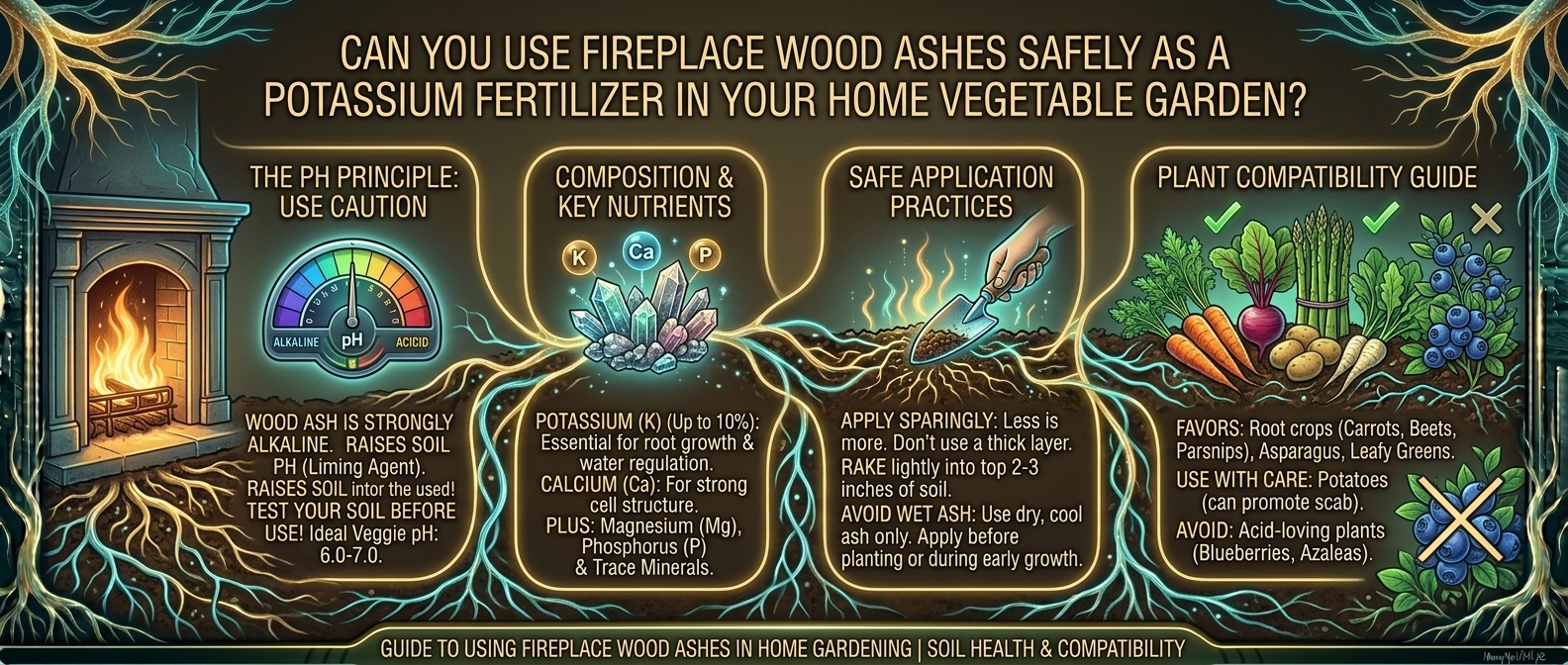
When wood burns, the organic carbon is released into the atmosphere as carbon dioxide, leaving behind a concentrated mineral residue—the ash. The chemical composition of wood ash varies depending on whether you burned hardwoods (like oak, maple, and hickory) or softwoods (like pine and fir), but it generally contains:
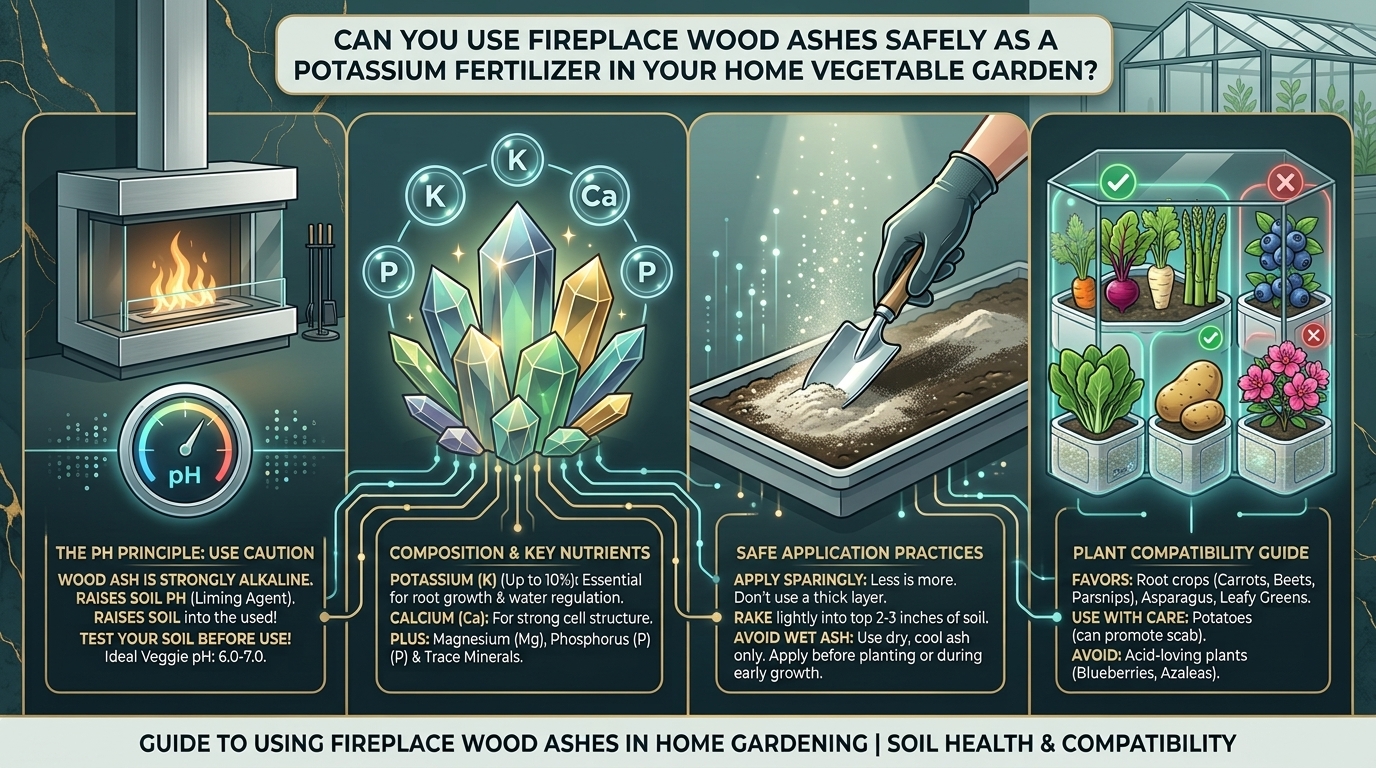
- Potassium (Potash): Typically ranging from 3% to 9%, potassium is essential for overall plant vigor, fruit development, and disease resistance.
- Calcium Carbonate: Making up roughly 25% to 45% of wood ash, calcium acts similarly to agricultural lime, raising soil pH and sweetening acidic earth.
- Magnesium: Usually around 1% to 4%, supporting chlorophyll production and enzyme activation.
- Trace Micronutrients: Small amounts of phosphorus, boron, iron, manganese, and zinc.
Hardwood vs. Softwood Ash
- Hardwoods: Produce denser, more nutrient-rich ash with higher concentrations of potassium and calcium.
- Softwoods: Produce lighter ash with lower nutrient density. For garden use, seasoned hardwood ash is generally preferred.
The Hidden Danger: Soil pH and Alkalinity
The single biggest misconception about wood ash is that it is a balanced, all-purpose fertilizer. In reality, wood ash behaves chemically very much like agricultural lime.
Because wood ash is heavily alkaline (often with a pH between 10 and 13), applying it to your garden increases your soil’s pH. While this is wonderful if your soil is overly acidic (a common condition in parts of Washington State and some eastern soils in New York), it can be disastrous if your soil is already neutral or alkaline.
- The Texas & California Factor: Many soils across Texas and inland California are naturally alkaline, often featuring high pH levels ($7.5$ to $8.5$). Adding wood ash to these soils pushes the pH even higher, locking up essential micronutrients like iron and manganese. This leads directly to severe nutrient deficiencies, such as interveinal chlorosis (yellowing leaves with green veins).
- Acid-Loving Plants Beware: Never apply wood ash around acid-loving vegetables and fruits like potatoes, blueberries, azaleas, or rhododendrons. Excess alkalinity on potatoes, for example, creates the ideal breeding environment for potato scab, a disfiguring bacterial disease.
When and How to Use Wood Ash Safely
If your soil test indicates an acidic pH (below $6.0$) and a deficiency in potassium, wood ash can be an excellent, cost-effective amendment. Follow these strict safety guidelines to protect your vegetables:
1. Always Test Your Soil First
Never apply wood ash blindly. Invest in a reliable soil pH test kit or send a sample to your local agricultural extension office. If your soil pH is already $6.8$ or higher, do not use wood ash.
2. Apply in Moderation
Wood ash is highly concentrated and water-soluble. Excessive application can cause salt burn on tender plant roots and trigger sudden nutrient imbalances.
- The Rule of Thumb: Apply no more than 20 pounds of wood ash per 1,000 square feet per year (roughly a 5-gallon bucket spread thinly over a large area).
3. Apply in Late Winter or Early Spring
Spread the ash evenly across your garden beds several weeks before planting season. This gives winter rains or early spring watering time to leach away excess salts and safely integrate the minerals into the soil profile.
4. Work It into the Soil Immediately
Do not leave wood ash sitting in loose piles or on the surface of the soil. When exposed to rain or watering cans, untreated surface ash can form a hard, impermeable crust. Rake or till it lightly into the top 2 to 4 inches of soil.
What NOT to Burn: Dangerous Contaminants in Ash
The safety of your garden wood ash depends entirely on what you put into your fireplace or wood stove. Never use ash derived from:
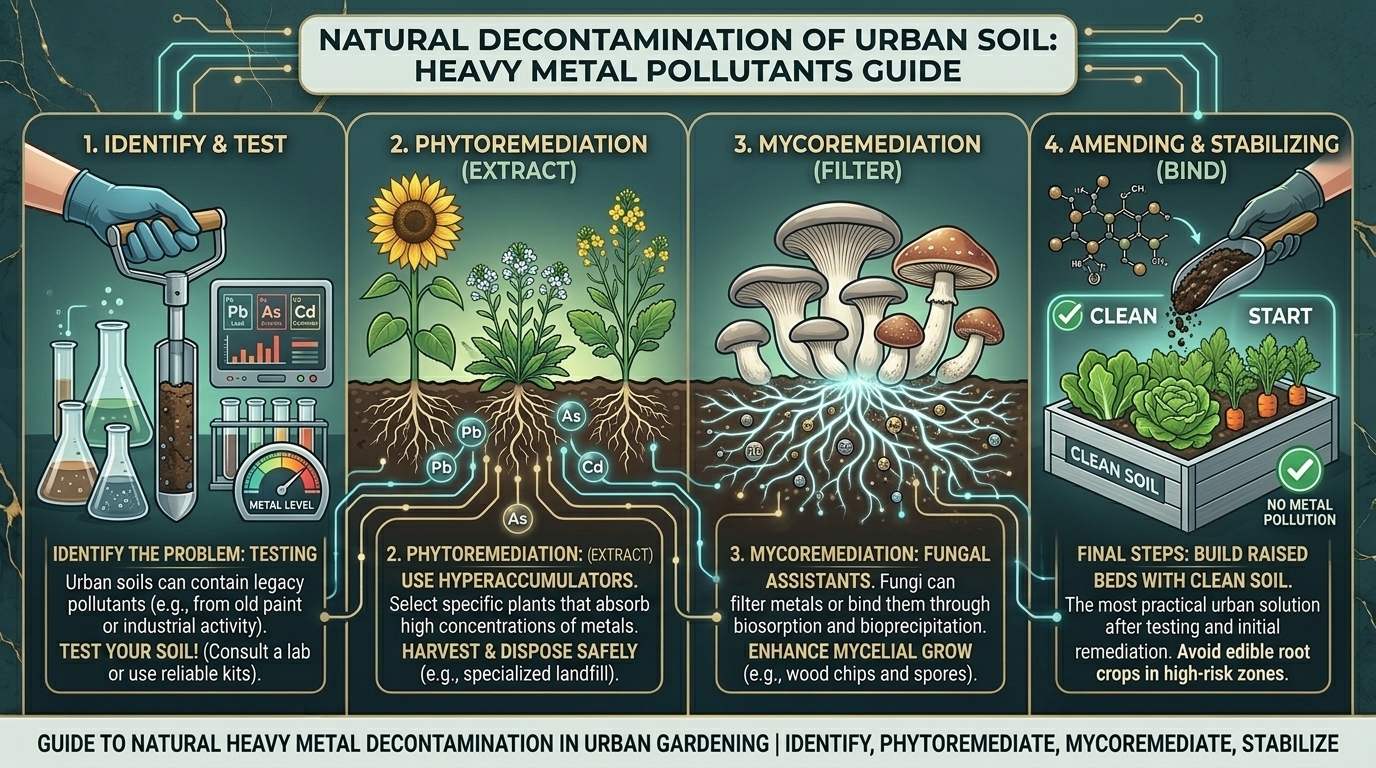
- Pressure-Treated, Painted, or Stained Wood: These lumbers are treated with heavy metals, copper, chromium, and arsenic, which will contaminate your vegetable bed and absorb directly into edible crops.
- Plywood and Particle Board: These manufactured woods contain synthetic glues, resins, and formaldehyde that release toxic compounds when burned.
- Trash, Plastics, and Glossy Paper: Burning magazine paper, cardboard with colored inks, or household garbage creates dioxins and heavy metal residues.
- Coal Ash: Unlike wood ash, coal ash contains high levels of sulfur, aluminum, and heavy metals that are toxic to garden plants.
Alternative Uses for Wood Ash in the Garden
If your vegetable garden soil is already too alkaline or you have an excess of ash, you do not have to throw it all away. Consider these alternative, garden-friendly uses:
- Compost Pile Booster: Wood ash is rich in potassium and helps neutralize organic acids in compost piles, speeding up decomposition. Tip: Sprinkle ash in thin layers (every 6 inches) rather than dumping a massive bucket all at once, as too much ash can kill off beneficial composting microbes and earthworms.
- Natural Slug and Snail Deterrent: A dry barrier of wood ash sprinkled around the perimeter of vulnerable plants (like hostas or leafy greens) irritates the bodies of crawling pests. Note: Wood ash loses its deterrent power the moment it gets wet from rain or irrigation.
Frequently Asked Questions (FAQ)
1. Can I put fireplace wood ash directly around tomato plants?
No. Tomatoes prefer slightly acidic to neutral soil ($6.0$ to $6.8$). Applying wood ash directly around tomatoes can spike the soil pH, block calcium uptake, and induce blossom-end rot.
2. Does wood ash raise or lower soil pH?
Wood ash raises soil pH, making it significantly more alkaline. It acts as a liming agent due to its high concentration of calcium carbonate and potassium carbonate.
3. Can I use wood ash on container gardens in New York or San Francisco apartments?
Generally, no. Container potting mixes are carefully formulated with specific pH balances and drainage properties. Adding wood ash to small pots can easily cause chemical burns, excessive salt buildup, and extreme alkalinity.
4. How long does wood ash take to break down in the soil?
Because wood ash is water-soluble, its chemical effects begin almost immediately upon watering or rainfall, with peak neutralization occurring over the course of 2 to 4 weeks.
5. Is charcoal chunks left in the ash safe for the garden?
Unburned or partially burned charcoal chunks are safe and essentially act as rudimentary biochar. However, large chunks should be sifted out and broken down so they do not repel water or interfere with seed germination.
6. Can wood ash help control garden pests?
Yes, dry wood ash can temporarily deter soft-bodied pests like slugs and snails by drying out their outer membranes. However, it is not a broad-spectrum insecticide and washes away easily.
7. What vegetables actually benefit from wood ash?
Vegetables that tolerate or thrive in slightly sweeter, calcium-rich soils—such as brassicas (cabbage, kale, broccoli, and Brussels sprouts)—tolerate wood ash better than acid lovers, provided the soil pH does not exceed 7.0.
8. How should I store leftover wood ash?
Store dry wood ash in a covered, airtight metal container away from wooden structures. Never store hot ash, as live embers can smolder undetected for days and start accidental fires.
9. Will wood ash kill earthworms?
Yes. Piling raw, concentrated wood ash directly onto earthworms or applying massive quantities all at once will alter soil chemistry too drastically, killing beneficial earthworms and soil microbes.
10. Can I use wood ash if I live in Washington State where soils are naturally acidic?
Yes! Washington soils—especially west of the Cascade Mountains—tend to be quite acidic and leached of basic minerals due to high rainfall. In this specific climate, wood ash can be an excellent, free amendment to balance soil acidity and supply potassium.
Conclusion
Fireplace wood ash can be a valuable, cost-free resource for the home gardener, but it must be handled with care and respect for soil chemistry. By testing your soil pH first, applying the ash in strict moderation, and avoiding treated or manufactured lumber, you can safely harness its potassium-rich benefits. Whether you are prepping beds in sunny Texas, urban plots in New York, coastal yards in San Francisco, or rainy gardens in Washington, a cautious, science-backed approach ensures your vegetables stay healthy, productive, and vibrant all season long.