Why proper seasonal cleanup of garden tools prevents the spread of plant fungal diseases? Garden maintenance often focuses heavily on soil amendment, proper watering schedules, and organic pest control. However, one critical operational step frequently gets overlooked: the seasonal cleanup and sterilization of garden tools. Pruning shears, spades, soil knives, and hori-horis move continuously between plants, beds, and root zones throughout the growing season. When left uncleaned, these implements become primary vectors for devastating fungal pathogens.
Fungal spores are remarkably resilient. They overwinter easily in microscopic crevices, sap residue, and dried soil particles cling to steel blades and wood handles. When spring arrives, unsterilized tools transmit microscopic inoculants directly into fresh vascular tissue cuts and healthy soil ecosystems.
Whether you manage an expansive kitchen garden in Texas, an urban balcony array in San Francisco, an intensive backyard plot in California or New York, or a lush raised bed setup in Washington, establishing a rigorous tool hygiene protocol is your first line of defense against crop failure.
The Microbiology of Tool-Borne Fungal Spread
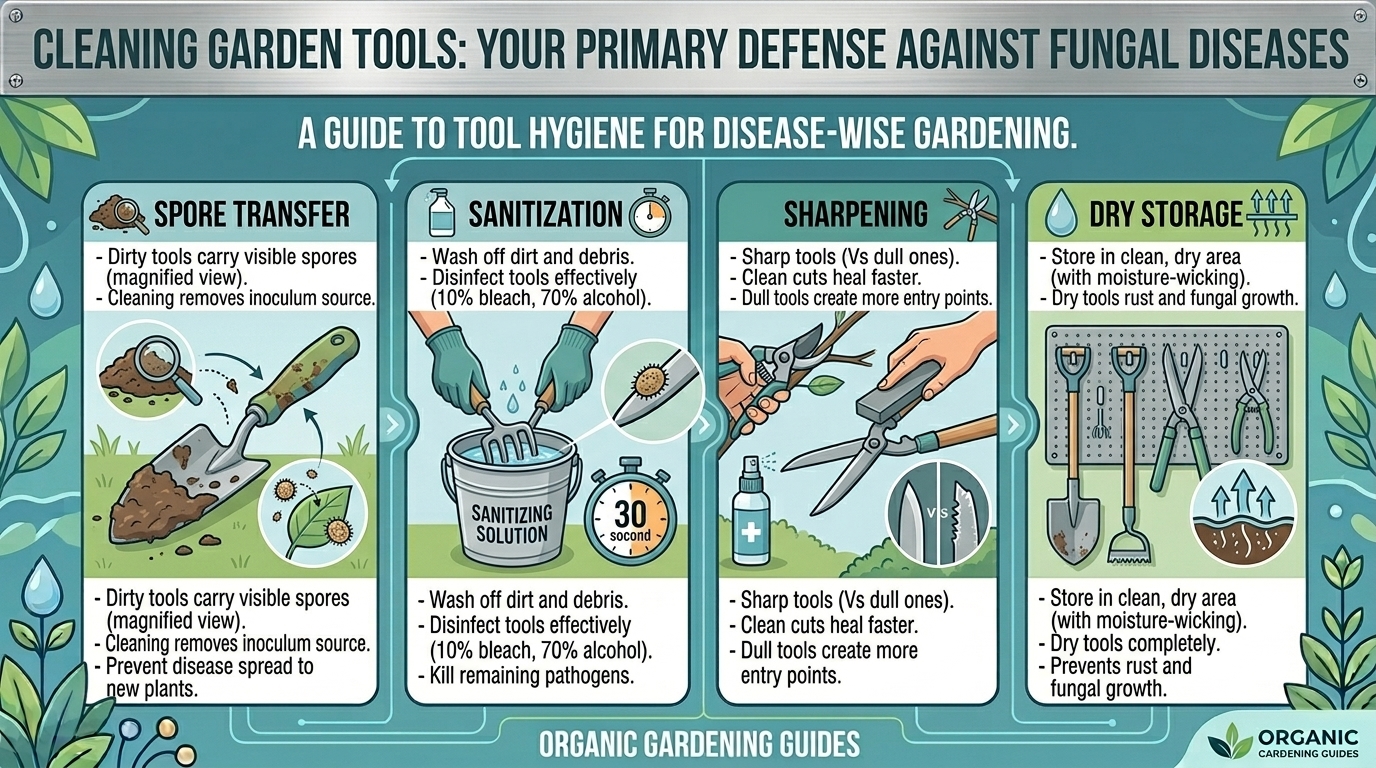
Understanding why tool cleanup is essential requires looking at how fungal pathogens interact with plant tissue and tool surfaces. Fungi reproduce primarily through microscopic spores. When you prune an infected plant—such as a tomato suffering from early blight or a rose affected by black spot—thousands of fungal spores attach to the sap and microscopic wood fibers left on your shears.
[Infected Plant Tissue] ──(Pruning Cut)──> [Sap & Spores Attach to Blade]
                                                      │
                                           (Tool Left Unsterilized)
                                                      │
                                                      ▼
[Healthy Plant Tissue]  <──(Next Cut)──── [Spores Inoculate Vascular System]
Common Tool-Vectored Fungal Pathogens
- Powdery Mildew (Erysiphales): Leaves a distinct white powdery film. Spores survive cold dormant periods in microscopic cracks along tool hinges and handle joints.
- Black Spot (Diplocarpon rosae): Common in humid regions. Transmitted readily when pruning shears transfer sticky conidia from infected foliage to fresh cuts on healthy stems.
- Verticillium & Fusarium Wilts: Soil-borne vascular fungi that survive for years in dirt clumped onto shovel blades, diggers, and hori-hori knives. Moving unwashed digging tools from bed to bed introduces wilt pathogens directly into root zones.
- Botrytis Blight (Gray Mold): Thrives in cool, damp conditions. Sap-laden blades carry active spores from decaying plant matter straight into healthy green shoots.
Regional Breakdown: Climate Risks Across the Country
Fungal disease pressure varies significantly depending on regional rainfall, ambient humidity, and temperature fluctuations. Adapting your tool maintenance protocol to your local environment is crucial for optimal prevention.
| Region / Location | Primary Environmental Risk | Common Fungal Threats | Key Sanitation Priority |
| Texas | High heat mixed with intense humidity spurts and overhead irrigation | Fusarium wilt, Southern blight, Powdery mildew | Clean soil thoroughly off all digging equipment; soil-borne spores survive intense heat in dried mud clumps. |
| California & San Francisco | Mild winters, fog condensation, and dense urban garden spacing | Powdery mildew, Rust, Botrytis gray mold | Sanitize pruners between every single plant; coastal fog creates ideal moisture levels for spore germination. |
| Washington | Extended cool, damp springs and high annual rainfall | Downy mildew, Apple scab, Black knot | Wipe tools dry after every use; store in low-humidity environments to stop moisture-loving fungal spores from multiplying on steel. |
| New York | Severe freeze-thaw cycles and humid summer microclimates | Early blight, Late blight, Anthracnose | Perform deep seasonal strip-downs before winter; winter storage without sanitizing allows spores to overwinter safely inside hinge joints. |
Step-by-Step: The Seasonal Tool Cleanup Protocol
A complete tool cleanup requires three distinct actions: Mechanical Cleaning, Chemical Disinfection, and Preventative Maintenance (Oiling & Sharpening).
Step 1: Mechanical Debris Removal
Before applying any disinfectant, remove all physical barrier materials. Disinfectants cannot penetrate thick layers of dried dirt, plant sap, or rust.
- Scrub Soil Away: Use a stiff wire brush or brass-bristle brush with warm, soapy water to scrub metal heads, blades, and tines.
- Dissolve Sap Build-Up: Apply a small amount of rubbing alcohol or specialized pitch-remover to cut through sticky tree resin and sap residue lingering around the pivot bolt.
- Rinse and Dry: Rinse off dirty soap suds with clean water and immediately towel dry with a micro-fiber cloth. Never leave metal tools to air-dry, as surface moisture invites rust formation and creates breeding zones for microbes.
Step 2: Disinfection & Sterilization
Once tools are clean, apply a targeted sterilizing agent to kill hidden fungal spores, bacteria, and viruses.
- 70% Isopropyl Alcohol (Best Everyday Choice): Wipe or spray directly onto blades. It evaporates quickly, requires no prolonged soaking, kills fungal spores effectively, and will not corrode metal components.
- 10% Bleach Solution (1 part bleach to 9 parts water): Highly effective against tough spores. Soak metal blades for 5–10 minutes. Crucial: You must rinse bleach off completely with clean water and dry immediately afterward, as chlorine aggressively corrodes high-carbon steel.
- 3% Hydrogen Peroxide: A non-toxic alternative for organic gardens. Soak or spray blades for 10–15 minutes before wiping dry.
Step 3: Sharpening and Blade Maintenance
Dull pruners crush plant stems rather than slicing through them cleanly. Crushed, jagged tissue takes significantly longer to heal, leaving open vascular wounds exposed to airborne fungal spores for extended periods.
- Use a diamond file or medium-grit whetstone matching the factory bevel angle (typically 20° to 25°).
- Push the stone along the bevel in smooth, single-direction strokes away from your body.
- Remove any raised metal burrs on the back flat side of the blade with a single flat pass.
Step 4: Protective Oiling and Storage
Protecting tools during winter or between seasonal shifts stops rust from pitting the metal surface. Pitted metal creates tiny pockets where microscopic fungal spores hide from standard surface wipes.
- Metal Care: Rub a light coat of food-grade mineral oil, boiled linseed oil, or 3-in-1 oil over all metal blades, springs, and pivot joints.
- Wooden Handles: Sand down splinters on wooden handles with 120-grit sandpaper and rub in boiled linseed oil to prevent drying, cracking, and water absorption.
- Storage: Store tools vertically off concrete floors in a well-ventilated, dry shed or garage.
Essential Best Practices for Organic Growers
- Sanitize Between Plants: When pruning diseased branches, dip or spray your shear blades with 70% isopropyl alcohol between every single cut.
- Isolate High-Risk Tools: Designate a specific pair of bypass pruners solely for sanitizing diseased growth, keeping your primary tools clean for healthy plants.
- Clean Digging Equipment: Don’t limit cleanup to pruning shears; shovels, spades, and tillers move tons of spore-laden soil across different raised beds. Hose them down and scrub them clean before storing.
- Inspect Pots and Trays: Sterilize nursery trays and seed pots in a 10% bleach bath before starting seasonal seedlings to prevent damping-off fungal diseases (Pythium and Rhizoctonia).
10 Frequently Asked Questions (FAQ)
1. Can plant fungal diseases really survive on metal tools over winter?
Yes. Fungal spores, bacterial cankers, and viral particles form protective outer walls or hide inside microscopic sap residue and soil clumps left on steel tools, surviving sub-zero winter temperatures easily.
2. Is pine sol or household disinfectant effective for garden tools?
Household disinfectants can kill standard bacteria, but many are not tested or rated for resilient plant-pathogenic fungal spores. 70% Isopropyl alcohol or a 10% household bleach solution are far more reliable choices.
3. Why shouldn’t I leave tools soaking in bleach overnight?
Bleach (sodium hypochlorite) is a strong oxidizing agent. Soaking metal tools in a bleach solution for longer than 10–15 minutes degrades high-carbon steel, causing surface pitting, rust, and premature joint failure.
4. How often should I sanitize my pruning shears during the growing season?
Ideally, sanitize pruners between cutting different plants. If you are working on a plant with active disease symptoms (like powdery mildew or black spot), sanitize your blades between every cut.
5. What is the best natural or non-chemical way to sanitize garden tools?
Boiling water (submerging tool heads for 10–15 minutes) or using a handheld steam cleaner (exposing blades to 180°F+ steam for 30 seconds) kills fungal pathogens effectively without chemical inputs.
6. Will dull tools increase the risk of fungal infection?
Yes. Dull blades tear, crush, and fray plant stems rather than making clean, smooth cuts. Damaged, crushed plant tissue heals slowly, keeping vascular wounds exposed to airborne fungal spores far longer than clean cuts.
7. Should I clean wooden tool handles as well?
Absolutely. Fungal spores and soil microbes absorb easily into porous, unsealed wood handles. Wipe wooden handles with isopropyl alcohol, sand off rough spots, and seal them with linseed oil.
8. How do I clear sticky sap off pruners before sanitizing?
Wipe blades down with a rag soaked in rubbing alcohol, turpentine, or a citrus-based solvent. Soap and water alone often fail to dissolve thick plant resins.
9. Does spraying tools with WD-40 sanitize them?
No. WD-40 is a water dispersant and lubricant; it is not a registered disinfectant and will not reliably kill fungal spores or plant pathogens. Use isopropyl alcohol to sterilize first, then apply a protective oil coat.
10. Can soil-borne fungal diseases spread via wheelbarrows and garden gloves?
Yes. Fungal spores like Fusarium and Verticillium travel in dirt sticking to glove palms, shoe soles, and wheelbarrow tires. Wash canvas gloves in hot water and hose off garden footwear and wheelbarrow tires periodically.
Conclusion
Preventing fungal diseases in your garden relies heavily on strict tool sanitation. By removing soil debris, sterilizing cutting surfaces with isopropyl alcohol or diluted bleach, maintaining sharp edges, and applying protective oils, you break the transmission chain of destructive plant pathogens.