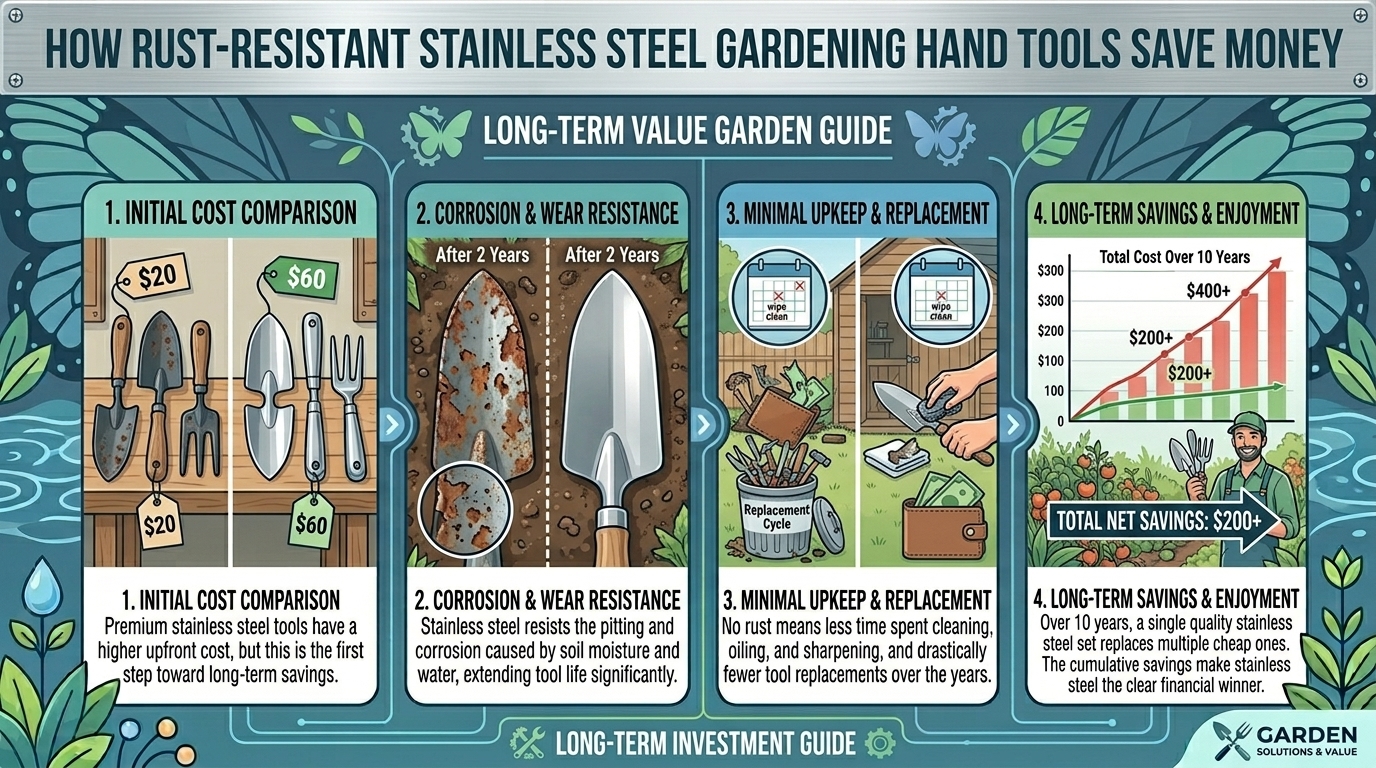
Why selecting rust-resistant stainless steel gardening hand tools saves money over time? Gardening is an investment in your home, health, and outdoor living space. However, many gardeners fall into the trap of buying budget carbon steel or coated metal hand tools every spring. These lower-cost implements rust, bend, snap at the tang, or lose their sharp edges after a single season of exposure to soil moisture and weather elements.
Replacing worn-out hand trowels, weeding forks, and transplanters every year drains your wallet over time. Choosing rust-resistant stainless steel hand tools eliminates this replacement cycle. High-grade stainless steel implements offer structural integrity, low maintenance, and smooth soil penetration, making them a one-time purchase that pays for itself over seasons of heavy use.
Whether turning dense clay beds across Texas, managing coastal fog and salt air in California and San Francisco, navigating damp marine soils in Washington, or preparing cold beds in New York, premium stainless steel hand tools deliver consistent performance.
At KC Plants, we guide gardeners toward reliable, long-lasting tools and garden setups tailored to regional growing conditions.
1. Financial Breakdown: The Hidden Costs of Cheap Garden Tools
Budget hand tools look attractive on nursery shelves due to lower upfront prices. However, evaluating the total cost of ownership over a 5-to-10-year period paints a clear financial picture.
Why Cheap Hand Tools Fail
- Oxidation and Rusting: Carbon steel tools lack chromium protection. Moisture from damp soil or ambient humidity causes oxidation, pitting the metal and weakening its core structure.
- Bending Under Soil Pressure: Low-cost stamped steel or aluminum alloys bend easily when levering taproots or digging into compacted clay soils.
- Handle Snap at the Neck: Cheap tools use weak rivets or glue to attach metal heads to plastic or soft pine handles, causing snapping under heavy torque.
| Feature | Low-Cost Stamped Steel / Aluminum | Carbon Steel (Uncoated) | Premium Stainless Steel |
| Upfront Cost | $5 – $10 per tool | $12 – $18 per tool | $25 – $40 per tool |
| Average Lifespan | 1 season | 2–3 seasons | 10+ years to lifetime |
| 10-Year Replacement Cost | $50 – $100 per tool slot | $40 – $60 per tool slot | $25 – $40 (One-time investment) |
| Rust Resistance | Low (Paint flakes, revealing bare metal) | Poor (Requires oiling after every use) | Exceptional (Chromium oxide barrier) |
| Soil Resistance & Friction | High (Rough rust patches drag in soil) | Medium (Smoother when oiled) | Lowest (Mirror-polished smooth glide) |
2. Metallurgy Advantages: What Makes Stainless Steel Superior?
The secret to stainless steel’s longevity lies in its alloy chemistry—specifically chromium content (typically 10.5% or higher).
Key Material Benefits
- Self-Healing Passive Layer: When exposed to oxygen, chromium forms an invisible, micro-thin layer of chromium oxide. If scratched by rocks or gravel, the layer regenerates instantly, blocking rust formation.
- Reduced Soil Adhesion: Smooth, mirror-polished stainless steel glides through heavy clay and damp loam with minimal effort, reducing wrist strain and fatigue.
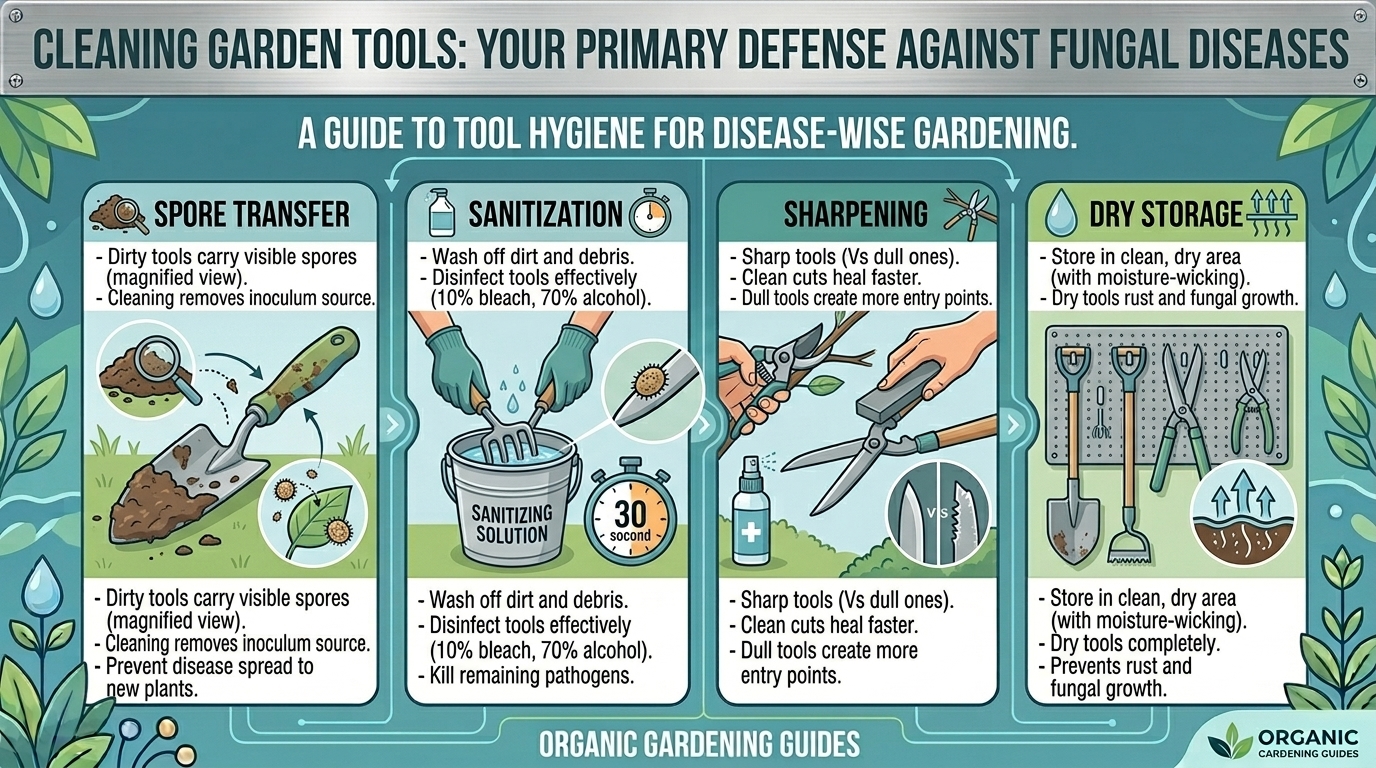
- Easy Cleaning and Sanitization: Soil, sap, and bacterial pathogens wipe away easily. Sanitizing tools between cuts prevents the spread of soil-borne diseases like fungal root rot.
3. Step-by-Step Care and Maintenance Guide for Stainless Steel Tools
While stainless steel is exceptionally low-maintenance, basic care keeps hardwood handles and polished metal heads performing like new for decades.
1.Rinse Off Soil After Every Use:Prevents moisture buildup in storage.
Wash off lingering mud, clay, and organic matter with clean water after finishing garden work.
2.Dry Thoroughly and Inspect Wooden Handles:Protects wooden handles from splintering.
Wipe metal heads dry with a clean rag. Inspect ash or hickory handles for minor burrs, sanding them smooth with fine-grit sandpaper if needed.
3.Apply Natural Linseed Oil to Hardwood Handles:Conditions natural wood against rot.
Rub a light coat of boiled linseed oil or food-safe tung oil onto wooden handles twice a year to maintain flexibility and water resistance.
4.Hone Working Edges with a Hand File:Restores razor-sharp cutting edges.
Use a flat mill bastard file to sharpen the leading edge of your stainless trowel or soil scoop annually for clean soil cuts and easy root slicing.
5.Store Tools Off the Ground in a Dry Shed:Keeps tools organized and moisture-free.
Hang tools by their lanyard loops or store them in a dry bucket filled with coarse sand to protect working edges from dulling.
4. Regional Performance: Navigating Local Soil Profiles
Soil types vary drastically across different states, placing unique performance demands on your hand tools:
- Texas (Dense Blackland Clay & Caliche): Texas soils compact tightly during dry summer heat. Stamped aluminum trowels bend under levering pressure, whereas thick-gauge stainless steel transplanters penetrate hard soil without flexing.
- California & San Francisco (Coastal Fog & Saline Air): High ambient salt and coastal humidity accelerate corrosion on carbon steel. Stainless steel withstands salty air and marine fog without pitting or rusting.
- Washington & Pacific Northwest (Persistent Dampness): Wet soil sticks to rough, painted hand tools. Smooth stainless steel sheds damp soil effortlessly and wipes clean without rusting in rain-soaked sheds.
- New York & Northeast (Rocky Glacial Soils): Rock-filled Eastern soils chip painted coatings off cheap tools, exposing raw iron to rust. Stainless steel handles repeated impacts with buried stones without flaking or degrading.
10 Frequently Asked Questions (FAQ)
1. Is stainless steel completely rust-proof?
Stainless steel is rust-resistant, not 100% rust-proof under extreme neglect. Prolonged exposure to harsh chemicals or standing saltwater can cause minor surface discoloration, but it will not pit or structural decay like carbon steel.
2. Why are stainless steel garden tools more expensive upfront?
Higher production costs stem from the quality of chromium-nickel steel alloys, precision welding at tang joints, and hand-polishing stages required to create a smooth, corrosion-resistant surface.
3. Are stainless steel trowels heavier than aluminum trowels?
Stainless steel is slightly heavier than aluminum, but the added weight delivers structural strength and momentum when digging into tough, compacted soils.
4. Can stainless steel hand tools bend when prying roots?
High-quality stainless steel hand tools feature a full-tang design or heavy-gauge socket weld that resists bending under normal levering forces when pulling weeds or digging planting holes.
5. How do I disinfect stainless steel tools to prevent plant disease?
Wipe the metal head with a solution of 70% isopropyl alcohol or a 10% bleach-water mix. Stainless steel non-porous surfaces sanitize in seconds without dulling or corroding.
6. Do stainless steel tools require oiling like carbon steel?
No. Unlike carbon steel, stainless steel does not need oil coats on the metal to prevent rust. However, applying linseed oil to the wooden handle is recommended to keep the wood supple.
7. What is a “tang,” and why does it matter for tool durability?
The tang is the extension of the metal blade that inserts into the wooden handle. A full tang or long neck weld provides maximum leverage, preventing the head from snapping off the handle.
8. Can I sharpen a stainless steel trowel or weeding knife?
Yes. Use a flat mill file or whetstone held at a 20-to-30-degree angle along the bevel to restore a sharp cutting edge for slicing through thick roots.
9. Which handle material is best paired with stainless steel tools?
FSC-certified ash or hickory wood offers superior shock absorption and comfort. Ergonomic TPR rubber grips are also ideal for wet climates where extra grip is needed.
10. Are stainless steel tools worth it for small container gardens?
Absolutely. Even in small potting setups, smooth stainless steel glides cleanly through potting mixes and handles fertilizer salts without corroding, lasting a lifetime.
Conclusion
Upgrading to rust-resistant stainless steel hand tools is a smart financial decision for any home gardener. By avoiding annual tool replacements, enjoying effortless soil penetration, and preventing corrosion in humid or coastal climates across Texas, California, San Francisco, Washington, and New York, premium stainless steel implements deliver lasting value season after season.