Dealing with chronically soggy, waterlogged soil can turn the joy of gardening into an exhausting battle against standing puddles, root rot, and stagnant odors. When heavy rains hit, or when natural topography traps moisture in low-lying zones, water collects and pushes vital oxygen out of the earth. Without oxygen, plant roots suffocate, beneficial soil microbes die off, and fungal pathogens take over.
While installing expensive French drains, grading your landscape with heavy machinery, or hauling in tons of gravel are traditional solutions, nature offers a far more elegant, sustainable, and visually stunning alternative: bio-drainage.
By strategically planting moisture-loving perennial shrubs and trees, you can harness living “pumps” that draw thousands of gallons of excess water from the earth, transpire it through their leaves, and transform a soggy wasteland into a thriving, beautiful landscape.
Whether you are managing heavy clay basins in Texas, dealing with unpredictable spring saturation in New York, balancing moisture in Washington State, or working with unique urban microclimates in California and San Francisco, this guide explores how to cure waterlogged soil naturally using resilient, water-loving perennials.
1. The Science of Bio-Drainage: How Plants Combat Soggy Soil
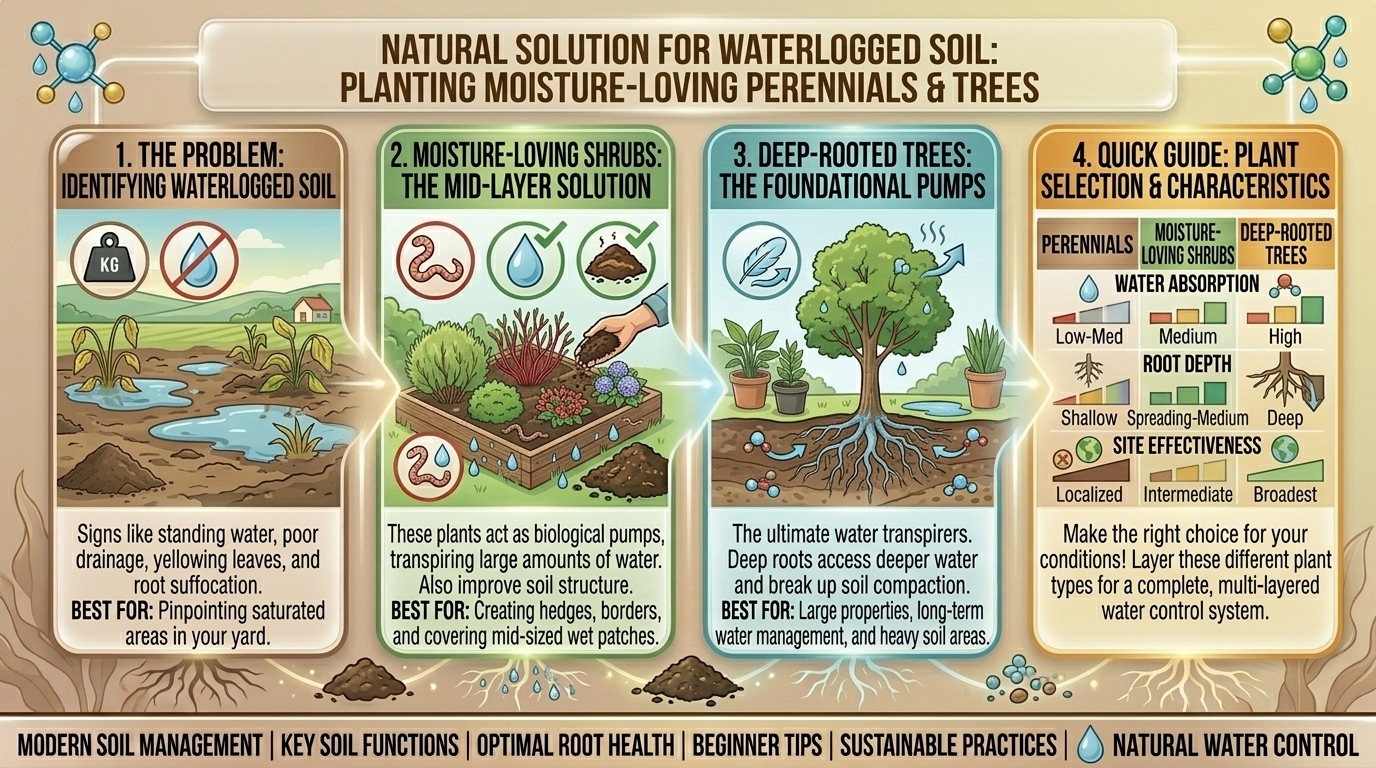
Bio-drainage is the practice of using deep-rooting, high-transpiration vegetation to lower the water table and dry out saturated soils. Instead of fighting water with concrete and plastic pipes, you work in harmony with botanical biology.
The Transpiration Engine
Trees and large shrubs act as natural biological pumps. Their root systems absorb vast quantities of water from the soil matrix. This water travels up the trunk through capillary action and is eventually released into the atmosphere as water vapor through microscopic pores in the leaves called stomata.
- A mature deciduous tree can transpire anywhere from 50 to over 200 gallons of water per day during peak growing season.
- Deep root systems also create physical channels in heavy or compacted soils. As roots grow and eventually shed, they leave behind macropores that drastically improve soil aeration and natural water infiltration over time.
2. Top Moisture-Loving Trees for Soggy Spaces
If you have a large, chronically wet area in your yard, planting thirsty deciduous or evergreen trees can make a dramatic difference.
1. River Birch (Betula nigra)
- Hardiness Zones: 4–9
- Why It Works: Famous for its striking peeling cinnamon-colored bark, the River Birch is a champion of wet sites. In nature, it naturally lines riverbanks and floodplains. Its aggressive, fibrous root system absorbs massive amounts of water and helps stabilize eroding banks.
2. Bald Cypress (Taxodium distichum)
- Hardiness Zones: 4–11
- Why It Works: Despite being a deciduous conifer (it drops its needle-like leaves in autumn), the Bald Cypress thrives in standing water, swamps, and saturated clay. In extreme wet conditions, it may develop picturesque “cypress knees” that protrude from the soil to help with root respiration.
3. Weeping Willow (Salix babylonica)
- Hardiness Zones: 6–8
- Why It Works: The ultimate symbol of water-seeking vigor. Weeping Willows grow at astonishing rates and drink immense amounts of water. Note: Because their roots actively seek out moisture, never plant them near underground utility pipes, septic lines, or sewer drains.
4. Red Maple (Acer rubrum)
- Hardiness Zones: 3–9
- Why It Works: While adaptable to normal garden soils, the Red Maple is naturally found in bottomlands and red-maple swamps. It tolerates seasonal flooding and wet feet remarkably well while providing breathtaking brilliant red autumn foliage.
3. Resilient Moisture-Loving Shrubs for Low-Lying Beds
If you do not have space for a massive canopy tree, large perennial shrubs offer a fantastic mid-story solution for wet garden corners, rain gardens, or ditch edges.
1. Redosier Dogwood (Cornus sericea)
- Hardiness Zones: 2–8
- Why It Works: Thriving in damp thickets and wetland borders, this hardy shrub loves moisture. Beyond its ability to soak up excess water, it offers stunning bright red stems that provide gorgeous winter interest against gray winter skies.
2. Buttonbush (Cephalanthus occidentalis)
- Hardiness Zones: 4–9
- Why It Works: Named for its unique, spherical white flowers that look like tiny pincushions, Buttonbush naturally grows in shallow standing water, pond edges, and wet thickets. It is a magnet for native pollinators and butterflies.
3. Summersweet / Clethra (Clethra alnifolia)
- Hardiness Zones: 3–9
- Why It Works: Highly adaptable to wet, poorly drained soils, Summersweet produces fragrant, spike-like white or pink flowers in mid-summer when little else is blooming. It spreads slowly to form dense, soil-stabilizing thickets.
4. Elderberry (Sambucus canadensis)
- Hardiness Zones: 3–9
- Why It Works: This fast-growing native shrub loves damp ditches and low-lying garden beds. It produces massive clusters of white flowers followed by dark purple berries that are prized by birds and foragers alike.
4. Regional Adaptation: Saturated Soils Across the Country
Waterlogging issues manifest differently depending on your regional climate, soil composition, and seasonal weather patterns:
California & San Francisco
- The Challenge: Mediterranean climates bring intense dry summers followed by sudden, torrential winter atmospheric rivers. This causes heavy clay soils to slam from bone-dry concrete to completely waterlogged mud in days.
- The Solution: Planting resilient native shrubs like Pacific Wax Myrtle or Red Twig Dogwood helps manage seasonal downpours, stabilizing hillsides and preventing winter erosion in low-lying micro-climates.
Texas
- The Challenge: Heavy Texas “Blackland Prairie” or gumbo clay soils swell shut when wet, creating impermeable barriers that hold standing water for weeks after a spring thunderstorm.
- The Solution: Utilizing aggressive moisture-loving trees like Bald Cypress or Pecan helps break through dense clay layers while drinking away stagnant surface water before root rot sets in.
New York
- The Challenge: Freeze-thaw cycles combined with heavy spring snowmelt and frequent nor’easter rains often leave suburban and urban garden beds saturated well into May.
- The Solution: Incorporating shrubs like Buttonbush and Summersweet into low spots transforms a muddy eyesore into a vibrant, pollinator-friendly rain garden.
Washington State
- The Challenge: Extended periods of autumn and winter rainfall saturate Pacific Northwest soils, keeping water tables exceptionally high for months at a time.
- The Solution: Planting native water-loving trees such as River Birch or Sitka Spruce establishes a natural biological sponge that mitigates seasonal flooding.
5. Step-by-Step Guide to Establishing a Bio-Drainage Bed
Simply dropping a water-loving plant into a puddle of stagnant mud is not always enough to guarantee success. Proper establishment is vital:
[ Identify Soggy Zone ]
       │
       ├──> Step 1: Map Water Flow & Saturation Duration
       │
       ├──> Step 2: Select Appropriate Thirsty Species
       │
       ├──> Step 3: Mound Planting (Plant High)
       │
       └──> Step 4: Mulch & Establish Root Systems
- Assess the Saturation: Determine whether the area is wet year-round or only after heavy rains. This dictates whether you need an absolute swamp-dweller or a plant that merely tolerates wet feet.
- Plant High (The Mound Method): Even moisture-loving trees and shrubs can suffer from collar rot if their root flares are submerged in standing water during their initial establishment phase. Dig your planting hole slightly shallower than the root ball, and mound the surrounding soil gently so the crown sits an inch or two above the waterline.
- Incorporate Organic Matter: Mix finished compost into the backfill soil to encourage immediate microbial activity and ease root expansion.
- Mulch Heavily: Apply a 3-inch layer of shredded hardwood bark mulch to retain even moisture balance and suppress weeds while the bio-drainage system takes root.
6. Frequently Asked Questions (FAQ)
1. Will planting trees damage my home’s foundation if they look for water?
While water-seeking trees like willows should be kept away from foundations, most moisture-loving shrubs and medium-sized trees (like Redosier Dogwood or Buttonbush) have root systems that stay safely within reasonable distances. Always research mature root spreads before planting near structures.
2. How long will it take for plants to dry out my soggy yard?
It depends on the scale of the saturation and the maturity of the plants. Smaller shrubs may show noticeable water reduction within one to two growing seasons, while mature trees can transpire hundreds of gallons daily within a few years.
3. Can I plant these moisture-loving species if my soil dries out in summer?
Many wetland-adapted plants (such as Red Maple and River Birch) are surprisingly resilient during summer dry spells as long as they get a deep watering during establishment. However, check individual species requirements before planting in arid zones.
4. What is the difference between a rain garden and bio-drainage?
A rain garden is a designed depression planted with native species specifically engineered to collect and filter stormwater runoff temporarily. Bio-drainage is a broader term encompassing any vegetation used to lower chronic water tables and dry out saturated earth.
5. Will standing water kill newly planted shrubs?
Yes. Even water-tolerant plants need their root crowns to have access to oxygen during their first few weeks in the ground. Always plant them on slight elevations or raised mounds until their roots establish deep into the saturated zone.
6. Can I use turf grass to fix a waterlogged yard?
Standard turf grass hates standing water and will quickly drown, turn yellow, and die in chronically waterlogged soil. Installing water-loving perennial shrubs and ground covers is a far more effective biological solution.
7. Do moisture-loving trees attract mosquitoes?
Stagnant standing water is a breeding ground for mosquitoes. By planting bio-drainage trees and shrubs that eliminate standing puddles, you actually reduce mosquito breeding sites in your yard over time.
8. Are there evergreen options for wet soil?
Yes! Conifers like Bald Cypress (deciduous needles), Arborvitae (Thuja occidentalis), and certain hollies (like Inkberry Holly, Ilex glabra) tolerate damp, poorly drained soils while maintaining lush green foliage year-round.
9. Should I add fertilizer to my wet garden beds?
Generally, no. Wet soils already suffer from low oxygen levels, and adding synthetic fertilizers can trigger rapid, weak top-growth that the oxygen-deprived root system cannot adequately support. Let the natural organic matter in the soil suffice.
10. Can I grow vegetables in waterlogged soil?
Most edible vegetables (with the exception of watercress or taro) will rot and die in waterlogged soil. If you want to grow food in a soggy area, you must build elevated raised beds above the saturation level or fix the drainage first.
Conclusion
Soggy, waterlogged garden soil does not have to be a permanent landscaping nightmare. Instead of fighting nature with costly engineering feats, you can deploy nature’s own filtration and transpiration pumps. By integrating moisture-loving perennial shrubs like Redosier Dogwood and Buttonbush, or majestic trees like the River Birch and Bald Cypress, you establish a self-sustaining bio-drainage network.