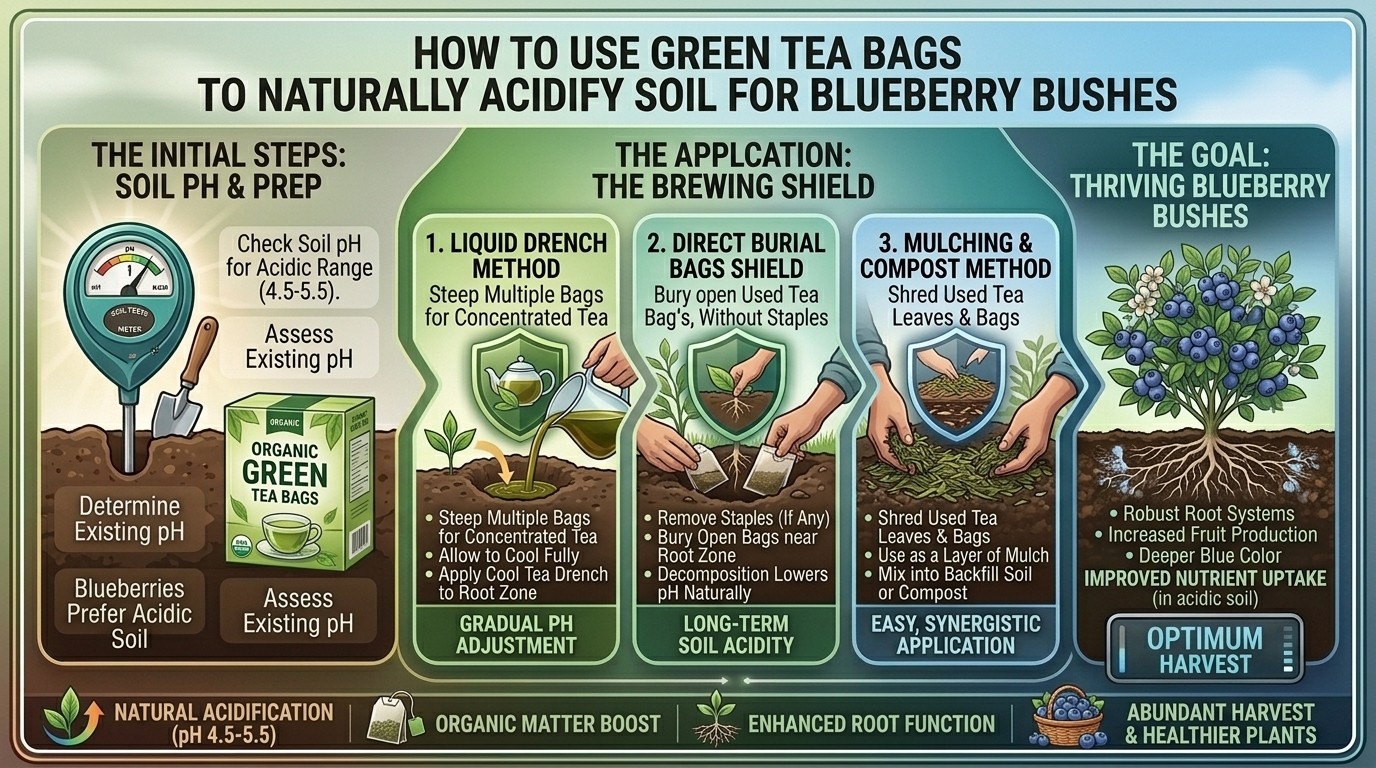
Cultivating a thriving patch of blueberry bushes in your home garden is immensely rewarding, but it comes with a strict botanical demand: acidic soil. Unlike most garden vegetables and ornamentals that prefer a neutral pH of 6.0 to 7.0, blueberries demand a specialized acidic environment with a pH ranging between 4.5 and 5.5.
When the soil pH creeps upward toward neutral, blueberries suffer from severe iron chlorosis. Their leaves turn a pale, sickly yellow between green veins, growth stalls, and fruit production plummets because the plant can no longer absorb vital micronutrients.
While commercial gardeners often rely on synthetic sulfur or aluminum sulfate to lower soil pH, eco-conscious growers are increasingly turning to a clever, sustainable household waste hack: used green tea bags.
Whether you are managing container blueberry setups on a sunny balcony in San Francisco, working with alkaline native earth in Texas, adjusting suburban garden beds in New York, or balancing moisture-rich soils across Washington State and California, this comprehensive guide explores how to harness green tea to naturally acidify your soil and supercharge your blueberry harvest.
1. The Science of Tea and Soil Acidity: Why Blueberries Love It
To understand why green tea is effective for acidifying soil, it helps to look at both the chemistry of tea leaves and the physiological needs of ericaceous (acid-loving) plants.
Tannins and Natural Acidity
Camellia sinensis (the tea plant) naturally accumulates organic acids and complex polyphenols, most notably tannins.
- The Acid Profile: Freshly brewed green tea (and the spent leaves left inside tea bags) typically has a mild acidic pH ranging from 4.0 to 5.0.
- Gradual Microbial Breakdown: As spent tea bags or loose tea leaves decompose in the soil, soil bacteria and fungi break down these organic compounds, releasing weak organic acids that gently lower the soil pH without shocking the plant’s delicate root system.
Micronutrient Boost (Nitrogen and Potassium)
Beyond altering pH, green tea leaves contain trace amounts of nitrogen, potassium, and antioxidants. While tea alone will not replace a comprehensive fertilizer, it provides a gentle, organic nitrogen tonic that encourages lush foliage and supports berry development.
2. Important Caveats: Paper Bags, Staples, and Caffeine
Before you dump your morning tea collection around your berry patch, you must follow strict preparation guidelines to protect your plants.
Beware of Plastic and Staples
- Remove Staples: Many commercial tea bags are sealed with tiny metal staples. Always inspect your tea bags and pull off any metal staples before adding them to your garden soil.
- Check the Bag Material: Avoid silky synthetic nylon or plastic tea bags, which do not biodegrade and will leave unsightly plastic mesh in your garden beds. Stick exclusively to paper-based, 100% biodegradable tea bags or loose-leaf green tea.
The Caffeine Myth
People often worry that the caffeine in green tea will harm plants. Research shows that moderate amounts of caffeine break down rapidly in soil and pose no threat to established shrubs. In fact, some studies indicate caffeine can stimulate certain beneficial microbial populations.
3. Step-by-Step Guide: How to Use Green Tea Bags for Blueberries
Depending on whether you want to brew a soil-drenching liquid tonic or integrate the tea leaves directly into the mulch, you have two primary methods.
[ Collect Spent Green Tea Bags ]
       │
       ├──> Method A: Direct Soil Incorporation & Top-Dressing (Slow Release)
       │
       └──> Method B: Green Tea Liquid Drench (Immediate Root Zone Acidification)
Method A: Direct Soil Incorporation and Top-Dressing
- Save and Dry: Collect your spent green tea bags over a couple of weeks. Spread them out on a paper towel to air-dry so they do not grow mold in storage.
- Tear and Empty: Cut open the dried paper bags and empty the spent green tea leaves directly into a container.
- Scratch Into the Topsoil: Gently scratch a thin layer of tea leaves into the top 1 to 2 inches of soil around the base of your blueberry bushes, taking care not to damage the shallow, delicate root system.
- Mulch Over: Cover the tea leaves with an insulating layer of acidic mulch (such as pine needles, shredded oak leaves, or peat moss) to keep the organic matter moist and active.
Method B: The Green Tea Liquid Drench
If your blueberries are showing signs of yellowing leaves (chlorosis) and you need a faster corrective action:
- Brew a strong batch of green tea using 5 to 10 used tea bags steeped in a gallon of warm water for a few hours.
- Let the tea cool down completely to room temperature.
- Pour the brewed tea directly onto the root zone of your blueberry bushes as a specialized soil drench, repeating every 2 to 4 weeks during the active growing season.
4. Regional Soil Realities: Managing pH Across the U.S.
Soil chemistry varies wildly across the country, which dictates how aggressively you need to apply acidifying amendments:
California & San Francisco
- The Challenge: Mediterranean climates and alkaline tap water can rapidly push garden soil pH above 7.0, locking out iron and stressing blueberries.
- The Strategy: Urban container gardeners in San Francisco utilizing potting mixes can incorporate green tea leaves into their acidic peat-perlite container blends, combined with rainwater or filtered water to prevent alkaline tap water build-up.
Texas
- The Challenge: Texas “Blackland Prairie” and regional soils are notoriously alkaline (often pH 7.5 to 8.5), making inground blueberry cultivation an extreme challenge.
- The Strategy: While green tea is a great organic supplement, Texas gardeners growing blueberries must rely primarily on raised beds filled with acidic peat moss, elemental sulfur, and pine bark mulch, using green tea drenches as a gentle seasonal maintenance booster.
New York
- The Challenge: Suburban and woodland soils in New York often range from neutral to slightly acidic, making them fantastic candidates for natural pH adjustments.
- The Strategy: Top-dressing blueberry beds with spent green tea leaves in early spring helps maintain the ideal 4.5–5.5 pH sweet spot throughout the humid summer growing season.
Washington State
- The Challenge: Naturally damp, acidic forest soils in the Pacific Northwest provide an ideal natural home for blueberries, though heavy rains can leach nutrients.
- The Strategy: Use green tea leaves combined with coffee grounds or composted conifer needles to maintain rich organic matter and sustain deep root health.
5. Frequently Asked Questions (FAQ)
1. Is green tea better than black tea for acidifying soil?
Both green and black tea contain tannins and offer acidifying properties. However, green tea is generally preferred by organic gardeners because it is less processed, contains a cleaner nutritional profile, and has a slightly more favorable organic acid breakdown.
2. Can I use coffee grounds instead of green tea bags?
Yes! Used coffee grounds are another fantastic, highly popular organic amendment for acidifying soil. In fact, spent coffee grounds tend to be slightly more acidic (around pH 6.5 when fresh, breaking down lower) and are rich in nitrogen, making them a great companion to green tea.
3. Will green tea lower my soil pH instantly?
No. Organic amendments like tea leaves lower pH very gradually through biological decomposition. If your soil pH is critically high (above 7.0), green tea alone will not fix it quickly enough; you will need to supplement with agricultural elemental sulfur.
4. Can I put whole tea bags directly into the soil without opening them?
While paper tea bags will eventually decompose in the soil, whole bags take a very long time to break down and can look messy in the garden. It is always best to tear them open and scatter the loose leaves, or discard the paper shell.
5. Will green tea attract pests or rodents?
Unlike bone meal or blood meal, green tea leaves do not possess a meaty aroma and will not attract scavenging animals, dogs, or rodents to your garden beds.
6. Can I use green tea on other acid-loving plants besides blueberries?
Absolutely! Any plant that thrives in acidic soil—such as rhododendrons, azaleas, hydrangeas (if you want blue flowers), camellias, gardenias, and ferns—will benefit from green tea soil drenches and leaf top-dressings.
7. How often should I apply green tea to my blueberry bushes?
You can scratch spent tea leaves into the soil once a month during the spring and summer growing season, or apply a green tea liquid drench every 2 to 3 weeks. Stop applications in late autumn as the plant enters dormancy.
8. Does iced green tea work the same way as hot-brewed tea?
If you are brewing tea specifically for your garden, hot water extracts tannins and active compounds much more efficiently than cold water. However, leftover unsweetened iced tea from your kitchen can still be poured safely around your plants.
9. Can I add green tea bags to my compost pile instead?
Yes! Green tea bags (staple-free and paper-based) are classified as “green” nitrogen-rich materials. Tossing them into your compost pile enriches the overall pile and helps create a nutrient-dense, slightly acidic finished compost.
10. How do I test my soil pH to know if my acidifying efforts are working?
You can use an inexpensive chemical soil test kit, digital pH meter, or send a sample to your local agricultural extension service. Test the soil 4 to 6 weeks after applying your amendments to track pH shifts accurately.
Conclusion
Harnessing spent green tea bags is a brilliant, zero-waste way to support your acid-loving blueberry bushes naturally. By introducing organic tannins, gentle acidity, and trace nutrients directly into the root zone—without relying exclusively on harsh synthetic chemicals—you create a resilient, flourishing environment for your berry patch.