What Causes Organic Mulch to Mold, and Is It Harmful to Your Home Garden Plants?
Stepping out into the garden on a warm, humid morning to admire your freshly mulched flower beds, only to discover unsightly patches of bright yellow, neon orange, or powdery white mold spreading across the surface, can be deeply alarming. Many gardeners instantly panic, assuming a destructive plant disease has invaded their yard and threatens to kill their prized ornamentals and vegetables.
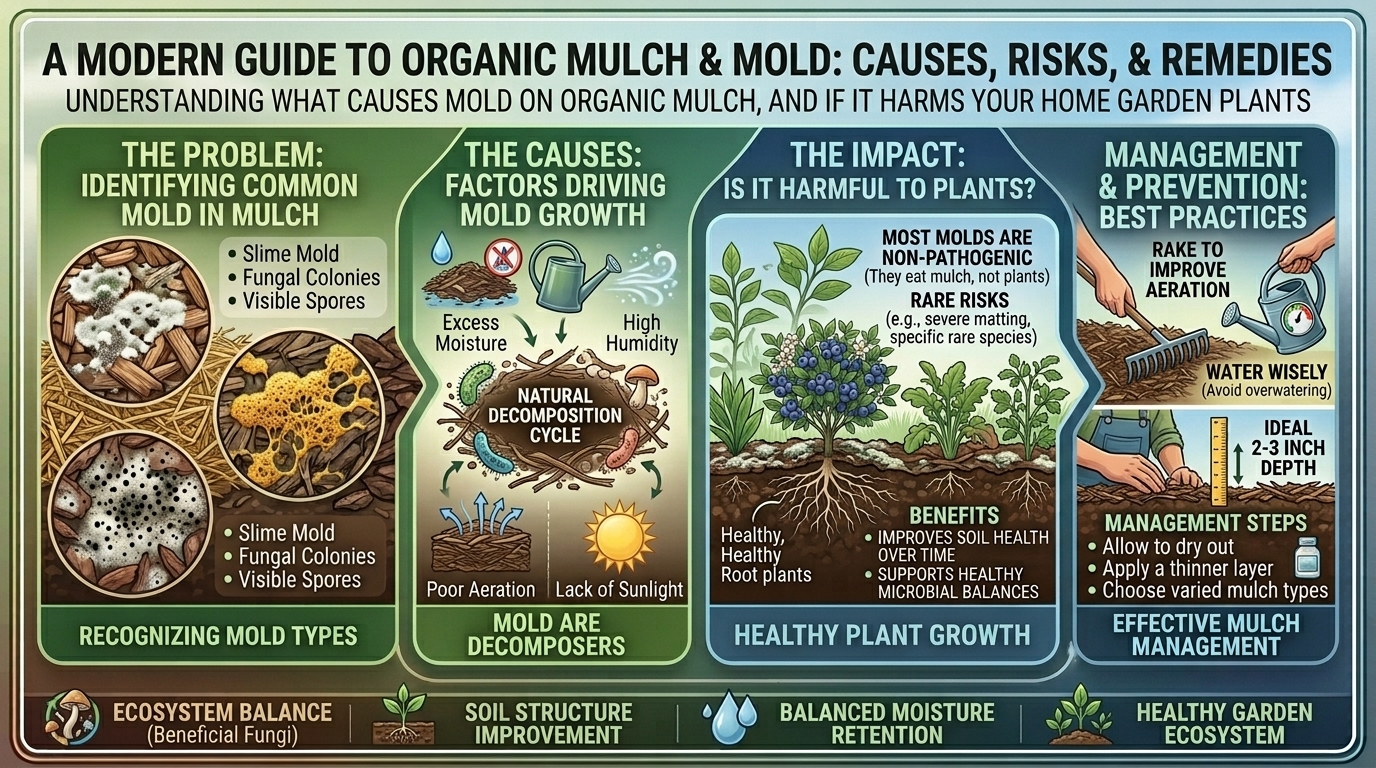
The reality, however, is far more reassuring. In the vast majority of cases, mold, slime molds, and beneficial fungi appearing on organic mulch are completely normal, harmless, and actually serve as proof that your soil ecosystem is alive and functioning exactly as nature intended.
Understanding why mulch molds, how to distinguish between harmless saprophytes and harmful plant pathogens, and knowing when (or if) you need to take action is essential for every home gardener.
Whether you are managing moisture-retaining garden beds in Washington State, dealing with summer humidity in New York, tackling heavy clay in Texas, or working with unique urban microclimates across California and San Francisco, this comprehensive guide explores the science of mulch mold and how to manage it effectively.
1. The Science of Decay: Why Organic Mulch Molds
To understand why mulch molds, you must look at the fundamental ecological purpose of mulch. Organic mulches—such as shredded hardwood bark, wood chips, pine straw, and leaf mold—are carbon-rich, dead plant materials. In nature, nothing is wasted.
The Subterranean Cleanup Crew
When you lay down organic mulch, you are introducing a massive buffet for the invisible decomposers of the soil food web: saprophytic fungi, actinomycetes, and bacteria.
- The Moisture Catalyst: Fungal spores are constantly floating through the air, settling invisibly on every surface. When a warm spring or summer rain drenches your mulch bed, followed by high humidity and trapped moisture beneath the mulch layer, these dormant spores wake up and rapidly colonize the organic material.
- Cellulose and Lignin Breakdown: Fungi specialize in breaking down tough plant cell walls (cellulose and lignin). As they feed on the decaying wood chips, they secrete powerful enzymes that liquefy and digest the carbon, releasing locked-up nutrients back down into the soil for your plants to use.
2. Common Types of Mulch Fungi and Molds
Not all mulch molds look or behave the same way. Identifying what is growing in your garden helps you determine whether intervention is necessary.
1. Artillery Fungus (Sphaerobolus stellatus)
- What It Looks Like: Small, cup-like structures containing a tiny black spore mass that resembles a speck of tar.
- The Behavior: True to its name, this fungus can literally shoot its sticky black spores up to 20 feet away through the air, frequently landing on light-colored house siding, fences, and cars. While harmless to plants, it is a notorious nuisance for homeowners using fresh bark mulch near structures.
2. Dog Vomit Slime Mold (Fuligo septica)
- What It Looks Like: A spongy, yellowish-white mass that resembles scrambled eggs or pet vomit sprawling across the mulch.
- The Behavior: Despite its gross appearance and scary name, slime mold is not actually a true fungus; it is a single-celled amoeba-like organism that aggregates to feed on bacteria and decaying wood. It is completely harmless, moves slowly over days, and eventually dries into a powdery gray dust that washes away easily.
3. White Mycelium Mats (“Artichoke” or “Stinkhorn” Molds)
- What It Looks Like: Thick, web-like white or grayish threads (mycelium) weaving through the underside of the mulch layers, sometimes forming dense water-repellent mats.
- The Behavior: These are classic saprophytic wood-decaying fungi. While they indicate rich biological activity, thick hydrophobic mats can sometimes prevent rainwater from soaking down into the soil.
3. Is Mulch Mold Harmful to Your Garden Plants?
The short answer is no. Saprophytic fungi that grow on organic mulch feed exclusively on dead, decaying organic matter (heterotrophic organisms). They do not have the biological capability to attack living plant tissue, meaning they will not parasitize healthy roots, stems, or leaves.
However, there are a few important exceptions where mulch mold can indirectly impact plant health:
[ Mulch Mold Assessment ]
       │
       ├──> Scenario A: Saprophytic Fungi (Harmless Decomposers) -> BENEFICIAL
       │
       └──> Scenario B: Thick Hydrophobic Mycelium Mats -> BLOCKS WATER (Needs Raking)
- Water Repellency: If allowed to dry out completely, some thick white fungal mats become hydrophobic (water-repellent), forming a crust that sheds irrigation water and starves plant roots of moisture.
- Nitrogen Tie-Up: While fungi break down wood, they temporarily consume available nitrogen in the top layer of mulch to fuel their own cellular growth. However, this nitrogen tie-up rarely extends deep enough into the soil to harm established garden plants.
4. Step-by-Step Guide: How to Manage and Prevent Mulch Mold
If unsightly mold or slime mold is dominating your aesthetic, or if hydrophobic mats are forming, you can easily manage them with these practical steps:
Step 1: Break Up the Surface Crust
Use a garden rake, cultivator, or pitchfork to fluff and turn your mulch every few weeks. Breaking up the surface exposes damp lower layers to sunlight and fresh air, disrupting fungal colonization and stopping mold growth in its tracks.
Step 2: Adjust Your Watering Habits
Over-watering is the primary trigger for excessive mold growth.
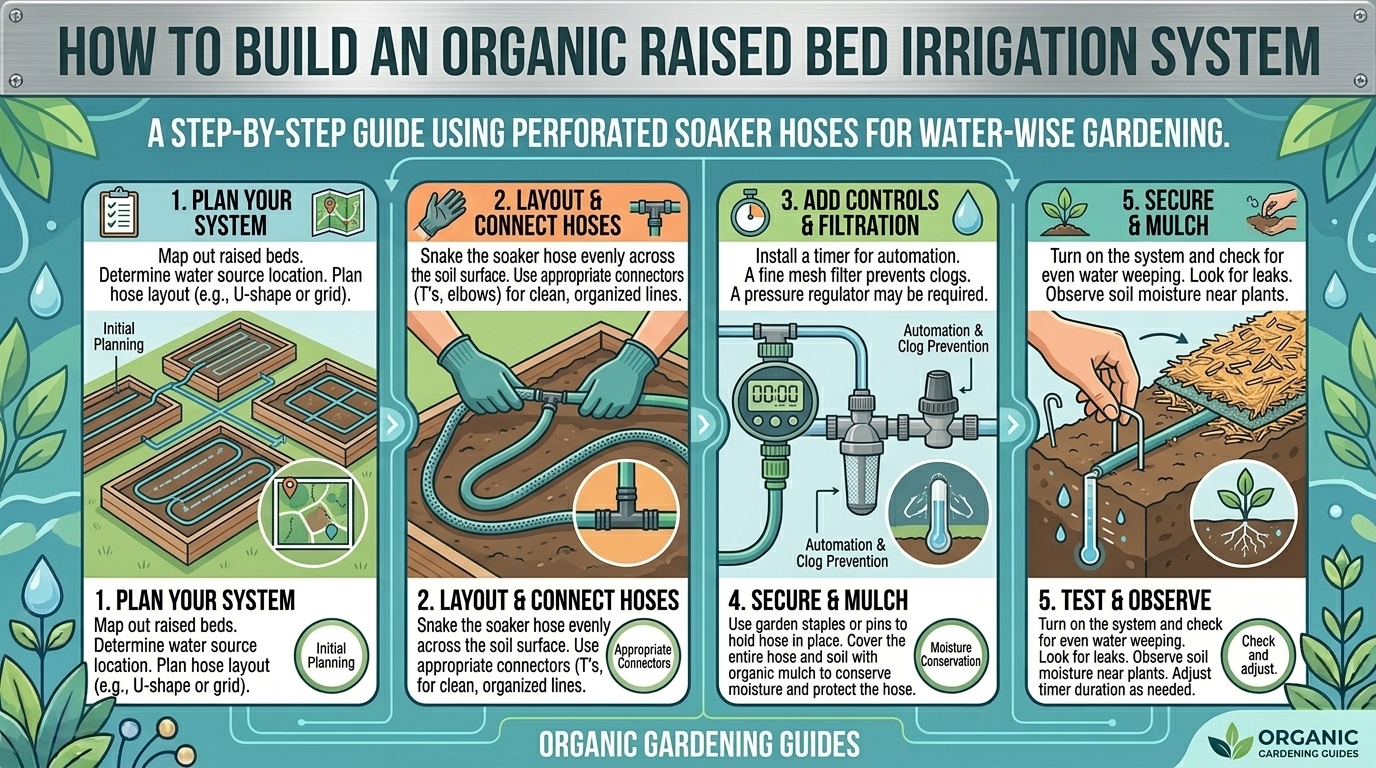
- Instead of giving your garden shallow, daily sprinkles that keep the top layer of mulch constantly soggy, switch to deep, infrequent irrigation (preferably using drip lines or soaker hoses tucked underneath the mulch layer). This keeps the top surface dry while roots stay deeply hydrated.
Step 3: Maintain the Proper Mulch Depth
Piling mulch too thick restricts airflow.
- Keep your organic mulch layer to a clean, breathable 2 to 3 inches deep.
- Never pile mulch against plant stems or tree trunks (the dreaded “mulch volcano”). Leave a 2-to-3-inch breathing ring around the base of plants to prevent moisture buildup and fungal rot against bark.
Step 4: Choose Fungal-Resistant Mulch Materials
If you live in a notoriously humid climate and want to minimize mold, avoid shredded forest products that contain high amounts of sapwood or uncomposted manure. Instead, opt for coarse cedar chips, cypress mulch, or clean pine straw, which decay much slower and resist aggressive mold blooms.
5. Regional Realities: Mulch Management Across U.S. Climates
Climate, humidity, and seasonal rainfall dictate how aggressively mold develops in your garden beds:
Washington State & Pacific Northwest
- Climate Challenge: Extended damp, cool autumns and springs create the ultimate breeding ground for saprophytic fungi and wood-decaying molds.
- Management Strategy: Rely on coarse, well-aerated conifer bark chips rather than dense fine composted mulches, and aggressively rake garden beds during dry spells to maximize airflow.
New York & Northeast
- Climate Challenge: Humid summer heat waves combined with frequent thunderstorms provide rapid moisture-heat spikes that trigger explosive slime mold and white mycelium growth.
- Management Strategy: Turn mulch beds regularly during mid-summer to prevent surface matting and maintain proper soil respiration.
Texas
- Climate Challenge: Heavy rainfall followed by intense baking sun can cause organic mulch to decompose rapidly in pockets while forming crusty barriers elsewhere.
- Management Strategy: Use durable hardwood mulches and ensure drip irrigation systems deliver water beneath the mulch layer rather than soaking the entire surface.
California & San Francisco
- Climate Challenge: Coastal fog in San Francisco provides persistent morning moisture that frequently sparks surface mold in shady garden beds, despite dry regional summers.
- Management Strategy: Rake shady courtyard mulch beds regularly to break up morning fog condensation layers and encourage rapid surface drying.
6. Frequently Asked Questions (FAQ)
1. Will mulch mold kill my tomato plants or flowers?
No. Saprophytic molds feed exclusively on dead wood and organic debris. They cannot infect or kill healthy living plants. If a plant dies in moldy mulch, the death is almost always due to over-watering, root rot, or poor soil drainage, not the surface mold itself.
2. Can mulch mold cause allergic reactions or health issues in humans?
In sensitive individuals, inhaling large quantities of fungal spores (such as artillery fungus or heavy mold dust) can trigger allergic reactions, asthma flare-ups, or respiratory irritation. If you are turning or shoveling dry, moldy mulch, wearing a basic dust mask is a smart precaution.
3. How do I get rid of artillery fungus on my house siding?
Artillery fungus spores are sticky and notoriously difficult to remove once dried onto vinyl siding, painted wood, or car paint. Scrape them gently with a plastic putty knife while wet, or use a mixture of warm water and oxygen bleach. To prevent recurrence, avoid placing organic mulch directly against exterior walls; use decorative gravel or stones for a 2-foot border around your home foundation instead.
4. Is dog vomit slime mold toxic to dogs or cats?
While its appearance is alarming, dog vomit slime mold is generally considered non-toxic to pets. However, to prevent any accidental stomach upset or ingestion by curious puppies, you can simply scoop the slime mold up with a shovel and toss it into the yard waste bin.
5. Should I remove moldy mulch and throw it away?
Usually, no. Moldy mulch is simply doing its job of breaking down into rich humus. Unless the mulch has become a solid, water-repellent mat that is suffocating your soil, you can simply rake and mix it into the surrounding earth or top it off with a fresh, thin layer of clean mulch.
6. Why does dyed black or brown mulch seem to mold faster?
Some dyed commercial mulches are produced from recycled pallet wood or construction debris that may contain high amounts of trapped moisture and uncomposted wood fibers. When bagged and sealed, these materials create an ideal internal incubator for fungal spores to thrive the moment they are spread out in a damp garden.
7. Does synthetic rubber mulch mold?
Rubber mulch (made from shredded tires) will not grow biological mold because it contains no organic carbon or nutrients for fungi to consume. However, horticulturists generally discourage rubber mulch in vegetable and flower gardens because it leaches toxic chemicals, absorbs intense heat, and offers zero nutritional benefits to the soil.
8. How can I tell the difference between beneficial fungus and a plant root disease?
Beneficial mulch fungi grow on top of or within the organic mulch layer and feature visible threads (mycelium), mushrooms, or powdery spores. Plant root diseases (like Phytophthora or Rhizoctonia) attack the actual root crown underground, causing wilting, black rotting roots, and plant collapse even when the surface mulch looks clean.
9. Can I spray fungicide on my mulch to kill the mold?
Spraying commercial fungicides on mulch is unnecessary and counterproductive. Fungicides will not permanently eliminate environmental fungal spores, and killing the natural decomposers slows down the healthy breakdown of organic matter that feeds your soil food web.
10. How often should I replace my garden mulch?
Rather than stripping out all your old mulch every year, a better practice is to apply a fresh, thin 1-inch top-dressing of organic mulch each spring. This refreshes the garden’s appearance while allowing the underlying layers to continue decomposing into nutrient-rich organic matter.
Conclusion
Discovering mold on your organic mulch can be startling, but it is actually a reassuring sign of a healthy, active biological ecosystem at work. Fungi and slime molds are nature’s master recyclers, safely breaking down carbon-rich wood chips and returning essential minerals back down into your garden soil.