Stepping out into your backyard vegetable garden should be a peaceful, rewarding experience. However, walking down your garden rows only to discover swiss chard riddled with flea beetle holes, tomato vines blanketed in hornworms, or cabbages decimated by imported cabbage worms can quickly turn joy into frustration.
For generations, the default reaction to garden pests has been reaching for chemical insecticides or synthetic bug sprays. Unfortunately, these harsh chemicals kill beneficial pollinators like honeybees and bumblebees, disrupt the soil microbiome, and leave toxic residues on the vegetables you plan to feed your family.
Instead of waging chemical warfare on your backyard ecosystem, savvy regenerative gardeners turn to an ancient, time-tested strategy: companion planting.
By strategically interplanting specific aromatic herbs, bright flowers, and protective botanical shields alongside your vegetables, you can confuse pests, mask scents, repel destructive insects naturally, and attract an army of beneficial predatory bugs.
Whether you are managing baking clay in Texas, balancing urban courtyard containers and raised beds in San Francisco, tackling suburban garden plots in New York, or working with moisture-rich soils across Washington State and California, this comprehensive guide explores the absolute best companion plants to protect your home vegetable garden from destructive insects.
1. The Science of Companion Planting: How Botanical Repellents Work
Companion planting is not mere folklore; it is rooted in biological ecology and chemical defense mechanisms. Plants communicate and defend themselves through complex organic chemistry.
[ Companion Defense Mechanisms ]
       │
       ├──> 1. Volatile Organic Compounds (VOCs) - Scent Masking
       │
       ├──> 2. Insect Repellent Exudates - Root & Leaf Deterrents
       │
       └──> 3. Beneficial Insect Attraction - Parasitic Wasps & Predators
1. Volatile Organic Compounds (VOCs)
Many aromatic herbs and flowers produce strong-smelling essential oils called Volatile Organic Compounds (VOCs). When pests like aphids, cabbage moths, or flea beetles fly over your garden, these powerful chemical scents overload their olfactory senses, masking the appetizing smell of your prized tomatoes, brassicas, and beans.
2. Attracting Beneficial Predators
Companion plants do more than just repel pests; they actively recruit garden allies. Brightly colored blossoms and nectar-rich umbels (like dill, fennel, and yarrow) attract predatory insects—such as lacewings, ladybugs, hoverflies, and parasitic mini-wasps—whose larvae consume hundreds of destructive soft-bodied pests daily.
2. The Best Companion Plants for Pest Repulsion
Here are the masterclass companion plants every home gardener should integrate into their vegetable beds:
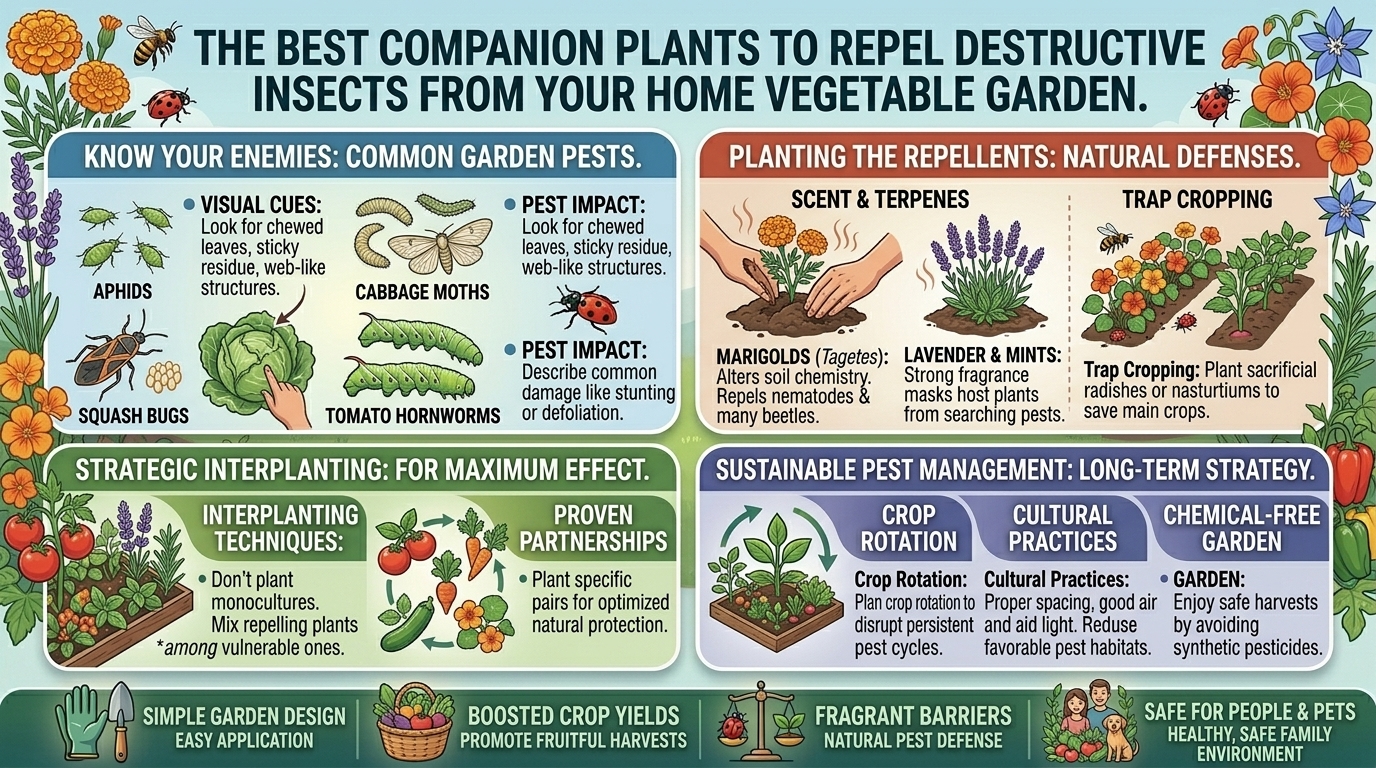
1. French Marigolds (Tagetes patula)
Marigolds are the undisputed champions of organic pest control.
- What They Repel: Nematodes (microscopic root-eating roundworms), tomato hornworms, squash bugs, and whiteflies.
- How They Work: Marigold roots exude a natural organic chemical compound called alpha-terthienyl, which suppresses root-knot nematodes in the soil. Simultaneously, their pungent foliage releases a sharp scent that confuses flying pests.
- Best Pairings: Plant French marigolds directly alongside tomatoes, eggplants, peppers, and squash.
2. Alliums (Garlic, Chives, Onions, and Leeks)
Members of the allium family pack a powerful aromatic punch fueled by sulfur compounds.
- What They Repel: Aphids, Japanese beetles, carrot rust flies, spider mites, and rabbits.
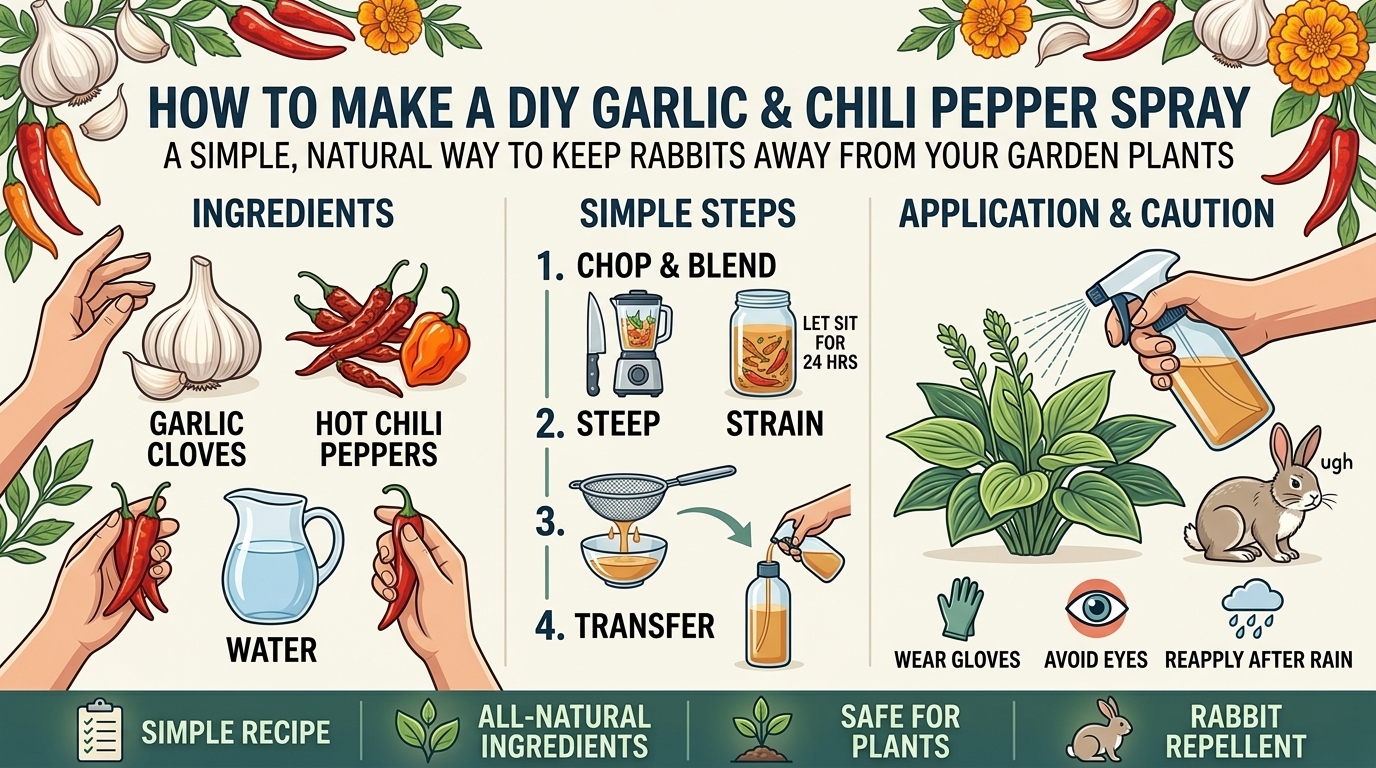
- How They Work: The strong sulfur scent acts as a natural olfactory deterrent, making it nearly impossible for pests to locate their preferred host plants. Furthermore, chives and garlic possess mild systemic antifungal properties.
- Best Pairings: Plant chives around the base of rose bushes and fruit trees to deter aphids, and tuck garlic bulbs between carrot and lettuce rows.
3. Basil (Ocimum basilicum)
Beyond making delicious pesto, sweet basil is a premier protective companion.
- What They Repel: Tomato hornworms, thrips, houseflies, and mosquitoes.
- How It Works: Basil emits strong aromatic oils (like linalool and eugenol) that mask the scent of neighboring tomato plants, hiding them from egg-laying hornworm moths.
- Best Pairings: Interplant sweet basil directly between tomato plants in your garden beds or containers.
4. Nasturtiums (Tropaeolum majus)
Nasturtiums are vibrant, edible flowering plants that serve a dual purpose as both a repellent and a “trap crop.”
- What They Repel: Aphids, squash bugs, cucumber beetles, and whiteflies.
- How They Work: Nasturtiums emit a peppery mustard oil scent that deters many insects. However, they are so intensely attractive to aphids that pests will willingly swarm the nasturtiums instead of your prize vegetables, sacrificing themselves to protect your harvest.
- Best Pairings: Plant nasturtiums around the outer perimeter of squash, cucumber, and brassica beds.
5. Mint (Peppermint and Spearmint)
- What They Repel: Ants, flea beetles, cabbage moths, rodents, and aphids.
- How They Work: The intense menthol aroma overpowers pest sensors. Crucial Growing Tip: Mint is extremely aggressive and spreads rapidly via underground runners. Always plant mint in containers or bottomless pots sunk into the soil to keep its roots from taking over your garden beds.
3. Regional Companion Planting Strategies Across the U.S.
Regional climates and insect pressures dictate which companion plants thrive best in your backyard:
California & San Francisco
- Climate Challenge: Mild coastal climates and urban backyards require compact companion plants that maximize small spaces while deterring aphids and thrips.
- Strategy: Plant dense borders of sweet alyssum and dwarf French marigolds in San Francisco raised beds and containers. Alyssum attracts hoverflies, whose larvae consume hundreds of aphids.
Texas
- Climate Challenge: Intense summer heat, heavy clay soils, and aggressive populations of squash bugs and nematodes.
- Strategy: Plant robust French marigolds and perennial herbs like rosemary and lavender alongside heavy-feeding tomatoes and squash to withstand dry heat and deter soil nematodes.
New York
- Climate Challenge: Humid summer rainstorms trigger rapid fungal diseases and pest migrations across suburban vegetable plots.
- Strategy: Interplant alliums (chives and garlic) and aromatic basil to deter Japanese beetles and aphids during humid July and August peak pest windows.
Washington State
- Climate Challenge: Cool, damp springs attract slugs, root maggots, and flea beetles to young brassica crops.
- Strategy: Plant strong-scented alliums, rosemary, and thyme around kale and cabbage beds to confuse root maggots and flea beetles during damp spring months.
4. Frequently Asked Questions (FAQ)
1. Do companion plants completely eliminate the need for pest control?
No companion plant provides 100% immunity against every pest. Instead, companion planting significantly reduces pest pressure, confuses insects, and attracts beneficial predators, creating a balanced backyard ecosystem where minor pest outbreaks are naturally controlled before becoming infestations.
2. Can I eat the companion plants and flowers in my vegetable garden?
Yes! Many of the best companion plants—including basil, chives, garlic, nasturtium flowers and leaves, dill, and cilantro—are completely edible and add wonderful flavor and color to summer salads and culinary dishes.
3. Will marigolds repel all types of garden pests?
While French marigolds (Tagetes patula) are exceptional at repelling nematodes, tomato hornworms, and whiteflies, they do not repel every pest. For instance, spider mites and certain slugs are largely unfazed by marigolds, which is why diversifying your companion plants is essential.
4. How close do companion plants need to be to the vegetables they protect?
For aromatic herbs like basil, chives, and mint to successfully mask scents, they should be planted within 1 to 2 feet of your target vegetable crops. For trap crops like nasturtiums, planting them just on the outer perimeter of the bed works effectively.
5. Will mint choke out my other vegetable plants if planted in the ground?
Yes. Mint spreads aggressively through underground rhizomes and will quickly overtake a garden bed, choking out delicate vegetable roots. Always contain mint in pots, containers, or restricted barrier borders.
6. Do companion plants attract pollinators to my garden?
Absolutely! Flowering companion plants like sweet alyssum, borage, nasturtiums, and herbs in bloom are irresistible to honeybees, bumblebees, and native pollinators, ensuring superior fruit set on your squash, tomatoes, and peppers.
7. Can I plant companion flowers in containers and raised beds?
Yes! Companion planting works exceptionally well in raised beds and large containers. Pairing a tomato plant with a basil plant and a small French marigold in a large container creates a mini self-contained protective ecosystem.
8. What is a “trap crop” in companion planting?
A trap crop is a sacrificial companion plant (like nasturtiums or blue Hubbard squash) that pests prefer eating more than your cash crop vegetables. Pests swarm the trap crop, allowing you to easily manage or remove them without harming your main harvest.
9. Are there companion plants that actually attract bad pests?
Yes. Avoid planting fennel near dill or tomatoes, as they can cross-pollinate and stunt each other. Additionally, planting wild mustard too close to your cabbage patch can attract cabbage loopers rather than deterring them.
10. How do I start companion planting in an existing garden bed?
You can start immediately! Simply tuck small starts of basil, chives, marigolds, or parsley into the empty gaps between your existing tomato, pepper, and brassica plants. Mixing flowers and herbs directly into your vegetable rows transforms a monoculture into a resilient polyculture.
Conclusion
Utilizing companion plants to repel destructive insects from your home vegetable garden is the ultimate sustainable, chemical-free way to protect your harvest. By harnessing the aromatic defense of herbs like basil and chives, the nematode-fighting power of marigolds, and the trap-crop brilliance of nasturtiums, you create a vibrant, self-balancing ecosystem.
Whether you are gardening on a sunny San Francisco deck, managing heavy clay in Texas, or cultivating plots across New York, Washington, and California, smart companion planting guarantees a flourishing, naturally protected backyard garden year after year.