Growing tomatoes indoors is one of the most rewarding gardening adventures you can undertake. Whether you are cultivating dwarf bush tomatoes on a sunny windowsill in San Francisco, managing a high-rise apartment setup in New York City, or maintaining an indoor grow tent in Seattle, Washington, harvesting a sun-ripened, homegrown tomato right from your living space is an incredible achievement.
However, nothing causes panic quite like walking over to your indoor garden and noticing that the lush green leaves of your tomato plants are beginning to turn a sickly yellow, curl at the edges, and drop off onto the soil.
Tomato plants are notoriously dramatic communicators. When something in their environment or care routine goes wrong, yellowing leaves (known botanically as chlorosis) and leaf drop (abscission) are their primary distress signals.
Because indoor home gardens lack the natural buffering capacity of outdoor native soils and weather cycles, indoor tomatoes require precise care. This comprehensive, expert-backed guide breaks down every possible reason your indoor tomato leaves are turning yellow and falling off, along with actionable steps to fix the problem and restore your harvest.
1. The Core Culprits: Watering Imbalances (Too Much or Too Little)
By far, the number one reason indoor tomato leaves turn yellow and drop off relates directly to how moisture is managed in your container or indoor bed.
A. Overwatering and Root Suffocation
Because indoor growers are often eager to care for their plants, it is easy to fall into the trap of loving them to death with water.
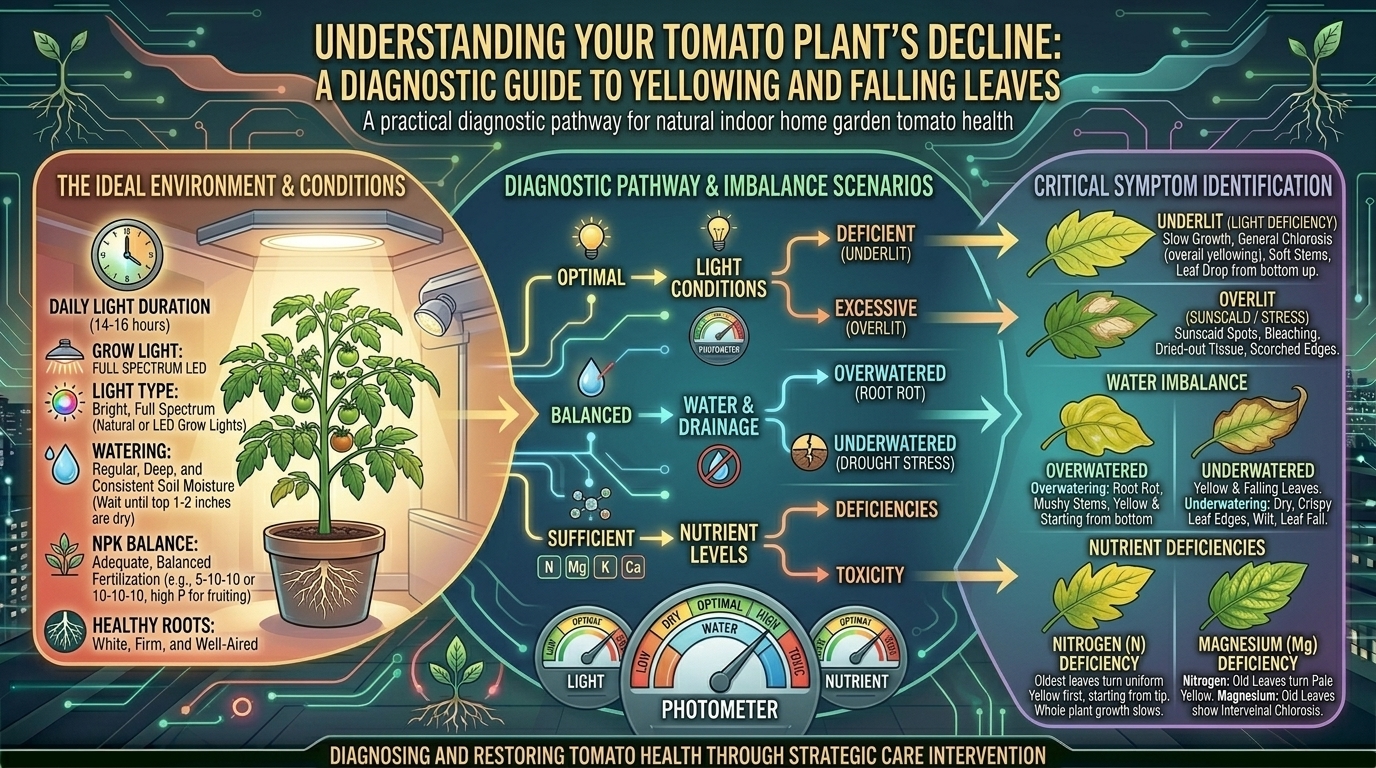
- The Science: When you water too frequently without letting the soil dry out, the air pockets in your potting mix fill entirely with water. Plant roots cannot swim; they need oxygen to survive. Deprived of oxygen, the roots suffocate, die, and develop root rot.
- The Symptoms: Lower leaves turn a bright, uniform yellow, feel limp or water-soaked, and drop off effortlessly. Growth stalls entirely.
B. Severe Underwatering
On the flip side, letting your indoor potting soil dry out completely into a brick-like consistency causes extreme stress.
- The Science: When roots experience drought, the plant shuts down its lower biological functions to conserve moisture for the top growing tips.
- The Symptoms: Leaves turn yellow and crispy at the edges, curl upward, and drop off in dry, crunchy flakes.
2. Nutrient Deficiencies in Restricted Indoor Soils
Unlike outdoor garden beds where roots can stretch deep into the earth to forage for minerals, indoor tomato plants live in a finite amount of potting soil. Once the available nutrients are used up, deficiency symptoms appear rapidly.
A. Nitrogen Deficiency (Mobile Nutrient)
- What it does: Nitrogen is essential for lush green vegetative growth. Because nitrogen is mobile, the plant pulls it away from older, lower leaves to feed new top growth.
- The Symptoms: Older, lower leaves turn a pale, uniform yellow (starting from the veins outward), while the plant’s overall growth slows down and stems look thin and purplish.
B. Magnesium Deficiency
- What it does: Magnesium is the core atom in chlorophyll molecules. Without it, the plant cannot photosynthesize effectively.
- The Symptoms: Interveinal chlorosis—meaning the leaf tissue between the veins turns yellow while the veins themselves remain stubbornly green. Eventually, the edges curl and the leaf drops.
3. Environmental and Lighting Stressors Indoors
Indoor spaces present unique environmental hurdles—ranging from stagnant air to erratic temperatures—that can trigger leaf drop in tomatoes.
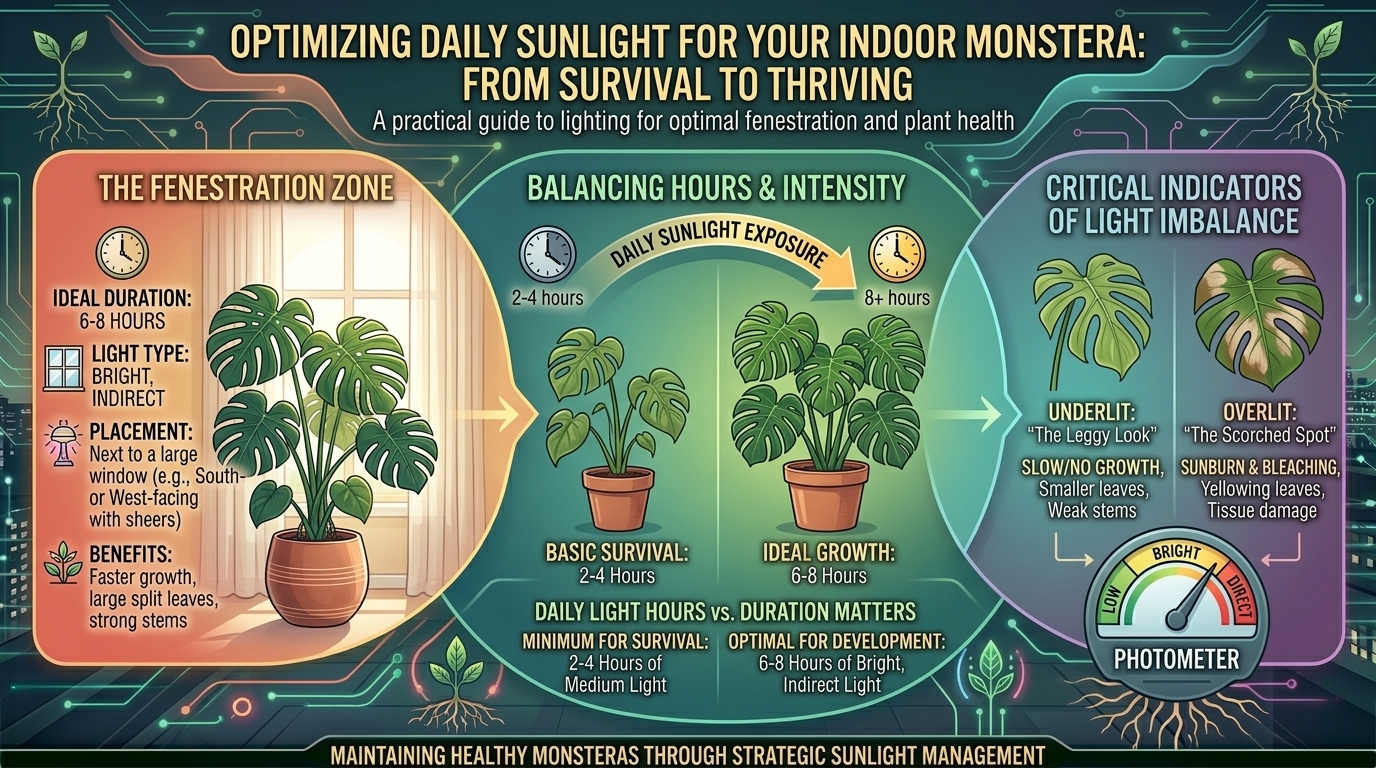
- Insufficient Light: Tomatoes are absolute sun-worshippers. They require 6 to 8 hours of direct sunlight (or 12 to 14 hours under intense LED grow lights). If an indoor tomato is placed in a dim corner or a north-facing window, it cannot produce enough energy via photosynthesis. It will cannibalize its own lower leaves, turning them yellow and shedding them to conserve energy.
- Temperature Fluctuations and Drafts: Keeping your indoor tomato plants right next to a blasting winter heater, an air-conditioning vent, or a drafty window frame causes severe thermal shock. Rapid temperature swings disrupt cellular water transport, leading to sudden leaf curl and yellowing.
- Lack of Air Circulation: Stagnant indoor air creates a microclimate of high humidity around dense plant foliage, inviting fungal spores to germinate on damp leaves.
4. Indoor Pests and Fungal Pathogens
Even indoors, pests and diseases can find your tomato plants, especially if you brought herbs or starter plants in from outdoors or left windows open during warm weather.
- Spider Mites: These microscopic arachnids thrive in warm, dry indoor air (common with indoor heating). They pierce plant cells to suck sap, causing tiny yellow stippling marks that eventually coalesce into large yellow patches and dropped leaves. Look for ultra-fine webbing underneath the leaves.
- Fungal Leaf Spots (Early Blight / Septoria): If indoor humidity is too high and leaves stay wet after watering, airborne fungal spores can cause concentric brown or yellow rings on lower leaves, leading to rapid defoliation.
5. Step-by-Step Recovery Protocol for Your Indoor Tomatoes
If your indoor tomato plants are currently dropping yellow leaves, don’t despair! Follow this systematic recovery guide:
- Inspect the Soil Moisture: Stick your finger 2 inches deep into the potting mix. If it feels soggy and swampy, stop watering immediately. Allow the top half of the soil to dry out completely. If it is bone dry, give the pot a deep, thorough soaking until water drains freely from the bottom.
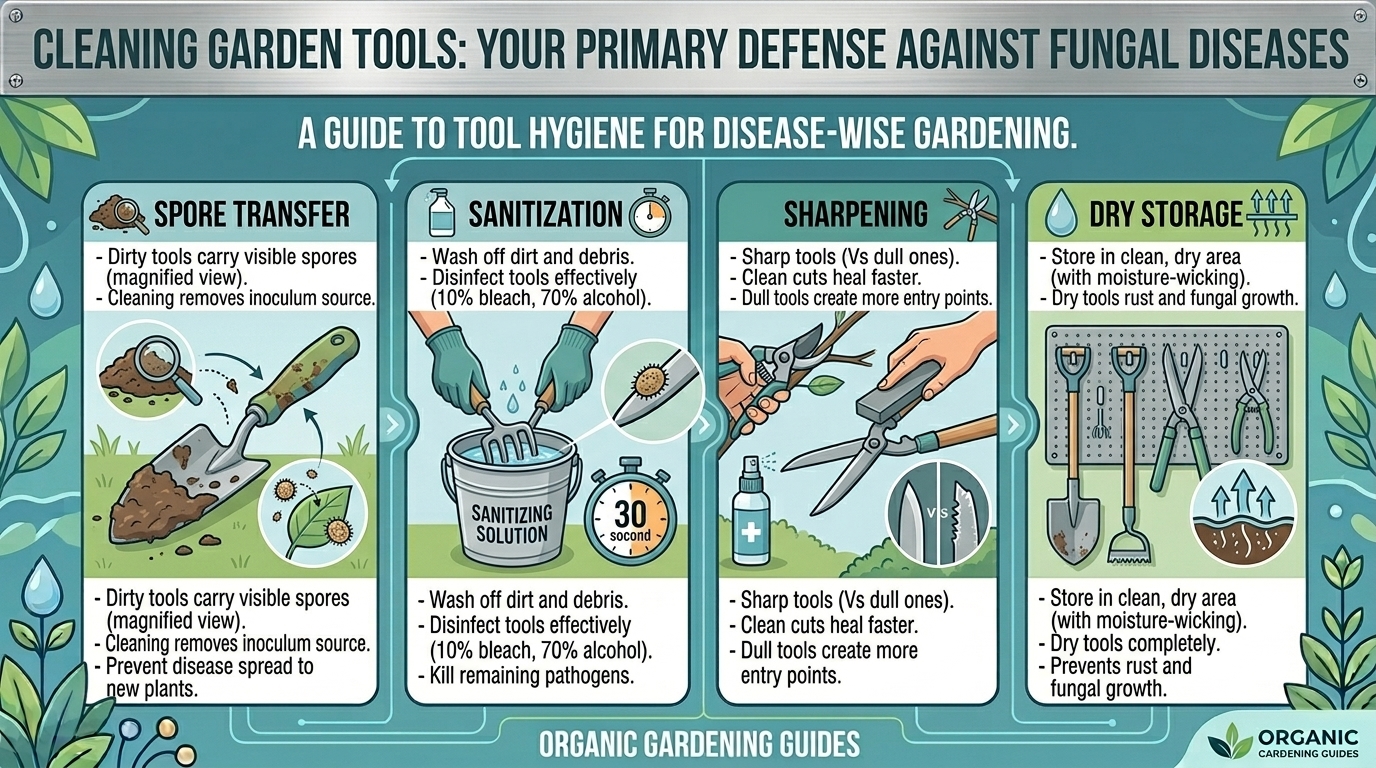
- Prune Damaged Foliage: Use sterile bypass pruners to cleanly snip away heavily yellowed, diseased, or dying leaves. This redirects the plant’s energy toward healthy upper growth and improves airflow around the base.
- Check Your Lighting Setup: Relocate your tomato container to your brightest south- or east-facing window, or supplement with a full-spectrum LED grow light positioned 12 to 18 inches above the canopy.
- Feed with a Balanced Organic Fertilizer: If you haven’t fertilized in weeks, apply a water-soluble organic fertilizer rich in balanced macro-nutrients and micronutrients (such as liquid fish emulsion or organic kelp/bloom meal tea) designed specifically for fruiting vegetables.
- Increase Air Movement: Set a small, oscillating desk fan on low speed near your indoor garden. Gentle air movement strengthens stems and prevents stagnant moisture from clinging to leaves.
6. Frequently Asked Questions (FAQ)
1. Should I pluck off yellow leaves from my indoor tomato plant immediately?
Yes. Once a tomato leaf turns completely yellow, it is no longer photosynthesizing or helping the plant. In fact, leaving dead or dying foliage on the plant invites pests and fungal spores. Snip them off cleanly at the stem base.
2. Can overwatering really cause leaves to turn yellow?
Absolutely. Overwatering drowns plant roots, cutting off their oxygen supply. Without oxygen, roots die and cannot transport water and nutrients upward, causing the lower leaves to turn yellow, limp, and drop off.
3. How many hours of light do indoor tomato plants need daily?
Indoor tomatoes require at least 6 to 8 hours of direct sunlight (such as a bright unobstructed south-facing window) or 12 to 14 hours under high-output full-spectrum LED grow lights to prevent light starvation and yellowing leaves.
4. What is the difference between natural leaf aging and a nutrient deficiency?
Natural aging affects only the oldest, lowest leaves at the very bottom of the plant, which naturally turn yellow and fall off as the vine grows upward. Nutrient deficiencies or watering issues affect multiple leaves across various tiers of the plant simultaneously.
5. Are tomato plants sensitive to indoor heating vents?
Yes. Direct blasts of hot air from a furnace or radiator rapidly dehydrate tomato leaves, causing the edges to curl, turn yellow, and drop prematurely. Keep your tomatoes away from direct HVAC airflow.
6. Why are the veins of my tomato leaves green, but the rest is yellow?
This is a classic sign of a magnesium or iron deficiency. The plant lacks the core mineral needed to produce chlorophyll between the leaf veins. A gentle drench with a balanced organic fertilizer or a diluted Epsom salt solution (1 tablespoon per gallon of water) can help correct magnesium shortages.
7. Do indoor tomatoes need artificial pollination?
Yes! Outdoors, wind and bees pollinate tomato blossoms. Indoors, you have to play the bee. Gently shake your tomato plant’s main stems every day when flowers open, or use an electric toothbrush held against the flower stems to release pollen and ensure fruit set.
8. Can spider mites cause indoor tomato leaves to turn yellow?
Yes. Spider mites feed on plant sap by piercing individual cells, creating a speckled yellow or white appearance on the upper surface of the leaves, followed by fine webbing on the undersides and eventual leaf drop.
9. How do I know if my indoor tomato pot is draining properly?
Check the bottom of your pot. It must have adequate drainage holes. If water pools in the saucer for more than 30 minutes after watering, your soil is retaining too much moisture or the drainage holes are clogged, putting your plant at risk of root rot.
10. Can I save a tomato plant that has lost most of its leaves?
It depends on how healthy the main stem and root system are. If the top growing tip is still green and vigorous, you can correct the underlying care issue (watering or light), and the plant will often push out fresh new growth. If the main stem has turned brown and mushy at the base, the plant cannot be saved.
Conclusion
Finding yellow and falling leaves on your indoor home garden tomato plants can be alarming, but it is almost always a solvable symptom of a specific environmental or nutritional stressor. By evaluating your watering habits, upgrading your indoor lighting, checking for subtle pests, and providing balanced organic nutrition, you can nurse your tomato plants back to vibrant health and enjoy a bountiful indoor harvest.