One of the most rewarding aspects of building a natural, organic home garden—whether you are managing a sunny raised bed in Austin, Texas, cultivating a balcony container setup in San Francisco or New York City, or tending a backyard plot in Seattle, Washington—is closing the loop on your household sustainability.
Instead of throwing vegetable peels, coffee grounds, and fruit scraps into the trash, millions of eco-conscious home gardeners are turning their kitchen waste into “black gold”: nutrient-rich organic compost.
Using homemade compost to feed your essential base home garden plants is the ultimate way to provide natural, slow-release macro- and micronutrients without buying synthetic chemical fertilizers. However, if you are new to composting, a major question naturally arises: Can I safely use natural kitchen food waste compost to fertilize my plants without harming them or inviting pests?
The short answer is yes, absolutely—provided you follow proper composting rules. Kitchen scraps can transform into a powerhouse fertilizer, but mismanaging your compost bin can introduce mold, foul odors, disease pathogens, and uninvited pests.
This comprehensive, expert-backed guide breaks down everything you need to know about transforming kitchen scraps into safe, high-grade garden fertilizer.
1. The Science of Composting: How Food Scraps Become Fertilizer
To understand how kitchen waste nourishes plants, you must look at what happens inside a healthy compost pile. Composting is not merely letting food rot; it is a controlled, aerobic (oxygen-requiring) decomposition process driven by billions of beneficial microorganisms, fungi, and earthworms.
When you combine your kitchen scraps with carbon-rich organic matter, these microbes break complex organic compounds down into simple, bio-available minerals. When you add this finished compost to your base garden soil, you are feeding the soil food web. The microbes and nutrients in the compost improve soil structure, increase water retention, and supply a gentle, balanced stream of Nitrogen, Phosphorus, Potassium (NPK), and trace minerals directly to plant roots.
2. The Golden Ratio: “Greens” vs. “Browns”
The biggest mistake beginners make when using kitchen food waste for compost is throwing only food scraps into a bin. Kitchen scraps are wet and nitrogen-heavy; without enough carbon, the pile turns into a soggy, stinky, anaerobic sludge.
To make safe, sweet-smelling, nutrient-dense garden compost, you must balance your ingredients:
A. Kitchen Scraps = “Greens” (Nitrogen-Rich)
These are your wet, raw food waste items that provide nitrogen and moisture:
- Fruit and vegetable peelings, cores, and scraps
- Coffee grounds and unbleached paper coffee filters
- Tea leaves (remove synthetic tea bag meshes first)
- Old salad greens and bruised vegetables
B. Yard and Household Waste = “Browns” (Carbon-Rich)
These are your dry, fibrous materials that provide structure, air pockets, and carbon:
- Shredded brown cardboard and unprinted paper bags
- Dry autumn leaves and twigs
- Straw or untreated wood shavings
- Torn egg cartons
The Ideal Ratio: Aim for roughly 3 parts Browns to 1 part Greens by volume. This keeps the pile airy, accelerates decomposition, and eliminates bad odors.
3. What Kitchen Waste is Safe (and What to Avoid)
Not all kitchen scraps belong in a home compost bin destined for vegetable gardens. Knowing what is safe and what is toxic prevents disease and pest infestations.
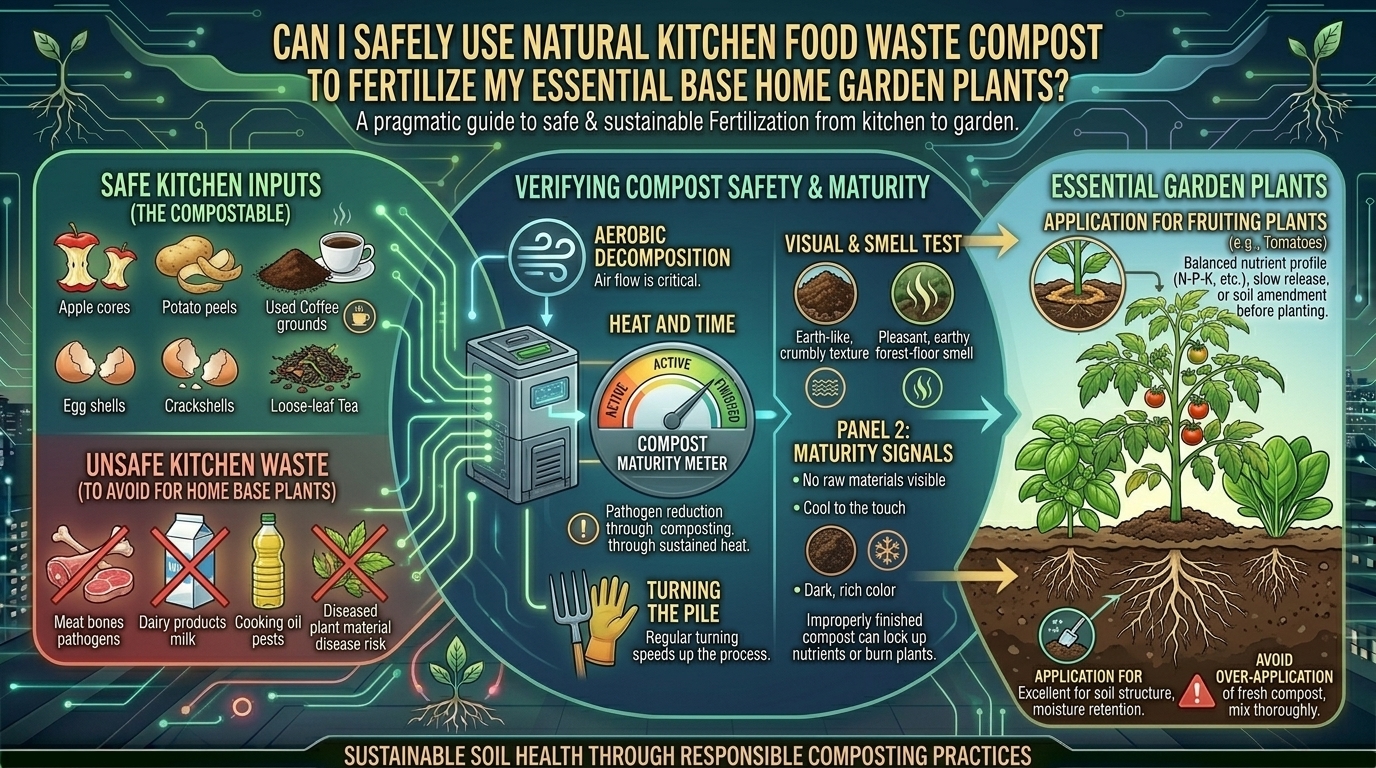
Safe Kitchen Scraps for Your Garden Compost:
- Fruit and Veggie Trimmings: Apple cores, potato skins, banana peels, carrot tops, and squash guts.
- Coffee Grounds and Filters: Highly prized by worms and beneficial soil bacteria; slightly acidic, making them wonderful for tomatoes and berries.
- Eggshells: Wash them first, crush them into a fine powder, and add them to supply slow-release calcium (great for preventing blossom-end rot in peppers and tomatoes).
- Nut shells: (Excluding black walnut, which contains natural herbicides).
Dangerous Kitchen Scraps to Keep Out:
- Oils, Fats, Greases, and Dairy: Butter, cheese, milk, salad dressings, and cooking oils coat organic matter, repel water, lack oxygen, and will attract rodents, raccoons, and neighborhood pests to your garden.
- Meat, Fish, and Bones: Animal proteins rot slowly, produce horrific odors, and are a primary magnet for flies, maggots, and scavenging animals.
- Pet Waste: Dog or cat feces can harbor dangerous parasites and pathogens (Toxoplasmosis, E. coli) that should never enter a vegetable garden soil ecosystem.
- Diseased Plant Material or Treated Wood: Avoid scraps from plants heavily treated with systemic pesticides or plants suffering from aggressive fungal blights.
4. Indoor vs. Outdoor Composting Methods for Small Spaces
Depending on where you live—whether you have a spacious backyard in Texas or a compact apartment balcony in San Francisco or New York—different composting methods suit different spaces.
A. Traditional Outdoor Compost Piles or Bins
Best for suburban yards with open ground space. A 3-foot by 3-foot pile retains enough internal heat (reaching 130°F to 160°F) to rapidly break down food waste and naturally sterilize weed seeds and plant pathogens.
B. Tumbler Composters
Great for tidy suburban backyards or patios. These sealed plastic drums elevate your compost off the ground, making it effortless to rotate and mix your scraps while keeping out rodents.
C. Worm Composting (Vermicomposting)
The ultimate solution for apartment and balcony gardeners! Using a compact indoor worm bin stocked with Red Wiggler worms (Eisenia fetida), you can feed kitchen vegetable scraps directly to the worms. They rapidly consume the waste and produce worm castings—one of the richest, safest organic fertilizers on earth.
5. How to Know When Your Kitchen Compost is Ready to Use
Never apply raw kitchen scraps directly onto your garden soil as surface mulch (unless using specialized bokashi methods or trench composting), as rotting food attracts pests and can burn tender plant roots with excess acidity.
Your compost must be fully “finished” before applying it to your base garden:
- Appearance: It should look dark brown, crumbly, and uniform, resembling rich forest floor humus. You should not be able to recognize individual food scraps.
- Texture: It should feel soft and moist like a wrung-out sponge, not sticky or heavy.
- Smell: It should have a sweet, earthy, pleasant smell of fresh rain and rich soil. If it smells like ammonia, sulfur, or rotting garbage, it is not ready and needs more carbon (browns) and oxygen (turning).
6. Frequently Asked Questions (FAQ)
1. Can I put citrus peels (lemons and oranges) into my compost?
Yes, but in moderation. Citrus peels are acidic and break down slowly due to natural oils and antimicrobial compounds. If you compost them, chop them into small pieces and ensure your overall pile is well-balanced with alkaline materials like crushed eggshells or wood ash.
2. Will kitchen compost attract rats and mice to my home garden?
If you compost correctly—meaning you never add meat, dairy, oils, or exposed food scraps—and bury your fresh kitchen waste under a thick layer of carbon-rich “browns” (like shredded cardboard or dry leaves), you will not attract pests. If using an apartment balcony, a sealed tumbler or indoor worm bin completely eliminates pest access.
3. Can I use coffee grounds directly on my garden soil instead of composting them?
Yes, in moderation. Used coffee grounds are slightly acidic and contain nitrogen. However, dumping thick layers of wet coffee grounds directly onto plant soil can form a dense, hydrophobic crust that blocks water. It is always better to mix them into your compost bin or worm bin first.
4. Are onion and garlic scraps safe for compost?
Yes! There is a common myth that onions and garlic kill beneficial compost worms. While earthworms may avoid massive concentrated piles of raw onions, standard kitchen quantities decompose safely and pose zero threat to a balanced, active compost pile.
5. How long does it take for kitchen waste to turn into usable compost?
In a hot, well-managed outdoor compost pile that is turned regularly, kitchen waste can transform into finished compost in 2 to 3 months. In a stationary pile or indoor vermicomposting bin, it typically takes 3 to 6 months.
6. Do I need to chop up my kitchen vegetable scraps before composting?
You don’t have to, but chopping them into smaller pieces drastically speeds up decomposition. Smaller pieces increase the surface area available to beneficial microbes and composting worms, allowing them to break down the food much faster.
7. Can I compost cooked food and leftovers?
It is generally best to avoid cooked foods, oily leftovers, and sauces in a standard home compost bin. Cooked foods often contain salts, oils, and dairy that attract pests and disrupt the microbial balance of a home compost pile. Stick strictly to raw vegetable trimmings and fruit peels.
8. Is moldy food from my refrigerator safe to put in the compost?
Yes! The white or green molds you see growing on old bread, cheese (if dairy is avoided, though bread mold is fine), or vegetables are natural saprophytic fungi. They are part of the decomposition process and will be broken down harmlessly inside an active compost bin.
9. Will my finished kitchen compost smell bad when I add it to my garden?
Not at all. Properly finished compost has completely lost the odor of decaying food and smells exclusively like rich, clean, earthy woodland soil. If your compost still smells sour or foul, it is not finished yet.
10. Can I use 100% pure kitchen compost to fill my plant pots?
While compost is an incredible source of nutrients, pure compost is often too rich, dense, and holds too much water to be used by itself in containers. Always mix your finished kitchen compost (roughly 20% to 30%) with structural bases like coco coir and perlite to create a balanced, well-draining potting soil.
Conclusion
Transforming your natural kitchen food waste into rich organic compost is one of the most sustainable, cost-effective, and rewarding practices you can adopt as a home gardener. By balancing your greens and browns, avoiding meat and dairy, and ensuring your compost is fully cured before application, you can safely feed your essential base home garden plants with nutrient-dense, chemical-free fertilizer.