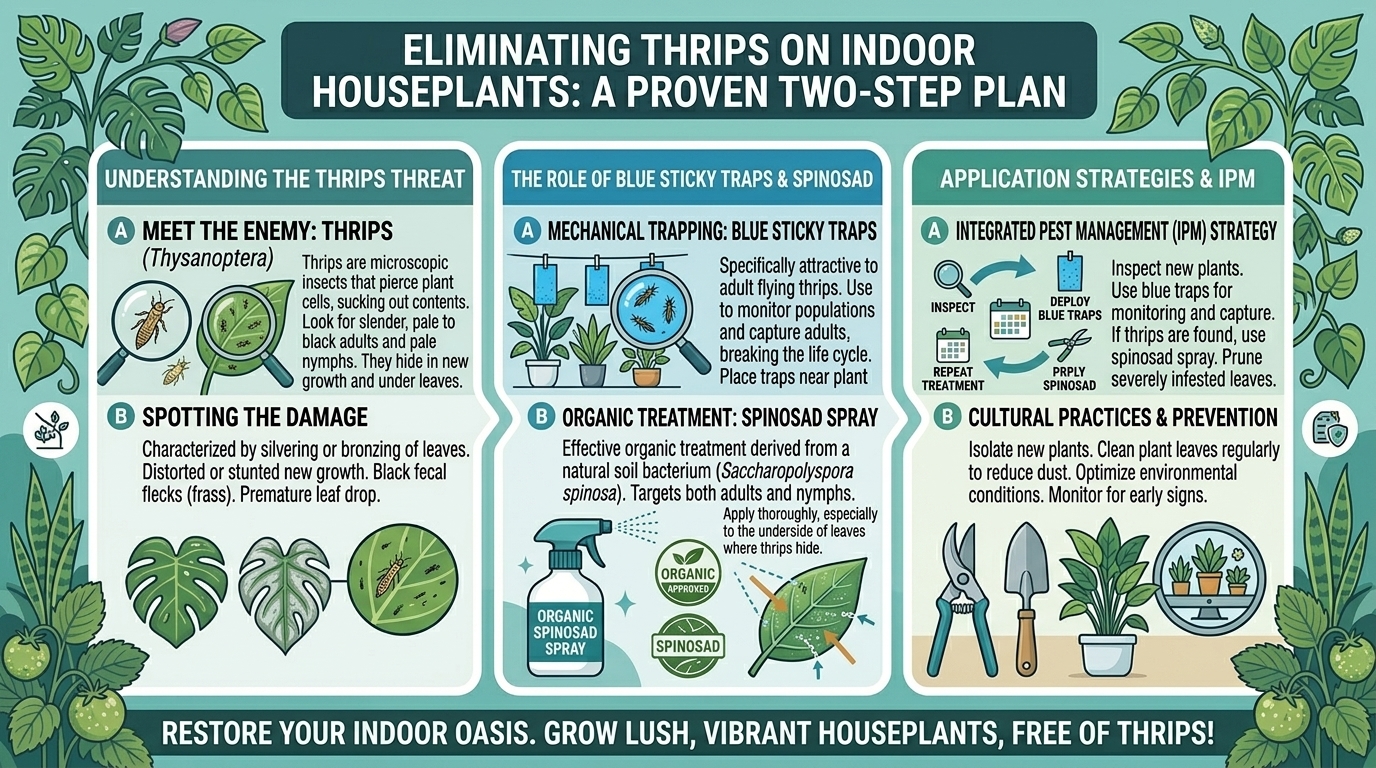
Thrips are among the most frustrating and destructive pests indoor plant hobbyists can face. These microscopic, slender insects pierce plant cells and suck out the sap, leaving behind unsightly silvery patches, distorted new growth, and black, tar-like spots of excrement. If left unchecked, a severe thrips infestation can quickly kill prized indoor houseplants like Monsteras, Alocasias, Fiddle Leaf Figs, and African Violets.
Fortunately, you do not need to rely on harsh, synthetic chemical pesticides that smell terrible and pose risks to your household pets and family. By combining blue sticky traps with organic spinosad spray, you have a powerhouse, dual-action, eco-friendly protocol that targets thrips at every stage of their life cycle.
Understanding the Enemy: Why Thrips Are So Hard to Kill
Before jumping into the treatment protocol, it helps to understand why thrips are notorious for bouncing back. Thrips have a rapid, multi-stage life cycle:
- Eggs: Female thrips slit plant tissue and lay eggs safely inside the leaves or stems, protecting them from many surface-level sprays.
- Larvae: Once hatched, the pale, wingless larvae immediately begin feeding voraciously on plant sap.
- Pupae: Unlike many pests, thrips drop down into the soil or crawl to sheltered crevices to pupate. During this non-feeding stage, they are entirely immune to foliar sprays.
- Adults: The adults develop wings, fly (or jump) from plant to plant, and lay the next generation.
Because of this cycle, spraying once and hoping for the best will not work. You need a continuous, systematic approach.
Step 1: The First Line of Defense – Blue Sticky Traps
Most gardeners reach for yellow sticky traps, and while yellow traps are great for fungus gnats and whiteflies, thrips are uniquely attracted to the color blue.
Why Blue Sticky Traps Work Wonders
Scientific studies show that thrips possess a visual attraction to specific blue wavelengths. Hanging or placing blue sticky cards near your houseplants acts as an irresistible visual beacon for adult thrips as they take flight or move between plants.
How to Use Blue Sticky Traps Effectively
- Placement is Key: Place the traps just a few inches above the soil line or right at canopy level where thrips are most active.
- Coverage: Use one trap per major plant or group of clustered houseplants.
- Monitoring: Check the traps weekly. Not only do they catch adult flyers, but they also serve as an early warning system to let you know if an infestation is brewing or fading.
Step 2: The Knockout Punch – Organic Spinosad Spray
While sticky traps catch flying adults, they do nothing for the larvae actively chewing on your leaves or the eggs hidden inside the plant tissue. This is where Spinosad comes in.
What is Spinosad?
Spinosad is a completely organic, naturally occurring soil bacterium (Saccharopolyspora spinosa) discovered in a Caribbean soil sample. When thrips ingest or come into contact with spinosad, it targets their nervous system, causing paralysis and death within 24 to 48 hours. Best of all, it is OMRI-listed for organic gardening, breaks down safely in sunlight within a few days, and is safe for humans and pets once dry.
How to Mix and Apply Spinosad
- Choose a Concentrate or Ready-to-Use Formula: Look for an organic garden spray containing spinosad (such as Captain Jack’s Deadbug Brew). If using a concentrate, mix it according to label directions—typically about 2 to 4 fluid ounces per gallon of water in a clean spray bottle.
- Timing Matters: Apply your spray in the evening or when your indoor plants are out of direct sunlight. Spraying wet leaves under hot, direct indoor grow lights or sunny windows can cause leaf scorch.
- Thorough Coverage: Spray every single surface of the plant. Do not forget:
- The tops of the leaves.
- Crucially, the undersides of the leaves (where thrips love to hide and feed).
- Stems, petioles, and the very center growth points (crowns) where new leaves emerge.
- Soil Drench (Optional/Advanced): Because some thrips pupate in the top layer of soil, you can use a mild spinosad solution to water the soil once every two weeks to catch any developing pupae.
Step 3: The Ultimate 4-Week Eradication Protocol
Consistency is the secret weapon of successful pest management. Follow this step-by-step schedule to wipe out a thrips population completely:
- Day 1: Deep Clean & Initial Treatment
- Take your houseplants to the sink or shower. Give them a thorough rinse with lukewarm water to physically wash away dozens of active thrips and dust.
- Let the plants dry, then apply a generous, thorough coating of your organic spinosad spray.
- Place fresh blue sticky traps into the pots.
- Day 7: The Second Spray
- Thrips eggs hatch roughly every 5 to 7 days. Spraying on Day 7 ensures you kill any newly hatched larvae before they can mature and lay more eggs.
- Day 14: The Third Spray
- Continue breaking the life cycle. Check your blue sticky traps to gauge the reduction in adult numbers.
- Day 21 to 28: Maintenance and Final Sweep
- Administer a fourth spray to catch any stragglers. Keep your blue sticky traps active for at least another two weeks to ensure zero adult thrips remain.
Pro-Tips for Indoor Plant Care During Treatment
- Quarantine New Arrivals: Always isolate new plants for at least 2 to 3 weeks before introducing them to your indoor jungle. Thrips hitchhike easily from nursery greenhouses.
- Isolate Infested Plants: Move heavily infested plants away from healthy ones immediately to prevent cross-contamination.
- Wipe Down Leaves Regularly: Keeping leaves clean of dust makes it harder for pests to hide and improves the plant’s overall health and photosynthesis.
- Boost Plant Health: Pests are naturally drawn to weak or stressed plants. Ensure your indoor lighting, watering habits, and humidity levels match the specific needs of your species.
Frequently Asked Questions (FAQ)
1. Are blue sticky traps better than yellow ones for thrips?
Yes. While yellow sticky traps catch a wide variety of flying insects (like fungus gnats and whiteflies), thrips are scientifically proven to be significantly more attracted to the specific blue color spectrum.
2. Is organic spinosad safe to use indoors around pets and children?
Yes, spinosad is considered very safe for residential indoor use. It is a naturally occurring soil bacterium. However, you should always keep pets and children away from the plants while you are actively spraying, and let the foliage dry completely (usually 1 to 2 hours) before anyone touches the plant.
3. How often should I apply spinosad spray to my houseplants?
For an active infestation, spray every 7 days for 3 to 4 weeks. This timeline breaks the thrips life cycle by killing newly hatched larvae before they can reproduce.
4. Will spinosad kill thrips eggs embedded inside the leaves?
No. Spinosad is effective upon contact and ingestion, but systemic action against hidden eggs is limited. This is precisely why a multi-week schedule is required—so you can kill the larvae the moment they hatch out of those eggs.
5. Can I use neem oil instead of spinosad?
You can, but neem oil is generally less effective against stubborn thrips populations. Neem oil works primarily by suffocation and requires direct contact with every single pest, whereas spinosad is a more potent neurotoxin that yields faster, more reliable eradication results.
6. What should I do if the thrips keep coming back?
If thrips return, it usually means a few pupae survived in the soil or a neighboring untreated plant is acting as a reservoir. Re-evaluate your quarantine zones, treat the topsoil, and maintain your blue sticky traps continuously.
7. Do thrips bite humans or pets?
No, thrips do not bite humans or animals. Sometimes people feel a minor itch if a thrips lands on their skin and crawls, but they lack the mouthparts to feed on human or animal blood. They are strictly plant-eaters.
8. Should I wash my plants before spraying them with spinosad?
It is highly recommended. Washing your plants in the shower or sink removes physical debris, honeydew, and a large percentage of active pests, allowing your spinosad spray to make direct contact with the plant surface more effectively.
9. Can I use blue sticky traps outdoors as well?
While you can use them outdoors, they are primarily utilized indoors or in enclosed greenhouses where ambient air movement doesn’t blow the lightweight cards around. Outdoors, they can occasionally catch beneficial insects, so monitor them carefully.
10. How do I prevent thrips from infesting my indoor plants in the future?
Prevention relies on rigorous quarantine protocols for new plant purchases, regular leaf inspections during watering days, maintaining optimal plant health, and keeping a few blue sticky traps active year-round as an early-detection safety net.
Conclusion
Dealing with thrips can test the patience of even the most dedicated plant parent, but an infestation is far from a death sentence for your indoor collection. By combining the visual allure of blue sticky traps to catch flying adults with the powerful, natural neurotoxin of organic spinosad spray to wipe out larvae, you have a foolproof, chemical-free system. Stick to the 4-week treatment schedule, maintain clean growing conditions, and enjoy a thriving, pest-free indoor jungle!