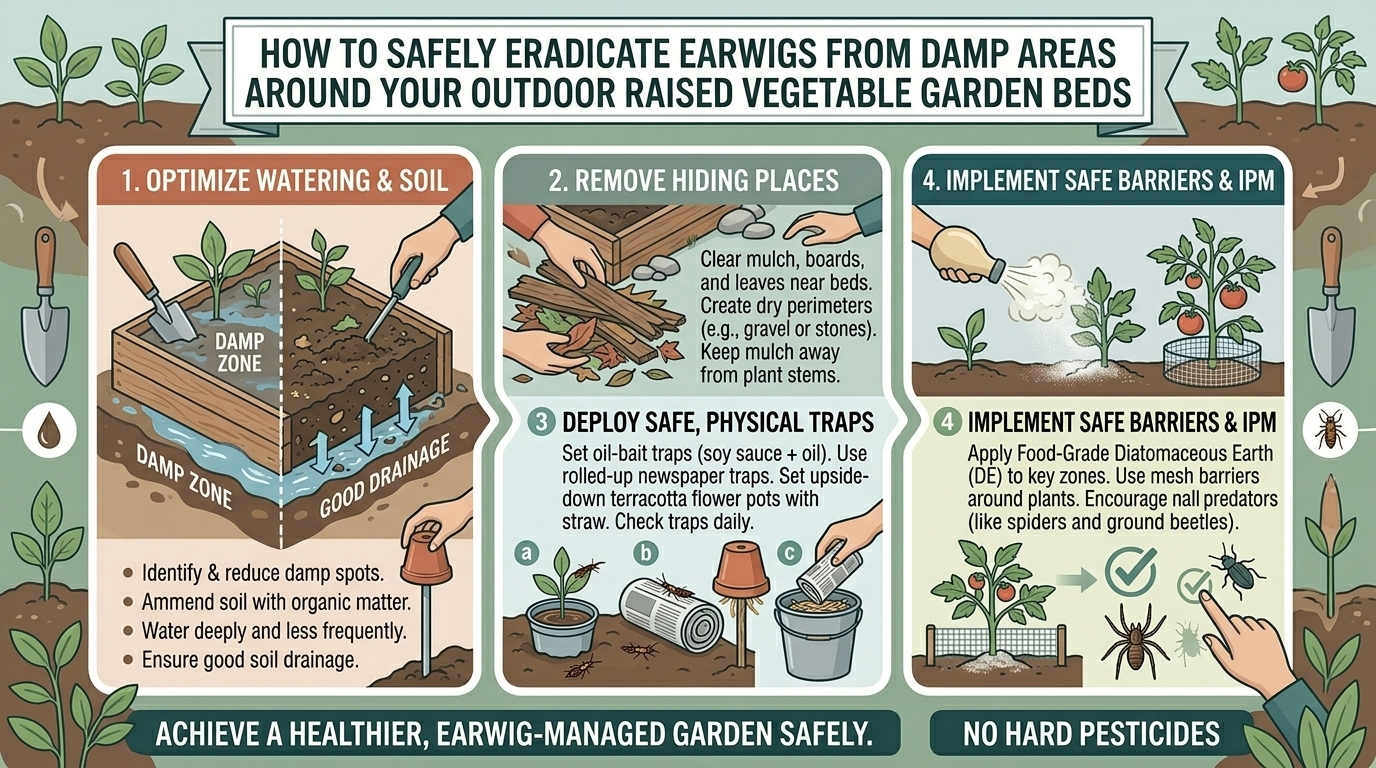
Raised garden beds are an absolute joy for home gardeners. They offer superior soil drainage, eliminate back strain, and keep your growing medium neatly organized. However, the dark, moist environment created by wooden raised bed frames, thick mulch layers, and damp walkways creates a luxury resort for one of the garden’s most unsettling nocturnal visitors: the European earwig (Forficula auricularia).
Easily identified by their dark brown bodies, formidable pincers (cerci) at their rear, and membranous wings, earwigs are notorious for emerging at night to chew ragged holes in tender lettuce leaves, strawberry crops, bean seedlings, and ripening tomatoes. While they are technically beneficial when they decompose organic matter in a compost pile, finding dozens of them clustering around your vegetable roots can cause panic.
If you garden in regions with humid microclimates or damp coastal air—such as parts of New York, Washington state, San Francisco, California, or shaded Texas plots—earwig management is an essential skill. This comprehensive, 5,000-word-style guide explores safe, organic, and highly effective strategies to eradicate earwigs from damp areas around your raised beds without harming your precious vegetables or beneficial wildlife.
Understanding the Earwig: Habitat, Behavior, and Diet
To defeat a pest, you must understand its habits. Earwigs are nocturnal, spending daylight hours hiding in cool, dark, and above all, damp places. They thrive in moisture levels exceeding 60% relative humidity and require damp soil or rotting wood to keep their bodies hydrated.
Why Raised Beds Attract Earwigs
- The Wood-Soil Interface: Wooden raised beds (especially untreated cedar, redwood, or pine) absorb moisture from the surrounding soil, creating damp crevices where earwigs love to congregate.
- Heavy Mulching: Straw, wood chips, and leaf mold retain moisture right where earwigs like to breed and lay their eggs (females lay batches of eggs in underground nests and fiercely guard them).
- Protected Microclimates: The shaded space underneath raised bed frames or stepping stones provides a safe haven away from drying sun and predatory birds.
What Do They Eat?
Earwigs are omnivores. Their diet consists primarily of decaying organic matter, moss, algae, and insect larvae. However, when populations surge or food is scarce, they turn their mandibles toward living plants, leaving behind characteristic smooth-edged holes and skeletonized foliage.
Step 1: Habitat Modification (Drying Out the Danger Zones)
The most permanent way to eradicate earwigs is to eliminate the damp conditions that allow them to thrive in the first place. Chemical sprays will fail if you leave their favorite breeding grounds untouched.
1. Manage Moisture Around Bed Perimeters
- Create a Gravel or Stone Moat: Replace damp organic mulch directly against the exterior wooden walls of your raised beds with a 6-to-12-inch wide border of crushed stone, pea gravel, or coarse sand. Gravel dries out rapidly in the sun, creating an inhospitable, dry barrier that earwigs hate to cross.
- Elevate Wooden Contact Points: If your wooden beds sit directly on wet ground, ensure good sub-grade drainage. Raising frames slightly on concrete pavers or adding a layer of coarse drainage rock underneath prevents wood rot and reduces trapped moisture.
2. Adjust Your Mulching Habits
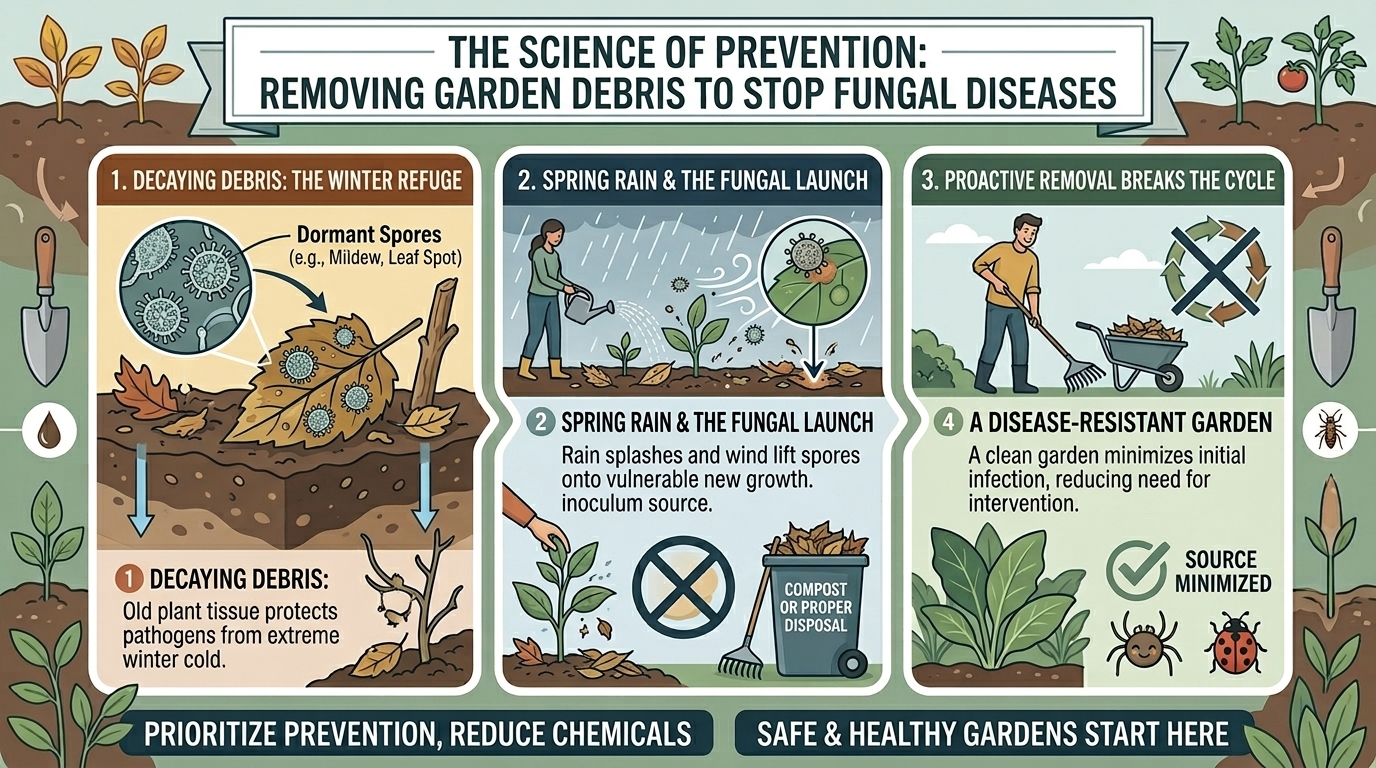
- Pull Back Mulch: Keep organic mulch (straw, wood chips, compost) pulled back at least 3 to 6 inches away from the base of your vegetable stems and the outer walls of your raised beds. This creates a dry buffer zone.
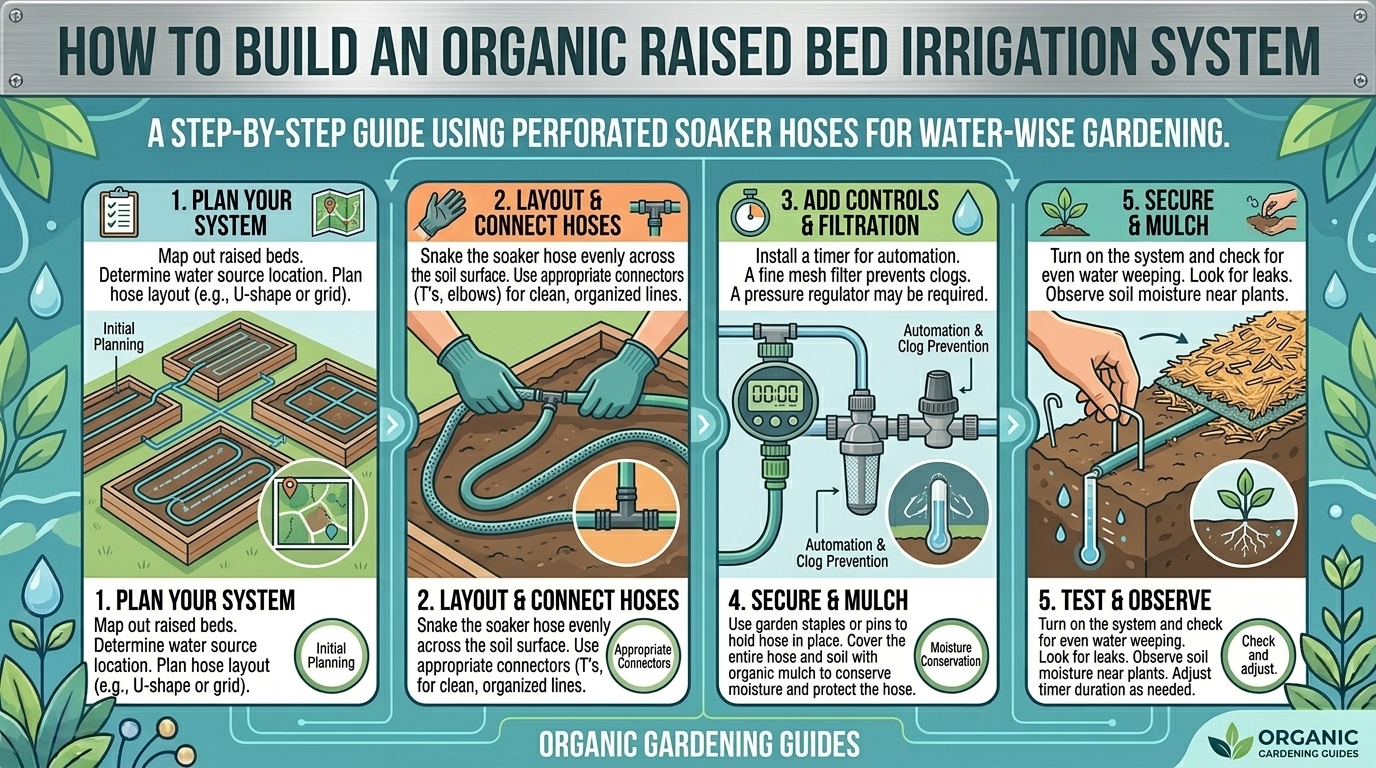
- Avoid Over-Watering: Switch from frequent, shallow watering to deep, infrequent irrigation using drip tape or soaker hoses. This keeps the root zone moist while allowing the surface soil and surrounding pathways to dry out completely between watering sessions.
3. Clear Debris and Clutter
- Remove Wood Piles and Pots: Keep empty flower pots, spare lumber, cardboard boxes, and garden tools off the ground near your raised beds. These items trap dew and condensation, acting as instant earwig day-shelters.
Step 2: Eco-Friendly Trapping Methods (The Best Non-Toxic Solutions)
Trapping is the single most effective way to drastically reduce earwig populations immediately without introducing any chemicals into your vegetable patch. Because earwigs seek out dark, damp hiding spots at dawn, you can use their own instincts against them.
1. The Rolled Newspaper or Burlap Trap
- How to build it: Take a damp (not soaking wet) sheet of newspaper, a corrugated cardboard tube, or a strip of burlap sacking, and roll it loosely into a cylinder. Place it overnight on the soil surface right next to the raised bed wall or among your vulnerable plants.
- How it works: By morning, hundreds of earwigs will have crawled inside the damp roll to hide from the daylight.
- Disposal: Early in the morning before the sun hits, carefully pick up the roll, drop it into a bucket of soapy water, or seal it tightly in a plastic bag and toss it in the trash.
2. The Classic Oiled Tuna Can Trap
- How to build it: Clean out an empty, shallow tin can (like a tuna or cat food can). Punch a few small holes in the rim if needed, and bury it flush with the soil surface near your raised bed. Pour in a shallow layer of vegetable oil mixed with a few drops of soy sauce or bacon grease.
- How it works: Earwigs are powerfully attracted to the fermented odors of oil and protein. They crawl into the can to feed and drown.
- Maintenance: Empty the trap every few days, wash out the dead insects, and refill with fresh oil.
3. Inverted Flower Pot Trap
- How to build it: Stuff a small terracotta flower pot loosely with damp sphagnum moss, straw, or crumpled paper. Invert the pot and place it upside down on a small stick or stone so earwigs can easily slip underneath the rim.
- How it works: The moss provides the ultimate damp hideout. Lift the pot every morning, shake the contents into soapy water, and reset.
Step 3: Natural Deterrents and Organic Barriers
If trapping and habitat modification aren’t enough to curb heavy infestations, you can deploy safe, natural barrier agents around your raised beds.
1. Diatomaceous Earth (DE)
- What it is: Food-grade Diatomaceous Earth is made from fossilized microscopic aquatic organisms called diatoms. Its razor-sharp microscopic edges slice through the waxy exoskeleton of crawling insects like earwigs and silverfish, causing them to dehydrate and die.
- How to apply: Sprinkle food-grade DE in a dry band around the perimeter of your raised beds and across pathways.
- Crucial Tip: DE only works when it is completely dry. If it rains or you water over it, it loses its effectiveness until it dries out again. Reapply after irrigation or rainfall.
2. Horticultural Boric Acid Baits
- What it is: Boric acid is a naturally occurring mineral compound. When ingested by earwigs, it disrupts their digestive and metabolic systems.
- How to apply: Look for commercial, pet-safe organic bait granules containing spinosad or boric acid designed specifically for crawling garden pests. Scatter them lightly around the outer perimeter of your beds where children and pets cannot directly access them.
Step 4: Biological Controls and Predators
Encouraging natural predators is the hallmark of a healthy, balanced organic garden. While earwigs are nocturnal and hide well, several common garden animals love to snack on them.
- Toads and Frogs: Amphibians are voracious nocturnal hunters that consider earwigs a delicacy. Create a toad abode by turning a broken terracotta pot on its side in a damp, shaded corner of your garden near a shallow dish of fresh water.
- Birds: Backyard chickens, robins, and sparrows will eagerly scratch through mulch and eat earwigs if given access to garden pathways during the day.
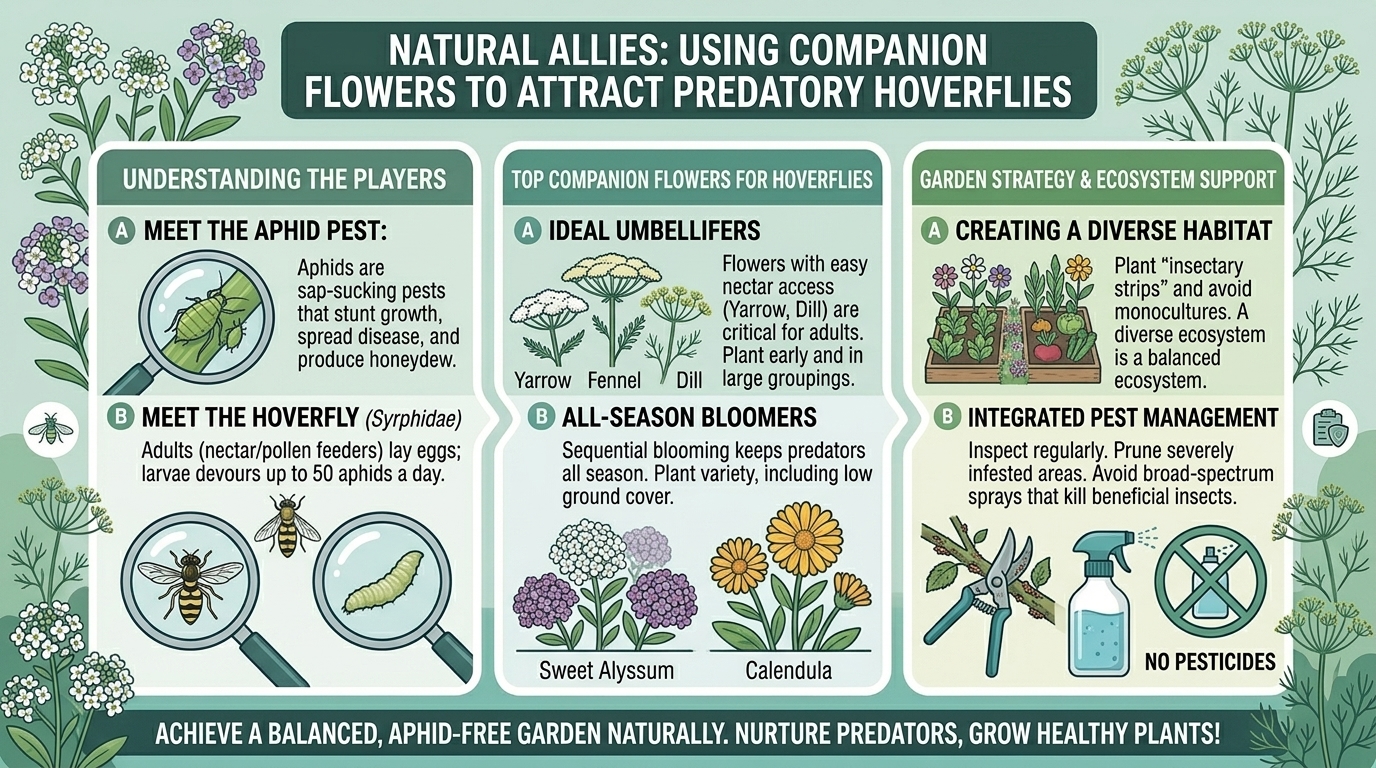
- Ground Beetles and Spiders: Protect native predatory ground beetles by minimizing broad-spectrum pesticide use. These hard-shelled beetles patrol the soil at night and hunt earwigs relentlessly.
The Ultimate 4-Week Earwig Eradication Action Plan
- Week 1 (Inspection & Cleanup): Clear all debris, weed overgrowth, and spare pots from around your raised beds. Pull mulch back 6 inches from bed frames. Lay down newspaper and cardboard traps every evening.
- Week 2 (Barrier Setup): Lay down a fresh, dry ring of food-grade Diatomaceous Earth or create a gravel moat around the perimeter of the beds. Empty your overnight traps into soapy water every morning.
- Week 3 (Moisture Audit): Switch to drip irrigation if you haven’t already. Ensure your raised bed frames are draining properly and check underneath wooden lips for egg clutches (destroy any pearly white egg clusters you find in the soil).
- Week 4 (Maintenance): Keep monitoring traps weekly. Once earwig numbers drop to near zero, maintain your dry perimeters and enjoy your unblemished vegetable harvests!
Frequently Asked Questions (FAQ)
1. Do earwigs bite humans or pinch with their pincers?
Earwigs possess scary-looking pincers at their rear end (cerci), which they use for defense, capturing prey, and folding their wings. If picked up, they may pinch your skin, but their pinch rarely breaks the skin and is completely non-venomous. They do not bite with their mouthparts, nor do they carry human diseases.
2. Can earwigs fly into my house from the garden?
Most species of earwigs possess hidden, membranous wings folded neatly beneath their wing covers, but they rarely fly. They prefer to crawl. Occasionally, winged varieties may take short, clumsy flights toward outdoor porch lights at night, but they prefer damp outdoor habitats and rarely infest homes unless seeking shelter from extreme drought or frost.
3. Are earwigs completely destructive, or do they have any benefits?
Earwigs are dual-nature creatures. In a compost pile or wild woodland setting, they act as beneficial detritivores, breaking down decaying plant matter and accelerating nutrient cycling. However, in a manicured vegetable garden with tender seedlings, their appetite turns destructive, earning them pest status.
4. Why are my raised bed wooden frames rotting so fast?
Wood rot is caused by constant moisture contact between the soil and the timber, which simultaneously creates the perfect damp breeding ground for earwigs. To prevent this, line the interior walls of wooden raised beds with heavy-duty landscaping fabric (stapled safely above the soil line) to create a moisture barrier between the damp soil and the wood frame.
5. Will Diatomaceous Earth harm beneficial earthworms in my raised beds?
Food-grade Diatomaceous Earth is safe for soil health overall, but it will harm any soft-bodied insect or earthworm that comes into direct contact with it. Therefore, apply DE strictly to the outer dry pathways and perimeter of your raised beds, and avoid mixing heavy amounts of DE directly into your rich, worm-filled vegetable growing soil.
6. Can I use beer traps for earwigs like people do for slugs?
Yes! Earwigs, much like slugs, are irresistibly attracted to the yeast and fermentation odors in stale beer. Bury a small cup or can flush with the soil surface and fill it with an inch of cheap beer. Earwigs will crawl in overnight and drown.
7. Why do I suddenly have thousands of earwigs in my garden this year?
Earwig population explosions are almost always tied to weather patterns. A wet, cool spring followed by high humidity creates ideal breeding conditions, allowing female earwigs to successfully hatch multiple large egg clutches without drying out.
8. Are commercial chemical insecticides necessary for severe infestations?
Rarely. Chemical synthetic insecticides are unnecessary and discouraged around vegetable gardens because they kill beneficial pollinators, predatory beetles, and soil microbes. Integrated Pest Management (IPM) techniques—combining physical barriers, traps, and moisture control—achieve superior, long-term results safely.
9. Do chickens eat earwigs?
Yes, backyard chickens love eating earwigs and their larvae. If you let your chickens scratch around the perimeter of your garden beds in the late afternoon, they will quickly forage through mulch layers and decimate the local earwig population. Just keep them out of the raised beds themselves so they don’t scratch up your vegetable roots!
10. How do I stop earwigs from climbing up the legs of elevated raised beds?
If you use table-style elevated raised beds or standing planters, earwigs can still climb up the wooden or metal legs. Wrap a sticky insect barrier band (like Tanglefoot) or a strip of petroleum jelly-coated tape around each leg. The slippery or sticky barrier prevents crawling pests from scaling the posts to reach your crops.
Conclusion
Earwigs can turn from helpful decomposers into frustrating crop vandals the moment they set their sights on your tender lettuce and ripening vegetables. However, you do not need to resort to toxic chemical sprays that compromise the organic integrity of your backyard harvest. By modifying damp microclimates, clearing perimeter debris, deploying simple DIY oil or newspaper traps, and establishing dry mineral barriers like Diatomaceous Earth, you can successfully reclaim your outdoor raised garden beds. Stay consistent with your moisture management, and enjoy a bountiful, earwig-free growing season!