How to Safely Manage a Sudden Outbreak of Spider Mites in a Tightly Enclosed Greenhouse Structure
Welcome to kcplants.com, your premier online destination for advanced horticulture, sustainable pest management, and thriving indoor and greenhouse growing. Whether you are managing a backyard hoop house in the humid climate of New York, a specialized glasshouse in Washington, an urban rooftop structure in San Francisco, or battling intense heat-driven pressures inside greenhouses across California and Texas, greenhouse growing offers incredible control—until a microscopic menace strikes.
Few pests strike fear into the hearts of growers quite like the two-spotted spider mite (Tetranychus urticae). In the warm, tightly enclosed environment of a greenhouse, these arachnids can transition from a minor nuisance to a catastrophic infestation in a matter of days. Because enclosed structures lack natural wind and rain, and often trap stagnant heat, spider mites multiply exponentially.
In this comprehensive, SEO-optimized guide, we will explore the biology of greenhouse spider mites, examine why traditional chemical controls often fail in tight spaces, and detail step-by-step, safe, biological, and cultural strategies to eradicate them without ruining your crops.
The Greenhouse Dilemma: Why Spider Mites Thrive Indoors
To defeat spider mites in a confined structure, you must understand why greenhouses act as incubators for these pests.
1. Rapid Reproduction Rates
Spider mites are tiny cousins of spiders and ticks. Under warm greenhouse conditions (typically between 70°F and 90°F), a female spider mite can lay up to 100 eggs in her lifetime, and her offspring can mature from egg to reproducing adult in as little as 5 to 7 days. This geometric progression means a population of 50 mites can explode into millions within three weeks.
2. The Danger of Tightly Enclosed Structures
While sealing a greenhouse protects plants from outside pests, it also seals out natural predators like ladybugs, lacewings, and predatory thrips. Furthermore, low humidity and warm temperatures—common in heated or sealed structures—shorten the mite life cycle while drying out plant leaves, making plant sap easier to extract.
Identifying the Signs of an Outbreak
Because individual spider mites are roughly the size of a period at the end of a sentence, growers rarely spot the pests until the damage is severe. Watch for these early indicators:
- Stippling: Tiny yellow or white speckles on the upper surface of leaves, caused by mites piercing individual plant cells to suck out chlorophyll.
- Fine Silken Webbing: A delicate, gossamer web spun across the undersides of leaves and between stems. This webbing acts as a protective nursery and highway system for the colony.
- Chlorosis and Leaf Drop: As feeding intensifies, leaves turn bronze, dry out, curl up, and drop prematurely. Entire plants can defoliate in severe outbreaks.
Regional Greenhouse Challenges Across Major Zones
Climate heavily influences how you manage a greenhouse structure:
- Texas & California: High ambient solar radiation and intense summer heat spike greenhouse temperatures rapidly. Proper ventilation and evaporative cooling are essential to prevent heat-stressed plants from becoming sitting ducks for mites.
- New York & Washington: Seasonal transitions require sealing greenhouses tightly against the cold. High indoor humidity combined with heating systems can create dry microclimates that encourage rapid mite reproduction.
- San Francisco: Coastal fog and cool outdoor air create a constant balancing act between trapping warmth and managing interior condensation, requiring careful monitoring for early pest colonization.
Step-by-Step Strategy: Eradicating Spider Mites Safely in Confined Spaces
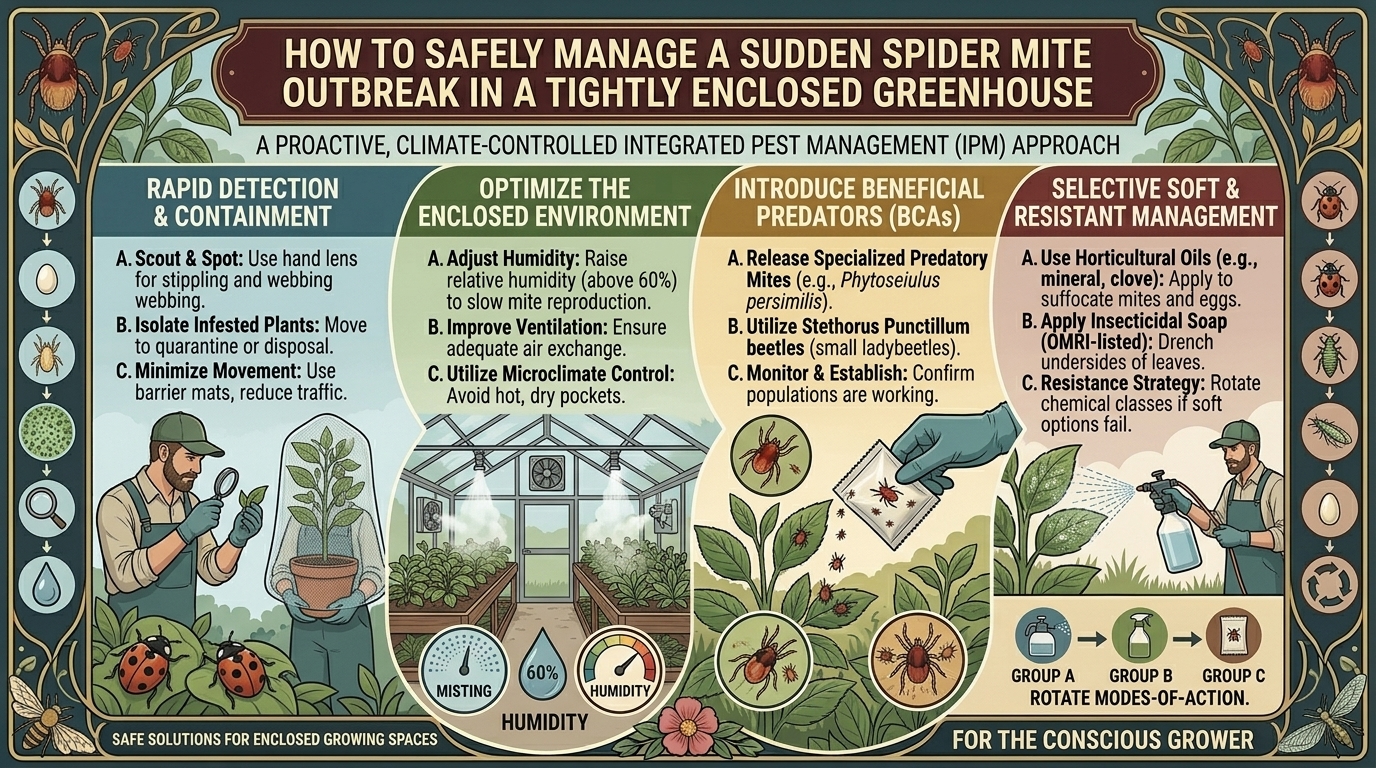
When managing pests inside a tightly enclosed structure, safety is paramount. Heavy chemical foggers can linger in closed air, damaging beneficial flora, leaving toxic residues on edible crops, and causing respiratory distress for the grower. Instead, rely on an integrated pest management (IPM) approach.
      [ Step 1: Alter Microclimate ]  -->  Increase Humidity & Lower Temperature
                   ↓
      [ Step 2: Physical Removal ]    -->  Gentle Water Wash or Insecticidal Soaps
                   ↓
      [ Step 3: Biological Warfare ]  -->  Release Predatory Mites (Phytoseiulus persimilis)
Step 1: Adjust the Greenhouse Microclimate
Spider mites despise moisture and high humidity. While you cannot drown them easily, you can dramatically slow down their metabolic and reproductive rates:
- Mist and Humidity: Raise relative humidity inside the greenhouse to 60% or higher if your crop tolerates it.
- Ventilation: Improve air circulation using oscillating interior fans to eliminate stagnant hot spots where mites thrive.
Step 2: Physical Washing and Soft Contact Soaps
For localized hotspots on sturdy plants:
- The Hose-Down: Take a hose with a fine, high-pressure nozzle and thoroughly wash down the undersides of leaves to break up silken webs and wash away adult mites.
- Potassium Salts of Fatty Acids (Insecticidal Soap): Spray affected plants thoroughly, ensuring contact with the undersides of leaves. Soaps disrupt the cellular membranes of soft-bodied mites without leaving harmful chemical residues.
Step 3: Biological Control (The Gold Standard for Greenhouses)
In a closed greenhouse, beneficial predatory insects are your most powerful weapon. Unlike chemical sprays that degrade quickly or require contact, living predators actively hunt down mites in every nook and cranny.
- Phytoseiulus persimilis: A voracious predatory mite specifically specialized in hunting two-spotted spider mites. They eat up to 20 eggs or 5 adult mites per day and reproduce faster than their prey under moderate greenhouse conditions.
- Neoseiulus californicus: A hardy predator that can survive longer periods when prey is scarce, making them great for preventative release.
- Application Tip: Release predatory mites immediately upon noticing the first signs of stippling. Do not use chemical insecticidal soaps right before releasing beneficials, as residual soap will harm the predators.
Comprehensive Troubleshooting and Prevention Tips
- Quarantine New Additions: Never bring outside plants, nursery cuttings, or houseplants directly into your clean greenhouse without a 14-day quarantine and inspection period.
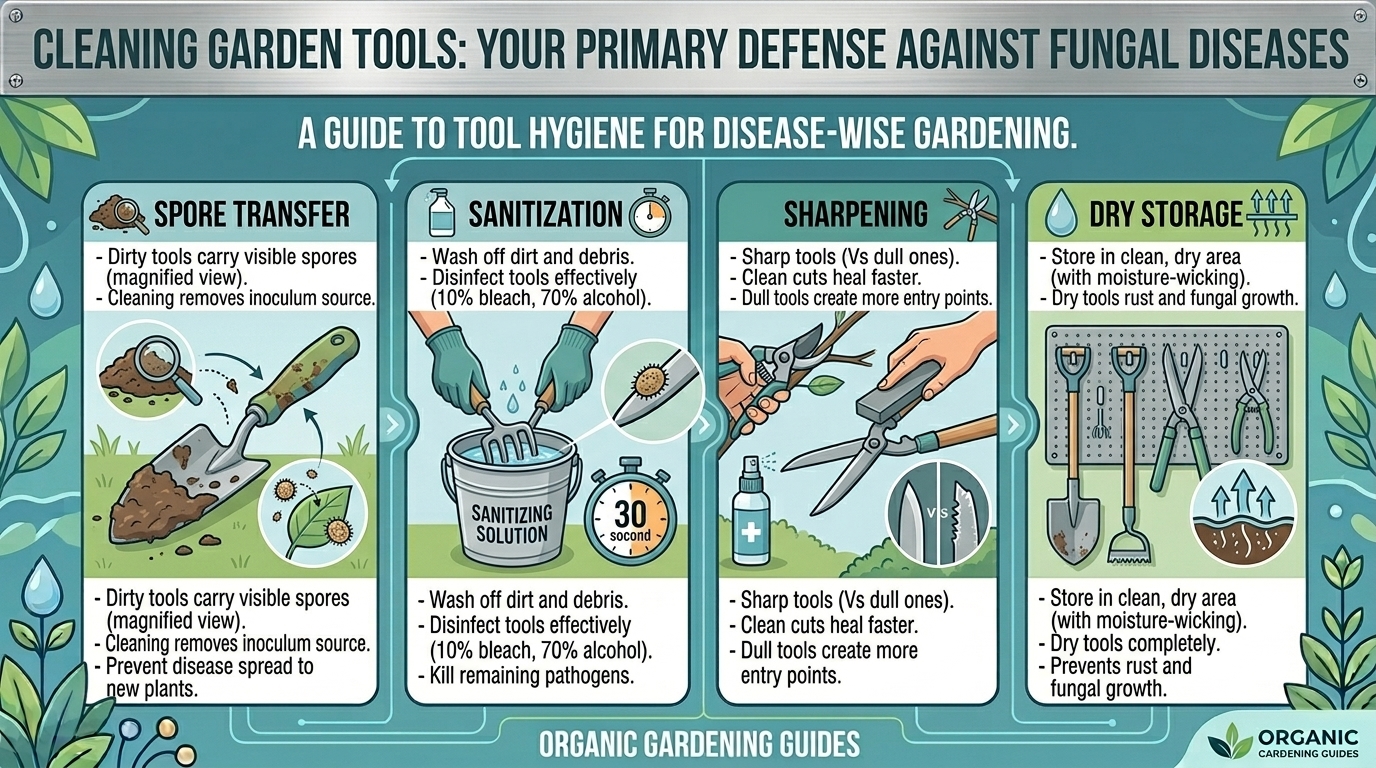
- Remove Plant Debris: Clear out fallen leaves, dead foliage, and weed growth from beneath benches. Spider mites overwinter and lay dormant in plant debris on the greenhouse floor.
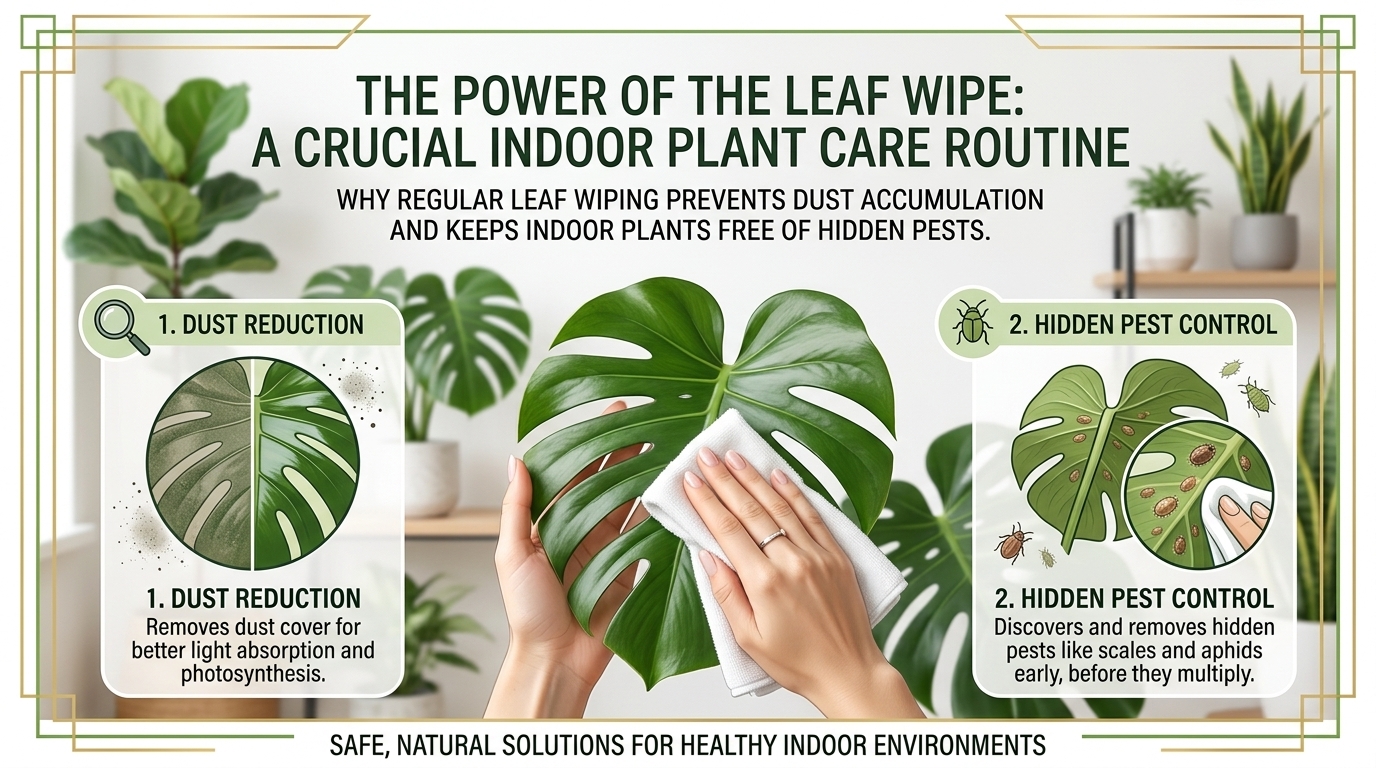
- Inspect with a Loupe: Keep a 10x jeweler’s loupe in your greenhouse kit. Routinely check the lower leaves of indicator plants (like tomatoes, cucumbers, and beans) once a week.
Frequently Asked Questions (FAQ)
1. Can spider mites fly between plants in a greenhouse?
No, spider mites do not have wings. However, they spread rapidly by walking, hitchhiking on clothing or tools, or by “ballooning”—spinning a tiny strand of silk that catches air currents generated by greenhouse fans, carrying them to neighboring plants.
2. Why do chemical bug sprays often fail against greenhouse spider mites?
Spider mites have an incredible capacity to develop chemical resistance due to their rapid generation times. Furthermore, sprays often fail to penetrate the dense silken webs or miss the undersides of leaves where colonies hide.
3. Are predatory mites safe to use if I am growing vegetables to eat?
Yes, absolutely! Beneficial insects like Phytoseiulus persimilis are 100% non-toxic, leave zero chemical residue on edible crops, and naturally die off or disperse once the spider mite population is eliminated.
4. How high should I raise the humidity to stop spider mites?
Raising relative humidity to between 60% and 70% significantly hinders spider mite reproduction rates. However, monitor your plants closely, as sustained high humidity in an enclosed space can encourage fungal pathogens like powdery mildew or botrytis.
5. Can I use neem oil inside a closed greenhouse?
Yes, cold-pressed neem oil is an effective organic remedy. However, apply it in the evening or on a cloudy day to prevent leaf burn, and never spray plants when greenhouse temperatures exceed 85°F.
6. Do spider mites attack all greenhouse plants equally?
No. They show strong preferences for certain crops, particularly tomatoes, cucumbers, peppers, eggplants, roses, and beans. Use these susceptible plants as “indicator species” to check for early outbreaks.
7. What happens to predatory mites after they eat all the spider mites?
Once their food source (spider mites) is depleted, the predatory mites will either starve or migrate out of the area in search of food. Because they cannot survive on plant sap alone, they will not become a secondary pest.
8. How often should I release beneficial insects during an outbreak?
For a severe outbreak, a heavy initial release of predatory mites followed by a smaller booster release two weeks later is usually necessary to break the pest’s reproductive cycle.
9. Can I wash my greenhouse structure between growing seasons to prevent mites?
Yes! At the end of your growing season, scrub down all greenhouse benches, glass panes, and framing with a solution of horticultural soap or diluted hydrogen peroxide to kill overwintering eggs and resting adults.
10. Do yellow sticky cards catch spider mites?
Standard yellow sticky cards are great for catching flying pests like fungus gnats, whiteflies, and thrips, but they are generally ineffective against spider mites because mites do not fly and rarely jump. Use a magnifying glass and physical leaf inspections instead.
Conclusion
Managing a sudden outbreak of spider mites in a tightly enclosed greenhouse structure requires swift action, vigilance, and a shift away from harsh synthetic chemicals. By adjusting your greenhouse microclimate, utilizing physical washes, and deploying beneficial predatory insects like Phytoseiulus persimilis, you can restore ecological balance to your indoor growing space. Protecting your greenhouse crops ensures a lush, healthy harvest all year round, no matter what climate you are growing in.