Every successful home garden—whether you are cultivating a backyard raised bed in Austin, Texas, managing a container collection on a sunny San Francisco or New York City balcony, or building a fertile plot in Washington state—shares one single, undeniable foundation: rich, nutrient-dense living soil.
If you start with poor, compacted, nutrient-depleted dirt, your plants will struggle, produce meager harvests, and show constant signs of distress. Many first-time gardeners make the mistake of trying to fix poor soil by pouring synthetic chemical fertilizers into the ground. While synthetic fertilizers provide a quick, temporary jolt of nitrogen, phosphorus, or potassium, they do nothing to improve soil structure, kill off beneficial soil microbes, and wash away easily with every heavy rain or watering.
The true secret to long-term gardening success is enriching your soil naturally and organically. By feeding the soil food web rather than just the plant, you create a self-sustaining ecosystem that builds fertility year after year.
This comprehensive, expert-backed guide breaks down the absolute best natural, organic methods to transform nutrient-poor dirt into dark, crumbly, powerhouse garden soil.
1. Diagnosing Your Soil: What Does “Nutrient-Poor” Look Like?
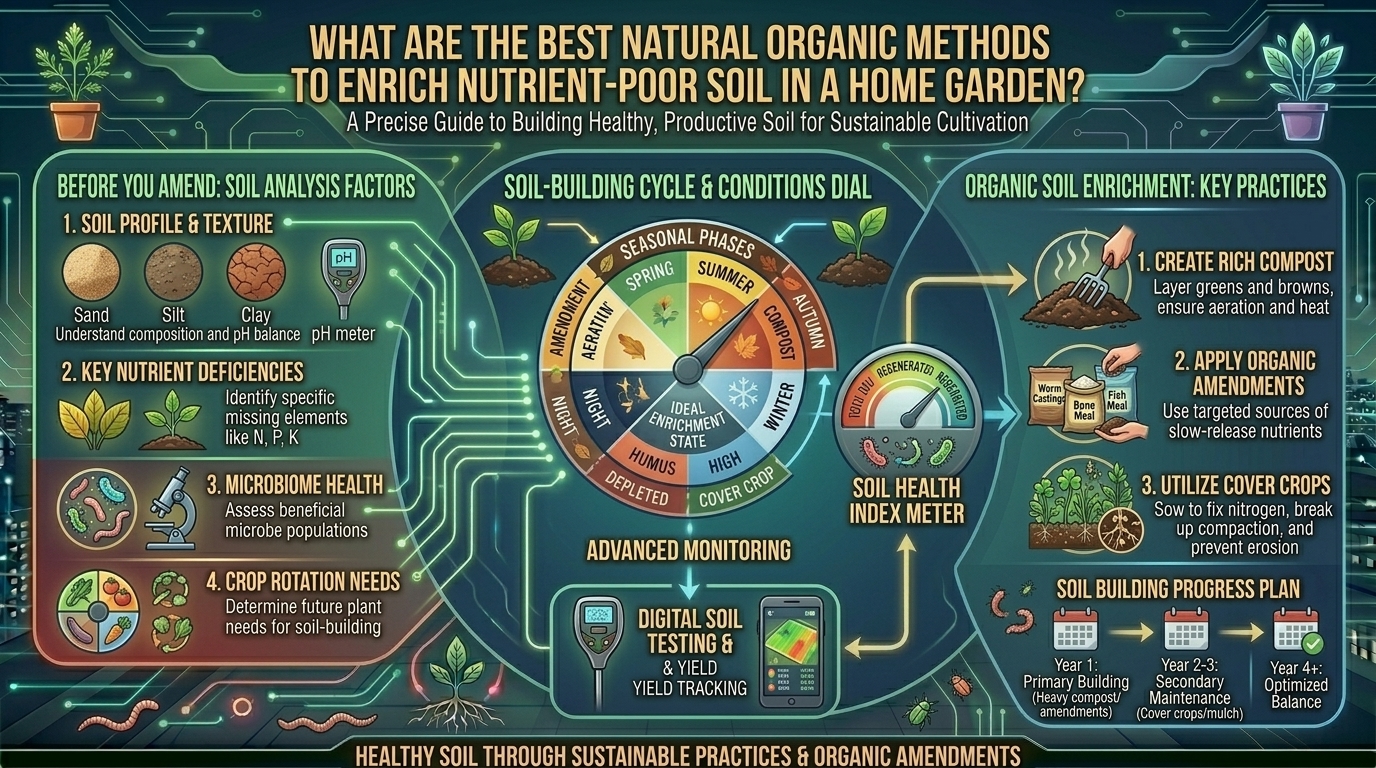
Before you can fix poor soil, you need to understand what is missing. Different types of poor soil present distinct physical characteristics:
- Sandy Soil: Gritty and loose. It drains water instantly, washing vital nutrients away before plant roots can absorb them. It lacks organic matter and moisture retention.
- Clay Soil: Heavy, sticky when wet, and hard as concrete when dry. It compacts tightly, suffocating plant roots and preventing water and air penetration.
- Compacted Urban Dirt: Often found in new construction or rental properties. It is stripped of all earthworms, microbial life, and organic humus, leaving a lifeless mineral dust.
The Simple Soil Test
Grab a handful of slightly damp soil and squeeze it:
- If it falls apart immediately like dry sand, your soil lacks organic matter and moisture sponges (like compost and coco coir).
- If it forms a slick, shiny ribbon that doesn’t break, your soil is heavy clay and needs aeration and structural aggregates (like perlite, gypsum, or coarse sand) combined with organic matter.
2. Top Natural Organic Methods to Build Soil Fertility
Implementing these proven organic amendments will completely revitalize depleted soil from the ground up.
A. Heavy Application of Organic Compost (“Black Gold”)
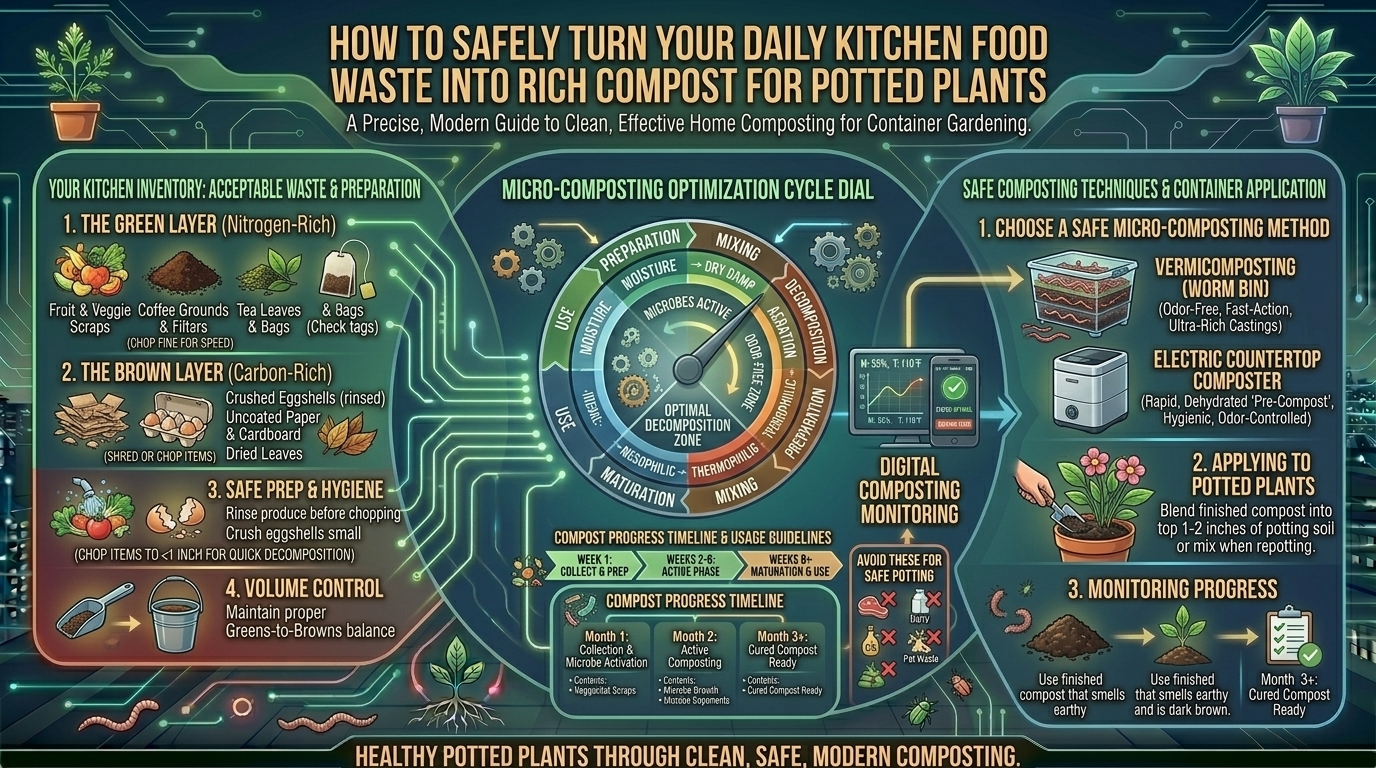
Compost is the undisputed king of soil enrichment. It introduces a massive diversity of beneficial bacteria, fungi, and earthworms while supplying a slow-release balance of macro- and micronutrients.
- How to apply: Spread a 2-to-3-inch layer of finished, crumbly organic compost across the top of your garden beds or mix it directly into the top 6 inches of your soil. For existing plants, apply a 1-inch “top-dress” layer around the base.
B. Vermicompost and Worm Castings
Worm castings are earthworm manure packed with concentrated enzymes, humic acids, and bio-available plant nutrients. They are exceptionally gentle and will never burn tender plant roots.
- How to apply: Mix 10% to 20% worm castings into your potting or bed soil, or brew them into an aerated “worm tea” to water directly into the root zone.
C. Mineral Rock Dusts (Azomite and Glacial Rock Dust)
Over years of gardening or weathering, native soils get stripped of broad-spectrum trace minerals and micronutrients (such as iron, magnesium, boron, and zinc).
- How to apply: Sprinkle a light dusting of Azomite or glacial rock dust over your soil beds (about 2 to 3 cups per 100 square feet). These raw stone dusts break down slowly over time, permanently replenishing micro-minerals that keep plants robust and disease-resistant.
D. Organic Meal Amendments (Nitrogen and Phosphorus Powerhouses)
To directly target specific nutrient shortages, incorporate slow-release organic meals:
- Kelp Meal: Rich in potassium, trace minerals, and natural plant growth hormones (cytokinins) that stimulate root growth.
- Alfalfa Meal: Provides a steady, gentle release of nitrogen and natural growth stimulants.
- Bone Meal or Fish Bone Meal: Packed with phosphorus, which is essential for heavy root development, vibrant flowering, and abundant fruiting (especially for tomatoes and peppers).
E. Green Manure and Cover Cropping
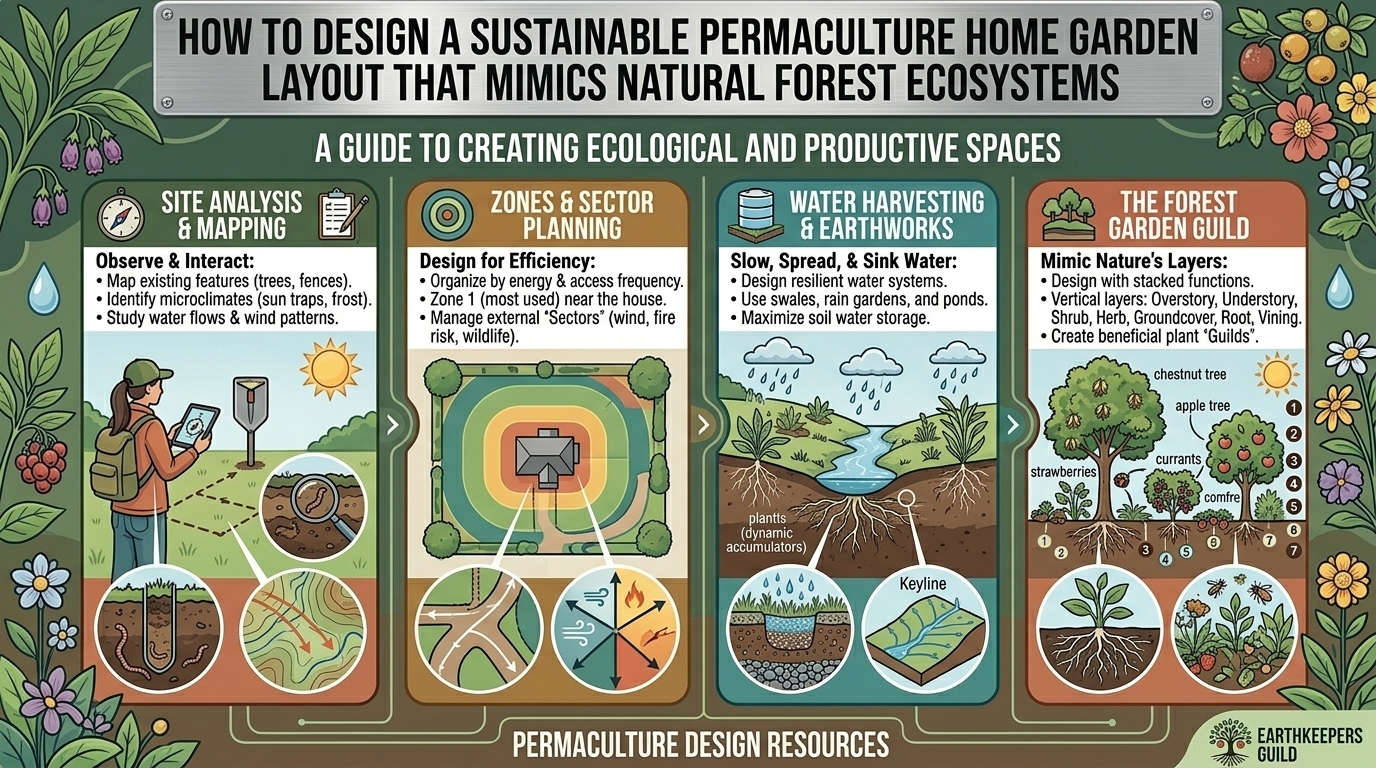
If you have an in-ground garden bed or large raised bed that sits empty during the off-season, planting cover crops (like winter rye, crimson clover, or hairy vetch) is a brilliant organic technique.
- How it works: Cover crops grow deep roots that break up compacted soil, prevent erosion, and capture atmospheric nitrogen, storing it directly in the root nodules. When chopped down and turned back into the soil in spring, they decompose into rich green manure.
3. Mulching: Protecting Your Newly Enriched Soil
Once you have added compost and organic amendments to enrich your soil, never leave it exposed to the elements.
Sunlight, wind, and heavy rain rapidly degrade soil biology and wash away surface nutrients. Apply a 2-to-3-inch layer of organic mulch across your garden surface:
- What to use: Shredded straw, chopped autumn leaves, untreated wood chips, or coco coir matting.
- Why it works: Mulch keeps soil temperatures stable, prevents moisture evaporation, stops weed seeds from germinating, and slowly breaks down over the season to add even more organic matter to the topsoil.
4. Frequently Asked Questions (FAQ)
1. How long does it take to turn poor dirt into rich organic soil?
While adding compost gives an immediate boost to plant growth, truly transforming poor, lifeless dirt into a thriving, self-sustaining living soil ecosystem takes about 1 to 2 seasons of consistent organic management, no-till practices, and cover cropping.
2. Can I just buy cheap topsoil to fix my garden?
Be cautious with cheap bagged “topsoil” from discount bins. Many commercial topsoils are nothing more than heavy, unrefined subsoil or construction fill dirt lacking organic matter. Always look for high-grade organic compost or blended garden mixes.
3. Is mushroom compost safe for organic vegetable gardens?
Yes, mushroom compost is an excellent, nutrient-rich organic amendment derived from spent mushroom farming substrates. However, because it can sometimes be slightly high in soluble salts, mix it thoroughly into your native soil rather than planting directly into pure mushroom compost.
4. How do I know if my soil is too acidic or too alkaline?
Nutrients can become “locked up” and unavailable to plants if your soil pH is too high or too low. Most organic vegetables prefer a slightly acidic to neutral pH between 6.0 and 7.0. You can test your soil pH easily using an inexpensive chemical drop kit or digital soil meter.
5. Can I use fresh animal manure to enrich my garden soil?
Never use fresh, raw manure directly on food gardens. Fresh manure (especially dog, cat, or pig waste) contains harmful pathogens and parasites. Even herbivore manures (horse, cow, chicken) are far too “hot” with raw ammonia and will burn plant roots. Manure must be thoroughly aged or composted for several months before garden use.
6. What is the fastest organic way to fix nitrogen-deficient soil?
Applying organic blood meal, feather meal, or a rich top-dressing of vermicompost and fish emulsion will rapidly boost nitrogen levels in nutrient-poor soils.
7. Do earthworms appear naturally once I enrich my soil?
Yes! Earthworms are nature’s ultimate tillers. Once you stop using synthetic chemical pesticides, stop tilling aggressively, and start adding thick layers of organic compost and mulch, native earthworms will quickly migrate into your garden beds.
8. Should I till or dig my soil every spring to mix in nutrients?
Traditional gardening relied on deep tilling, but modern organic science champions no-till or minimal-till gardening. Tilling shatters delicate fungal mycelium networks and exposes dormant weed seeds to sunlight. Instead, top-dress your beds with compost and let earthworms and soil microbes naturally pull the nutrients downward.
9. Can I enrich soil in pots and containers the same way as garden beds?
Yes, but with one caveat: containers require materials that maintain good drainage. Use a base of coco coir or perlite combined with organic compost, worm castings, and slow-release organic meals rather than heavy outdoor compost alone.
10. Why do my plants still look yellow even after I added compost?
If your soil is consistently waterlogged, roots cannot breathe and absorb nutrients (even if the nutrients are present in the compost). Ensure your beds or containers have proper drainage and that you are following correct watering schedules.
Conclusion
Enriching nutrient-poor soil in your home garden does not require expensive chemical fertilizers or complicated laboratory fixes. By harnessing the power of organic compost, worm castings, mineral rock dusts, slow-release nutrient meals, and protective mulch, you can permanently transform lifeless dirt into a vibrant, living soil ecosystem.
What kind of soil condition are you working with in your garden right now, and what organic amendment are you planning to add first? Let us know in the comments below!