For urban apartment dwellers and suburban homeowners alike, styling living spaces to feel lush, serene, and deeply connected to nature is a constant pursuit. Whether you are curating a sunlit loft in San Francisco, styling a classic brownstone in New York, managing a sprawling suburban home in Texas, balancing indoor comfort against the rainy outdoors in Washington, or enjoying the Mediterranean climate of California, nothing bridges the gap between interior design and living art quite like an indoor jungle.
Among all the styling zones in a home, bookshelves offer the ultimate canvas. Combining books, collected art, and trailing greenery creates a dynamic, layered aesthetic. However, styling shelves with plants requires more than just picking something green; it demands selecting the right trailing houseplants that can gracefully cascade down vertical spaces while adapting to indoor shelf environments.
This comprehensive, SEO-optimized guide explores the absolute best trailing houseplants to transform your bookshelves into thriving, cascading botanical waterfalls, complete with care tips, styling strategies, and regional advice.
1. The Anatomy of Bookshelf Plant Styling: Why Trailing Plants Excel
Bookshelves present unique architectural opportunities and microclimates. Because shelves are typically elevated and stepped back from direct windows, plants placed upon them must possess specific biological traits:
- Gravity-Defying Growth: Trailing (or cascading) plants naturally direct their energy downward, utilizing gravity to create elegant green curtains that frame your book collections.
- Shade Tolerance: Many popular cascading species originate from the understory of tropical rainforests, meaning they naturally thrive in the lower-light conditions typical of indoor bookshelf settings.
- Vertical Space Optimization: Bookshelves maximize floor space while utilizing height. Trailing plants draw the human eye upward and outward, making rooms feel larger, taller, and more vibrant.
2. The Best Trailing Houseplants for Bookshelves
To create a balanced indoor jungle look, choose a mix of textures, leaf sizes, and growth habits. Here are the top contenders for bookshelf styling.
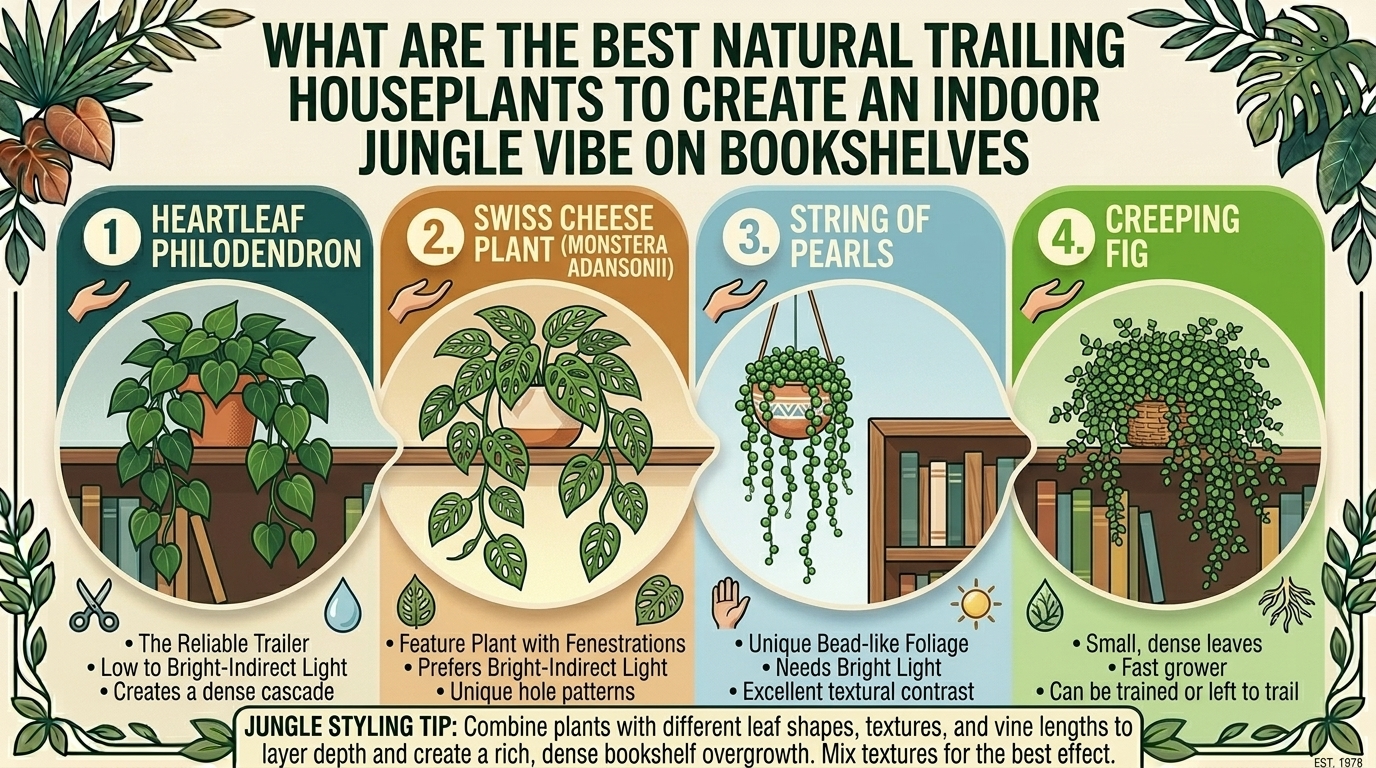
A. Heartleaf Philodendron (Philodendron hederaceum)
Often considered the ultimate beginner plant, the Heartleaf Philodendron is virtually indestructible and grows at an impressive rate.
- Visual Appeal: Glossy, heart-shaped leaves on flexible vines that can trail several feet long. Varieties like the ‘Brasil’ feature stunning lime-green and cream variegation.
- Shelf Placement: Perfect for top shelves where its long vines can cascade completely unobstructed down the side of the bookcase.
B. Golden Pothos (Epipremnum aureum)
A close relative of the philodendron, the Golden Pothos is famed for its resilience and ability to tolerate lower-light bookshelf microclimates.
- Visual Appeal: Waxy, variegated leaves splashed with gold, yellow, and cream. It adapts well to being trimmed to exact lengths if you want a neat, manicured jungle look.
- Shelf Placement: Middle or lower shelves, where vines can drape across book spines or frame framed photographs.
C. String of Hearts (Ceropegia woodii)
For a delicate, bohemian, and sophisticated aesthetic, the String of Hearts is unmatched.
- Visual Appeal: Tiny, succulent, heart-shaped leaves patterned in silver and purple, dangling from thread-like, purplish stems.
- Shelf Placement: Best placed on eye-level or higher shelves where you can admire the intricate detail of its cascading strings. Because it is a succulent, it tolerates lower watering frequencies.
D. Satin Pothos (Scindapsus pictus)
Though commonly called a pothos, this plant belongs to the Scindapsus genus and offers a velvety, luxurious texture that elevates any bookshelf display.
- Visual Appeal: Matte, dark green leaves splashed with shimmering silver markings that catch indoor lighting beautifully.
- Shelf Placement: Upper shelves near a light source, where its metallic sheen stands out against dark wood or white painted bookcases.
E. Creeping Fig (Ficus pumila)
If you want a dense, manicured, woodland-floor aesthetic, the Creeping Fig is a phenomenal choice.
- Visual Appeal: Tiny, heart- or oval-shaped leaves that hug stems tightly as they cascade, creating a lush, textured curtain resembling ivy climbing a stone wall.
- Shelf Placement: Ideal for shelves that receive moderate to bright indirect light and slightly higher humidity.
F. English Ivy (Hedera helix)
Classic, timeless, and exceptionally hardy, English Ivy brings a traditional botanical conservatory vibe to your shelves.
- Visual Appeal: Lobed, deeply carved leaves that cascade densely in shades of green, cream, or yellow.
- Shelf Placement: Excellent for cooler rooms or near north-facing windows. (Note: Keep away from pets, as ivy can be toxic to cats and dogs).
3. Designing Your Bookshelf Jungle: Styling Strategies
Creating an authentic jungle vibe requires thoughtful arrangement rather than random pot placement. Use these professional interior styling tips:
The Rule of Thigh and Eye Level
- Top Shelves: Place your most vigorous trailing plants (like Golden Pothos or Heartleaf Philodendrons) on the absolute top tier. Let their long vines drape downward, framing the entire bookcase like natural curtains.
- Middle Shelves: Intersperse medium-trailing varieties (like Satin Pothos) between bookends and horizontal stacks of books. Allow vines to snake across shelf partitions or frame special art pieces.
- Bottom Shelves: Keep upright, bushy plants or shorter trailing specimens (like String of Hearts) on lower shelves so they don’t drag heavily on the floor or collect dust.
Mixing Textures and Colors
Combine solid dark greens with variegated leaves, matte finishes with glossy surfaces, and large leaves with delicate string foliage to create visual depth and prevent the bookshelf from looking monotonous.
4. Practical Care Challenges for Bookshelf Plants
Growing plants on bookshelves introduces unique maintenance hurdles that every urban gardener must navigate.
Light Deficits on Upper Shelves
Bookshelves are often pushed against interior walls away from direct windows.
- Solution: If natural light falls short, use full-spectrum LED grow light bulbs designed to fit standard desk lamps or install discreet under-shelf LED strip grow lights. Your plants will reward you with vibrant growth instead of stretching out leggily.
The Watering Logistics Challenge
Lifting a heavy ceramic pot down from a high bookshelf every week to water it can be cumbersome and messy.
- Solution: Use lightweight nursery pots inside decorative cachepots (as discussed in our double-potting guide). Alternatively, use long-spout watering cans to water plants in place, or take them down in batches over a sink once every 1–2 weeks.
5. Regional Considerations Across the U.S.
Indoor environmental factors driven by local climates significantly impact how your bookshelf jungle thrives:
- Texas & California (Warm & Air-Conditioned/Heated): Indoor climate control systems dry out ambient air rapidly. Trailing plants like heartleaf philodendrons and pothos handle average humidity well, but occasional misting or grouping plants together helps maintain local moisture.
- New York (Seasonal HVAC Shifts): Winter heating radiators can bake plants sitting on nearby shelves, while summer brings humidity. Monitor moisture levels closely as heating cycles turn on and off.
- Washington & San Francisco (Mild, Foggy, & Temperate): Natural indoor humidity is often higher, keeping plants like ivy and creeping fig extremely happy. However, cooler rooms require careful attention to watering frequency to prevent soggy soil.
6. 10 Frequently Asked Questions (FAQs)
1. Do trailing bookshelf plants need direct sunlight?
No. Most trailing bookshelf plants (like pothos, philodendrons, and satin pothos) thrive in bright, indirect light. Direct, scorching sunlight through a window can burn their leaves and dry out bookshelf soil too quickly.
2. How do I water plants high up on a bookshelf without making a mess?
Use a watering can with a long, narrow spout to reach the soil directly, or use lightweight inner nursery pots inside cachepots, taking them down to water over a sink when necessary.
3. Can I let my trailing plant vines grow all the way down to the floor?
Yes! Letting vines cascade to the floor creates a stunning dramatic waterfall effect. Just ensure the lower stems receive adequate light and that pets or foot traffic won’t snag or pull on the vines.
4. Why are the stems of my bookshelf pothos getting long and leggy?
Leggy growth (long spaces of bare stem between small leaves) is almost always a sign of insufficient light. Move the plant closer to a natural light source or supplement with a small LED grow light.
5. Are trailing bookshelf plants safe for cats and dogs?
Many popular trailing plants—like English Ivy and certain philodendrons—are toxic to pets if ingested. If you have curious pets, opt for pet-safe trailing alternatives like Spider Plants or specific non-toxic varieties.
6. How often should I trim my cascading bookshelf plants?
Trim your trailing plants whenever they become unruly, block access to books, or touch the floor. Pruning actually stimulates the mother plant to branch out, creating a fuller, bushier look on top of the shelf.
7. What soil mix is best for bookshelf potted plants?
Use a light, well-aerated potting mix combined with perlite and orchid bark. Heavy garden soil retains too much moisture and compacts easily in indoor pots.
8. How do I prevent dust from building up on trailing leaves?
Indoor dust settles quickly on elevated shelves. Gently wipe down large leaves (like pothos and philodendrons) with a damp microfiber cloth every few weeks to keep them clean and able to photosynthesize efficiently.
9. Can I propagate my bookshelf plants right from the shelf?
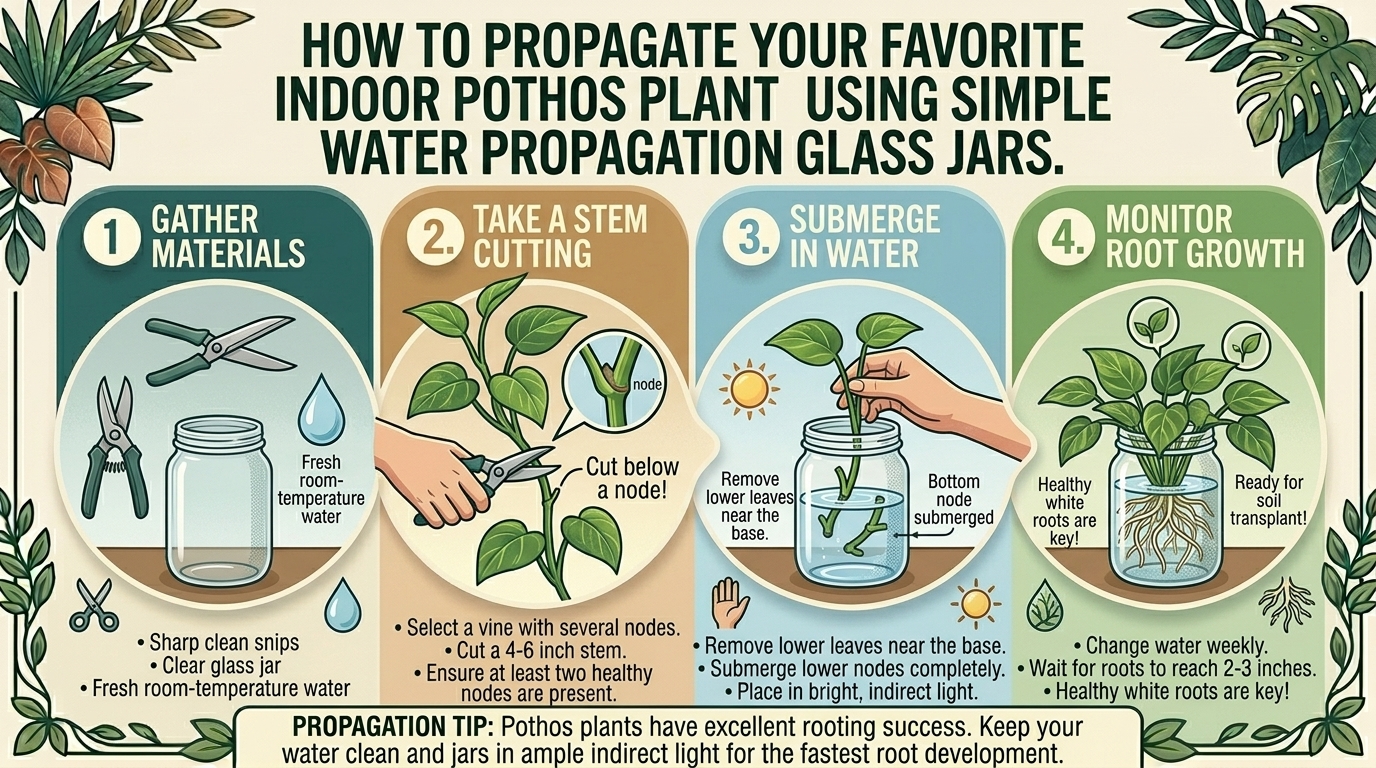
Yes! You can snip a few vines directly from your bookshelf plants, place the cuttings in small glass jars of water on an adjacent shelf, and watch them root right there as part of your decor.
10. Why is the bottom of my bookshelf plant dry while the top feels damp?
This is usually caused by shallow, frequent watering that only wets the top inch of soil. Water thoroughly until it runs out of the drainage holes (using a cachepot system) so the entire root ball stays hydrated.
Conclusion
Transforming your bookshelves with natural trailing houseplants is one of the most effective ways to weave vibrant life and organic texture into your home decor. By selecting resilient, cascading species like the Heartleaf Philodendron, Golden Pothos, and String of Hearts, you can create a stunning indoor jungle that thrives vertically. Whether you are styling a cozy reading nook in Washington or a modern urban loft in San Francisco, thoughtful plant selection, proper lighting adjustments, and clever watering routines will keep your bookshelf botanical canopy flourishing all year round.