What Are the Best Non-Toxic Indoor Houseplants That Are Completely Safe for Cats and Dogs?
For pet parents who are also passionate plant lovers, curating an indoor jungle can sometimes feel like walking through a minefield. Many of the most popular statement houseplants—such as majestic Monsteras, glossy Pothos, elegant Dieffenbachias, and classic Lilies—contain insoluble calcium oxalate crystals or toxic alkaloids that can cause severe gastrointestinal distress, oral pain, and in some cases, life-threatening organ failure if ingested by curious cats and dogs.
Fortunately, creating a lush, vibrant indoor garden does not mean you have to compromise the safety of your furry family members. Whether you are styling a sunlit urban loft in San Francisco, an apartment in New York, a home in Texas, or residential spaces across California and Washington, a vast array of stunning, non-toxic plants can safely coexist with your cats and dogs.
Brought to you by kcplants.com, this comprehensive, expert-led masterclass explores the top pet-safe indoor houseplants, detailing their care requirements, aesthetic benefits, and essential tips for maintaining a harmonious, pet-friendly home.
Part I: The Danger of Common Houseplants to Pets
Before diving into safe alternatives, it is crucial to understand why choosing non-toxic varieties matters. Cats, in particular, are natural climbers and explorers who love chewing on dangling vines or batting at swaying leaves. Dogs—especially teething puppies—frequently investigate household items with their mouths.
- Insoluble Calcium Oxalate Crystals: Found in popular aroids like Philodendrons, Pothos, and Alocasias, these microscopic needle-like crystals pierce soft tissue when chewed, causing intense burning of the mouth, excessive drooling, swelling, and difficulty swallowing.
- Systemic Toxins: Plants like True Lilies (Lilium species) are profoundly toxic to cats, where even ingesting a tiny amount of pollen or leaf material can trigger sudden kidney failure.
- Peace of Mind: Selecting verified pet-safe plants (as certified by the ASPCA) eliminates the constant anxiety of accidental poisoning, allowing both your pets and your plants to thrive in the same space.
Part II: The Best Non-Toxic Indoor Houseplants for Cats and Dogs
Here are the finest, most resilient, and aesthetically striking non-toxic plants that bring natural elegance into your home while keeping your pets entirely safe.
1. Calathea / Prayer Plant (Goeppertia species)
- The Aesthetic Appeal: Renowned for their intricate, hand-painted foliage featuring striking purples, deep pinks, and emerald greens. They are called “prayer plants” because their leaves fold upward at night.
- Pet Safety: 100% non-toxic to both cats and dogs. Even if a curious kitten nibbles on a leaf, there is zero risk of systemic toxicity.
- Care Essentials: Calatheas thrive in bright, indirect light and high humidity. They prefer consistently moist (not soggy) soil and appreciate being watered with distilled or filtered water to prevent leaf tip browning.
2. Parlor Palm (Chamaedorea elegans)
- The Aesthetic Appeal: A classic, graceful palm that brings a soft, tropical, feathery texture to any room. It has been a beloved indoor plant since the Victorian era.
- Pet Safety: Completely safe and non-toxic. Cats often find the soft, swaying fronds fun to bat at, making this a wonderful, guilt-free substitute for toxic decorative ferns or cycads.
- Care Essentials: Thrives in medium to low indirect light, making it ideal for darker corners or northern exposures. Allow the top inch of soil to dry out between waterings.
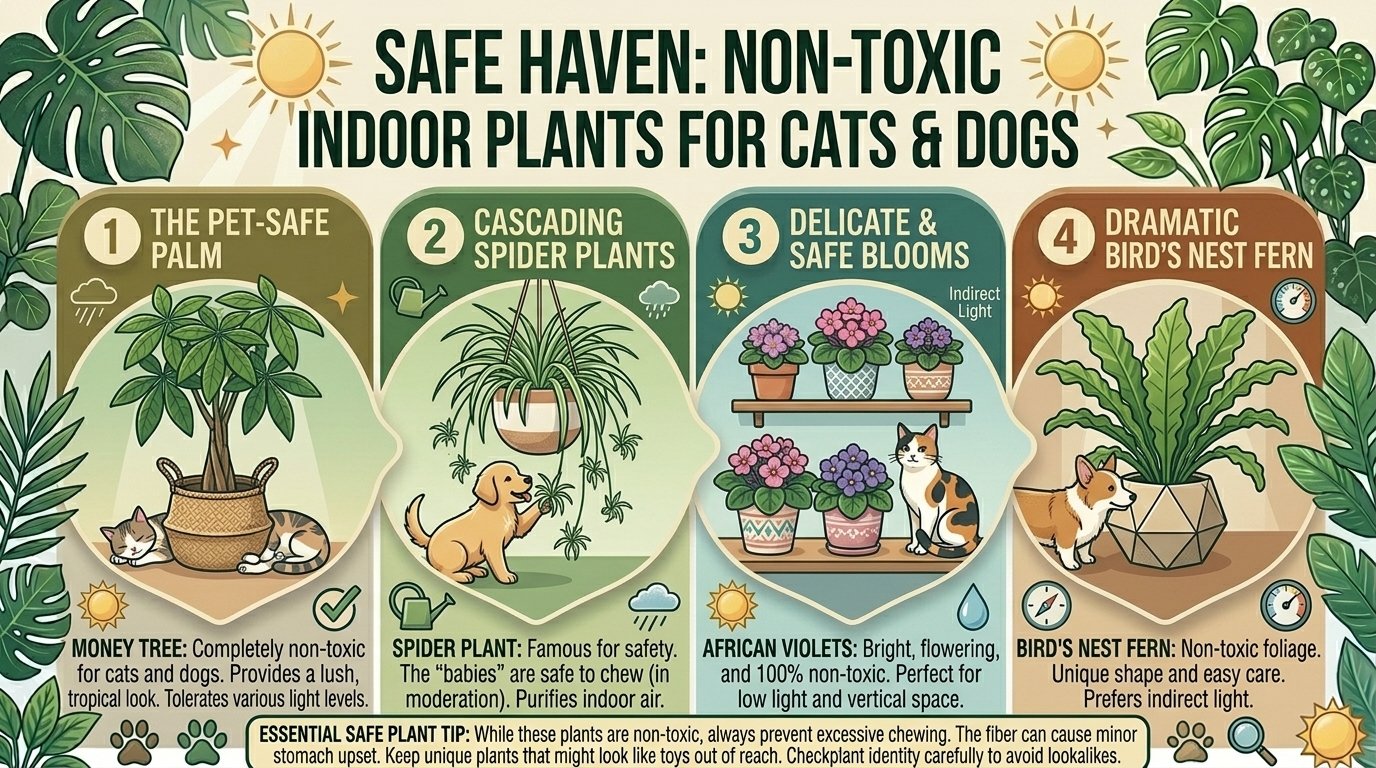
3. Spider Plant (Chlorophytum comosum)
- The Aesthetic Appeal: Featuring arching green-and-white striped leaves and producing adorable little “pups” (baby spider plants) on long stems, this is one of the hardiest houseplants on earth.
- Pet Safety: Non-toxic to cats and dogs. Interestingly, spider plants are known to cause a mild, harmless hallucinogenic or catnip-like reaction in some felines, which is why cats are often drawn to nibble on them safely.
- Care Essentials: Highly adaptable. They tolerate low light to bright indirect light and infrequent watering. Note: Fluoride or chlorine in tap water can cause brown leaf tips; using filtered water helps keep them pristine.
4. Boston Fern (Nephrolepis exaltata)
- The Aesthetic Appeal: The gold standard of lush, cascading foliage. Perfect for hanging baskets or high plant stands where their frilly, vibrant green fronds can drape elegantly.
- Pet Safety: Completely non-toxic to dogs and cats.
- Care Essentials: Boston ferns are heavy drinkers and demand high humidity. They require consistently damp soil and regular misting, thriving best in bright, indirect light away from harsh, drying heating vents.
5. Chinese Money Plant (Pilea peperomioides)
- The Aesthetic Appeal: Characterized by uniquely geometric, coin-shaped flat green leaves that bounce charmingly on top of upright stems. It is a modern interior design favorite.
- Pet Safety: Non-toxic to pets, meaning you can display it safely on low tables or desks without worry.
- Care Essentials: Loves bright, indirect light. Rotate the pot weekly so the plant grows evenly, and let the soil dry out completely between waterings.
6. Ponytail Palm (Beaucarnea recurvata)
- The Aesthetic Appeal: Despite its name, it is actually a succulent relative featuring a bulbous, water-storing trunk (caudex) topped with a wild, cascading fountain of curly green hair.
- Pet Safety: Non-toxic and structurally resilient. Its tough, woody trunk and leathery leaves make it less tempting for pets to chew on.
- Care Essentials: Requires bright light (even direct sunlight) and very infrequent watering. Because it stores water in its trunk, it easily survives underwatering.
7. Peperomia Varieties (e.g., Peperomia obtusifolia / Baby Rubber Plant)
- The Aesthetic Appeal: With over a thousand species, Peperomias offer incredible variety, featuring thick, succulent-like glossy leaves, trailing vines, or variegated patterns.
- Pet Safety: All Peperomia species are completely safe and non-toxic for cats and dogs.
- Care Essentials: Compact and easy-going. They thrive in medium indirect light and prefer their soil to dry out significantly between watering sessions.
8. African Violet (Saintpaulia)
- The Aesthetic Appeal: A compact, classic flowering houseplant that produces velvety green leaves and charming clusters of purple, pink, blue, or white blossoms.
- Pet Safety: Non-toxic to both cats and dogs.
- Care Essentials: Thrives in bright, indirect light and prefers watering from the bottom (placing the pot in a dish of water) to prevent water from splashing onto its fuzzy leaves, which can cause leaf rot.
Part III: Design and Placement Tips for Pet-Friendly Homes
Even when plants are completely non-toxic, ingestion of large amounts of plant matter can still cause mild stomach upset or vomiting in pets due to indigestible fiber. Smart placement keeps both your pets comfortable and your plants looking immaculate:
- Utilize Vertical Space: Hang trailing pet-safe plants like Boston Ferns or Spider Plants from ceiling hooks or high wall brackets out of jumping range.
- Elevate on Plant Stands: Use tall, sturdy plant stands with wide bases to display statement plants like Parlor Palms or Ponytail Palms safely out of reach of curious puppies.
- Protect the Soil: Cats sometimes view exposed potting soil as an indoor litter box. Cover the soil surface with large river rocks or decorative gravel to deter digging and scratching.
Part IV: Regional Considerations for Indoor Pet-Safe Plants
Depending on where you live across our key regions:
- San Francisco & New York (Urban Apartments): High-rise living often means lower natural light levels. Focus on low-light tolerant, pet-safe champions like Parlor Palms and Peperomias.
- Texas, California, & Washington: Homes with expansive windows and bright sunrooms can comfortably support sun-loving, pet-safe succulents like Ponytail Palms and bright prayer plants, keeping indoor humidity in check with room humidifiers during dry winter heating cycles.
Part V: Pro Tips for Troubleshooting Indoor Plant Care
- Always Verify Before You Buy: Never rely solely on store labels. Check the ASPCA toxic and non-toxic plant database whenever introducing a new botanical specimen into your home.
- Skip Chemical Leaf Shines: If your non-toxic plant leaves get dusty, wipe them down gently with a damp microfiber cloth and plain water rather than aerosol shine sprays, which can linger on foliage and irritate pet noses.
- Provide Cat Grass Alternatives: If your cat is an avid chewer, set out a dedicated pot of sprouted wheatgrass or cat grass nearby to satisfy their natural grazing instincts safely away from your decorative houseplants.
10 Frequently Asked Questions (FAQ)
1. Are all ferns safe for cats and dogs?
Not all ferns! While True Boston Ferns and Sword Ferns are completely non-toxic, Asparagus Ferns (Asparagus setaceus) are actually members of the lily family and are toxic to cats and dogs, causing severe vomiting and skin irritation. Always verify the exact species.
2. What happens if my cat eats a non-toxic houseplant?
If a cat ingests a non-toxic plant like a Spider Plant or Parlor Palm, they may experience mild, temporary tummy upset or vomit due to the indigestible plant fiber, but there is no risk of poisoning or organ damage.
3. Are succulents safe for pets?
Some are, and many are not. While Ponytail Palms and Haworthias are non-toxic, popular succulents like Jade Plants (Crassula ovata), Aloe Vera, and Kalanchoes are toxic to cats and dogs.
4. How can I keep my cat from digging in my potted plant soil?
You can place large decorative river stones over the soil surface, use double-sided sticky tape around the outer rim of the pot (which cats dislike stepping near), or sprinkle citrus peels on the soil, as cats dislike citrus scents.
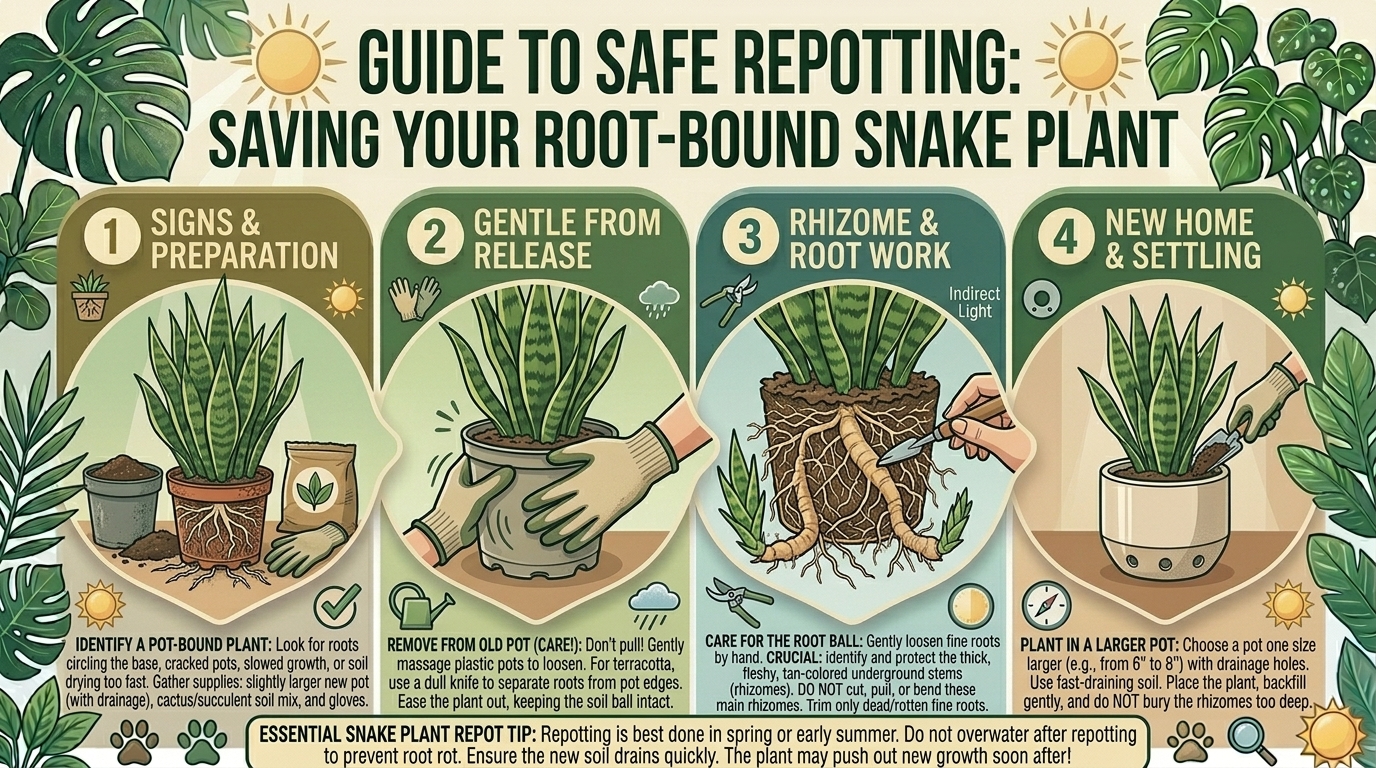
5. Are snake plants safe for dogs and cats?
No. Snake plants (Sansevieria or Dracaena trifasciata) contain saponins, which are mildly toxic to pets and can cause excessive drooling, nausea, vomiting, and diarrhea if ingested.
6. What is the easiest pet-safe plant for beginners?
The Spider Plant and the Parlor Palm are widely considered the most forgiving, hardy, and resilient pet-safe houseplants for beginners.
7. Are peace lilies safe for pets?
No! Despite their calming name, Peace Lilies (Spathiphyllum) contain calcium oxalate crystals and are toxic to cats and dogs, causing intense oral irritation and drooling. True lilies are even more dangerous, causing kidney failure in cats.
8. How do I clean my pet-safe houseplants safely?
Use a soft, damp microfiber cloth soaked in lukewarm water to wipe dust off smooth leaves. Avoid chemical pesticides or leaf-shine products, which can leave residues harmful if licked by pets.
9. Can I use fertilizer around pet-safe plants?
Yes, but exercise caution. Store liquid or granular fertilizers securely away from pets, and ensure any organic fertilizers (like fish emulsion) are washed away or worked deep into the soil so pets aren’t tempted to dig them up.
10. Where can I check if a specific plant is safe for my pets?
The American Society for the Prevention of Cruelty to Animals (ASPCA) maintains an exhaustive, searchable online toxic and non-toxic plant database categorized by dogs, cats, and horses.
Conclusion
Transforming your living space into a green, thriving sanctuary doesn’t have to put your furry companions at risk. By selecting stunning, verified non-toxic houseplants like Calatheas, Parlor Palms, Spider Plants, and Peperomias, you can enjoy all the mental health and aesthetic benefits of an indoor jungle with total peace of mind. Visit kcplants.com regularly for more expert plant care guides, design tips, and resources to help your indoor garden—and your pets—thrive!