What Are the Best Organic Fertilizers to Give Heavy-Feeding Zucchini Plants During Peak Summer?
Few plants in the backyard garden embody the sheer, unbridled abundance of summer quite like zucchini (Cucurbita pepo). Plant just a couple of seeds in the earth, and within weeks you are greeted by sprawling, star-shaped leaves, brilliant golden blossoms, and a relentless parade of glossy green cylinders. Zucchini is famously prolific—so much so that suburban folklore is filled with jokes about hiding surplus squash on neighbors’ porches.
Yet, this legendary productivity comes with a catch. Zucchini plants are classified as heavy feeders. To fuel their explosive growth, massive foliage, continuous flowering, and rapid fruit production, they drain enormous quantities of primary nutrients—nitrogen, phosphorus, and potassium—along with vital trace minerals from the soil.
By the time peak summer arrives, even the most fertile spring soil can become depleted. Without a strategic nutritional boost, your zucchini vines will suddenly stall, leaves will pale, blossoms will drop without setting fruit, and your harvest will screech to a halt.
Whether you are gardening under the blazing sun of Texas, managing the humid midsummer of New York, navigating the diverse microclimates of California, working the rich soils of Washington, or tending a compact backyard plot in San Francisco, supplying the right organic nutrition during peak summer is the secret to a non-stop harvest.
This comprehensive, SEO-optimized guide explores the absolute best organic fertilizers for heavy-feeding zucchini plants, how to apply them correctly, and how to keep your vines thriving until the first autumn frost.
Introduction: Understanding Zucchini’s Nutritional Demands
To feed zucchini effectively, you first need to understand what the plant requires at different stages of its life cycle:
- Early Growth (Nitrogen Focus): When the plant is young, it needs nitrogen to build its massive solar panels—its broad, dark green leaves. Nitrogen drives vegetative growth, structural strength, and stem development.
- Peak Summer & Fruiting (Phosphorus & Potassium Focus): Once summer hits and the plant transitions into full production, its nutritional needs shift dramatically. Phosphorus is essential for heavy root development and prolific flower set (remember: every zucchini starts as a blossom). Potassium is the workhorse nutrient that regulates water movement, enhances disease resistance, and drives the rapid expansion and sugar content of the fruit.
Using harsh, synthetic chemical fertilizers may provide a quick green-up, but they often burn delicate feeder roots, destroy beneficial soil microbes, and lead to an unsustainable growth spike followed by a sudden plant crash. Organic fertilizers, on the other hand, feed both the plant and the living soil ecosystem simultaneously, providing a slow-release, steady stream of balanced nutrition perfectly tailored for peak summer stress.
The Top 5 Organic Fertilizers for Peak Summer Zucchini
When your zucchini plants are working overtime in the heart of summer, these organic amendments and liquid feeds provide the ultimate nutritional punch:
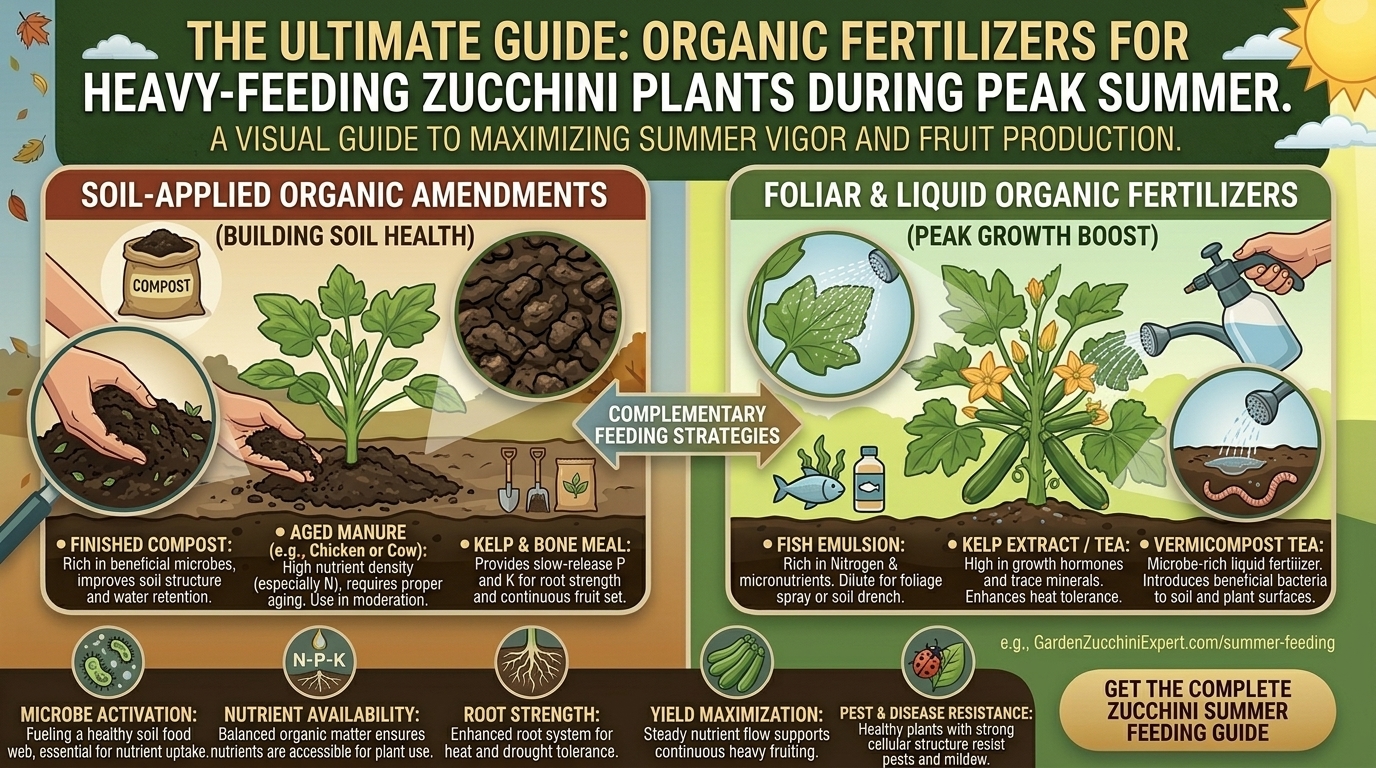
1. Aged Compost and Worm Castings (The Foundation)
- What it is: Thoroughly decomposed organic matter or the nutrient-rich waste of earthworms.
- Why it works: While not a high-octane chemical blast, compost and worm castings are packed with micronutrients, humic acids, and billions of beneficial microbes. Side-dressing your zucchini plants with a 2-inch ring of compost in mid-summer revitalizes tired soil, improves moisture retention, and provides a gentle, perfectly balanced slow-release feeding.
2. Liquid Kelp and Seaweed Extract (The Anti-Stress Tonic)
- What it is: Concentrated liquid derived from harvested marine kelp.
- Why it works: Peak summer brings blistering heat waves and drought stress, especially in regions like Texas and interior California. Liquid kelp is a powerhouse of natural plant hormones (auxins and cytokinins) and trace minerals. Foliar spraying or root-drenching with kelp helps zucchini plants withstand heat stress, stimulates root growth, and enhances overall cellular strength.
3. Fish Emulsion (The Rapid Nitrogen and Growth Booster)
- What it is: A liquid organic fertilizer made from whole fish or fish processing byproducts.
- Why it works: Fish emulsion provides a rapid-acting source of organic nitrogen and trace elements. If your summer zucchini leaves are looking pale, light green, or growth has noticeably stunted, a bi-weekly drench of diluted fish emulsion will quickly green up the foliage and fuel new vine extension. (Tip: Look for deodorized formulas if you are gardening in close urban quarters like San Francisco!)
4. Bone Meal (The Phosphorus Powerhouse for Blossoms)
- What it is: Finely ground animal bones, prized for their high phosphorus and calcium content.
- Why it works: If your zucchini plant is blooming profusely but all the baby squash are turning yellow, shriveling, and rotting at the end (a sign of pollination issues or phosphorus/calcium deficiency), bone meal is your fix. Scratching a handful of bone meal into the soil around the drip line in early summer fuels robust flower development and prevents blossom-end rot.
5. Composted Poultry or Steer Manure (The Balanced All-Rounder)
- What it is: Fully composted animal manure that has broken down enough to be safe for direct garden application without burning plants.
- Why it works: Manure is a classic organic heavy-hitter. It provides a steady, well-rounded ratio of nitrogen, phosphorus, and potassium while adding heavy organic matter to the soil structure.
Regional Considerations Across the US
Your local climate dictates how and when you should apply these organic fertilizers during the intense heat of summer:
- Texas: High summer temperatures cause zucchini to go into overdrive, but excessive heat can also cause plants to shut down temporarily. Avoid heavy, high-nitrogen synthetic or raw fertilizers during peak July and August heat waves, as they can burn heat-stressed roots. Stick to cooling liquid kelp tonics and light compost side-dresses.
- New York: Midsummer in New York often brings high humidity mixed with heavy thunderstorms. This environment is prime breeding ground for fungal diseases like powdery mildew. Use granular organic fertilizers worked gently into the topsoil rather than heavy overhead liquid spraying, and keep mulch clean.
- California & San Francisco: Coastal San Francisco offers mild, foggy summers, meaning zucchini won’t face extreme scorching heat, but they do appreciate consistent potassium boosts to maintain fruit set in cooler air. Interior California valleys require heavy watering paired with organic liquid kelp to combat dry, arid winds.
- Washington: Western Washington’s mild summers mean zucchini grow steadily without extreme heat stress. Regular bi-weekly applications of balanced organic fish emulsion and compost tea will keep production humming right through August.
Step-by-Step Guide: How to Feed Zucchini During Peak Summer
Applying fertilizer correctly is just as important as choosing the right product. Follow this step-by-step strategy for midsummer feeding success:
Step 1: Assess Your Plants
Look closely at your zucchini plants.
- Are the leaves pale green? (Needs nitrogen/fish emulsion).
- Are there plenty of flowers, but few developing fruits? (Needs phosphorus/bone meal).
- Are the leaves drooping and struggling against the heat? (Needs kelp extract and moisture management).
Step 2: Clear and Clean the Base
Gently pull back any old mulch from a 1-foot radius around the base of the main stem. Clear away any rotting fallen leaves or debris where pests or fungal spores might hide.
Step 3: Apply the Amendment
- For Granular/Solid Amendments (Compost, Bone Meal, Manure): Sprinkle a cup of bone meal and a generous shovelful of compost or aged manure in a ring around the plant, matching the spread of the canopy (the drip line). Gently scratch it into the top 1 to 2 inches of soil with a hand cultivator, taking care not to damage the shallow surface roots.
- For Liquid Amendments (Fish Emulsion, Liquid Kelp): Mix the concentrated liquid with water in a watering can according to product label instructions (usually 1 to 2 tablespoons per gallon). Pour the mixture directly into the soil around the root zone. Avoid splashing liquid directly onto the leaves in the hot afternoon sun, which can cause leaf scorch.
Step 4: Water Deeply
Organic fertilizers require moisture to break down and release their nutrients to plant roots. Always give your zucchini bed a deep, thorough watering immediately after applying any fertilizer.
Step 5: Replenish the Mulch
Layer clean straw or shredded leaves back over the fertilized soil to lock in moisture, regulate soil temperature, and prevent weed competition.
Midsummer Pest and Disease Management for Heavy Feeders
Well-fed plants are naturally more resilient against pests, but heavy-feeding summer zucchini still face classic adversaries:
- Powdery Mildew: Appears as a white, powdery dusting on leaves during humid summer stretches. Combat it by ensuring proper plant spacing, watering the base (not the leaves), and spraying with a weak organic baking soda or milk solution.
- Squash Bugs and Vine Borers: These notorious pests can devastate a summer patch overnight. Inspect the undersides of leaves weekly for bronze-colored egg clusters and scrape them off immediately. Floating row covers earlier in the season and crop rotation are your best defenses.
10 Essential FAQs About Fertilizing Summer Zucchini
1. How often should I fertilize my zucchini plants during peak summer?
Because zucchini are heavy feeders, they benefit from a steady feeding schedule. Apply a slow-release granular organic amendment (like compost or bone meal) once in mid-summer, supplemented by a liquid organic feed (like fish emulsion or kelp extract) every 2 to 3 weeks throughout July and August.
2. Can I over-fertilize zucchini with organic fertilizers?
Yes, though it is harder to do with organics than with synthetic chemicals. Over-fertilizing—especially with high-nitrogen sources like fresh manure or heavy fish emulsion—will cause the plant to produce a monstrous jungle of giant leaves at the complete expense of flowers and fruit, while also attracting aphids.
3. Why are my zucchini flowers dropping off without producing fruit?
This is one of the most common midsummer panics. Zucchini plants produce separate male and female flowers. The very first flowers are almost exclusively male (designed to attract pollinators) and naturally drop off. Furthermore, if pollination rates are low due to a lack of bees, or if the plant lacks sufficient phosphorus, female baby fruits will shrivel and drop.
4. Is fresh animal manure safe to use on summer zucchini?
Never use fresh manure directly on active summer plants; it is too hot, will burn the root system, and can introduce harmful pathogens to edible crops. Always use fully composted, aged manures.
5. What is the best organic fertilizer to stop blossom-end rot on zucchini?
Blossom-end rot (where the bottom of the squash turns black and leathery) is triggered by calcium uptake issues, often caused by erratic watering. Applying bone meal provides both phosphorus and organic calcium, while maintaining steady moisture levels ensures the plant can actually absorb it.
6. Should I use liquid fertilizers or granular fertilizers in peak summer?
A combination of both is ideal! Use granular amendments (like compost) for long-term, slow-release soil structure improvement, and use liquid fertilizers (like fish emulsion or kelp) for a fast, targeted nutritional rescue when growth slows down in mid-summer.
7. Does zucchini need extra potassium when setting fruit?
Yes! Potassium is vital during peak fruit production. Kelp meal, wood ash (used sparingly), and composted organic matter are fantastic organic sources of potassium that help swell the fruit and enhance flavor.
8. How do I know if my summer zucchini is suffering from nutrient deficiency?
Look at the foliage:
- Overall yellowing of older leaves points to nitrogen deficiency.
- Purplish or dark bronze tones on stems and leaves often indicate a phosphorus shortage.
- Marginal leaf burn or yellowing leaf tips can signal potassium deficiency.
9. Can I make my own organic fertilizer at home for zucchini?
Absolutely. You can steep comfrey leaves, stinging nettles, or aged compost in a bucket of water for 2 to 3 weeks to create a potent, nutrient-dense “weed tea” or “compost tea” that serves as an incredible liquid organic feed for summer vegetables.
10. Do container-grown zucchini plants need different fertilizers?
Yes. Zucchini grown in pots or large containers wash nutrients out of the soil much faster due to frequent watering. Container-grown plants require more frequent, diluted applications of liquid organic fertilizers (like fish emulsion or liquid kelp) every 10 to 14 days throughout the summer.
Conclusion
Peak summer is the ultimate test of endurance for both the gardener and the zucchini patch. As these heavy-feeding vines churn out an endless supply of delicious squash, they require robust, sustained organic nutrition to keep pace.
By enriching your soil with aged compost, boosting flower development with bone meal, and protecting your plants against heat stress with liquid kelp and fish emulsion, you ensure a healthy, vibrant harvest all season long. Whether you are battling the dry Texas heat, the humid New York summers, or mild coastal winds in San Francisco, organic feeding keeps your soil alive and your vines loaded with fruit. Treat your zucchini right, and you will have more squash than you ever thought possible! Happy gardening!