There is a distinct, satisfying crunch that comes with biting into a freshly harvested stalk of home-grown celery (Apium graveolens). Unlike the pale, watery, rubbery stalks often found sitting on supermarket shelves, crisp garden celery packs an intense, aromatic punch that elevates everything from soups and stocks to raw crudité platters.
Yet, for many backyard gardeners, growing celery is viewed as an intimidating challenge. Celery is notoriously thirsty, slow-growing, and demanding of rich soil. But perhaps the biggest hurdle gardeners face is learning how to harvest it. All too often, well-meaning growers slice down the entire plant at the soil line, abruptly ending its life cycle after just a single harvest.
What if you could harvest fresh, crisp celery stalks continuously for weeks or even months without ever killing the plant?
By utilizing the outer-stalk harvesting method and protecting the vital central growth point (the heart), you can turn a single celery plant into a renewable culinary resource. Whether you are cultivating your garden under the intense sun of Texas, navigating the variable spring-to-autumn transitions of New York, managing the diverse microclimates of California, working the fertile soils of Washington, or tending an urban plot in San Francisco, this comprehensive, SEO-optimized guide will teach you how to harvest celery like a master professional.
Introduction: Understanding the Architecture of the Celery Plant
To master the art of continuous harvesting, you must first understand how celery grows. Celery is a biennial plant typically grown as an annual. It develops in a rosette pattern, sending out new, tender leaves and stalks from a central core known as the crown or growing tip.
- The Outer Stalks (The Veterans): These are the oldest, longest, and outermost stalks on the perimeter of the plant. They receive the most sunlight, mature first, and bear the brunt of external elements.
- The Inner Stalks (The Heart): These are the younger, shorter, paler stalks clustering tightly around the center. They are exceptionally tender, sweet, and crisp.
- The Central Growth Point: Located right at the base of the inner core, this invisible engine block of the plant generates every new leaf and stalk. If this center point is crushed, cut too low, or damaged, the plant will permanently stop growing and begin to rot.
Understanding this architecture changes everything about how you approach harvest day. Instead of destroying the plant to get your dinner, you learn to gently harvest the outer perimeter while safeguarding the factory floor in the center.
Regional Realities: Growing and Harvesting Across the US
Celery is a cool-season heavy feeder that requires precise timing depending on your regional climate:
- Texas: Because Texas features long, scorching summers, celery must be timed carefully. Plant in late winter (January–February) for a spring harvest, or plant in late summer for an autumn-to-winter crop. Shade cloth during peak afternoon heat is essential to prevent bitterness.
- New York: New York’s brisk springs and autumns are fantastic for celery. Start seeds indoors in late winter and transplant outdoors in mid-to-late spring after the danger of hard frost has passed. Harvest heavily before the deep freeze of late autumn.
- California & San Francisco: San Francisco’s cool, foggy summers provide an absolute paradise for celery, which thrives in mild, humid maritime air. Coastal California growers can often extend their harvest well into the winter months.
- Washington: Western Washington’s wet, temperate climate supports lush celery growth, but well-draining raised beds are crucial to prevent root rot during rainy spells. Eastern Washington gardeners should utilize heavy mulch to retain moisture during dry summer weeks.
Step-by-Step Guide: The Outer-Stalk Harvesting Method
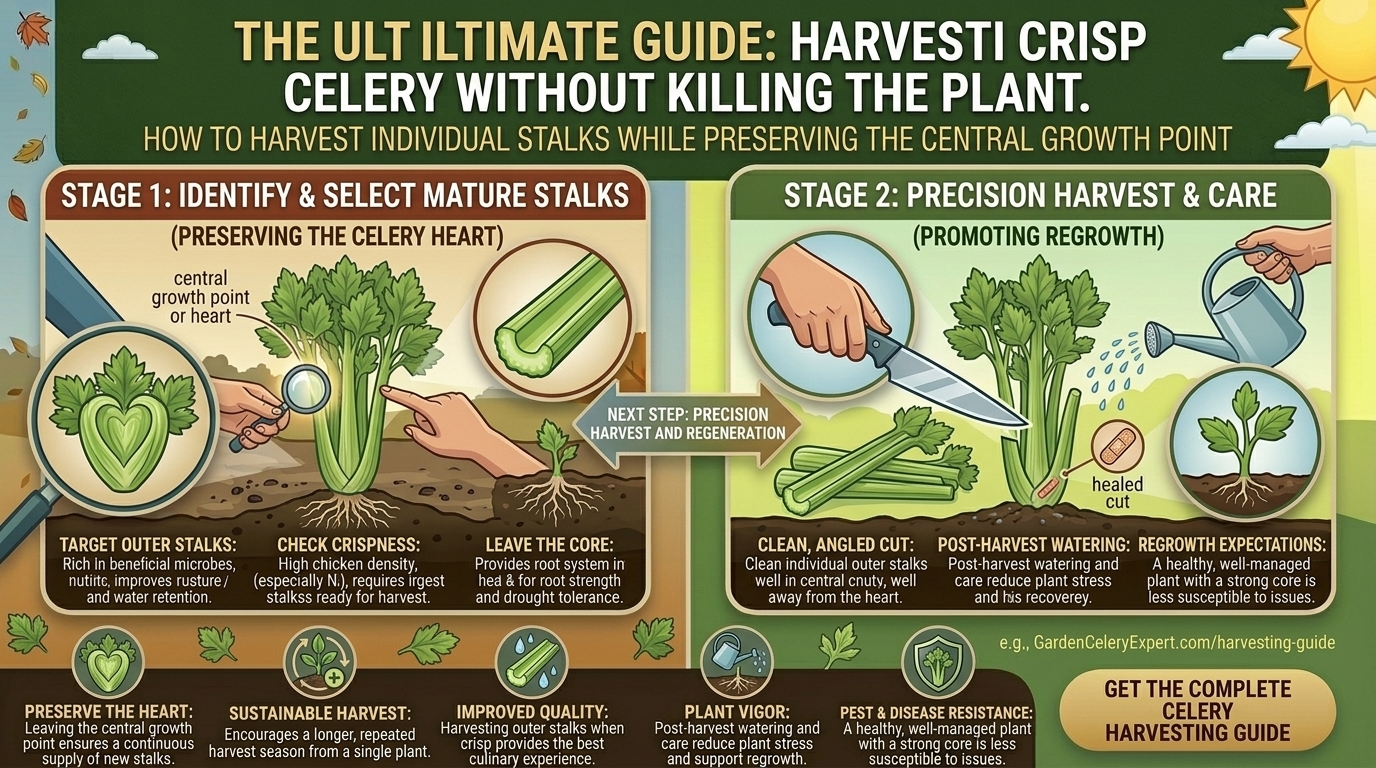
When your celery plants reach a height of 12 to 18 inches, they are ready for harvest. Instead of grabbing a kitchen knife and chopping the plant in half, follow this precise step-by-step technique to preserve the central growth point:
Step 1: Assess Plant Maturity
Before harvesting, check your plants. They should have a robust cluster of thick stalks. If the outer stalks are at least 8 to 12 inches long and pencil-thick or thicker, they are prime candidates for picking. Never harvest from a young, weak plant that has fewer than 6 to 8 total stalks, as it needs its foliage to photosynthesize and build strength.
Step 2: Choose the Outermost Stalks
Work your way around the perimeter of the plant. Select the oldest, outermost stalks—the ones leaning farthest away from the center. These are the most mature and flavorful, and removing them actually opens up the plant’s canopy to let more sunlight reach the developing inner core.
Step 3: Use the “Snap and Pull” Technique (or Clean Snips)
- The Snap Method: Gently grasp the base of the chosen outer stalk close to the soil line. Pull it outward and downward with a firm, decisive motion. It should naturally snap clean away from the main base with a satisfying crunch, leaving no ragged stump behind.
- The Snip Method: If the stalk is stubborn or woody, use a pair of sterilized garden shears or a sharp knife to cut the stalk as close to the main base as possible, taking care not to nick neighboring stalks or the central crown.
Step 4: Leave the Heart Completely Untouched
As you remove the outer ring of stalks, leave all the inner, smaller stalks and—most importantly—the central cluster of baby leaves completely undisturbed. This central growth point is where tomorrow’s celery is being manufactured.
Step 5: Clean and Store Immediately
Rinse your freshly harvested stalks in cool water to remove any garden soil, trim the root end, and store them in an airtight container or damp towel in the refrigerator to maximize crispness.
Alternative Harvesting: The “Cut-and-Come-Again” Whole Plant Method
There is a second, highly popular harvesting style known as the whole-plant cut-and-come-again method, though it requires slightly different execution:
Instead of picking individual stalks week by week, you harvest the entire plant all at once—with one crucial rule: you must cut the entire plant approximately 2 inches above the soil line, leaving the root crown and the very base of the stems intact in the ground.
- How it works: Once the top foliage is removed, the dormant growth buds nestled inside the remaining crown will rapidly activate. Within weeks, multiple new shoots will erupt from the stub, creating a multi-stemmed cluster of smaller, intensely flavorful celery shoots (often called “cutting celery”).
- Best used for: Gardeners who want a massive harvest of bunching celery all at once, or those who want to squeeze a final bonus harvest out of their plants at the end of the growing season before winter sets in.
Advanced Tips for Maximizing Celery Crispness and Yields
Growing crisp celery requires managing its unique biological needs. Because celery is roughly 95% water, even minor stress ruins its texture, turning stalks stringy, hollow, or bitter.
1. Maintain Uncompromising Moisture
Celery has a remarkably shallow root system. If the soil dries out even slightly during hot weather, the stalks will become stringy and bitter. Ensure your plants receive a consistent 1 to 2 inches of water per week.
2. Heavy Mulching is Mandatory
Apply a 3-to-4-inch layer of clean straw or shredded leaves around your celery plants. This locks in precious soil moisture, keeps the root zone cool, and prevents soil from splashing onto the stalks during watering or rainstorms.
3. The Art of Blanching (Optional)
If you prefer tender, pale, mild-tasting celery stalks rather than dark green, strongly flavored ones, you can blanch your celery 2 weeks before harvesting. Wrap the lower two-thirds of the plant loosely with cardboard, heavy brown paper, or a sleeve of black plastic, securing it with twine. This blocks sunlight from hitting the stalks, preventing chlorophyll production and resulting in sweeter, whiter stalks.
10 Essential FAQs About Harvesting and Growing Celery
1. Will my celery plant die if I accidentally cut the central growth point?
Yes, if you accidentally slice right through the absolute center crown (the heart), the plant cannot generate new leaves. While it may occasionally send out small, weak side-shoots from lower nodes, the primary vertical growth of that plant is effectively terminated. Always cut carefully around the center!
2. How many stalks can I safely harvest from one plant at a time?
As a general rule of thumb, you can harvest up to one-third to one-half of the plant’s outer stalks at any given time. This leaves enough mature foliage for the plant to photosynthesize, recover quickly, and continue feeding the central core.
3. Why are my home-grown celery stalks stringy and tough?
Stringiness is almost always caused by water stress (letting the soil dry out) or harvesting too late in the season after the plant has begun to bolt (flower). Consistent moisture and timely harvesting ensure tender, crisp stalks.
4. Can I grow celery in containers or raised beds?
Absolutely! Celery grows exceptionally well in large pots, fabric grow bags, or raised beds (at least 12 inches deep). Containers are fantastic for urban gardeners in San Francisco or New York apartments, as they allow you to closely monitor soil moisture and rich compost composition.
5. Does celery need a lot of fertilizer?
Yes, celery is a heavy feeder. Because it grows rapidly, it requires nitrogen-rich soil. Side-dress your plants with aged compost or apply a diluted liquid organic fish emulsion every 3 to 4 weeks throughout the active growing season.
6. What causes celery to turn bitter in summer?
Extreme heat and dry soil are the primary culprits behind bitter celery. If you live in a hot region like Texas, provide afternoon shade cloth and heavy straw mulch to keep soil temperatures down and prevent bitterness.
7. How long can I keep harvesting from a single celery plant?
Using the outer-stalk harvesting method, a single healthy celery plant can continue producing new stalks for 2 to 4 months before the plant eventually exhausts itself or begins the bolting process (sending up a flower stalk).
8. What should I do when my celery plant starts to bolt (flower)?
Once celery bolts, the central stalk turns thick, hollow, woody, and intensely bitter, and the leaves become unpalatable. When you notice a flower spike forming, harvest the remaining usable outer stalks immediately, pull the plant, and compost the roots.
9. Can I regrow store-bought celery kitchen scraps in water?
Yes! You can cut the base off a supermarket celery stalk, place it in a shallow dish of water on a sunny windowsill, and watch new leaves sprout from the center within a week. Once roots appear, transplant it into soil. Note: While fun and educational, it produces smaller, slender stalks compared to plants grown from seed or nursery starts.
10. How do I properly store harvested celery to keep it crisp?
Wash your harvested stalks, trim the root ends, wrap them loosely in a damp paper towel or place them in an airtight container or perforated plastic bag inside the crisper drawer of your refrigerator. Properly stored, fresh garden celery will remain crisp and crunchy for up to 2 to 3 weeks.
Conclusion
Harvesting celery does not have to be a destructive event. By ditching the practice of chopping down entire plants and instead adopting the outer-stalk harvesting method, you unlock a continuous, renewable supply of fresh, crunchy green stalks straight from your backyard garden.