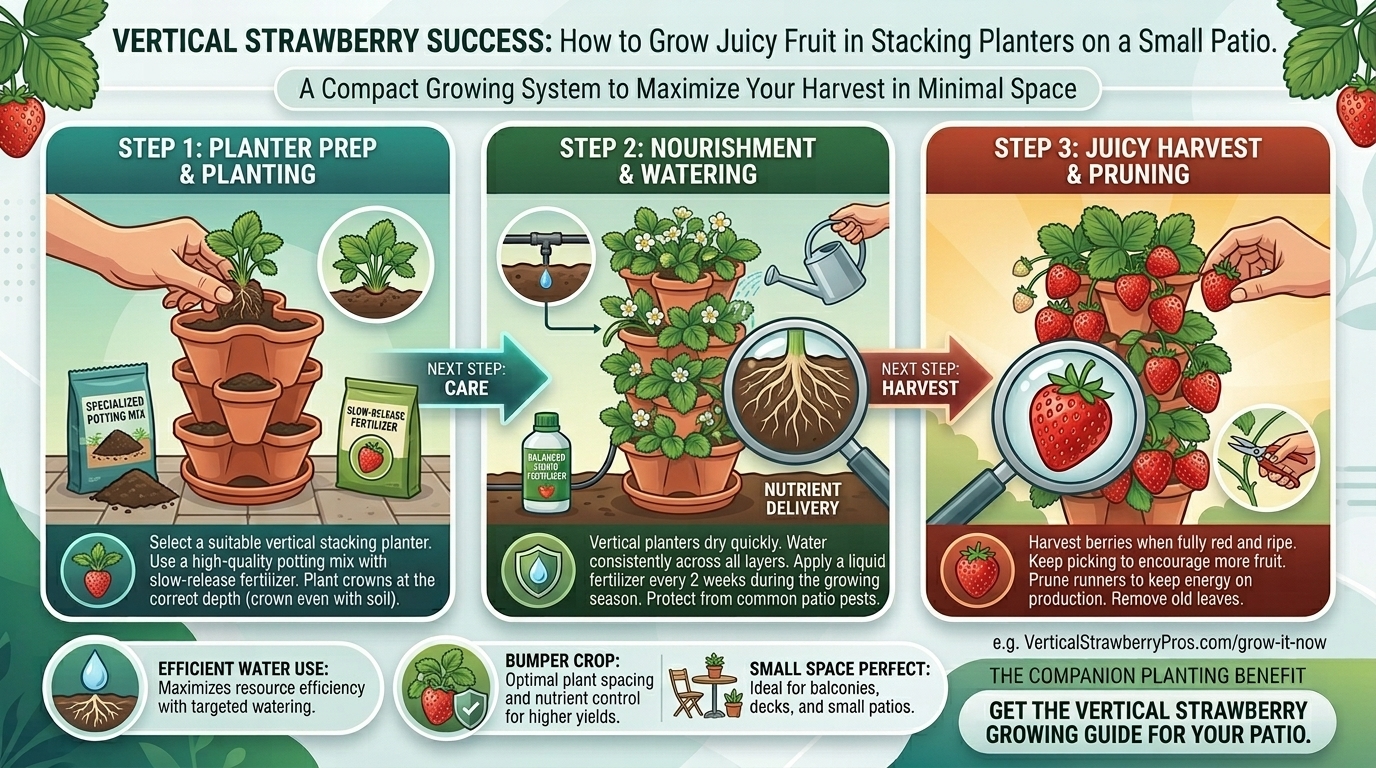
How to Grow Juicy Strawberries in Vertical Stacking Planters on a Small Patio Space
There is an undeniable, sun-ripened magic to walking out onto your patio, reaching down, and picking a warm, fragrant strawberry straight from the vine. Their intense, sugary sweetness bears no resemblance to the pale, travel-weary berries sitting in plastic clamshells at the supermarket.
For many urban and suburban gardeners, however, a sprawling backyard garden patch is an impossible luxury. If your “garden” consists of a concrete balcony, a cozy urban courtyard, or a compact patio space, you might assume that growing your own luscious fruit is out of reach.
Enter the revolutionary world of vertical stacking planters.
By utilizing vertical space rather than sprawling across horizontal acreage, vertical planters allow you to cultivate a massive, high-yield strawberry patch within a footprint no larger than a single floor tile. Whether you are gardening under the brilliant sunshine of Texas, managing the seasonal shifts of New York, navigating the diverse microclimates of California, working the cool maritime air of Washington, or tending a windy balcony in San Francisco, vertical stackers are the ultimate space-saving solution.
This comprehensive, SEO-optimized guide explores everything you need to know to grow juicy, heavy-yielding strawberries in vertical stacking planters on a small patio space.
Introduction: Why Vertical Planters Are a Game-Changer for Strawberries
Strawberries (Fragaria × ananassa) are naturally shallow-rooted perennial plants. Because their root zones rarely extend deeper than 6 to 8 inches into the earth, they do not require massive, deep garden beds to thrive. Instead, they thrive wonderfully in containers.
However, traditional single pots take up massive amounts of floor space for very few plants. Vertical stacking planters—modular, tiered, or vertical tower systems that stack upward—solve this dilemma brilliantly:
- Maximized Sunlight: Stacking upward ensures that every individual tier catches maximum sunlight, preventing plants from shading each other out.
- Disease Prevention: By elevating your strawberries off the ground, vertical planters completely eliminate soil contact. This single feature prevents muddy fruit rot, deters crawling garden pests like slugs and snails, and keeps berries clean.
- Effortless Harvesting: No more bending down or kneeling in the dirt. At harvesting time, ripe berries dangle invitingly at eye and waist level.
- Exceptional Drainage: Strawberry roots despise sitting in waterlogged soil. Vertical towers provide superior gravity-fed drainage, preventing root rot.
Understanding Strawberry Types: Which Ones Fit Vertical Towers?
Before buying plants or filling your vertical stacker, you must choose the right variety of strawberry. They fall into three primary categories:
1. Everbearing Strawberries
- Characteristics: Despite their name, they do not produce fruit continuously all year. Instead, they produce two to three heavy flushes of fruit: a large crop in late spring, a smaller lull in mid-summer, and a final heavy flush in late summer or autumn.
- Vertical Suitability: Excellent for vertical towers because they maintain a manageable, compact size and don’t produce excessive runners.
2. Day-Neutral Strawberries
- Characteristics: These modern hybrids are temperature-sensitive rather than daylight-sensitive. As long as temperatures stay between 35°F and 85°F, they will continuously produce flowers and fruit from late spring straight through until the first autumn frost.
- Vertical Suitability: The absolute best choice for vertical stacking planters. Their continuous-cropping habit ensures your patio tower remains productive and visually stunning for months. Popular varieties include ‘Albion’, ‘Seascape’, and ‘Quinault’.
3. June-Bearing Strawberries
- Characteristics: These produce one massive, intensely sweet harvest over a concentrated 3-to-4-week window in early summer, followed by vegetative growth for the rest of the year.
- Vertical Suitability: Less ideal for compact vertical patio towers because they throw out massive quantities of long runners (“stolons”) that crowd vertical tiers quickly.
Selecting and Preparing Your Vertical Planter System
Vertical planters come in a dazzling array of designs, ranging from DIY PVC towers and fabric vertical wall-hanging pockets to interlocking, tiered plastic stacking pots.
When choosing a system for your patio, look for these features:
- Food-Safe Materials: Ensure any plastic, resin, or fabric tower is explicitly labeled UV-resistant, BPA-free, and food-safe.
- Internal Water-Flow Design: High-quality vertical towers feature internal baffling or a central watering tube that allows water poured into the top tier to trickle down evenly through all lower tiers without washing out the soil.
- Adequate Pocket Volume: Each planting pocket or tier should hold at least 1 to 2 gallons of potting mix per plant to provide sufficient root space and moisture retention.
Regional Patio Growing Strategies Across the US
Your local climate dictates your planting timeline and microclimate management on a patio:
- Texas: Intense summer heat can scorch patio containers. Place your vertical tower where it receives morning sun and afternoon shade (or use a 30% shade cloth during peak July/August afternoons). Choose day-neutral varieties that tolerate heat well, and water daily.
- New York: Start your container setup in mid-to-late spring after frost risks pass. Because containers freeze solid in harsh northern winters, you will need to move your vertical planter into an unheated garage or wrap it heavily in burlap if you want perennial plants to survive until next spring.
- California & San Francisco: San Francisco’s cool, foggy microclimates and coastal California conditions provide an idyllic environment for strawberries. Day-neutral varieties will thrive on a sunny apartment balcony, producing fruit almost year-round due to the mild winters.
- Washington: Western Washington’s damp springs require excellent drainage; choose a light, airy potting mix. Ensure your patio tower sits in the sunniest corner available to compensate for overcast maritime days.
Step-by-Step Guide: Setting Up Your Strawberry Tower
Step 1: Mix the Ultimate Potting Soil
Never use heavy native garden soil or clay in a vertical planter; it will compact into a brick and suffocate the roots.
- Mix a custom blend: 60% high-quality organic potting mix (for moisture retention), 20% aged compost or worm castings (for nutrient density), and 20% perlite or pumice (to guarantee rapid drainage and aeration).
Step 2: Stacking and Filling the Tower
- Assemble your vertical stacking planter tier by tier right on your patio in its permanent, sunlit location (once filled with wet soil, it will be heavy to move).
- Fill each tier with your soil mix, gently tamping it down to eliminate large air pockets.
Step 3: Planting the Crown Correctly
This is the most critical step in strawberry cultivation: planting depth.
- Gently insert your bare-root or potted strawberry plants into the side pockets or top tiers.
- Ensure the crown (the swollen base where the stems and leaves emerge from the roots) sits right at the soil surface.
- If you bury the crown too deep beneath the soil, it will rot. If you plant it too shallow, the roots will dry out and die.
Step 4: Initial Watering
Water each tier thoroughly until water runs freely out of the drainage holes at the bottom of the planter. This settles the soil firmly around the root systems.
Season-Long Care and Maintenance on a Patio
Patio containers dry out much faster than in-ground garden beds, making attentive care essential for a heavy harvest:
- Daily Watering: During warm summer weeks, your vertical tower will likely need watering once a day (and twice a day during scorching heat waves in Texas or interior California). Always water at the base or through the top reservoir, keeping foliage as dry as possible.
- Bi-Weekly Organic Feeding: Because watering washes nutrients out of container soil quickly, strawberries in vertical planters are heavy container feeders. Feed them every 2 weeks from spring through summer with a balanced, organic liquid fertilizer or a diluted fish emulsion and kelp tea.
- Runner Management: Snip off any long runners that shoot out of the plants. Forcing the plant to direct its energy inward rather than growing runners results in larger, juicier berries.
- Bird Protection: Patio strawberries are sitting ducks for opportunistic birds. If local wildlife discovers your vertical tower, drape a lightweight bird netting or garden mesh over the structure until harvest time.
10 Essential FAQs About Growing Strawberries in Vertical Planters
1. How many strawberry plants can I fit in a standard vertical tower?
Most modular vertical stacking systems hold 3 plants per tier, with 4 to 6 tiers total, meaning a single tower can comfortably house 12 to 18 strawberry plants in a 2-foot footprint.
2. Do vertical strawberry planters survive the winter outdoors?
It depends on your climate. In mild regions like San Francisco, coastal California, and parts of Texas, they survive outdoors year-round. In harsh winter climates like New York and Washington, perennial strawberry roots in containers can freeze and die. Move the planter into a garage, shed, or wrap it in insulating bubble wrap and straw.
3. Why are my patio strawberries small, dry, and woody?
This is almost always caused by underwatering or nutrient deficiency. Container soil dries out rapidly in the wind and sun. Ensure you are watering consistently and feeding your plants with liquid organic fertilizer every 2 weeks.
4. Can I grow strawberries from seeds in a vertical planter?
You can, but it is extremely slow, tedious, and yields inconsistent fruit. For vertical patio planters, it is vastly superior to start with bare-root plants or potted nursery starts (plugs), which will fruit in their very first season.
5. Why are the leaves on my patio strawberries turning brown at the edges?
Brown leaf margins typically signal salt buildup from synthetic fertilizers, wind burn (common on high-rise balconies), or inconsistent moisture. Flush the soil thoroughly with clean water every few weeks to wash away accumulated mineral salts, and use organic fertilizers instead.
6. Do I need to pollinate patio strawberries manually?
If your vertical planter is on an open balcony or patio, visiting bees, beneficial flies, and wind will handle pollination naturally. However, if your patio is enclosed on a high-rise floor where bees rarely visit, you can easily pollinate them yourself by gently brushing the open yellow flower centers with a soft artist’s paintbrush.
7. What potting soil is best for vertical strawberry towers?
A light, loose, well-aerated potting mix combined with 20% perlite and plenty of organic compost. Avoid heavy topsoil, garden soil, or old potting mix that has lost its structure.
8. How many years will strawberry plants produce fruit in a vertical planter?
Strawberry plants peak in productivity during their second year. By their third year, fruit size and yield drop significantly. It is best to refresh your vertical tower with brand-new disease-free strawberry plants every 2 to 3 years.
9. How do I prevent pests like spider mites on a patio tower?
Patio containers can occasionally attract spider mites during hot, dry weather. Keep plants well-watered, hose down the foliage gently in the morning to increase local humidity, and treat infestations organically with insecticidal soap or neem oil.
10. Can I grow everbearing and day-neutral strawberries together in the same tower?
Yes, you can mix varieties, but keep in mind their growth habits. Ensure you group varieties with similar watering and sun requirements, and trim aggressive runners promptly so they do not overtake neighboring plants in the stack.
Conclusion
Growing juicy, sun-ripened strawberries doesn’t require acres of sprawling land or a massive backyard. With a vertical stacking planter, your sunny patio, balcony, or courtyard transforms into a high-yield, space-saving fruit oasis.