Welcome to the ultimate garden harvesting guide by KCPlants, custom-tailored for passionate food growers across America’s diverse agricultural and climatic landscape—from the blistering heat of Texas and California to the brisk, seasonal frost pockets of New York and Washington, and the unique, fog-cooled maritime microclimates of San Francisco.
There are few vegetables in the home garden as resilient, productive, and visually stunning as Swiss chard (Beta vulgaris subsp. cicla). With its brilliant neon stems in shades of ruby red, bright yellow, striking orange, and crisp white, paired with deep emerald-green crinkled leaves, chard is both a culinary powerhouse and a gorgeous ornamental addition to any raised bed or container.
Better yet, unlike crops like head lettuce, cabbages, or radishes—which are harvested once and then die—Swiss chard is a master of endurance. It offers one of the highest yields-per-square-foot in urban and suburban food gardens thanks to a technique known as cut-and-come-again harvesting.
By learning how to selectively harvest the mature outer leaves while leaving the delicate inner core untouched, you can unlock a continuous, months-long supply of fresh, nutrient-dense greens from just a handful of plants.
This comprehensive, SEO-optimized guide explores the physiology of chard growth, step-by-step harvesting techniques, tool hygiene, regional adjustments across the US, and actionable tips designed to help your website rank effortlessly on Google.
The Physiology of Swiss Chard: How the “Cut-and-Come-Again” Method Works
To master harvesting chard without harming the plant, it helps to understand how a chard plant grows from its central base.
+-------------------------------------------------------------+
               THE SWISS CHARD GROWTH STRUCTURE
+-------------------------------------------------------------+
| OUTER LEAVES:   Oldest foliage, large, mature, ready first  |
| INNER CORE:     Newest growing tip (The "Heart")            |
| ROOT CROWN:     Deep energy hub powering continuous shoots  |
| STRATEGY:       Harvest outer, spare inner = Infinite yield |
+-------------------------------------------------------------+
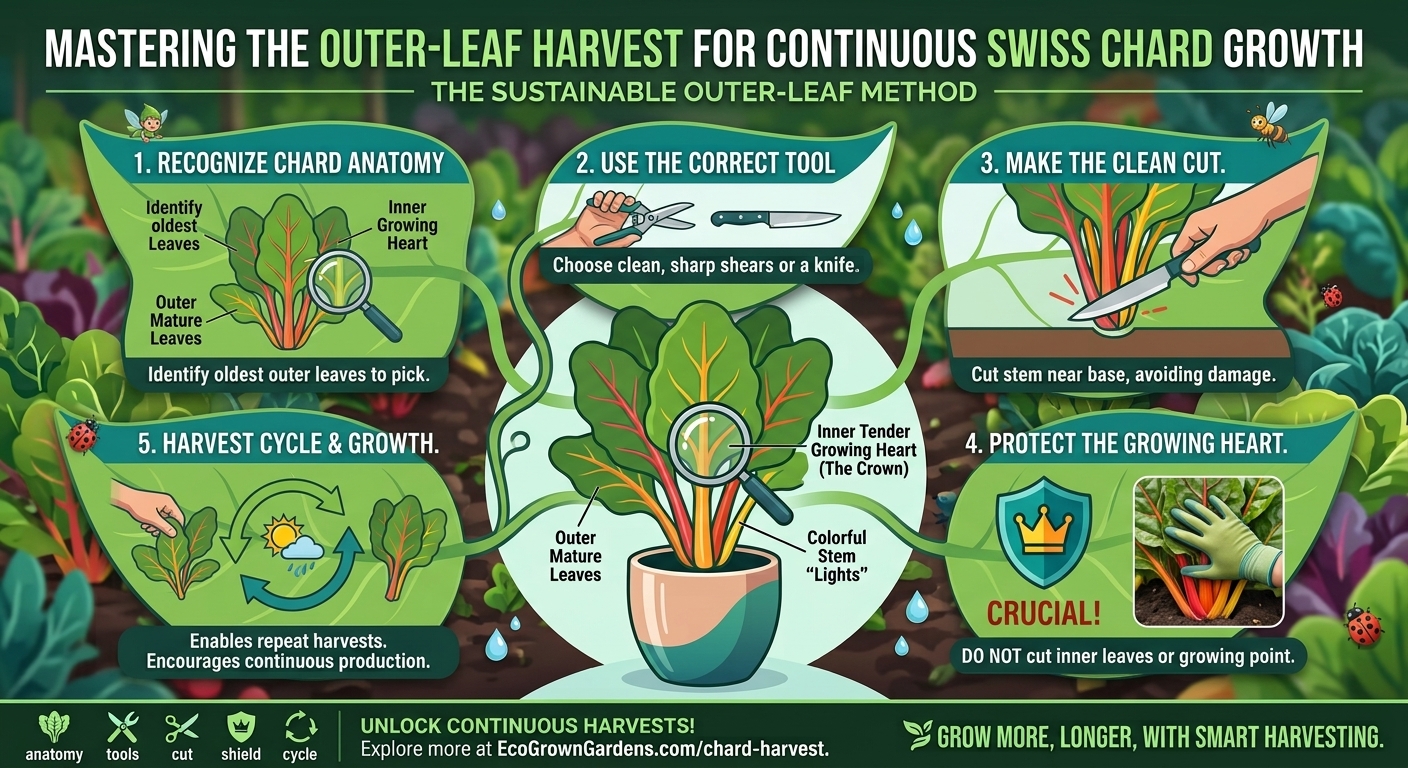
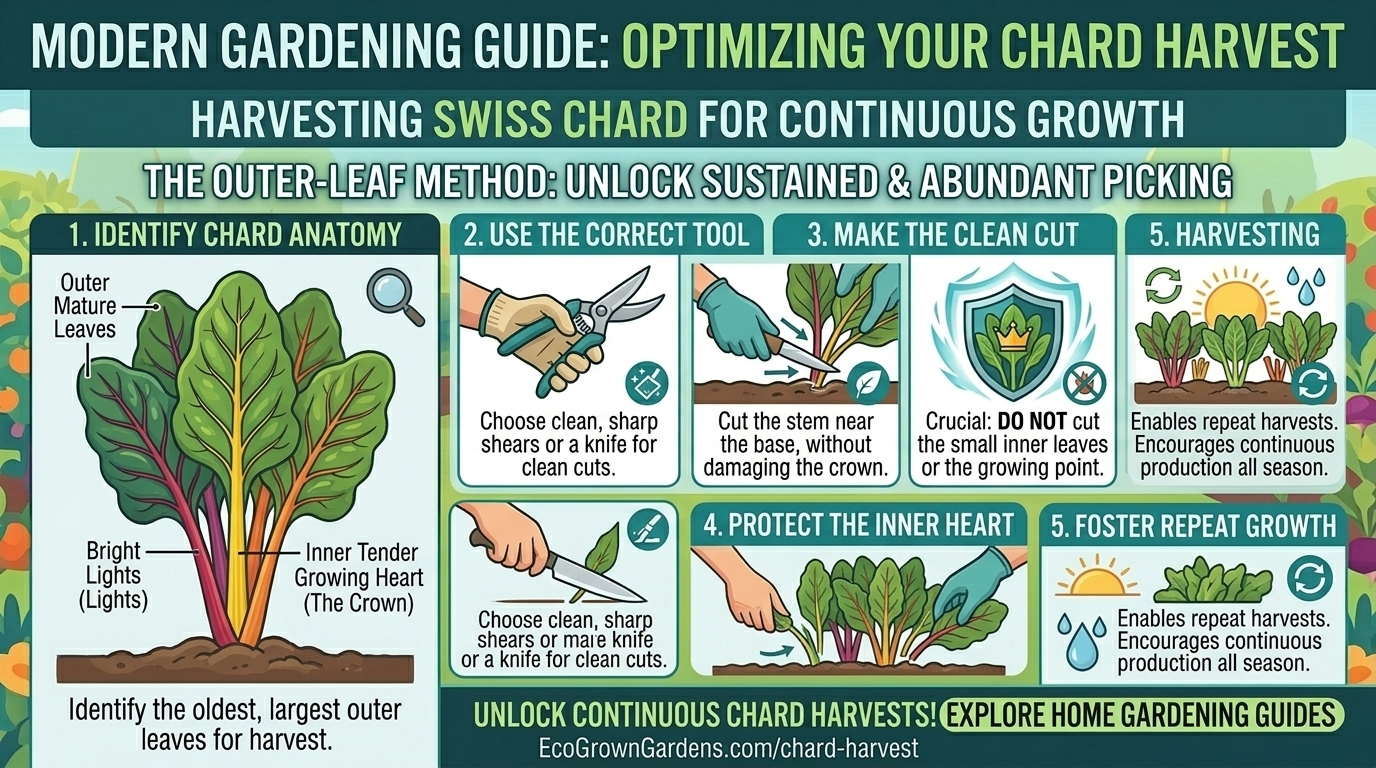
1. The Crown and Core Architecture
Unlike upright vining crops, Swiss chard grows in a tight, rosette-like cluster radiating upward from a central underground base called the crown.
- The Outer Leaves: These are the oldest leaves on the plant. They are the largest, longest-stemmed, and have reached their peak photosynthetic potential. They sit on the outer perimeter of the plant.
- The Inner Leaves (The Heart): Emerging directly from the center of the crown are tiny, tightly folded baby leaves. This is the growing tip of the plant.
2. The Perpetual Motion of Photosynthesis
When you harvest the large outer leaves correctly, you remove the foliage that has finished its heavy lifting. This action immediately relieves crowding, opens up the center of the plant to sunlight and air circulation, and signals the plant’s root crown to channel its stored energy into pushing up fresh, tender new leaves from the inner core.
Why Selective Outer-Leaf Harvesting Beats Whole-Plant Removal
Many beginner gardeners make the mistake of pulling up the entire Swiss chard plant when they want a salad or a side of sautéed greens. Doing this terminates the plant’s life cycle prematurely. Selective outer-leaf harvesting provides massive advantages:
- Extended Harvest Windows: Instead of a single meal, a single chard plant can produce tender leaves continuously for 6 to 12 months depending on your climate zone.
- Maximized Garden Space: Because a few plants keep producing over and over, you don’t need to waste valuable garden real estate planting successive rows every two weeks.
- Continuous Nutrient Supply: Freshly harvested outer leaves are rich in vitamins A, C, and K, as well as iron and magnesium. Continuous harvesting ensures a steady, daily supply of fresh nutrition for your kitchen.
Step-by-Step Guide: How to Harvest Outer Leaves Correctly
Harvesting chard isn’t just about grabbing a handful and ripping them off. Improper technique can tear the central crown, introduce diseases, or stunt the plant’s recovery. Follow this step-by-step roadmap:
+-------------------------------------------------------------+
                    THE HARVEST WORKFLOW
+-------------------------------------------------------------+
| 1. Inspect and Select Mature Outer Leaves (8-12 inches)     |
| 2. Grab Clean, Sharp Pruning Shears or Scissors             |
| 3. Cut Cleanly Near the Base (Leave a 1-to-2-inch stem)     |
| 4. Never Damage the Delicate Inner Core (The Heart)         |
| 5. Process and Clean Your Harvest Immediately               |
+-------------------------------------------------------------+
Step 1: Select the Right Leaves
Walk out to your chard bed and examine the plants. Look for the oldest, largest outer leaves located around the perimeter of the rosette. These leaves typically measure 8 to 12 inches long or more. Leave the smaller, medium, and tiny inner leaves strictly alone so they can continue to grow.
Step 2: Use Clean, Sharp Tools
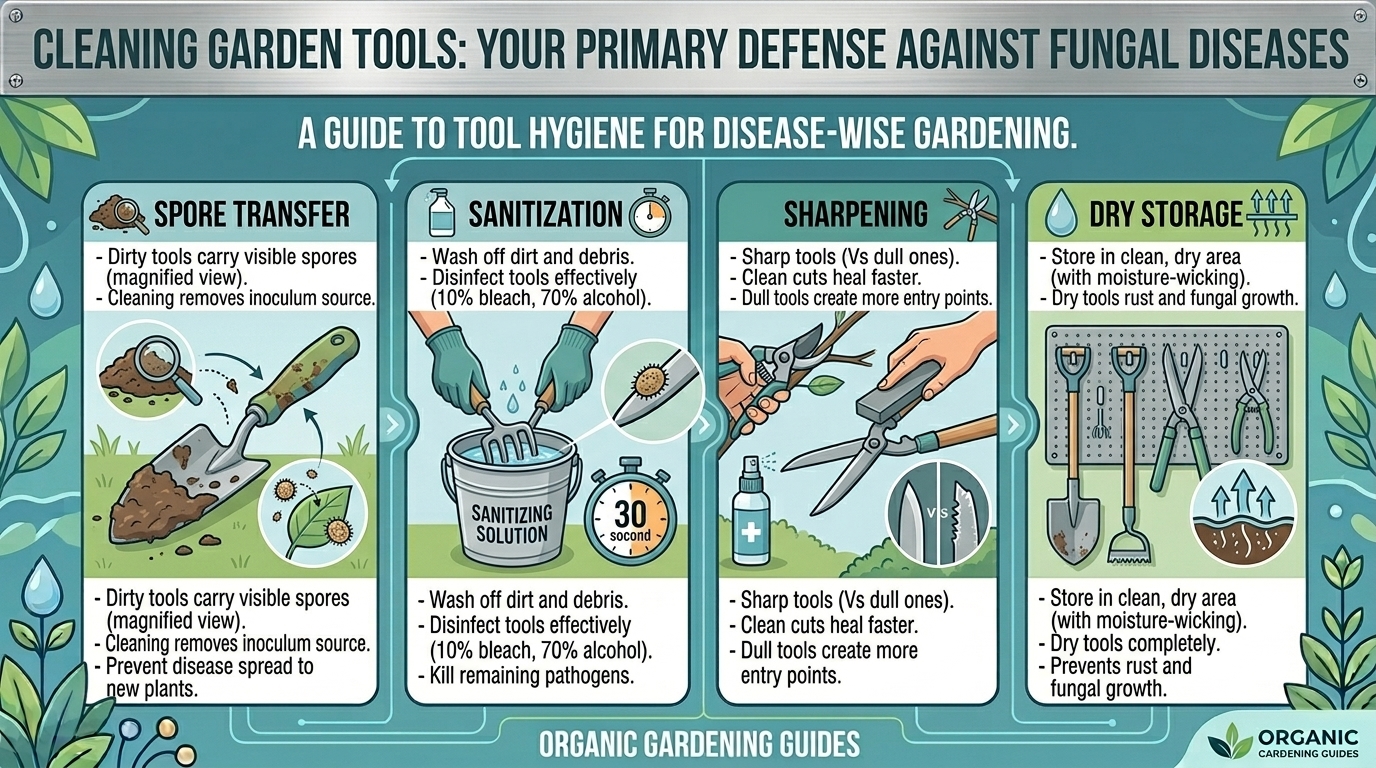
Never rip or yank chard leaves off by hand. Tearing leaves creates jagged, frayed wounds on the stem that take a long time to heal and act as open entry points for fungal spores and bacteria. Always use clean, sharp pruning shears or kitchen scissors sterilized with rubbing alcohol.
Step 3: Make a Clean Cut Close to the Base
Position your shears near the base of the stem, cutting cleanly about 1 to 2 inches above the main soil line or crown.
- Crucial Warning: Take extreme care not to nick, gouge, or cut into the central growing crown or the tiny inner leaves. If you accidentally sever the heart of the plant, new leaf production will halt.
Step 4: Harvest Moderately Per Plant
As a rule of thumb, never harvest more than one-third to one-half of the plant’s total foliage during a single harvesting session. Leaving plenty of healthy leaves behind ensures the plant maintains enough solar panels to photosynthesize and recover rapidly.
Regional Harvesting Strategies Across the US
Different American climates dictate how chard behaves, how fast it regrows, and when the harvesting season peaks.
☀️ Texas & Southern California (Managing Extreme Heat)
- The Challenge: While chard is remarkably heat-tolerant compared to spinach or lettuce, intense summer temperatures (above 95°F) can cause chard leaves to become thick, tough, and bitter, while prompting the plant to bolt (flower).
- Regional Strategy: Harvest your chard frequently in the cooler morning hours. During peak summer heatwaves, provide your chard beds with afternoon shade using 30% shade cloth. This keeps the leaves tender, sweet, and productive straight through the summer months.
🌉 San Francisco (Coastal Fog & Extended Cool Seasons)
- The Challenge: San Francisco’s cool maritime climate, frequent fog, and mild year-round temperatures create an absolute paradise for Swiss chard. Chard can often live and produce continuously for over a year here.
- Regional Strategy: Because growth is steady and continuous, you can harvest outer leaves weekly. However, watch out for high coastal humidity; ensure you remove older, declining outer leaves promptly so they don’t rot against the damp soil and invite fungal leaf spot.
🌲 Washington & New York (Freezing Winters & Spring-to-Fall Cycles)
- The Challenge: Northern winters bring hard freezes that eventually kill chard foliage, though chard is surprisingly cold-hardy and can survive light autumn frosts.
- Regional Strategy: Maximize your harvest from spring through late autumn. When freezing winter weather approaches, you can apply a thick layer of straw mulch over the root crowns; in milder microclimates, the crowns will survive underground and push up a brand-new flush of sweet chard leaves the following early spring.
Post-Harvest Care: Keeping Your Chard Beds Thriving
Harvesting is only half the equation; keeping your chard plants healthy guarantees continuous regeneration.
- Consistent Watering: Chard leaves are mostly water. Water your chard beds deeply at the soil line every few days, ensuring the root zone stays consistently moist without becoming waterlogged.
- Side-Dressing with Compost: Because you are constantly harvesting foliage, chard plants are heavy consumers of nitrogen and soil minerals. Side-dress your plants every 4 to 6 weeks with a thin layer of rich organic compost or a light application of organic fish emulsion.
- Sanitation and Weed Control: Regularly pluck away any yellowing, damaged, or diseased lower leaves that touch the soil. Keep the bed free of weeds so your chard doesn’t have to compete for water and nutrients.
Frequently Asked Questions (FAQ)
1. What happens if I accidentally cut the center of the Swiss chard plant?
If you accidentally sever the central growing tip (the heart) of the chard plant, that specific stem will stop producing new leaves. However, if the root crown is healthy, the plant will often push out new side shoots and recover over time. Always cut carefully around the outer perimeter!
2. Can I eat the colorful stems of Swiss chard, or should I discard them?
The stems (or chard ribs) are entirely edible, delicious, and crunchy! You can chop them up and sauté them slightly ahead of the leafy greens (since stems take a minute or two longer to soften), or pickle them like quick refrigerator pickles.
3. How often can I harvest outer leaves from a single chard plant?
During peak growing seasons (spring and autumn), you can harvest outer leaves from healthy chard plants every 7 to 10 days. Always leave the inner core intact to fuel the next wave of growth.
4. Why are my chard leaves turning bitter and tough?
Bitterness and tough texture are usually caused by extreme heat stress or lack of water. When temperatures soar or soil dries out, chard triggers a stress response. Harvesting frequently, providing afternoon shade cloth in hot zones, and watering deeply resolves this.
5. Does Swiss chard survive the winter?
In mild climates (like San Francisco, parts of California, and coastal Texas), Swiss chard behaves as a multi-year perennial. In colder northern zones (like New York and Washington), chard is grown as an annual because hard winter freezes kill the top growth, though roots protected by mulch often revive in spring.
6. Should I wash my chard leaves right after harvesting?
Only wash your chard leaves right before you are ready to cook or eat them. Storing damp chard leaves in the refrigerator will trap moisture and cause them to rot or turn slimy within 48 hours.
7. How do I store freshly harvested chard in the refrigerator?
Wrap unwashed chard leaves loosely in a dry paper towel, place them inside a breathable produce bag or container, and store them in the crisper drawer. Properly stored, fresh chard lasts for 5 to 7 days.
8. Why are there holes in my Swiss chard leaves?
Holes are typically caused by common garden pests such as flea beetles, caterpillars, or slugs. Inspect the undersides of your leaves regularly, hand-pick pests, and use organic barriers or companion flowers to deter them.
9. Can I grow Swiss chard in containers and harvest outer leaves the same way?
Yes! Swiss chard is exceptionally well-suited for pots, window boxes, and fabric grow bags (at least 8 to 10 inches deep). The cut-and-come-again method works identically in containers.
10. Is Swiss chard the same plant as rhubarb?
No, they are entirely different plant families. While Swiss chard features bright red stalks that visually resemble rhubarb, chard belongs to the beet and spinach family (Amaranthaceae), and its leaves and stems are completely safe and edible, whereas rhubarb leaves are toxic.
Conclusion
Mastering the art of harvesting Swiss chard outer leaves while letting the inner core continue to grow transforms your home garden into a perpetual, high-yield vegetable machine. By utilizing clean shears, cutting selectively around the perimeter, and providing consistent water and nutrients, you ensure a continuous supply of vibrant, nutrient-dense greens for your kitchen table.
Whether you are harvesting chard beneath the warm Texas sun, managing maritime microclimates in San Francisco, or enjoying a bountiful summer harvest in New York and Washington, this simple technique guarantees garden success.