Welcome to the ultimate organic gardening guide by KCPlants, custom-tailored for passionate food growers across America’s diverse agricultural and climatic landscape—from the blazing sun and clay soils of Texas and California to the brisk, seasonal frost pockets of New York and Washington, and the unique, fog-cooled maritime microclimates of San Francisco.
There are few sights in the summer garden more satisfying than a row of lush tomato plants (Solanum lycopersicum) heavily laden with ripening fruit. Tomatoes are the absolute crown jewel of the home food garden. Yet, every experienced grower knows that achieving a bountiful harvest is rarely effortless. Two massive challenges routinely threaten summer crops: poor pollination leading to disappointing fruit set, and the sudden, devastating appearance of the infamous tomato hornworm (Manduca quinquemaculata), a ravenous green caterpillar capable of stripping a mature vine bare in a matter of days.
While chemical sprays and synthetic fertilizers offer quick fixes, modern organic gardeners look to nature’s own balancing acts. The secret weapon? Companion planting with Borage (Borago officinalis).
Often called the “starflower” for its brilliant, edible, star-shaped blue blooms, borage is much more than a pretty face. When planted strategically alongside your tomato patch, borage acts as an elite biological bodyguard and a super-pollinator magnet.
This comprehensive, SEO-optimized guide explores the science of companion planting, borage’s unique biochemical defense mechanisms, step-by-step garden design, regional strategies across the US, and actionable tips designed to help your website rank effortlessly on Google.
The Science of Borage and Tomatoes: A Botanical Alliance
To understand why borage is the ultimate companion for tomatoes, you must look at how these two plants interact above and below the soil line.
+-------------------------------------------------------------+
               THE BORAGE-TOMATO ECOSYSTEM LOOP
+-------------------------------------------------------------+
| POLLINATION: Borage flowers lure bees to boost tomato fruit |
| PEST DEFENSE: Pungent scent and hairs deter tomato hornworms|
| SOIL MINING: Deep taproot pulls up subsoil minerals          |
| MULCHING:    Fallen borage leaves enrich the surface soil   |
+-------------------------------------------------------------+
1. The Super-Pollinator Magnet
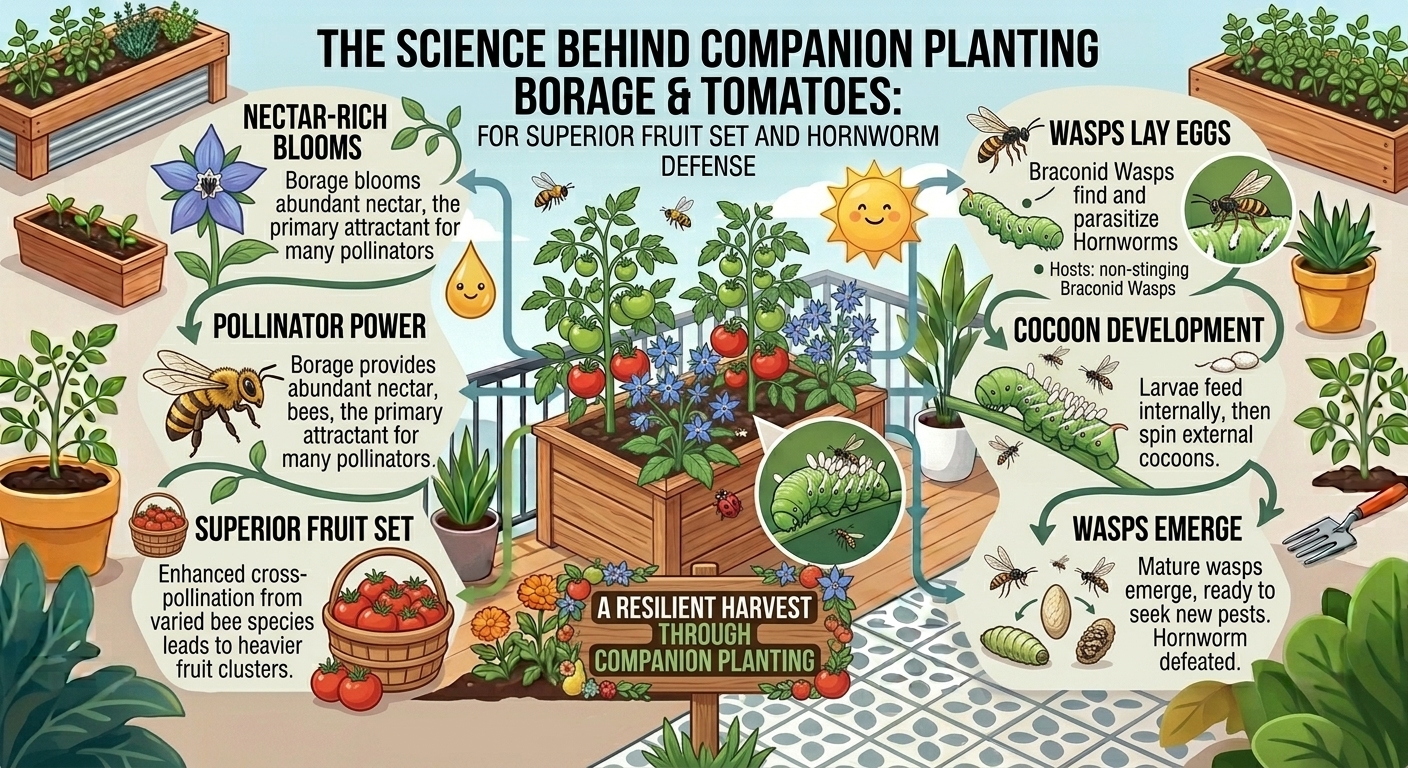
Tomatoes possess “perfect” flowers containing both male and female reproductive organs. However, they rely heavily on a specific mechanism called buzz pollination (or sonic pollination) to release their pollen. Standard honeybees often pass over tomato blossoms because they lack nectar incentives.
Borage, on the other hand, is an absolute neon sign for pollinators. Its vibrant blue nectar-rich flowers bloom continuously throughout the summer, attracting massive populations of bumblebees, native bees, and beneficial hoverflies. Once these pollinators are drawn to your garden by the borage, they naturally visit your nearby tomato blossoms, shaking the flowers loose and drastically improving your ultimate fruit set.
2. Deterring the Dreaded Tomato Hornworm
Tomato hornworms are the nightmare of summer gardeners. These massive green larvae blend perfectly into tomato foliage while devouring leaves, stems, and green fruit overnight.
While borage does not act as a direct poison to hornworms, its dense, hairy foliage and strong, cucumber-like aromatic compounds create an olfactory and tactile barrier. Furthermore, borage acts as a powerful magnet for braconid wasps and predatory beneficial insects. Braconid wasps lay their eggs inside hornworms; when the wasp larvae hatch, they consume the hornworm from the inside out, providing natural, chemical-free pest control for your tomatoes.
The Dynamic Traits of Borage (Borago officinalis)
Before introducing borage into your beds, it helps to understand its physical nature and growth habits.
- Growth Habit: Borage is a robust, fast-growing annual herb that can easily reach heights of 2 to 3 feet and spread outward just as wide. It features thick, bristly, hairy stems and leaves.
- Edible and Medicinal Beauty: Both the cucumber-flavored leaves and the sweet, brilliant blue star-shaped flowers are entirely edible. They make stunning additions to summer salads, cocktails, and desserts.
- The Dynamic Accumulator: Borage possesses a massive, deep taproot that plunges far into the subsoil, mining valuable minerals like potassium, calcium, and silica. When borage leaves drop or are chopped and dropped onto the soil surface, they release these rich nutrients back into the topsoil.
Step-by-Step Guide: How to Integrate Borage into Your Tomato Beds
Planting borage isn’t just about dropping seeds anywhere; strategic spacing ensures your tomatoes don’t get choked out by borage’s enthusiastic growth.
+-------------------------------------------------------------+
                    BORAGE INTEGRATION WORKFLOW
+-------------------------------------------------------------+
| 1. SOW STRATEGICALLY: Place 2 to 3 feet away from tomato base|
| 2. DIRECT SOW:        Borage dislikes root disturbance      |
| 3. MANAGE SIZE:       Prune back stray stems if overcrowding|
| 4. CHOP AND DROP:     Use spent borage leaves as green mulch|
| 5. ALLOW SELF-SEEDING:Let a few flowers drop seeds for next year|
+-------------------------------------------------------------+
Step 1: Spacing and Placement
Because borage grows into a substantial bush, never plant it right on top of your tomato stems.
- Space your borage seeds or seedlings roughly 2 to 3 feet away from the base of your tomato plants.
- Position them along the sunny perimeter of your tomato bed or between rows so they don’t block vital morning sunlight from reaching your tomato foliage.
Step 2: Direct-Sowing is Best
Borage has a fragile taproot system that hates being transplanted. Whenever possible, direct-sow borage seeds straight into your garden soil in early spring after the danger of hard frost has passed. Press seeds gently about 1/4 inch deep into the soil; they germinate rapidly within 5 to 10 days.
Step 3: Maintenance and “Chop-and-Drop”
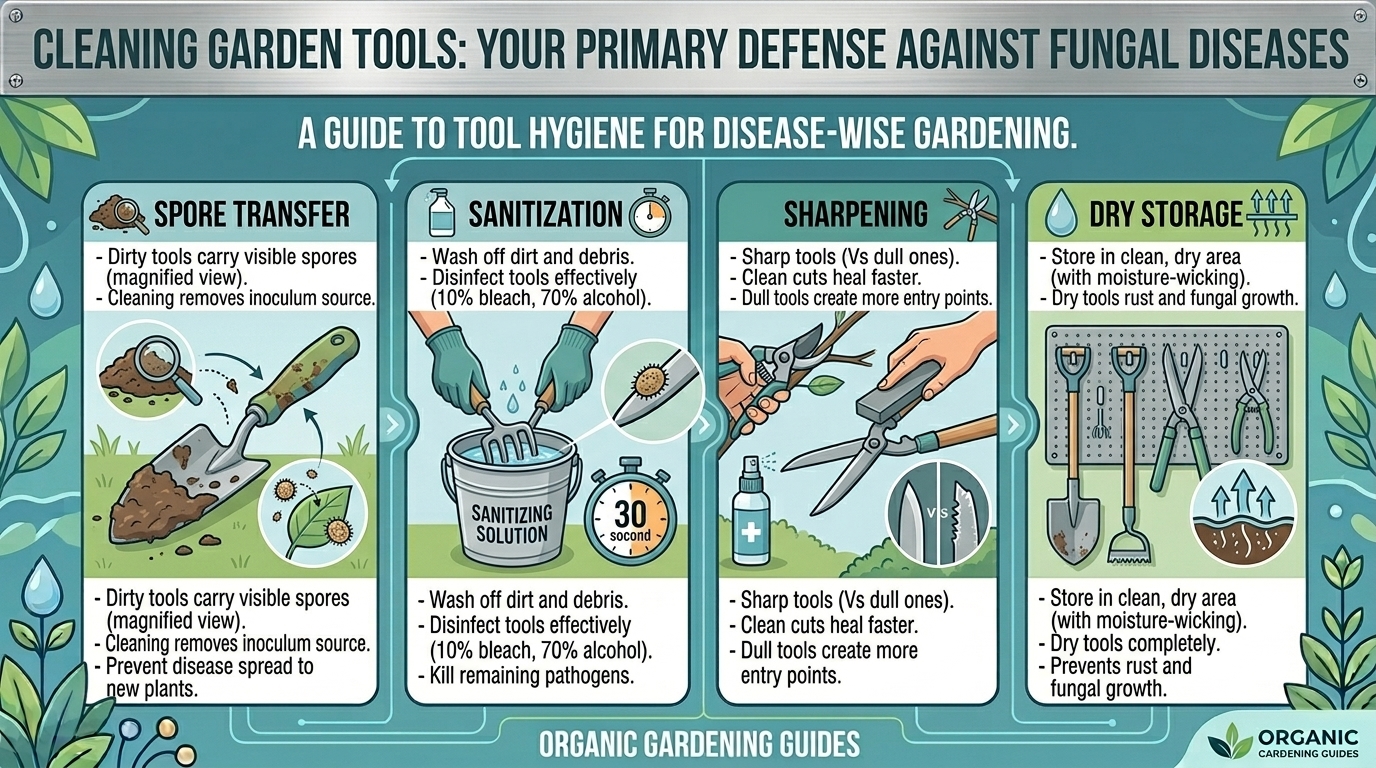
As summer progresses, borage can become quite sprawling. If it encroaches too heavily on your tomato cages, use clean pruning shears to snip back outer branches. You can drop these pruned leaves right onto the soil beneath your tomatoes to act as a nutrient-rich organic mulch.
Regional Companion Strategies Across the US
Different American climates present unique weather profiles that influence how borage and tomatoes interact.
☀️ Texas & Southern California (Managing Heat & Drought)
- The Challenge: Blazing summer heatwaves (temperatures exceeding 95°F) cause tomato blossoms to drop off unpollinated due to heat stress, while hornworms multiply rapidly.
- Regional Strategy: Plant borage early in spring. Borage handles moderate drought exceptionally well thanks to its deep taproot, and its cooling shade helps buffer tomato root zones from extreme soil temperatures. Use morning drip irrigation to support both plants.
🌉 San Francisco (Coastal Fog & Cool Microclimates)
- The Challenge: San Francisco’s cool maritime air, rolling fog, and lack of intense summer heat can occasionally reduce pollinator activity and slow down tomato fruit set.
- Regional Strategy: Borage is a cool-season champion that thrives in San Francisco’s mild climate. Its brilliant blue flowers act as a beacon, cutting through the grey coastal haze to draw in bumblebees and maximize the limited sunny windows for tomato pollination.
🌲 Washington & New York (Short Seasons & Summer Storms)
- The Challenge: Short northern growing seasons mean you need maximum fruit set in the shortest window possible before autumn chill arrives.
- Regional Strategy: Direct-sow borage alongside your tomato starts in late spring. The explosive influx of pollinating insects will dramatically accelerate fruit set, ensuring your green tomatoes develop and ripen well before autumn frosts.
Step-by-Step Tomato & Borage Garden Layout
[Borage] <--- 3 feet ---> [Tomato Plant] <--- 3 feet ---> [Borage]
   |                           |                           |
   v                           v                           v
(Pollinator Magnet)      (Heavy Fruit Set)        (Hornworm Deterrent)
- Prepare Rich Soil: Both tomatoes and borage are heavy-yielding plants that require well-draining, compost-rich soil.
- Establish the Perimeter: Plant borage seeds in small clusters around the outer corners of your raised beds or tomato rows.
- Plant Tomatoes in the Center: Position your staked or caged tomato plants in the center, surrounded by the borage guard ring.
- Enjoy the Harvest: Watch as the bees flood your garden, pollinate your tomatoes, and keep destructive pests at bay naturally.
Frequently Asked Questions (FAQ)
1. Will borage choke out my tomato plants if left unmanaged?
Borage can grow quite large (up to 3 feet wide). If planted too close to tomato stems, it can crowd them out. Always maintain a spacing of 2 to 3 feet between borage and your tomato plants, and prune back stray borage branches as needed.
2. How does borage specifically improve tomato fruit set?
Borage flowers are exceptionally rich in nectar and produce bright blue colors and visual cues that attract massive numbers of bumblebees and native pollinators. These bees visit the borage and subsequently buzz-pollinate nearby tomato flowers, ensuring high pollination rates and heavy fruit sets.
3. Do hornworms eat borage leaves?
No. Tomato hornworms are specialized pests that feed almost exclusively on solanaceous plants (tomatoes, peppers, eggplant, and potatoes). They actively avoid borage due to its bristly hairs and unpalatable chemical compounds.
4. Is borage an annual or a perennial plant?
Borage is technically an annual in most climates, completing its life cycle in a single season. However, it is a prolific self-seeder; if you let a few flower heads drop seeds at the end of autumn, you will likely see a brand-new crop of borage pop up next spring!
5. Can I eat borage flowers and leaves?
Yes! Both the leaves and the bright blue star-shaped flowers are edible. The leaves have a refreshing, mild cucumber flavor, while the flowers are slightly sweet and make a stunning, edible garnish for summer salads and drinks.
6. Can I grow borage in containers with my patio tomatoes?
Borage develops a massive, deep taproot, meaning standard small pots are too restrictive. However, if you are growing patio tomatoes in large containers (such as 15-to-20-gallon fabric grow bags), you can successfully tuck a single borage plant into the edge of the bag.
7. Why are the lower leaves of my borage plant turning brown and dying?
As borage matures into a large bush, older lower leaves naturally shade out and die back. This is normal plant aging; simply snip away the declining lower leaves to improve airflow around the base of the plant.
8. Does borage attract harmful pests to my garden?
No, borage is remarkably pest-resistant. In fact, it acts as a “sacrificial trap crop” for beneficial predatory insects like ladybugs, hoverflies, and braconid wasps that prey on garden pests like aphids and hornworms.
9. What soil conditions does borage prefer?
Borage is exceptionally adaptable and actually thrives in poor, sandy, or dry soils. Avoid heavy nitrogen fertilizers, as too much nitrogen will cause borage to produce massive amounts of leafy green foliage at the expense of its bright blue flowers.
10. How do I harvest borage for culinary use?
Harvest young, tender borage leaves in the morning before the sun heats them up. Pluck individual star-shaped flowers gently by hand when they are fully open to use as fresh, edible decorations on your summer dishes.
Conclusion
Companion planting borage near your tomato plants is one of the most elegant, effective, and natural strategies you can adopt in the home garden. By deploying borage as a super-pollinator magnet to boost fruit set, an olfactory deterrent for hornworms, and a nutrient-rich dynamic accumulator for your soil, you transform your vegetable beds into a balanced, thriving ecosystem.