Why Proper Tool Maintenance and Oiling Prevents Wooden Handles from Splintering and Rusting Metal
Welcome to the ultimate garden tool care and equipment longevity guide by KCPlants, custom-tailored for property owners, landscape professionals, and dedicated gardeners across America’s diverse regional corridors—from the sun-baked, dry heat of Texas and Southern California to the humid seasonal rains of New York and Washington, and the unique maritime fog-belts of San Francisco.
Step into your garden shed or garage, reach for your favorite shovel, pruning shears, or mattock, and look closely at the condition of your gear. If you notice a rough, grey wooden handle covered in jagged dry splinters that bite into your palms, or a thick layer of reddish-brown iron oxide crusting over steel blades and pivot bolts, you are looking at the direct physical cost of neglect.
Every seasoned gardener knows the satisfying weight of a well-balanced, high-quality tool. Yet, premium gardening tools represent a significant financial investment. When left unmaintained, exposure to moisture, soil microbes, ultraviolet radiation, and friction rapidly degrades even the finest ash wood and high-carbon steel.
The single most effective action you can take to protect your gear, save money, and ensure effortless garden performance is remarkably straightforward: implement a strict routine of proper tool maintenance, deep cleaning, and specialized oiling.
This comprehensive, SEO-optimized guide explores the material science of wood and steel degradation, regional climate challenges across the US, a step-by-step tool restoration and oiling workflow, ongoing seasonal maintenance secrets, and 10 detailed FAQs designed to help your website, kcplants.com, rank effortlessly at the top of Google search results.
The Material Science of Decay: Why Wood Splinters and Metal Rusts
To understand why preventive maintenance works, you must first understand what happens to tools at a microscopic level when they are exposed to the elements.
+-------------------------------------------------------------+
                  THE DEGRADATION PATHWAY
+-------------------------------------------------------------+
| 1. WOOD CELL DESICCATION: Sun and moisture strip natural oils|
| 2. GRAIN RAISING & SPLINTERING: Dry wood fibers lift and snap|
| 3. ELECTROCHEMICAL RUST: Iron reacts with oxygen and water   |
+-------------------------------------------------------------+
1. The Death of Wooden Handles (Ash and Hickory)
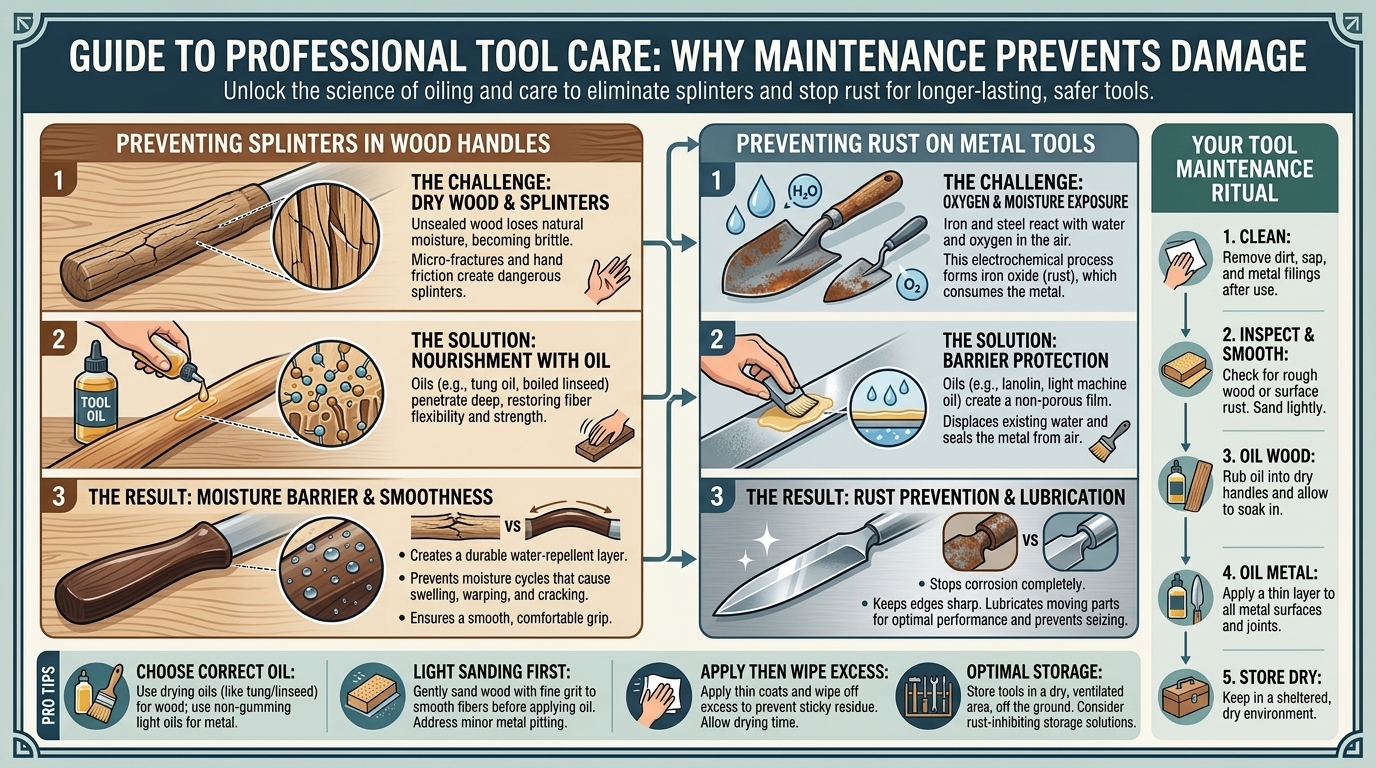
Traditional garden tool handles are typically crafted from dense hardwoods like white ash or American hickory because of their shock-absorbing flexibility. However, wood is a hygroscopic organic material—it constantly absorbs and releases moisture from the surrounding air.
- When left out in the sun, ultraviolet (UV) radiation breaks down lignin, the natural binding agent holding wood cells together.
- When exposed to repeated cycles of wet soil and drying air, wood expands and contracts violently. This process strips the wood of its natural internal moisture, causing the grain to lift, dry out, curl upward, and form painful, hand-tearing splinters.
2. The Electrochemical Oxidation of Steel
Metal rust is not merely superficial dirt; it is a destructive electrochemical process. When exposed to oxygen in the presence of moisture (dew, rain, or damp garden soil), iron atoms lose electrons and oxidize into hydrated iron(III) oxide—commonly known as rust.
- As rust forms, it occupies significantly more volume than the original steel, causing the metal to pit, flake, weaken at cutting edges, and lock up pivot joints.
The Essential Maintenance Toolkit
Before tackling your tool maintenance session, assemble a proper cleaning and restoration kit.
+-------------------------------------------------------------+
                  TOOL RESTORATION CHECKLIST
+-------------------------------------------------------------+
| 1. CLEANING:     Wire brush, stiff nylon brush, warm soapy water|
| 2. ABRASIVES:    Medium-grit sandpaper (80-grit & 120-grit)  |
| 3. WOOD OILS:    Boiled Linseed Oil or Tung Oil              |
| 4. METAL PROTECTION: Linseed oil, mineral oil, or multi-purpose|
+-------------------------------------------------------------+
- Boiled Linseed Oil (BLO): The gold standard for treating wooden handles. Unlike surface varnishes that chip and peel, linseed oil penetrates deep into wood pores, polymerizes upon exposure to oxygen, and forms a flexible, water-repellent barrier that nourishes the wood from within.
- Refined Mineral Oil: Ideal for metal blades and moving pivot bolts, especially on tools that come into contact with edible vegetable crops, as it is 100% food-safe and non-toxic.
Step-by-Step Tool Restoration and Oiling Workflow
Restoring neglected, splintered, and rusted tools is an immensely satisfying weekend project that breathes new life into your gear.
+-------------------------------------------------------------+
                    TOOL RESTORATION WORKFLOW
+-------------------------------------------------------------+
| Phase 1: Deep Cleaning (Scrub away dried dirt and sap)      |
| Phase 2: Handle Sanding & Oiling (Smooth splinters and condition)|
| Phase 3: Rust Removal (Scrub steel surfaces with wire wool)  |
| Phase 4: Blade Sharpening (Restore a razor-sharp cutting edge)|
| Phase 5: Final Sealing (Apply protective oil coating)        |
+-------------------------------------------------------------+
Phase 1: Deep Cleaning the Tool
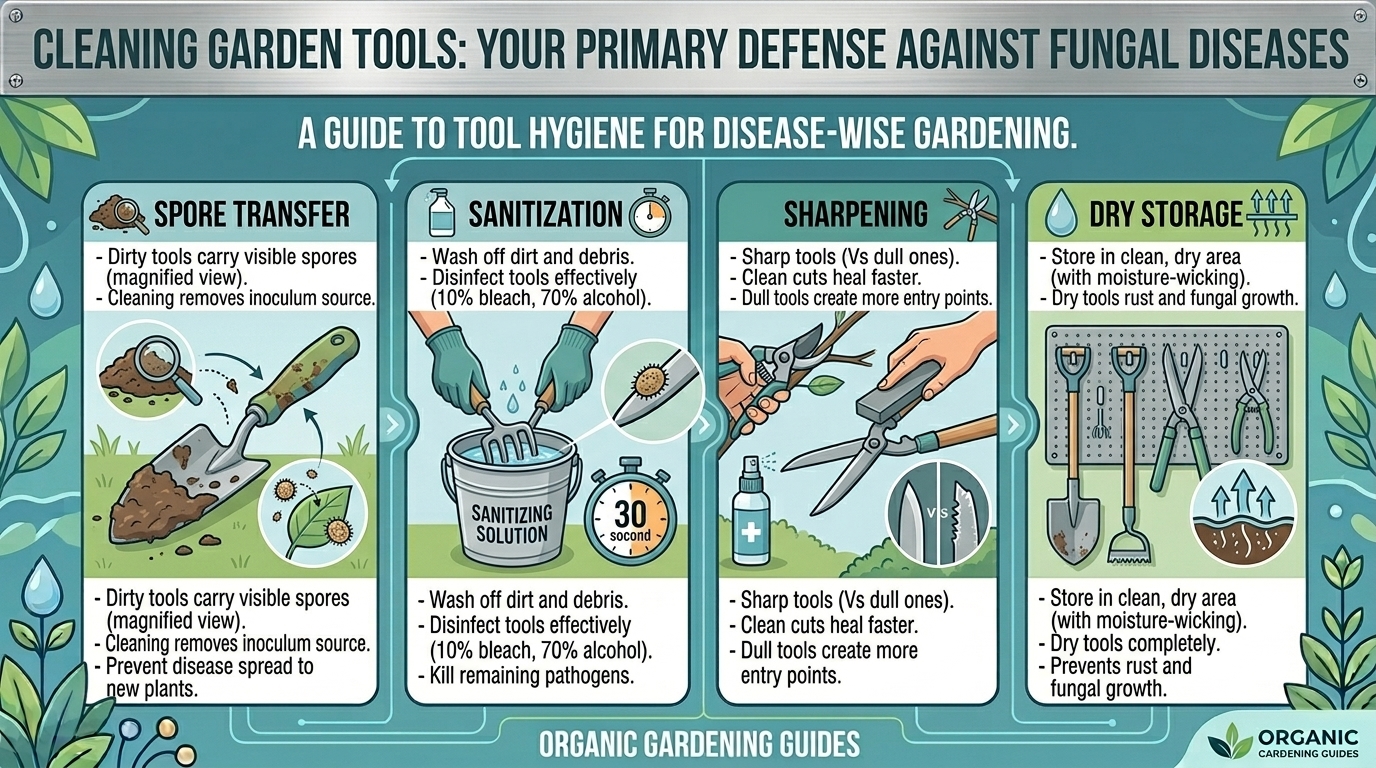
Scrape away caked-on mud and organic debris using a putty knife. Scrub metal blades and wooden handles with a stiff nylon brush dipped in warm water mixed with a few drops of dish soap. Dry all components thoroughly with a clean rag.
Phase 2: Eliminating Splinters and Conditioning Wood
Inspect the wooden handle. If it feels rough or has raised fibers:
- Sand the handle down smoothly using 80-grit sandpaper to remove rough spots, followed by 120-grit sandpaper for a silky finish. Wipe away sanding dust.
- Pour a small amount of Boiled Linseed Oil onto a clean cloth and rub it generously into the wood. Allow the wood to absorb the oil for 15 minutes, then buff away any excess liquid with a dry rag. The oil will seal the pores against moisture and prevent future splintering.
Phase 3: Eradicating Rust and Protecting Metal
Attack rusted metal surfaces using a stainless steel wire brush, steel wool (Grade #0000), or a coarse sanding block. Scrub vigorously until bright bare metal is exposed.
- Once clean, coat the entire metal surface immediately with a thin film of mineral oil or linseed oil to displace lingering moisture and form an oxygen barrier that stops rust in its tracks.
Regional Maintenance Strategies Across the US
Different American climates present distinct environmental factors that dictate how frequently and aggressively you must maintain your garden tools.
☀️ Texas & Southern California (Combatting Dry Heat & UV Damage)
- The Challenge: Intense sunlight, high UV radiation, and arid desert heat cause wooden handles to dry out, shrink, warp, and split rapidly, while abrasive sandy soils scratch steel blades.
- Regional Strategy: Because dry heat rapidly bakes natural moisture out of wood, apply a fresh coat of Boiled Linseed Oil to all tool handles twice a year (spring and autumn). After every use in sandy soils, rinse your tools immediately to prevent abrasive grit from wearing down moving pivot joints.
🌉 San Francisco (Maritime Moisture & Fog Corrosion)
- The Challenge: Cool, damp marine air and heavy morning fog deposit a continuous layer of moisture on metal tools stored in unheated sheds, accelerating rust formation.
- Regional Strategy: San Francisco’s coastal microclimate requires heightened vigilance against rust. Never store tools damp. Wipe metal surfaces down with an oily rag containing mineral oil or specialized anti-rust protectants after every gardening session, and consider storing tools inside canvas rolls or padded bags containing silica gel packets.
🌲 Washington & New York (Rain, Humidity, and Winter Storage)
- The Challenge: Prolonged autumn rains, high humidity, and freezing winter storage conditions invite fungal rot on wooden handles and deep oxidation on steel edges.
- Regional Strategy: Before packing tools away for winter dormancy, perform a comprehensive annual overhaul. Sand and oil every wooden handle, sharpen all cutting edges, coat metal heads in a heavy layer of protective oil or paste wax, and hang tools vertically off the ground in a dry garage or basement.
Sharpening: The Secret Partner to Tool Maintenance
A sharp tool is not only easier to use; it is fundamentally safer. Dull pruners and hoes require excessive physical force, increasing the risk of slips and tearing plant stems rather than making clean cuts that heal quickly.
+-------------------------------------------------------------+
                    SHARPENING BEST PRACTICES
+-------------------------------------------------------------+
| 1. THE BEVEL ANGLE: Maintain the factory-ground bevel angle |
| 2. DIAMOND FILES:   Use a fine diamond sharpening stone     |
| 3. LUBRICATION:     Apply honing oil during the sharpening stroke|
+-------------------------------------------------------------+
- Always sharpen cutting tools (pruners, loppers, spades, and hoes) by filing along the original factory bevel angle.
- Finish by wiping the blade clean and applying a fresh drop of oil to the pivot screw and cutting edge.
Frequently Asked Questions (FAQ)
1. Why do wooden tool handles develop splinters?
Splinters form when wood dries out, losing its natural internal moisture and structural flexibility. Exposure to UV sun rays and repeated wet-dry cycles causes wood fibers to lift, curl, and snap.
2. Can I use cooking oil (like olive or vegetable oil) to oil my tools?
No! Never use vegetable oils, corn oil, or olive oil on tools. Unlike drying oils (like linseed oil), organic cooking oils never polymerize; instead, they go rancid, become sticky, attract dirt and insects, and promote fungal growth.
3. What is the best oil to protect wooden tool handles?
Boiled Linseed Oil (BLO) or pure Tung Oil are universally regarded as the finest treatments. They penetrate deep into the wood pores and cure into a hard, water-resistant seal that prevents splintering.
4. How do I remove stubborn rust from metal shovel blades?
Scrub the rusted area vigorously with a wire brush, steel wool, or coarse sandpaper. For heavy rust, soak the metal overnight in a container filled with white vinegar or a commercial biodegradable rust remover before scrubbing.
5. Is mineral oil safe to use on vegetable garden pruning shears?
Yes! Refined mineral oil is 100% food-safe, non-toxic, and odorless. It provides exceptional rust protection for pruning shears and harvest knives without transferring harmful synthetic chemicals to edible plants.
6. How often should I oil my garden tools?
For active tools, wipe down metal parts and oil them after every few uses (or immediately if exposed to wet soil). Wooden handles should be sanded and re-oiled once or twice a year.
7. How do I store my tools to prevent rust during winter?
Clean all dirt off thoroughly, dry them completely, sharpen cutting edges, apply a protective coat of oil or paste wax to metal parts, and hang them vertically off the floor in a dry, well-ventilated shed or garage.
8. What causes wooden handles to wiggle loose from the metal head?
When wood dries out, it shrinks. This shrinkage causes the wooden eye of the handle to pull away from the metal socket. Rehydrate the handle with linseed oil or soak the metal head briefly in water to temporarily swell the wood back into place before re-securing the wedge.
9. Can a splintered, rough tool handle be saved, or must I replace it?
Most splintered handles can easily be saved! Simply sand away the damaged surface fibers using medium-grit sandpaper down to clean wood, wipe clean, and saturate the handle with multiple coats of boiled linseed oil.
10. Why is maintaining tool sharpness just as important as oiling?
Sharp tools require significantly less physical effort to cut through roots, stems, and soil, preventing operator fatigue and eliminating ragged plant wounds that invite bacterial and fungal diseases into your garden.
Conclusion
Proper tool maintenance and regular oiling are the ultimate hallmarks of an experienced, mindful gardener. By trading neglect for a disciplined routine of cleaning, sanding, sharpening, and oiling, you transform frustrating, splintered, and rusted equipment into an heirloom-quality arsenal that performs flawlessly season after season.