What are the best flowering shrubs to attract hummingbirds to your backyard patio space? Transforming a outdoor patio into a sanctuary for hummingbirds brings movement, vibrant color, and natural beauty directly to your living space. Hummingbirds are guided by high-energy dietary needs, relying on nectar-rich blooms to fuel their fast metabolism. By strategically choosing flowering shrubs with tubular blossoms, high sucrose content, and multi-season bloom cycles, you can create a reliable refueling stop for local and migratory hummers alike.
Whether managing a sun-soaked patio in Texas, designing a container garden in San Francisco or California, landscaping a coastal deck in Washington, or maintaining a seasonal haven in New York, choosing the right patio-friendly shrubs ensures a steady stream of visits.
At KC Plants, we specialize in helping home gardeners select, containerize, and care for high-nectar flowering shrubs tailored to regional growing conditions.
1. Top Flowering Shrubs for Hummingbird Patio Gardens
Hummingbirds are particularly drawn to bright red, orange, pink, and deep purple flowers with deep tubular structures that hold high concentrations of nectar.
Patio-Ready Hummingbird Magnet Shrubs
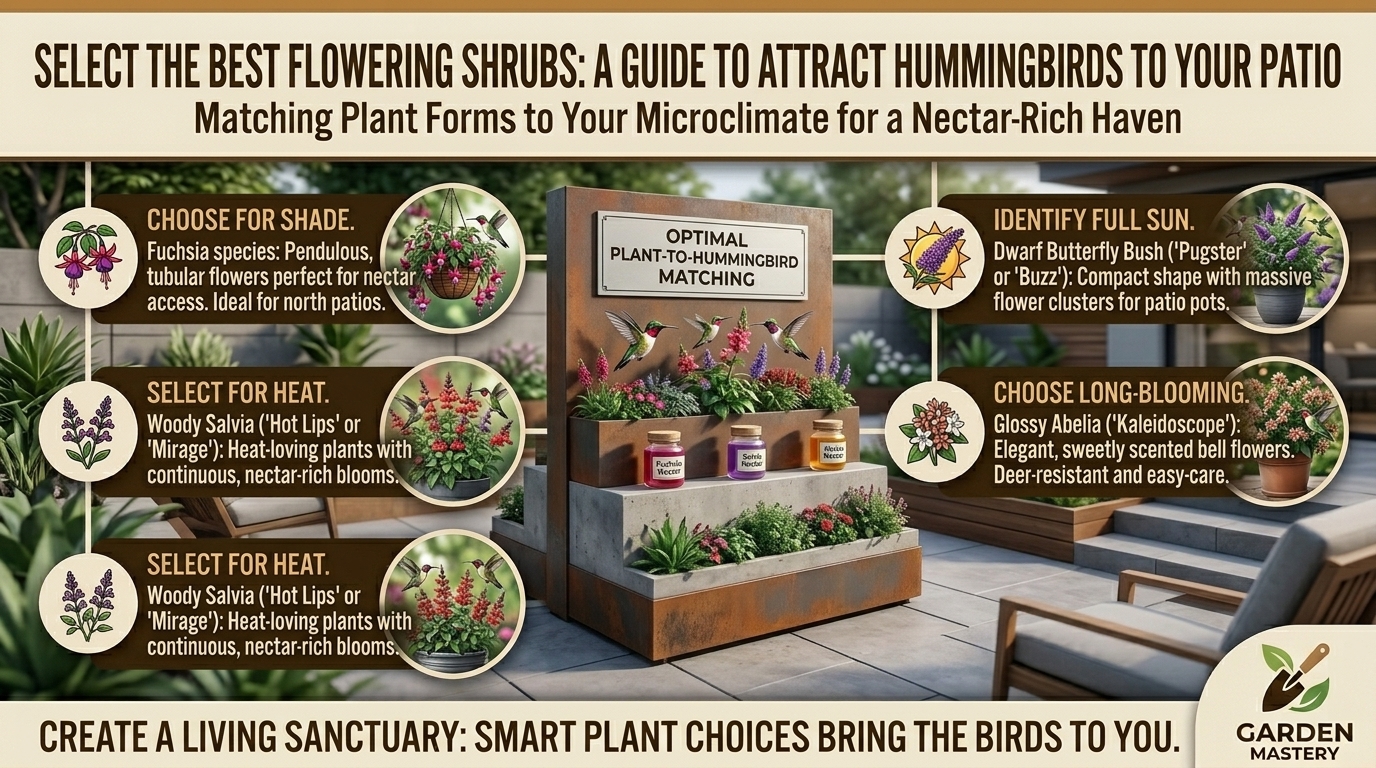
- Fuchsia (Fuchsia magellanica & Hybrids): Features drooping, lantern-like flowers in brilliant shades of pink, purple, and red. Ideal for shaded patio corners and large hanging pots.
- Salvia / Autumn Sage (Salvia greggii): A compact, drought-tolerant semi-evergreen shrub producing dozens of tubular red, coral, or magenta flowers from spring through fall.
- Flame Acanthus (Anisacanthus quadrifidus): Extremely tough, heat-hardy shrub covered in fiery orange-red trumpet flowers that bloom relentlessly through summer heatwaves.
- Weigela (Weigela florida): A deciduous shrub loaded with rose-pink, trumpet-shaped blossoms in late spring, creating an early-season nectar corridor.
- Abelia (Abelia × grandiflora): Features glossy foliage and small, bell-shaped white-to-pink flowers that bloom continuously from late spring into autumn, providing a long-lasting nectar source.
| Shrub Species | Flower Color & Shape | Bloom Season | Preferred Light | Container & Patio Suitability |
| Autumn Sage (Salvia greggii) | Red, Coral, Pink (Tubular) | Spring through Late Fall | Full Sun | Excellent: Compact habit (2–3 ft) ideal for large pots. |
| Hardy Fuchsia (Fuchsia magellanica) | Red, Violet, Pink (Pendulous) | Late Spring to First Frost | Partial to Full Shade | Excellent: Perfect for shaded patios & elevated planters. |
| Flame Acanthus (Anisacanthus) | Bright Orange-Red (Trumpet) | Early Summer through Fall | Full Sun | Great: Extremely heat-hardy; thrives in sunny spots. |
| Wine & Roses Weigela (Weigela) | Deep Pink (Bell-shaped) | Late Spring with Summer Rebloom | Full Sun | Moderate: Best in large 15–20 gallon patio containers. |
| Glossy Abelia (Abelia × grandiflora) | Soft Pink to White (Bell-shaped) | Summer through Autumn | Full Sun to Part Shade | Great: Easy to prune; offers continuous nectar supply. |
2. Regional Considerations across Key Growing Zones
Hummingbird species and climate conditions vary significantly depending on geographic location. Adjusting plant selections for local microclimates ensures success:
1.New York and the Northeast:Ruby-throated Hummingbird Corridor.
Focus on cold-hardy shrubs like Weigela, Abelia, and hardy Fuchsia varieties. Plant in containers that can be moved or insulated over harsh freezing winters when plants drop their leaves.
2.California and San Francisco Bay Area:Year-round Anna’s Hummingbirds.
San Francisco’s mild coastal fog microclimates are perfect for year-round Fuchsia blooms, Salvia greggii, and Bush Monkeyflower (Diplacus). Plants thrive in sun-to-partial shade without scorching.
3.Washington and the Pacific Northwest:Rufous and Anna’s Hummingbird Haven.
Damp maritime climates support Fuchsia magellanica, Flowering Currant (Ribes sanguineum), and Abelia. Ensure patio pots feature sharp drainage to handle heavy winter rains.
4.Texas and the Desert Southwest:Black-chinned and Broad-tailed Hummingbird Stopover.
Emphasize extreme heat and drought tolerance with Flame Acanthus (Anisacanthus), Autumn Sage (Salvia greggii), and Hummingbird Bush (Hamelia patens). Provide afternoon shade for potted specimens.
3. Patio Container Setup and Maintenance Tips
Growing flowering shrubs in patio pots requires extra attention to soil volume, drainage, and watering routines to keep nectar production high.
Potting and Irrigation Essentials
- Container Sized for Growth: Choose containers at least 16 to 24 inches in diameter with ample bottom drainage holes. Large pots shield root systems from temperature spikes and prevent plants from drying out quickly.
- Lightweight Nectar-Promoting Soil: Use a high-quality potting mix blended with perlite and organic compost. Avoid high-nitrogen fertilizers, which promote leafy green growth at the expense of nectar-filled flowers.
- Consistent Hydration: Plants under moisture stress produce significantly less nectar. Water patio pots whenever the top inch of soil feels dry to keep flower production steady.
- Avoid Chemical Pesticides: Never use systemic insecticides (such as neonicotinoids) on hummingbird plants. Hummingbirds consume small insects as well as nectar; chemical residues harm these small birds.
10 Frequently Asked Questions (FAQ)
1. Which flower colors attract hummingbirds the most?
Hummingbirds are visually drawn to bright red, bright pink, orange, and deep purple. However, they will readily visit any flower that yields rich, accessible nectar regardless of color.
2. Can I keep flowering shrubs in containers on a small apartment balcony?
Yes! Compact shrubs like Salvia greggii, Dwarf Weigela, and Fuchsia thrive in medium-to-large patio containers as long as the space receives 4 to 6 hours of direct sunlight (or bright shade for Fuchsias).
3. Do hummingbird feeders replace the need for flowering shrubs?
No. While feeders provide quick sugar water, native and flowering shrubs offer natural nutrients, trace minerals, shelter from predators, and essential insects (like gnats and spiders) that form critical protein in a hummingbird’s diet.
4. How do I protect potted flowering shrubs during freezing winters?
In cold zones like New York or inland Washington, move potted perennial shrubs into an unheated garage, basement, or insulated shed after they drop foliage in late autumn. Keep soil barely moist until spring outdoor re-entry.
5. Why are hummingbirds ignoring the flowers on my patio shrub?
Ensure your shrub is receiving enough sunlight to produce nectar. If you recently applied high-nitrogen fertilizer, the plant may be putting energy into leaves rather than blooms. Grouping several flowering pots together also creates a larger visual target for passing birds.
6. What is the best time of year to plant hummingbird shrubs on a patio?
Spring and early autumn are ideal planting windows. Planting in spring allows roots to establish before summer heat, while autumn planting lets root systems grow in mild soil before winter dormancy.
7. Should I deadhead faded flowers on my hummingbird shrubs?
Yes! Regularly snipping off spent blossoms (deadheading) encourages the plant to continually produce fresh buds and new flower spikes throughout the growing season.
8. Are any of these hummingbird-attracting shrubs toxic to dogs or cats?
Most classic hummingbird shrubs—including Fuchsia, Salvia greggii, Weigela, and Abelia—are non-toxic to pets. However, always verify specific varieties before adding them to areas accessible to animals.
9. How high off the ground should patio hummingbird plants be placed?
Hummingbirds feed comfortably at all heights, from ground-level groundcovers up to high tree canopies. Placing patio containers on raised plant stands or using hanging baskets brings flowers to eye level for easy viewing.
10. How do I encourage hummingbirds to nest near my patio?
In addition to nectar shrubs, provide perching sites (thin bare twigs or small trellises nearby) and leave spiderwebs intact around your garden, as female hummingbirds use spider silk to construct their tiny nests.
Conclusion
Designing a hummingbird-friendly patio space using flowering shrubs blends functional wildlife habitat with stunning outdoor aesthetics. By selecting tubular, high-nectar species like Autumn Sage, Fuchsia, Flame Acanthus, and Weigela, ensuring proper container drainage, and avoiding harmful pesticides across Texas, California, San Francisco, Washington, and New York, you can create an inviting backyard retreat for these incredible pollinators.