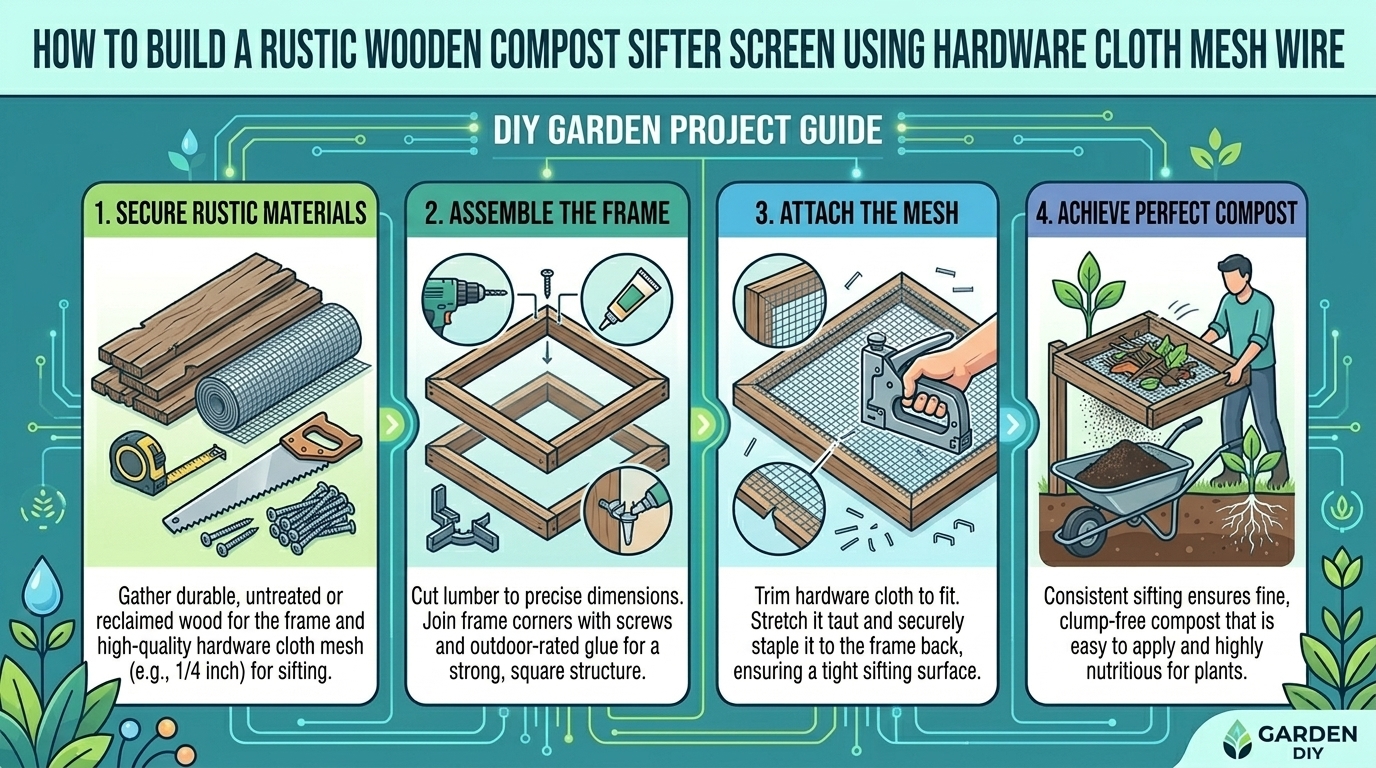
How to build a rustic wooden compost sifter screen using hardware cloth mesh wire? Gardeners often refer to finished compost as “black gold”—a nutrient-rich, moisture-retaining soil amendment that transforms home landscapes. However, raw compost fresh from a backyard bin or tumbler rarely looks like the fine, velvety material sold in nursery bags. It is usually filled with unfinished twigs, avocado pits, wood chips, clumped leaves, and thick organic debris.
Using unsifted compost can smother delicate seeds, stunt root growth in seed-starting flats, and leave flower beds looking cluttered. Building a rustic wooden compost sifter screen (often called a riddle or soil trommel frame) allows you to separate rich, fine compost from coarse organic matter quickly.
Whether you are managing large vegetable beds in sunny Texas, amending heavy soils across California and San Francisco, building raised beds in damp Washington climates, or preparing seed trays for short growing seasons in New York, a home-built compost sifter is an essential garden tool.
At KC Plants, we specialize in helping home gardeners build functional, sustainable, and aesthetically pleasing garden tools tailored to regional growing needs.
1. Why Every Gardener Needs a Compost Sifter Screen
Sifting compost is not just about cosmetic appearance; it directly impacts plant health, seed germination rates, and soil structure.
Practical Benefits of Sifting Compost
- Optimal Seed Germination: Fine, sifted compost provides maximum seed-to-soil contact without heavy twigs blocking delicate hypocotyls during seedling emergence.
- Custom Potting and Seed-Starting Mixes: Blending screened compost with coco coir and perlite creates a lightweight, nutrient-packed potting soil free of large debris.
- Efficient Compost Recycling: The coarse material left behind on top of the sifter mesh (un-decomposed sticks, fruit pits, thick bark) acts as an active bacterial inoculant when tossed back into your active compost pile.
- Protection for Garden Beds and Wheelbarrows: Screening prevents rocks, buried plastic tags, and sharp woody fragments from entering soft garden soil beds.
| Mesh Hardware Size | Wire Type | Ideal Use Case | Pros & Cons |
| 1/4-inch Hardware Cloth | Galvanized Steel Wire | Seed-starting mixes, fine potting soil, lawn top-dressing | Pros: Creates ultra-fine soil. Cons: Clogs easily with damp compost; requires dry material. |
| 1/2-inch Hardware Cloth | Galvanized Steel Wire | General garden bed amending, raised beds, general potting | Pros: Excellent balance of speed and particle size; ideal general-purpose mesh. |
| 3/4-inch to 1-inch Mesh | Heavy-Duty Wire / Chainlink | Rough bulk compost screening, mulching fruit trees | Pros: Moves large volumes fast. Cons: Lets smaller twigs and bark through into beds. |
2. Materials and Tools Needed for the Build
Building a rustic wooden sifter frame requires minimal tools, basic dimensional lumber, and hardware cloth. You can easily build it in under an hour.
Tool and Materials Checklist
- Lumber: 1×4 or 2×4 untreated cedar, redwood, or Douglas fir boards (Cedar and redwood naturally resist moisture rot).
- Hardware Cloth: 1/2-inch galvanized steel hardware cloth mesh (2×3 ft or 3×3 ft roll).
- Fasteners: 2-inch exterior wood screws and 3/8-inch heavy-duty galvanized staples.
- Corner Reinforcement: 4 flat L-angle metal corner brackets (optional, for maximum frame durability).
- Tools: Circular saw or hand saw, staple gun, wire snips (aviator snips), drill with driver bits, tape measure, safety gloves, and safety glasses.
3. Step-by-Step Construction Guide
For maximum efficiency, construct the sifter frame to fit comfortably on top of your standard garden wheelbarrow or 5-gallon buckets so sifted soil falls directly into your transport container.
1.Measure and Cut the Frame Components:Sized to rest securely on your wheelbarrow rim.
Measure the top opening of your wheelbarrow. Cut four pieces of 2×4 or 1×4 lumber to build a rectangular frame (e.g., 24 inches by 36 inches). Sand any large splinters while leaving a rugged, rustic finish.
2.Assemble the Outer Wooden Frame:Ensures rigidity under heavy, wet compost loads.
Join the four wooden boards at right angles using 2-inch exterior wood screws. Drill pilot holes to prevent wood splitting. Attach metal L-brackets to all four outer corners for extra structural stability.
3.Cut and Tension the Hardware Cloth Mesh:Protects your hands from sharp wire edges.
Unroll the galvanized 1/2-inch hardware cloth over the wooden frame. Use wire snips to cut the wire flush with the outer wood edges. Pull the wire mesh tight across the frame to eliminate sagging.
4.Staple Wire and Add Protective Wood Cleats:Locks wire securely under heavy shaking weight.
Staple the wire mesh every 1 to 2 inches along the frame using a heavy-duty staple gun. To prevent sharp wire ends from catching skin or clothing, screw thin wooden batten strips (1×2 cleats) directly over the stapled wire edges.
5.Apply a Natural Exterior Oil Finish (Optional):Extends the life of raw lumber outdoors.
Rub raw linseed oil or food-safe Tung oil onto the wooden frame. Avoid synthetic chemical stains that could leach into your organic compost and soil beds over time.
4. How to Use and Maintain Your Sifter Across Regions
Using your sifter efficiently depends on compost moisture and regional climate conditions.
- Texas & Warm Arid Zones: Compost can dry out completely in summer. Lightly mist overly dry, dusty compost before sifting to prevent inhaling airborne dust particles (always wear a dust mask).
- California & San Francisco (Urban & Coastal Microclimates): San Francisco’s foggy, cool conditions mean compost stays damp. Allow compost to air-dry in thin layers on a tarp under full sun for a day before sifting through 1/2-inch mesh.
- Washington & Pacific Northwest: Heavy seasonal rainfall keeps compost bins wet. Build your sifter with 1/2-inch mesh rather than 1/4-inch mesh to prevent damp soil from clumping and clogging wire grids.
- New York & Cold Eastern Climates: Sift compost in late autumn before the ground freezes solid. Store screened compost in covered totes or burlap bags so it stays ready for early spring seed starting.
10 Frequently Asked Questions (FAQ)
1. What size hardware cloth mesh is best for a compost sifter?
A 1/2-inch square mesh is the best all-around choice for general garden beds and top-dressing. Use a 1/4-inch mesh if you specifically need fine, debris-free soil for seed-starting trays.
2. What type of wood should I use for a long-lasting sifter frame?
Naturally rot-resistant lumbers like Cedar, Redwood, or White Oak last longest outdoors. If using standard pine or fir, apply a coat of raw linseed oil to protect the wood from moisture rot.
3. How do I prevent sharp hardware cloth wire edges from cutting my hands?
After stapling the mesh to the bottom of the wooden frame, screw thin wooden batten strips (1×2 cleats) over the raw wire edges. This sandwich construction seals sharp wire ends completely.
4. Why is my compost clogging the sifter screen?
Clogging occurs when compost is too wet. Spread damp compost out on a tarp in the sun for a few hours to let moisture evaporate before sifting.
5. What should I do with the coarse material left on top of the sifter?
Toss un-sifted sticks, coarse bark, and fruit pits back into your active compost bin! They act as carbon-rich bulking agents and introduce beneficial microbes to fresh organic waste.
6. Can I build a rotary compost sifter (trommel) instead of a manual frame?
Yes! Rotary trommels use a cylindrical mesh drum turned with a hand crank. They process larger volumes of compost faster with less physical arm strain, making them great for large properties.
7. How large should I build my compost sifter frame?
Dimensions of 2 feet by 3 feet fit perfectly across the top rim of most standard 6-cubic-foot garden wheelbarrows, allowing sifted soil to drop straight into the tub.
8. Is pressure-treated wood safe for building a compost sifter?
Modern copper-treated lumber is generally safer than older arsenic-treated wood, but natural untreated cedar or redwood is still preferred to avoid chemical exposure in organic gardens.
9. How do I clean and store my wooden compost sifter?
Tap the wooden frame firmly on the ground to loosen stuck dirt, brush wire clean with a stiff bristle brush, and store the frame flat in a dry shed or garage away from standing water.
10. Can I use chicken wire instead of hardware cloth for a sifter?
Chicken wire (hexagonal netting) is generally too flexible and sags under the weight of wet soil. Heavy-gauge square hardware cloth provides structural rigidity and consistent particle sizing.
Conclusion
Building a rustic wooden compost sifter screen using hardware cloth wire is an easy, low-cost DIY project that elevates your gardening efficiency. By screening out coarse woody debris and un-decomposed matter, you create fine, high-performing organic soil ready for seed trays, garden beds, and container plants across Texas, California, San Francisco, Washington, and New York.