How to create a butterfly puddling station using flat stones and wet sand in your garden? While traditional wildlife gardens prioritize nectar-rich blooms and host plants for caterpillars, butterflies require more than sugar to thrive. Male butterflies in particular seek out specialized mineral feeding sites known as puddling stations. In nature, butterflies gather around mud puddles, damp riverbanks, and mineral outcrops to extract essential salts, amino acids, and trace minerals—such as sodium and potassium—that nectar alone cannot provide. These micro-nutrients are critical for reproductive health, flight stamina, and lifespan.
By constructing an intentional butterfly puddling station using flat basking stones, coarse wet sand, and mineral additives, you can create a high-value wildlife feature that draws swallowtails, monarchs, painted ladies, and blues directly into view.
Whether managing a sun-baked patio in Texas, an urban rooftop in New York or San Francisco, a coastal courtyard in California, or a damp sanctuary in Washington, adding a puddling station completes your garden’s ecological footprint.
At KC Plants, we help home gardeners build functional, beautiful wildlife micro-habitats tailored to regional ecosystems.
1. The Science of Butterfly Puddling (Mud-Puddling)
Understanding why butterflies puddle helps you design a station that caters directly to their physiological needs.
Why Butterflies Need Mineral Stations
- Sodium and Mineral Extraction: Nectar is rich in carbohydrates (sucrose, glucose, fructose) but almost completely lacking in minerals. Puddling provides sodium, calcium, and trace elements required for neuromuscular function.
- Reproductive Vitality: Male butterflies consume sodium and pass it to females during mating via the spermatophore. This “nuptial gift” increases egg viability and female lifespan.
- Thermal Regulation: Butterflies are cold-blooded (ectothermic). Flat, dark river stones absorb solar heat, allowing butterflies to warm their flight muscles while sipping moisture.
| Component | Primary Purpose | Material Recommendations | Ecological Benefit |
| Shallow Basin | Holds moisture and substrate | Terracotta saucer, shallow ceramic bowl, stone birdbath base | Prevents quick drying while keeping water shallow enough to prevent drowning. |
| Coarse Sand & Soil Base | Holds water & releases minerals | Coarse builder’s sand blended with a pinch of organic compost | Provides a stable footing for proboscis insertion without sinking. |
| Flat Basking Stones | Solar heating & perching | Dark slate, flat river rocks, flagstone pieces | Heats up under sunlight, warming butterfly wing muscles for flight. |
| Mineral Boosters | Supplies essential sodium | Sea salt (tiny pinch), compost tea, wood ash, or overripe fruit | Replicates natural muddy riverbank mineral concentrations. |
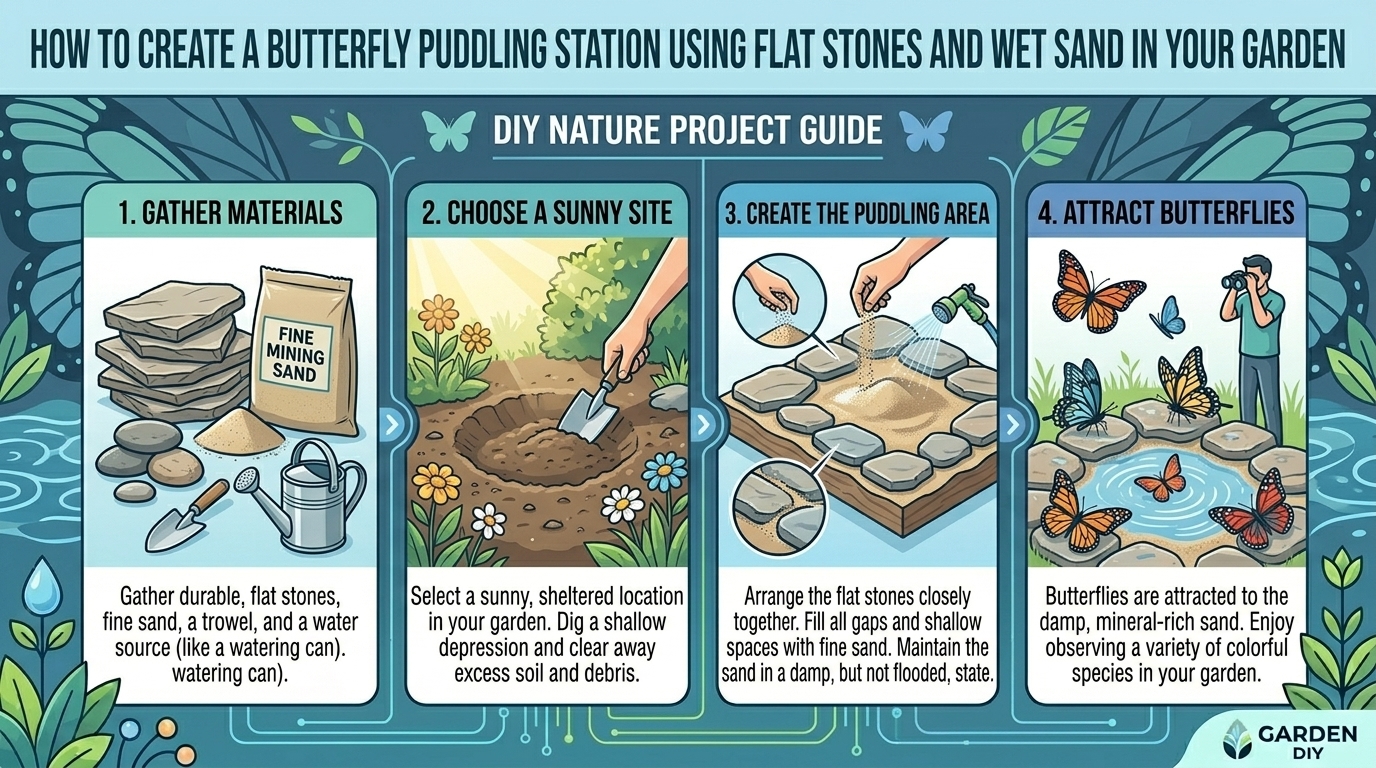
2. Step-by-Step Guide to Building a Butterfly Puddling Station
Building a puddling station is a quick, rewarding project that takes less than 30 minutes to assemble.
1.Select and Position a Shallow Container:Choose an accessible, non-porous vessel.
Place a 12 to 18-inch shallow terracotta or glazed ceramic saucer in a sheltered, sun-drenched spot that receives at least 6 hours of direct sunlight daily.
2.Fill the Basin with Sand and Organic Compost:Creates a stable capillary layer.
Fill the container with a 2-inch layer of clean coarse builder’s sand mixed with 1 tablespoon of organic compost or a pinch of unrefined sea salt to introduce trace minerals.
3.Arrange Flat Basking Stones and Driftwood:Provides safe perching and thermal warmth.
Set smooth, flat slate or river stones across the sand surface. Ensure the stone tops sit slightly above the sand level so butterflies can land comfortably without getting their wings wet.
4.Saturate the Sand to Create a Damp Mud Layer:Dampen without creating open standing water.
Pour fresh water into the saucer until the sand is thoroughly saturated and damp to the touch, but keep water levels below the stone surface to prevent mosquito breeding.
5.Add Optional Overripe Fruit Slices (Optional):Extra attractant for fruit-feeding species.
Place small slices of overripe bananas, oranges, or plums on a side stone to attract fruit-feeding species like Red Admirals and Question Marks.
3. Regional Maintenance Strategies across Key Growing Zones
Microclimates impact how quickly water evaporates from your puddling station:
- Texas & Warm Southern Climates: Intense summer heat causes rapid evaporation. Place your puddling station where it receives morning sun and light afternoon shade, or set up a simple automated drip emitter above the saucer to keep sand damp continuously.
- California & San Francisco (Coastal Fog & Drought): Coastal breezes cool basking stones quickly. Use dark basalt or slate rocks that absorb maximum solar heat, and position the station out of strong winds.
- Washington & Pacific Northwest: Heavy rain can flush out mineral salts. Use a saucer with small side drainage holes so excess rainwater drains off without washing away the sand substrate.
- New York & Cold Eastern Zones: Set up your station in late spring as swallowtails emerge. Clean out sand and store saucers indoors over winter to prevent freeze-cracking.
10 Frequently Asked Questions (FAQ)
1. Why aren’t butterflies visiting my birdbath for water?
Deep, open water in standard birdbaths poses a drowning hazard for butterflies. Butterflies cannot swim and require damp sand or moist stone edges where they can land safely and insert their long proboscis.
2. Will a damp sand puddling station attract mosquitoes?
No. Mosquitoes require still, open standing water to lay eggs and complete their larval cycle. A proper puddling station contains only saturated, damp sand with no open surface water.
3. How often should I add water to the puddling station?
Add water every 1 to 3 days, depending on temperature and humidity. The sand should stay consistently moist, resembling a wrung-out sponge.
4. Can I use table salt to supply minerals in the sand mix?
Use table salt with extreme caution—only a tiny pinch (less than 1/8 teaspoon per tray) is needed. Excessive refined iodine salt can be toxic. Natural alternatives like unrefined sea salt, compost tea, or a sprinkle of wood ash are safer.
5. What butterfly species are most likely to use a puddling station?
Male Swallowtails (Tiger, Black, Pipevine), Monarchs, Sulphurs, Blues, Red Admirals, Question Marks, and Painted Ladies are frequent puddlers.
6. Where is the best place in the garden to set up a puddling station?
Place it in a sunny, wind-sheltered location near nectar-rich flowering shrubs or host plants. Positioning it near ground level or on a low garden pedestal mimics natural puddling conditions.
7. Should I clean or replace the sand in the station?
Rinse and replace the sand once or twice per season to prevent mold or algae buildup. If using overripe fruit attractants, refresh fruit every 2 days so it does not attract wasps or fruit flies.
8. Can I use beach sand instead of builder’s sand?
Avoid unwashed beach sand because its high salt concentration can dehydrate butterflies. Use clean, coarse builder’s sand or horticultural sand from a nursery.
9. Why do I mostly see male butterflies at puddling stations?
Male butterflies require high quantities of sodium and amino acids to produce viable sperm packets (spermatophores). Females obtain much of their mineral intake directly from males during mating.
10. Can I build a puddling station in a small balcony garden?
Yes! A small 8-inch terracotta plant saucer filled with sand, a flat rock, and damp moisture works perfectly on apartment balconies and patios.
Conclusion
Creating a butterfly puddling station using flat stones and wet sand is one of the simplest, most impactful additions you can make to a wildlife-friendly garden. By providing the essential salts, minerals, and thermal basking spots butterflies need for reproduction and stamina, you expand your landscape’s ecological value across Texas, California, San Francisco, Washington, and New York.