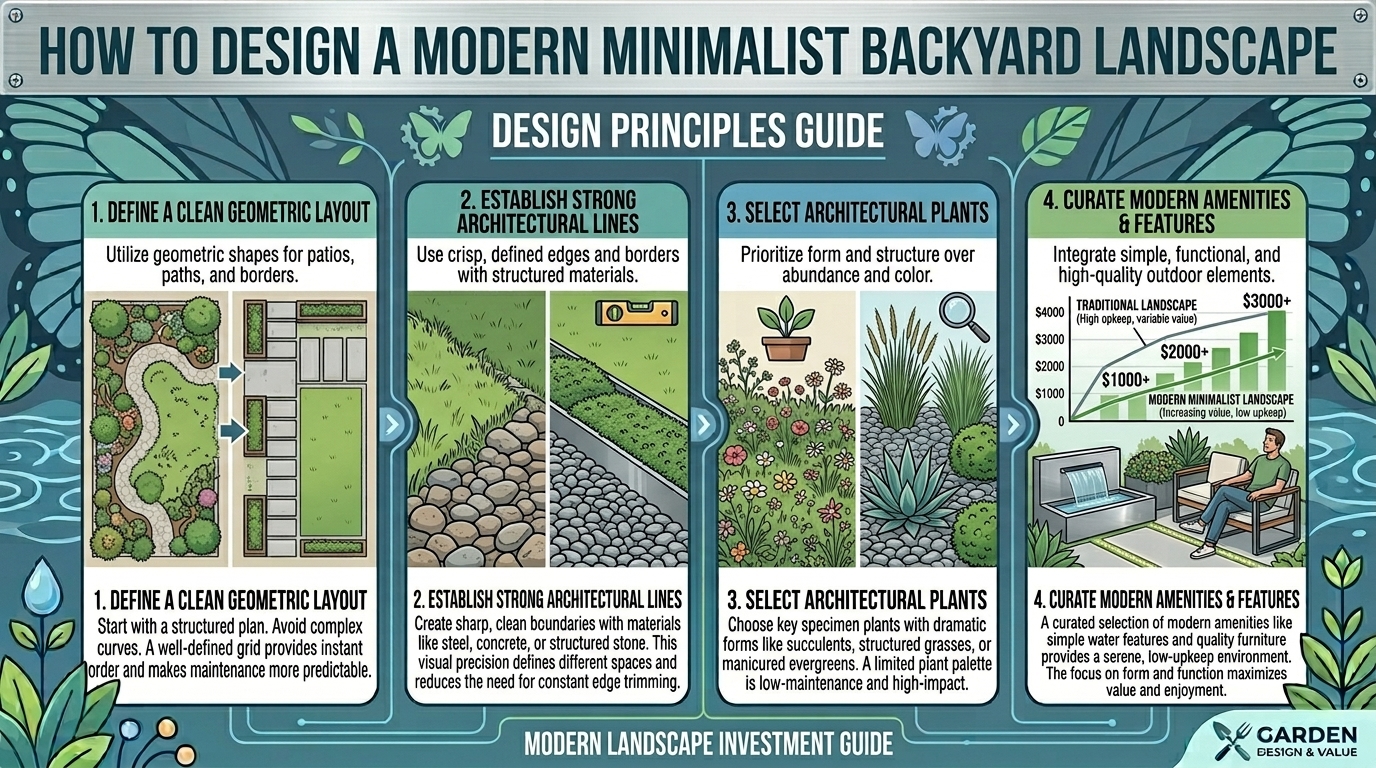
How to design a modern minimalist backyard landscape with clean lines and architectural plants.? Modern minimalist landscape design centers on structure, restraint, and intentionality. Rather than packing garden beds with dozens of flower varieties, a minimalist approach embraces a refined palette: clean hardscape lines, strong geometric forms, and high-impact architectural plants. The result is a calm, functional outdoor living space that serves as an extension of modern interior architecture while significantly paring down long-term yard maintenance.
Achieving a clean, high-end landscape balance requires thoughtful spatial planning, high-quality materials, and plant selections that offer year-round sculptural silhouette rather than short-lived seasonal clutter.
Whether transforming a compact urban lot in San Francisco or New York, building outdoor entertainment zones in Texas, or integrating sleek hardscapes into green coastal backyards across California and Washington, modern landscaping pairs architectural geometry with regional climate performance.
At KC Plants, we specialize in helping homeowners, urban garden designers, and landscape enthusiasts select structural flora and design clean outdoor spaces suited to their regional microclimates.
1. Principles of Modern Minimalist Landscape Architecture
Minimalist landscaping is governed by the mantra “less, but better.” Every element—from a concrete paver layout to a single specimen tree—must serve a clear structural or visual purpose.
Core Design Rules
- Geometric Form and Clean Sightlines: Utilize straight edges, crisp 90-degree right angles, and long sightlines to establish visual order. Align pathways, retaining walls, and planting beds with the structural grid of your house.
- Restrained Color and Texture Palette: Limit hardscape materials to two or three complementary finishes (such as dark basalt, polished concrete, and natural cedar). Stick to a green-on-green planting palette with sharp structural foliage rather than busy multi-colored flower borders.
- Outdoor “Rooms” and Defined Hardscape Zones: Divide the backyard into intentional functional zones—dining, lounging, fire feature, and open lawn or gravel space—separated by low-profile retaining walls, steel edging, or linear planters.
- Negative Space as a Feature: Open gravel fields, smooth turf stretches, or large format pavers give the eye places to rest, emphasizing the sculptural silhouettes of key architectural plants.
| Feature | Traditional Cottage / Layered Garden | Modern Minimalist Landscape |
| Design Geometry | Curved beds, organic flowing edges, crowded borders | Rectilinear layouts, grid patterns, razor-sharp steel edging |
| Plant Selection | High-density flowering perennials, mixed cottage blooms | Sculptural architectural plants (Agaves, Bamboo, Horsetail, Boxwood) |
| Color Scheme | Multi-colored, seasonal blooms, variable foliage shades | Monochromatic greens, deep charcoals, warm wood tones, slate gray |
| Hardscape Role | Secondary frame for surrounding flower beds | Primary structural framework (Poured concrete, gravel, Corten steel) |
| Maintenance | High (Frequent deadheading, pruning, multi-fertilizer care) | Low-to-Medium (Structured pruning, automated drip irrigation) |
2. Choosing Top Architectural Plants by Climate Profile
Architectural plants feature bold leaves, strong verticality, or geometric habits that act as living sculptures in a minimalist garden.
Top Architectural Plant Categories
- Dramatic Succulents & Agaves: Agave americana, Agave attenuata, and Yucca species provide bold starburst shapes ideal for hot, sun-exposed hardscape beds.
- Structural Grasses & Reeds: Horsetail Reed (Equisetum hyemale), Karl Foerster Feather Reed Grass, and Black Mondo Grass add striking vertical lines and textural contrast against smooth concrete walls.
- Sculptural Evergreen Trees & Shrubs: Columnar Japanese Yew (Taxus cuspidata ‘Fastigiata’), Italian Cypress, Boxwood spheres (Buxus), and Japanese Maple (Acer palmatum) offer dramatic structural silhouettes.
3. Step-by-Step Implementation Guide for Modern Landscaping
Creating clean lines requires precise excavation, durable hardscape installation, and proper plant spacing.
1.Draft a Grid-Based Spatial Layout Plan:Align hardscapes with home architecture.
Measure your backyard boundaries and map out a strict rectangular grid. Align main patio borders, walkways, and planting boxes with existing home features like sliding glass doors or exterior building corners.
2.Install Heavy-Duty Steel or Aluminum Landscape Edging:Creates sharp edges that contain materials.
Dig narrow trenches along bed borders and secure 14-gauge Corten steel or black powder-coated aluminum edging. Steel edging provides rigid boundaries that prevent gravel from spilling into plant beds or lawn areas.
3.Lay Large-Format Concrete Pavers with Gravel Infill:Provides smooth walking surfaces and clean visual grid.
Excavate the patio area, lay a compacted crushed stone base, and set large 24×36-inch architectural concrete pavers. Fill gaps between pavers with dark basalt gravel or dense groundcover like Elfin Thyme.
4.Position Architectural Specimen Plants with Wide Spacing:Isolate specimen plants for high visual impact.
Plant structural specimens (such as a multi-trunk Japanese Maple or large Agave) with generous surrounding space. Apply a 2-inch top layer of dark lava rock, slate chips, or black beach pebbles to keep beds crisp.
5.Install Low-Voltage LED Architectural Landscape Lighting:Enhance structural shadows and sightlines.
Place hidden low-voltage LED uplights at the bases of key structural plants to project dramatic branch shadows onto perimeter walls, and install continuous LED strip lights under floating bench seating.
4. Regional Design Adaptations Across Key States
Designing a minimalist garden requires adapting plant choices to local soil, rainfall, and thermal conditions:
- Texas (Dallas, Austin, Houston): Heat tolerance is critical. Combine wide-format concrete paver pads with drought-resilient Agave parryi, Soft Leaf Yucca, and Red Yucca (Hesperaloe parviflora). Utilize Corten steel raised planters to elevate soil and protect roots from heavy clay retention.
- California & San Francisco (Bay Area & Coastal Zones): Embrace seamless indoor-outdoor living. Pair floor-to-ceiling glass doors with continuous bluestone or light gray porcelain pavers. Use coastal-tolerant architectural plants like Aeonium, Agave attenuata, Phormium (New Zealand Flax), and structural architectural bamboos in root-barrier-lined planters.
- Washington & Pacific Northwest (Seattle, Tacoma): Integrate warmth to balance cool, cloudy days. Combine dark charcoal basalt stone with warm cedar slat privacy screens. Select shade-tolerant structural foliage such as Horsetail Reed, Japanese Forest Grass (Hakonechloa), architectural ferns, and cloud-trimmed Japanese Holly.
- New York & Cold Eastern Zones (NYC Urban Rooftops & Suburbs): Ensure plant choices survive freeze-thaw cycles. Choose cold-hardy architectural specimens like Karl Foerster Grass, Columnar Hornbeam, Boxwood spheres, and Buxus hedges set in insulated fiberglass containers.
10 Frequently Asked Questions (FAQ)
1. What defines an “architectural plant” in landscape design?
An architectural plant features a strong, distinct form, striking foliage geometry, or bold verticality (such as Agaves, Horsetail Reeds, or Columnar Evergreens) that allows it to hold visual interest as a standalone structural element.
2. Is modern minimalist landscape design expensive to install?
Upfront costs can be higher due to large-format pavers, custom steel work, and high-quality specimen plants. However, long-term maintenance, water consumption, and plant replacement costs are significantly lower than traditional high-density gardens.
3. How do I prevent weeds from growing in gravel aggregate beds?
Install a heavy-duty, professional-grade woven weed barrier fabric underneath the crushed rock or river stone layer. Ensure steel edging keeps soil from washing into the gravel.
4. Can I create a minimalist garden in a small urban San Francisco or NYC yard?
Yes! Minimalist design is especially effective for compact spaces. Clean lines, large-format pavers, and vertical wall planters eliminate visual clutter, making small courtyards and rooftop terraces feel much larger.
5. What are the best hardscape materials for modern backyards?
Poured-in-place architectural concrete, large-format porcelain or bluestone pavers, Corten steel planter walls, dark crushed basalt, polished beach pebbles, and horizontal cedar slatting are top material choices.
6. Is Horsetail Reed (Equisetum hyemale) safe to plant directly in garden beds?
Horsetail Reed is extremely aggressive and spreads rapidly via underground rhizomes. Always plant Horsetail Reed inside sealed concrete containers or heavy-duty lined metal trough planters to contain root growth.
7. How do I incorporate outdoor lighting into a minimalist design?
Focus on subtle, hidden fixture lighting: low-voltage LED uplighting aimed at specimen tree trunks, under-cap LED strip lights beneath floating seats, and sleek path lights hidden along gravel walkways.
8. What color palette works best for modern outdoor furniture?
Stick to neutral, monochromatic tones: charcoal gray, matte black, stark white, and natural teak or warm cedar tones that complement surrounding concrete and greenery.
9. Can I include a lawn in a modern minimalist garden?
Yes, but shape the lawn into a crisp, geometric form (such as a perfect rectangle or square) bordered by clean steel edging, stone borders, or wide paver ribbons.
10. How do I keep a minimalist garden from feeling cold or uninviting?
Balance hard concrete and steel surfaces with warm elements: natural timber wall slats, warm 2700K exterior landscape lighting, cozy fire tables, and soft movement from ornamental grasses.
Conclusion
Designing a modern minimalist backyard landscape with clean lines and architectural plants creates a peaceful, structured outdoor space that seamlessly connects with modern architecture. By establishing crisp geometric hardscapes, utilizing high-contrast materials like concrete, gravel, and Corten steel, and positioning bold structural plants across Texas, California, San Francisco, Washington, and New York, you create a timeless, low-maintenance landscape.