Urban gardening has exploded in popularity, transforming tiny backyards, community plots, balconies, and rooftop spaces into vibrant patches of green. Growing your own food is deeply rewarding, but city agriculture comes with a hidden challenge. Beneath the lush green foliage, urban soil often carries the invisible baggage of industrial history, heavy traffic emissions, and aging infrastructure.
If you garden in bustling metropolitan regions like New York, San Francisco, industrial pockets of Washington, or dense urban centers across California and Texas, your soil may contain trace amounts of heavy metals like lead, cadmium, arsenic, and zinc.
This comprehensive guide explores how to identify, manage, and naturally decontaminate urban garden soil, ensuring your home-grown harvest is safe, nutritious, and thriving.
Understanding Urban Soil Contamination
Unlike rural farmland, city dirt is subjected to decades—sometimes centuries—of human activity. Heavy metals do not break down over time like organic matter; instead, they persist indefinitely in the soil matrix, binding to fine silt and clay particles.
Common Sources of Heavy Metals in City Soils
- Lead ($Pb$): The most widespread urban contaminant. It stems from historical paint flaking off older buildings, decades of leaded gasoline emissions settling near roadways, and industrial fallout.
- Cadmium ($Cd$): Often introduced via chemical fertilizers, atmospheric deposition from industrial smelting, and discarded nickel-cadmium batteries.
- Arsenic ($As$): Found near old treated lumber structures, historic orchards, and certain industrial sites.
- Zinc and Copper ($Zn, Cu$): Common near high-traffic zones from tire wear, brake pad degradation, and urban runoff.
Regional Urban Realities
- New York & San Francisco: High-density historic architecture means lead paint residue and century-old fill dirt are common challenges in backyard gardens and community plots.
- California & Texas: Rapid urban expansion over former industrial or agricultural sites can leave behind legacy pesticides and heavy metal residues.
- Washington: Urban centers influenced by maritime and aerospace manufacturing histories require careful soil screening to rule out heavy industrial pollutants.
Step 1: Soil Testing (Never Guess, Always Test)
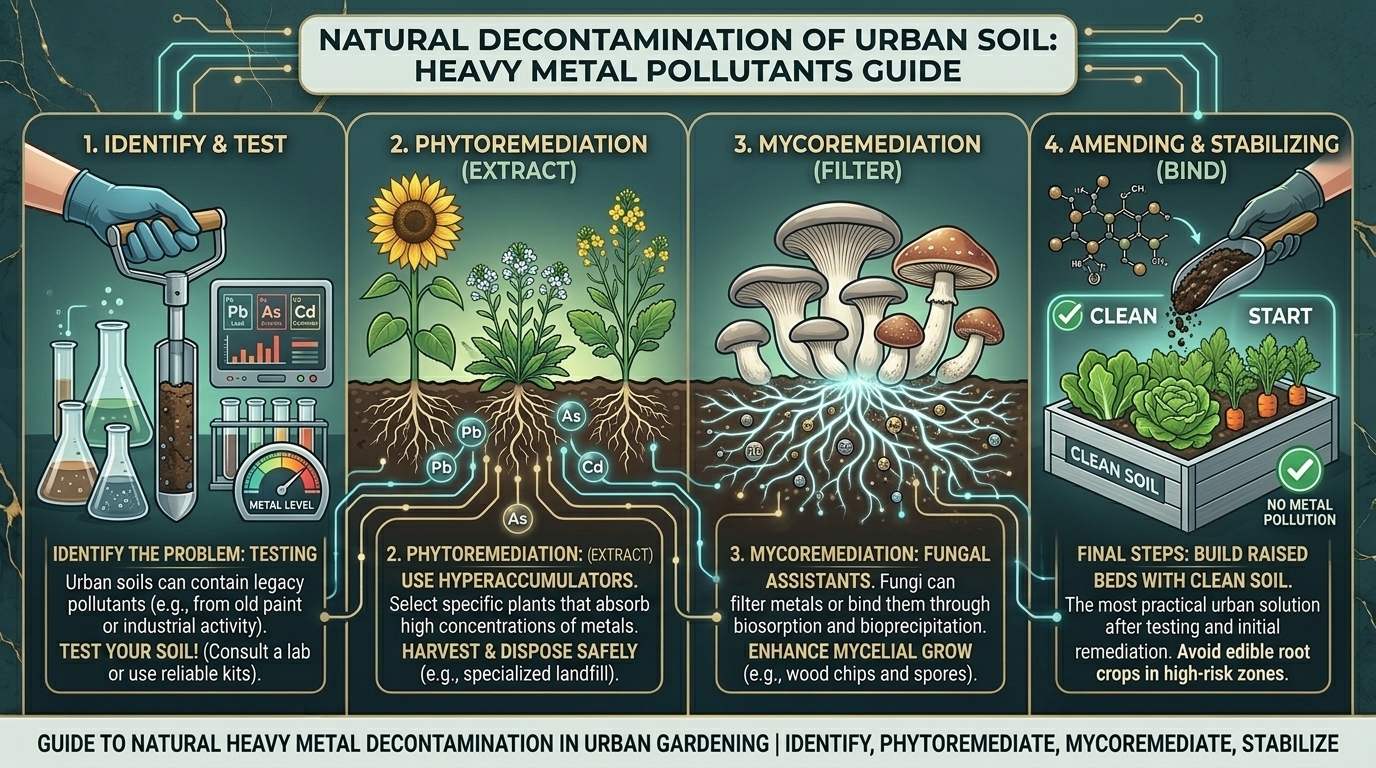
You cannot look at soil and tell if it contains heavy metals. Before planting root vegetables or leafy greens, you must conduct a professional laboratory soil test.
- Collect a Representative Sample: Take small core samples from 6 to 8 different spots in your garden down to a depth of 6 inches. Mix them together in a clean plastic bucket.
- Send to a Certified Lab: Skip cheap DIY home lead kits, which can be notoriously inaccurate. Instead, submit your sample to your local agricultural extension office or a certified university soil testing laboratory.
- Interpret the Results: Pay close attention to parts-per-million (ppm) thresholds for lead. Generally, lead levels below 100 ppm are considered safe for all gardening. Levels between 100 and 400 ppm require caution (especially for root crops and children), while levels exceeding 400 ppm demand strict mitigation or container-only growing.
4 Natural Approaches to Manage and Decontaminate Urban Soil
While you cannot magically evaporate heavy metals, you can manage them using natural, eco-friendly strategies. Depending on your contamination levels, choose from these proven techniques:
1. Phytoremediation (Using Plants to Clean Soil)
Phytoremediation is a biological process where specific hyperaccumulator plants absorb heavy metals through their roots and store them in their stems and leaves.
- How It Works: Sunflowers, mustard greens, Indian mustard, and certain ferns are known champions at pulling lead, zinc, and nickel out of the earth.
- The Catch: Once the plants absorb the metals, they are considered hazardous waste and must be carefully harvested, bagged, and disposed of according to local municipal guidelines. You cannot compost these plants or put them in green waste bins!
2. Physical Barriers and Capping (The Safest Shortcut)
If remediation feels too slow or your metal levels are moderately elevated, capping is the gold standard for urban gardening.
- How It Works: Lay down a permeable geotextile landscape fabric directly over the contaminated native earth. On top of this barrier, build raised beds and fill them with 12 to 18 inches of clean, certified organic topsoil and compost.
- Why It Works: Plant roots stay safely inside the clean raised bed layer, preventing them from foraging down into the historic urban soil below.
3. Soil pH Management and Organic Matter
Heavy metals become far more dangerous and bioavailable to plants when soil is overly acidic.
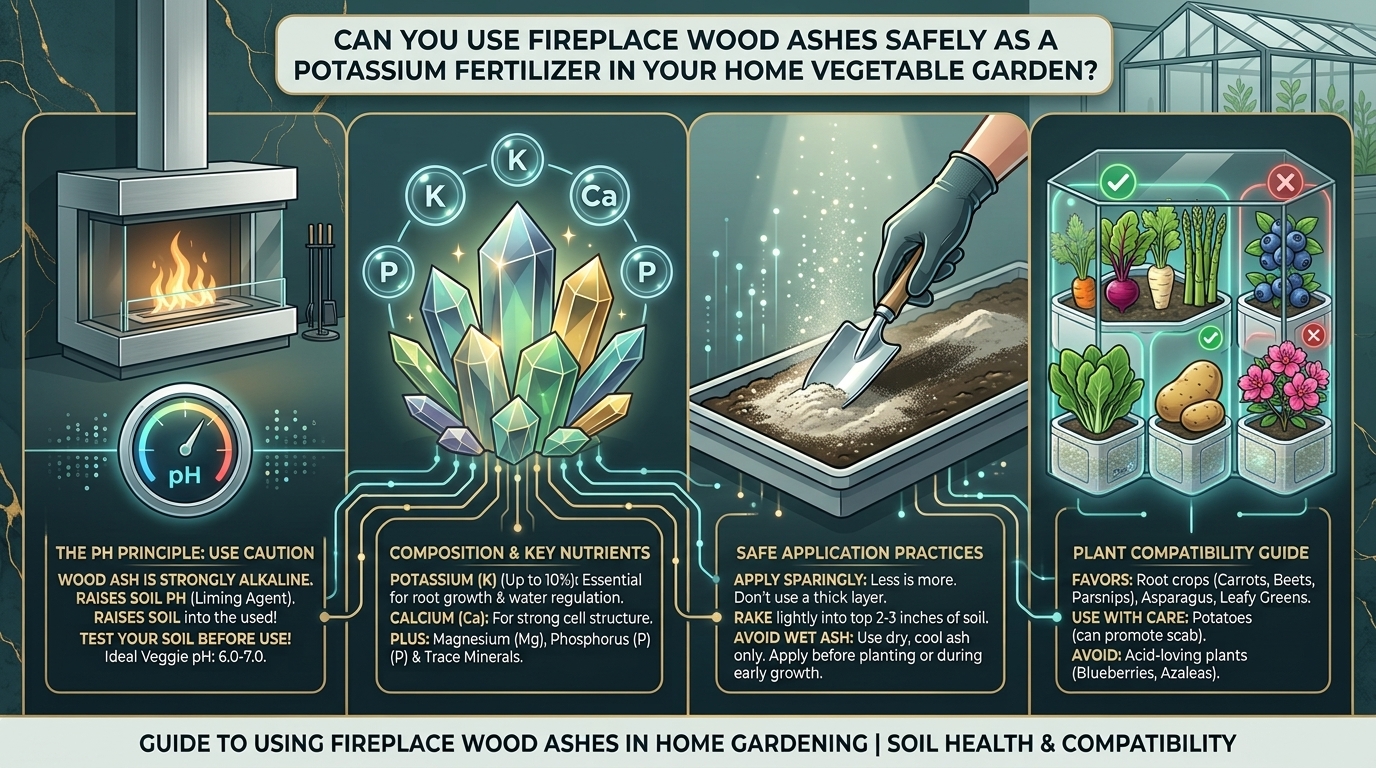
- Raise Your pH: Maintaining an alkaline or neutral pH (around $6.5$ to $7.0$) locks heavy metals tightly onto soil particles, making it much harder for plant roots to absorb them. Adding agricultural lime or wood ash (if appropriate for your soil) helps stabilize pH.
- Boost Organic Matter: Mixing in generous amounts of mature compost, peat moss, or worm castings creates humic substances that bind to heavy metals, neutralizing their mobility.
4. Dilution (Mixing Clean Soil)
For low-level contamination spread across large lots, mixing massive amounts of clean, uncontaminated topsoil and compost into your native dirt can dilute the concentration of heavy metals below hazardous thresholds.
Smart Crop Selection: What to Grow in Urban Soil
Different vegetables absorb heavy metals at vastly different rates. If you choose to grow directly in urban ground, you must choose your crops strategically:
- Safe Choices (Fruiting Crops): Tomatoes, peppers, squash, cucumbers, eggplants, and tree fruits absorb very little lead into their edible fruits.
- High-Risk Choices (Root & Leafy Crops): Carrots, radishes, beets, lettuce, spinach, and herbs readily accumulate heavy metal dust on their leaves or pull toxins directly into their edible roots. Never grow root crops in unverified urban soil.
Frequently Asked Questions (FAQ)
1. How do I know if my city garden soil has too much lead?
The only reliable method is to send a core sample to a certified soil testing laboratory. The EPA generally flags residential soil lead levels above 400 ppm as a hazard, while urban gardeners aim to keep levels below 100 ppm.
2. Can washing vegetables remove heavy metals?
Washing removes physical surface dust, soil particles, and atmospheric fallout clinging to the outside of your produce. However, it cannot remove heavy metals that have been biologically absorbed into the plant tissue itself.
3. Is raised bed gardening safe in contaminated urban areas?
Yes! Raised beds built with a protective landscape fabric barrier at the base and filled with imported, certified clean soil and compost provide a completely safe environment for growing all types of vegetables.
4. What are hyperaccumulator plants?
Hyperaccumulators are specialized plant species (such as Indian mustard, alpine pennycress, and sunflowers) that naturally absorb unusually high concentrations of heavy metals through their root systems without dying.
5. Can I compost plants used for phytoremediation?
No. Phytoremediation plants concentrate heavy metals in their biomass. Composting them will recycle the toxins right back into your organic matter. They must be bagged and thrown away as solid waste.
6. Does chicken manure or compost help neutralize heavy metals?
Adding rich, mature compost helps bind heavy metals chemically, reducing their ability to enter plant roots. However, ensure your compost source is clean and free of heavy metal contamination itself.
7. Why are root crops more dangerous in urban soil than fruiting crops?
Root crops (like carrots and radishes) grow directly inside the soil matrix and can absorb heavy metals through direct contact. Furthermore, soil particles cling to their skins, making thorough scrubbing essential.
8. Are backyard soils in San Francisco and New York always contaminated?
Not always, but urban centers have a higher statistical probability of contamination due to historic industrial output, heavy traffic history, and older painted structures. Testing is always required.
9. How deep do heavy metals penetrate urban soil?
Unless disturbed by deep excavation, heavy metals like lead typically remain concentrated in the top 2 to 6 inches of soil because they bind tightly to organic matter and clay minerals near the surface.
10. Can earthworms survive in heavy metal-contaminated soil?
Earthworms can survive moderate contamination, but high concentrations of heavy metals like cadmium and lead are toxic to earthworms, drastically reducing their population in urban environments.
Conclusion
Urban gardening is an empowering way to connect with nature, reduce your carbon footprint, and enjoy hyper-local, nutritious food. While heavy metal pollutants in city soils pose a real challenge, they are entirely manageable with the right knowledge and tools. Whether you choose to cap your beds with clean soil, adjust your soil pH, or experiment with phytoremediation, taking proactive steps ensures your urban garden remains a safe and productive oasis.