How to Identify Beneficial Soil Bacteria That Protect Your Home Garden Plants from Root Diseases
- Author: KC Plants Editorial Team
- Published For Gardeners In: Texas, New York, California, Washington, and San Francisco
- Estimated Read Time: 25-30 Minutes (Comprehensive Soil Microbiology Masterclass)
Introduction: The Invisible Guardians Beneath Your Garden Beds
When most home gardeners think of plant diseases, their minds instantly drift to visible afflictions: powdery mildew on squash leaves, black spots on rose petals, or rust on tomato foliage. However, the most devastating plant pathogens operate entirely out of sight, deep within the dark, hidden ecosystem of your garden soil.
Root rot (Phytophthora, Pythium, Rhizoctonia, and Fusarium fungi) can wipe out an entire vegetable patch, raised bed, or container garden within weeks. Once these opportunistic pathogens colonize a plant’s root system, cutting off water and nutrient transport, saving the plant is often nearly impossible.
For decades, the standard chemical reflex has been to reach for broad-spectrum fungicides, soil sterilizers, or chemical drenches. But this brute-force approach backfires: it destroys the entire living soil ecosystem, wiping out friendly organisms along with the bad, and leaving your garden permanently dependent on artificial chemical inputs.
Fortunately, nature has already deployed an elite defense force. Billions of microscopic, beneficial soil bacteria wage daily biochemical warfare against destructive root pathogens. By understanding, identifying, and fostering these invisible guardians, you can build a self-defending garden soil web.
Whether you are managing heavy clay beds in Texas, urban container spaces in New York, drought-smart landscapes in California, wet winter soils in Washington, or hillside urban gardens in San Francisco, this exhaustive masterclass guide explores how to identify, attract, and protect the beneficial soil bacteria that keep your plants bulletproof.
Chapter 1: The Underground Battleground: Plant Roots and Rhizosphere Biology
To understand how soil bacteria protect your plants, you first need to look at the rhizosphere—the narrow zone of soil directly influenced by root secretions.
1. The Plant-Microbe Mutualism
Plants are master biochemists. Through photosynthesis, they manufacture sugars, amino acids, and complex carbohydrates, pumping up to 20% to 40% of these hard-earned energy compounds out through their roots as liquid exudates.
- The Invitation: Plants do not leak these sugars by accident; they use them as a targeted biological currency to bribe beneficial soil bacteria and mycorrhizal fungi.
- The Exchange: In return for this steady food supply, beneficial bacteria colonize the root surface (the rhizoplane) like microscopic knights in shining armor, providing physical shielding and chemical antibiotics against invading root pathogens.
2. PGPR: Plant Growth-Promoting Rhizobacteria
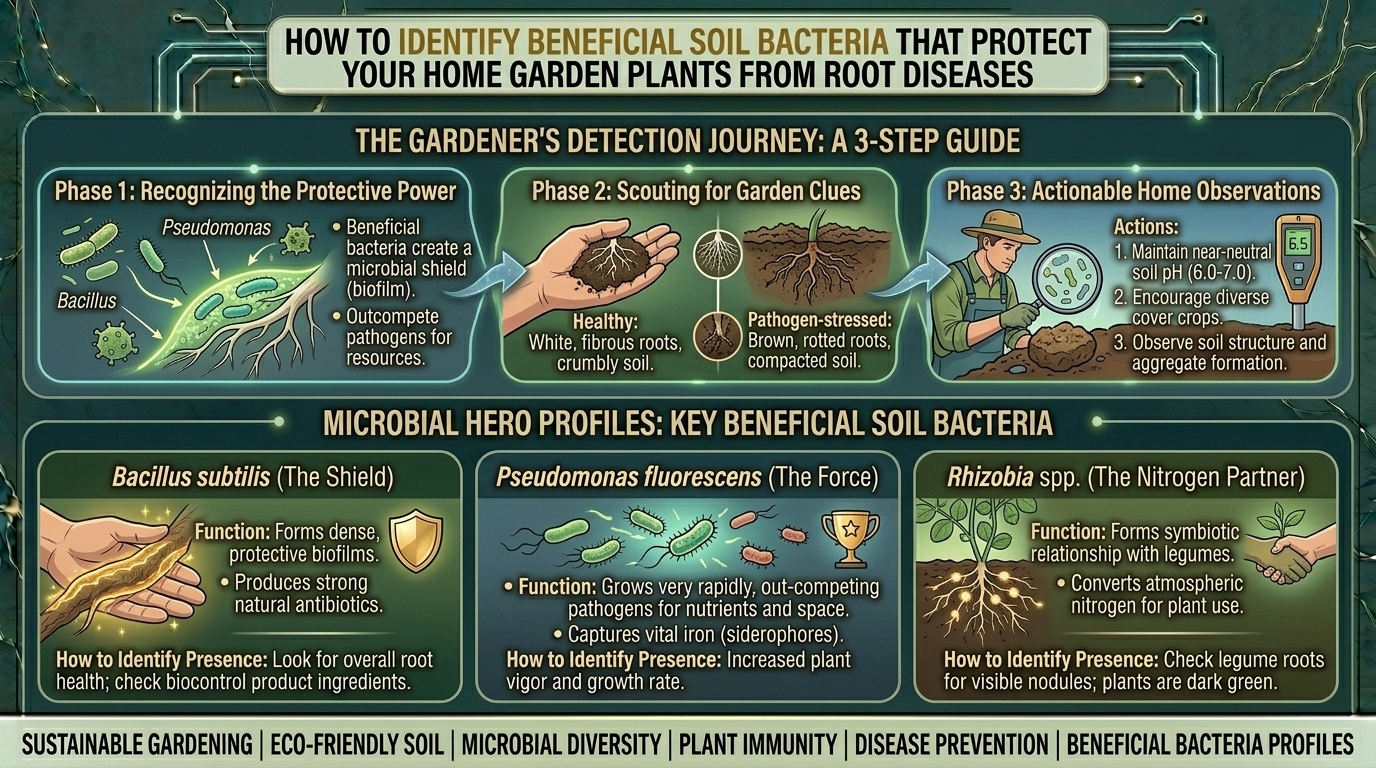
Among the vast universe of soil bacteria, a specific elite group is classified as Plant Growth-Promoting Rhizobacteria (PGPR). These specialized strains perform three vital functions:
- Biocontrol (Disease Suppression): They outcompete harmful pathogens for space and nutrients, secrete natural antibiotics, and trigger systemic acquired resistance (SAR) in the host plant.
- Bio-fertilization: They fix atmospheric nitrogen, solubilize bound-up phosphorus, and make micronutrients easily accessible to plant roots.
- Phytostimulation: They synthesize plant hormones (auxins, gibberellins, and cytokinins) that stimulate explosive root branching and hair growth.
Chapter 2: The Core Champions: Key Beneficial Bacteria to Know
While millions of bacterial species inhabit healthy soil, several prominent genera stand out as the primary protectors of home garden root systems.
[Key Beneficial Soil Bacteria Families]
  ├── Bacillus Species (Form tough endospores; secrete natural antibiotics & fungicides)
  ├── Pseudomonas Species (Aggressive root colonizers; produce iron-scavenging siderophores)
  ├── Streptomyces Species (Produce earthy geosmin and potent anti-fungal compounds)
  └── Azotobacter & Rhizobium (Nitrogen fixers that build soil fertility and plant vigor)
1. Bacillus Species (The Endospore Defenders)
- What They Are: Rod-shaped bacteria famous for forming tough, dormant structures called endospores when environmental conditions turn harsh. This allows commercial and natural Bacillus strains (such as Bacillus subtilis and Bacillus amyloliquefaciens) to survive extreme heat, drought, and shelf storage.
- How They Protect Roots: Bacillus strains secrete powerful lipopeptides and natural antibiotic compounds that puncture the cell walls of harmful fungi like Fusarium and Pythium. They act as rapid colonizers, locking down root real estate before pathogens can gain a foothold.
2. Pseudomonas Species (The Iron-Guarding Vanguard)
- What They Are: Highly motile, flagellated bacteria that swim rapidly through soil moisture films to locate fresh root tips.
- How They Protect Roots: Beneficial Pseudomonas strains produce siderophores—specialized molecules that bind tightly to free iron in the soil. By locking up available iron, they starve pathogenic fungi and bad bacteria (which rely on iron to multiply) while feeding the host plant.
3. Streptomyces Species (The Soil Antibiotic Producers)
- What They Are: Filamentous bacteria that resemble microscopic fungi. They are responsible for that wonderful, rich “after the rain” earthy scent in your garden, which comes from an organic compound they produce called geosmin.
- How They Protect Roots: Streptomyces species produce over two-thirds of the world’s natural antibiotics (including streptomycin). In your garden, they act as a biological pharmacy, continuously releasing compounds that suppress root-rotting pathogens.
Chapter 3: How to Identify Healthy, Biologically Active Soil
You cannot look at soil bacteria with the naked eye, but you can read the unmistakable diagnostic signs of a thriving, microbe-rich soil ecosystem.
1. The Aroma Test: Rich, Earthy, and Sweet
- The Indicator: Pick up a handful of damp soil from a well-managed garden bed and take a deep breath.
- What It Means: If it smells rich, sweet, and deeply earthy (thanks to active Streptomyces and actinomycetes), your soil is teaming with biological activity. If it smells sour, swampy, or sulfurous (like rotten eggs), your soil is anaerobic, devoid of oxygen, and dominated by destructive pathogens.
2. The Crumb Structure (Aggregate Stability)
- The Indicator: Examine your soil texture. Does it look like a dense, powdery dust or sticky gray paste, or does it resemble dark, crumbly chocolate cake crumbs?
- What It Means: Beneficial bacteria and fungi secrete sticky, glue-like sugary substances called glomalin and polysaccharides. These biological glues bind microscopic mineral particles together into stable crumbs (aggregates), creating thousands of tiny pore spaces that hold air and water.
3. Earthworm Presence
- The Indicator: Finding active earthworms when you dig.
- What It Means: Earthworms don’t eat dirt for the minerals alone; they graze on the massive populations of bacteria and fungi coating organic matter. A high earthworm population is a direct proxy for a thriving bacterial and fungal food web.
Chapter 4: Regional Realities: Texas, New York, California, Washington, and San Francisco
Soil microbial communities adapt dynamically to regional climates. Tailoring your approach to your local geography ensures your beneficial bacteria thrive year-round.
1. Texas (Protecting Microbes Against Extreme Heat and Heavy Clay)
- The Regional Challenge: Blistering Texas summers bake native clay soils, driving soil temperatures above 100°F and scorching the upper soil horizon where beneficial bacteria reside.
- Identification & Protection Tip: Healthy Texas microbial soils must be heavily insulated with organic mulch to keep soil temperatures regulated. Look for crumbly, structured clay mixed with expanded shale, which houses Bacillus species that tolerate heat stress.
2. New York (Reviving Urban Soils and Beating Freeze-Thaw Die-Offs)
- The Regional Challenge: New York urban garden plots and suburban yards face heavy compaction, road salt contamination, and harsh winter sub-zero freezes that force soil bacteria into prolonged dormancy.
- Identification & Protection Tip: Look for dark, leaf-mold-rich topsoils in established community gardens or park peripheries. Protect your soil biology over winter by applying thick layers of straw and compost, ensuring rapid microbial revival when spring thaws arrive.
3. California (Sustaining Soil Life Through Extended Dry Spells)
- The Regional Challenge: California’s long, dry summers and water-efficient irrigation regimes mean soils can dry out completely, threatening the moisture films that bacteria need to swim and feed.
- Identification & Protection Tip: Healthy California organic soils feature rich compost amendments and drip irrigation that maintain steady subterranean moisture. Watch for active root branching and vibrant foliage as indicators that Pseudomonas and mycorrhizae are successfully supporting your plants.
4. Washington (Guarding Against Winter Saturation and Anaerobic Rot)
- The Regional Challenge: Western Washington’s relentless autumn and winter rains saturate raised beds, threatening to drown aerobic beneficial bacteria and invite anaerobic root-rot fungi (Phytophthora).
- Identification & Protection Tip: Check your soil drainage frequently. In healthy Pacific Northwest beds, raised structures and coarse wood chips keep oxygen levels high, allowing aerobic Bacillus and Streptomyces strains to outcompete water-loving pathogens.
5. San Francisco (Leveraging Marine Microclimates for Year-Round Biology)
- The Regional Challenge: San Francisco’s cool, foggy maritime climate prevents deep freezes, meaning soil biology remains active almost continuously, but cool dampness can encourage damping-off fungi in seedlings.
- Identification & Protection Tip: Look for fine, fungal-and-bacterial webs weaving through your compost-amended urban beds. Utilize beneficial bacterial inoculants (like Bacillus subtilis) when starting seeds in cool San Francisco fog to protect delicate roots.
Chapter 5: Actionable Tips to Cultivate and Protect Beneficial Soil Bacteria
Attracting and multiplying friendly soil bacteria doesn’t require complex laboratory equipment. You can engineer an ideal habitat using organic horticulture practices.
[The Microbe-Building Protocol]
  ├── Step 1: Stop Using Broad-Spectrum Chemical Fungicides & Synthetic Fertilizers
  ├── Step 2: Feed the Soil Food Web with Diverse Organic Compost & Mulch
  ├── Step 3: Practice No-Till Gardening to Protect Subterranean Habitats
  └── Step 4: Apply Specialized Biological Inoculants (Compost Tea / Bacillus strains)
1. Ban Synthetic Chemicals and Harsh Fungicides
- Broad-spectrum chemical fungicides, sterilizing soil drenches, and high-salt synthetic fertilizers act like a neutron bomb for your soil microbiome, killing beneficial bacteria right alongside harmful pathogens. Transition to organic pest and disease management immediately.
2. Apply Living Compost and Compost Tea
- Inoculation: The single fastest way to introduce beneficial bacteria to a sterile garden bed is by applying a 1-to-2-inch top-dressing of finished, living compost.
- Compost Teas: Brew aerated compost tea using finished compost, unsulfured molasses (as a bacterial food source), and an aquarium bubbler for 24 hours, then drench your root zones to populate billions of active Bacillus and Pseudomonas cells.
3. Practice No-Till Gardening
- Tilling shatters microscopic bacterial colonies, destroys soil aggregate structure, and exposes delicate organisms to lethal UV radiation and drying air. Practice zero-till or minimal-disturbance gardening to let your bacterial networks expand uninterrupted year after year.
Chapter 6: 10 Frequently Asked Questions (FAQs)
1. Can I see beneficial soil bacteria with the naked eye?
No. Soil bacteria are single-celled microscopic organisms ranging from 0.5 to 5 micrometers in size. You cannot see them individually without a high-powered compound microscope (magnified 400x to 1000x), though you can easily observe their collective work via soil structure, aroma, and plant health.
2. How do beneficial bacteria protect plant roots from root rot?
Beneficial bacteria protect roots through competitive exclusion (taking up all available root surface space so pathogens can’t land), secreting natural antibiotics and antifungal compounds, and triggering the plant’s internal immune defense system (systemic acquired resistance).
3. Do chemical fertilizers kill beneficial soil bacteria?
Yes. Synthetic chemical fertilizers are highly concentrated salts. Repeated heavy applications cause osmotic shock, drawing moisture out of bacterial cell membranes and triggering massive die-offs in the soil food web.
4. What is the difference between Bacillus and Pseudomonas bacteria?
Bacillus species form tough endospores that survive extreme heat and drought while secreting potent antifungal peptides. Pseudomonas species are fast-swimming root colonizers that produce iron-scavenging siderophores to starve competing pathogens.
5. How can I test my garden soil for microbial activity at home?
While you can’t run a full genomic lab test at home, you can perform the aroma test (rich, sweet earth smell indicates life; sour smell indicates anaerobic rot), check for soil crumb aggregation, and observe active earthworm populations as reliable proxies for biological health.
6. Are commercial bacterial inoculants worth buying?
Yes, especially when starting a brand-new raised bed, container garden, or soil mix that has been sterilized or lacks organic matter. Look for products containing specific strains of Bacillus subtilis or Streptomyces lydicus.
7. Does tilling the soil destroy beneficial bacteria?
Yes. Tilling breaks up bacterial and fungal networks, exposes subsurface organisms to drying air and UV light, and destroys the delicate pore spaces (aggregates) that beneficial bacteria rely on for oxygen and moisture.
8. How long does it take to restore a dead, sterile soil microbiome?
With aggressive organic management—including heavy compost top-dressing, no-till practices, organic mulching, and microbial inoculations—you can see a noticeable revival in soil structure and plant vigor within one to two growing seasons.
9. Can beneficial bacteria fix nitrogen for my garden plants?
Certain specialized PGPR strains (such as Azotobacter and Rhizobium) capture inert nitrogen gas from the atmosphere and convert it into bio-available ammonium and nitrates, providing natural, slow-release fertility directly to plant roots.
10. Why does my soil smell sour or swampy, and how do I fix it?
A sour or swampy smell indicates your soil is anaerobic (lacking oxygen), usually caused by overwatering, poor drainage, or heavy compaction. Fix it by stopping excess watering, gently aerating the soil surface with a fork, and folding in coarse organic matter and perlite.
Conclusion: Cultivating Invisible Protectors for a Bulletproof Garden
Identifying and fostering beneficial soil bacteria is the ultimate shift from fighting plant disease after it strikes to preventing it naturally from the ground up. By nourishing the rhizosphere with organic compost, protecting delicate subterranean habitats from tilling, and harnessing powerhouse strains like Bacillus and Pseudomonas, you build an unyielding biological shield around your plants.
At KC Plants (kcplants.com), we champion holistic, soil-first gardening techniques tailored to the unique environments of Texas, New York, California, Washington, and San Francisco. Nourish your soil microbiome today, protect your plant roots from hidden pathogens, and watch your garden thrive with vibrant, resilient health!