Every keen gardener has experienced the moment: you walk out to your raised bed, container garden, or flower border to check on your plants, only to notice an unsightly, chalky white crust coating the surface of the soil. Sometimes it looks like a dusting of powdered sugar; other times, it forms a hard, impermeable mineral shield that cracks under your fingernails like dry concrete.
When a white, crusty layer appears on your garden soil, it is easy to panic. Is it a toxic mold? A destructive fungal outbreak? A chemical contamination?
More often than not, the white crust is a diagnostic distress signal from your soil. It is telling you something profound about water movement, mineral accumulation, and biological activity in your garden. Whether you are dealing with mineral-heavy hard water in Texas, urban container soil saturation in New York, drought-induced salt draw in California, persistent winter moisture cycling in Washington, or intensive container gardening on a San Francisco balcony, understanding this white crust is critical to saving your plants.
This exhaustive, masterclass-level guide explores the exact biological and chemical causes of white crusty soil, the difference between harmless mineral salts and harmful fungal blooms, and step-by-step natural methods to restore your soil to vibrant health.
Chapter 1: The Two Main Culprits: Mineral Efflorescence vs. Saprophytic Fungi
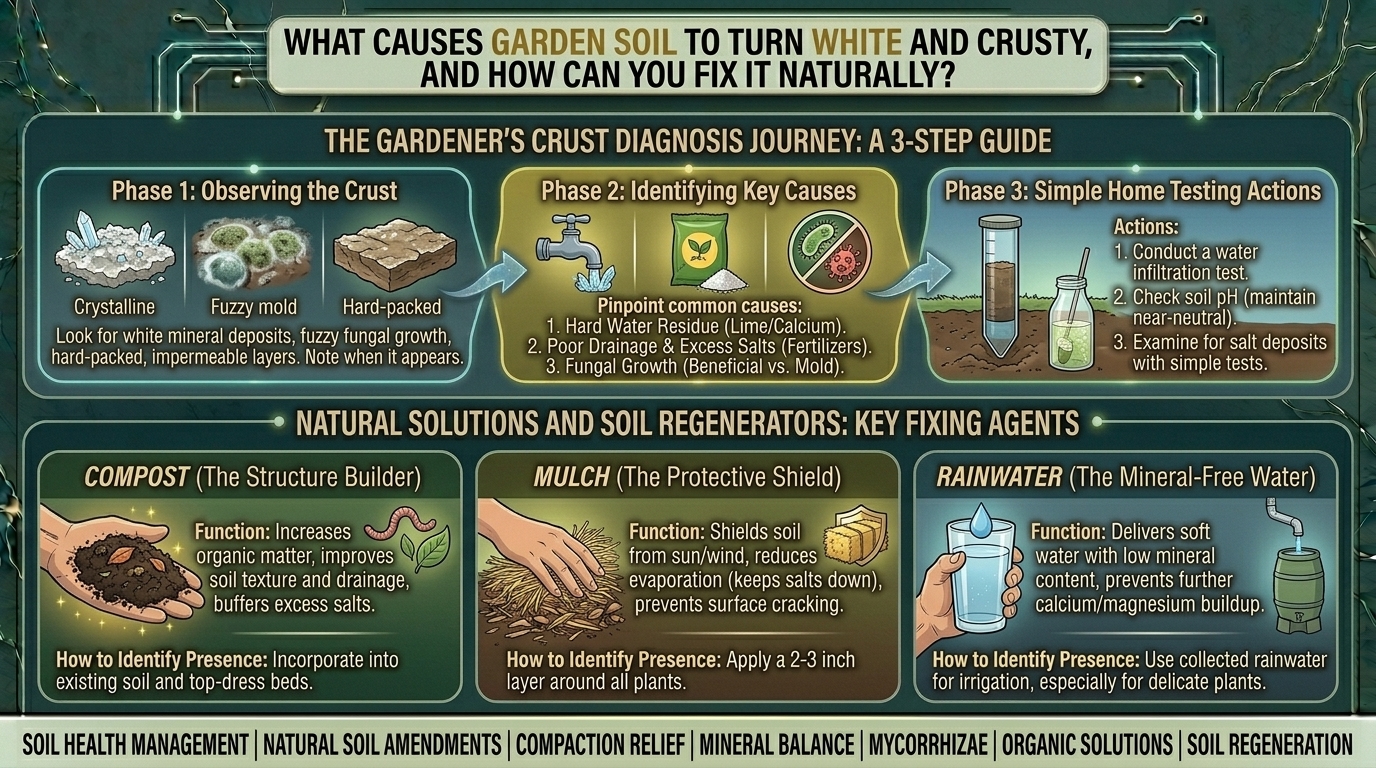
Before you can fix white crusty soil, you must correctly diagnose what you are looking at. A white soil surface generally falls into one of two completely different categories: mineral salt accumulation (efflorescence) or beneficial saprophytic fungal growth.
[Diagnosing Your White Soil Surface]
  ├── Test 1: The Touch & Texture Test
  │     ├── Hard, crunchy, mineral-like? -> Salinity / Efflorescence
  │     └── Soft, fluffy, web-like mycelium? -> Beneficial Fungi (Saprophytes)
  └── Test 2: The Water Drop Test
        ├── Dissolves instantly or forms a salty sheen? -> Mineral Salts
        └── Repels water or stays intact as a fuzzy mat? -> Fungal Mycelium
1. Mineral Salt Efflorescence (The Chemical Crust)
- What It Is: Efflorescence occurs when water containing dissolved minerals (such as calcium, magnesium, sodium, and sulfates) is wicked upward to the soil surface through capillary action. As the sun and wind evaporate the water, the minerals are left behind, crystallizing into a chalky white crust.
- Why It Happens: Over-fertilization with synthetic chemical salts, high mineral content in your irrigation water (hard water), poor drainage, and high evaporation rates.
2. Saprophytic Fungal Mycelium (The Biological Web)
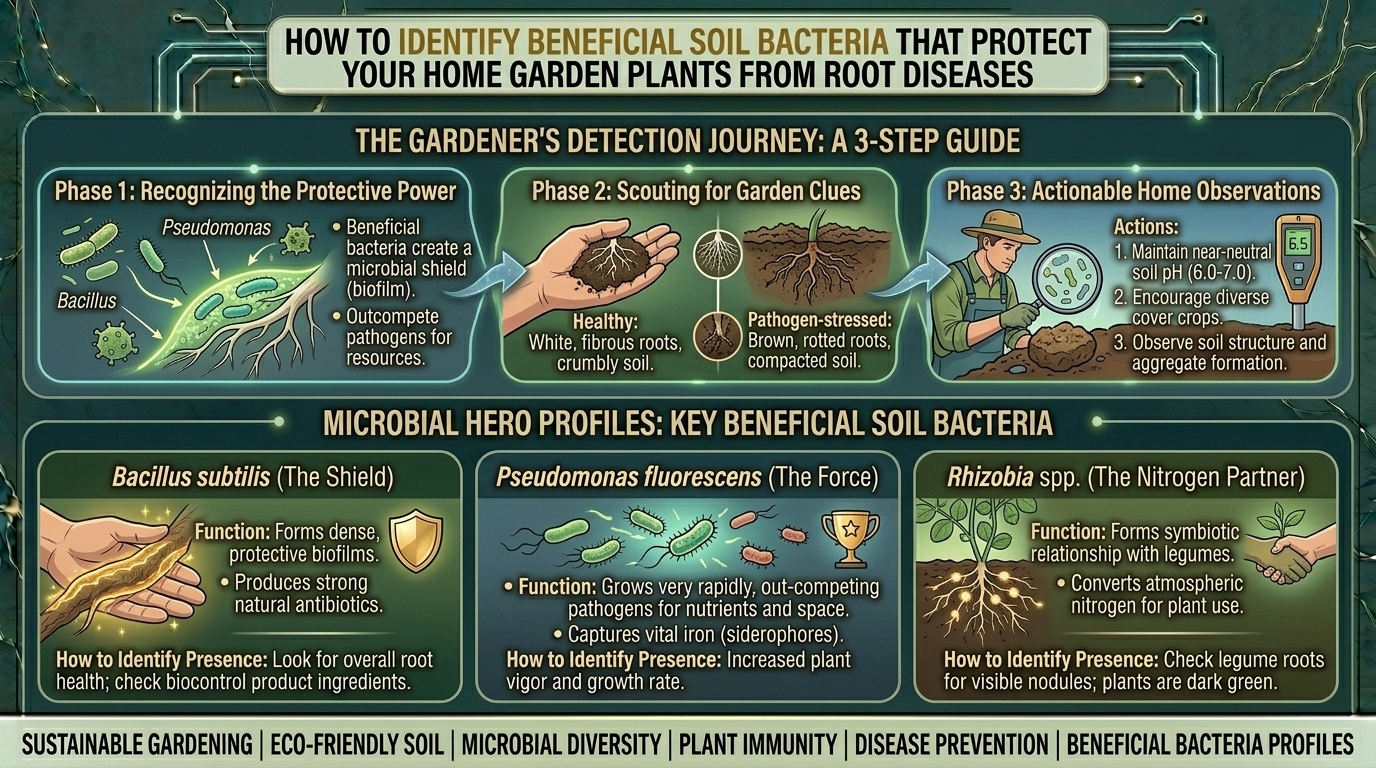
- What It Is: Sometimes a white, powdery, or web-like substance appears on rich organic mulch or compost surfaces. This is usually mycelium—the vegetative root network of harmless saprophytic fungi breaking down organic matter.
- Why It Appears: High organic matter, cool, damp weather, and fresh wood chip mulches. Unlike mineral crusts, fungal mycelium is soft, fluffy, and a sign of a healthy, living soil food web rather than a chemical imbalance.
Chapter 2: Detailed Breakdown of What Causes Mineral Salt Crusts
If your soil crust is hard, crunchy, and mineral-based, it is driven by several compounding environmental and horticultural factors.
1. Synthetic Chemical Fertilizer Overuse
- Synthetic fertilizers are composed of concentrated mineral salts (ammonium nitrate, potassium chloride, etc.). When you apply these fertilizers repeatedly without flushing the soil, excess salts accumulate in the root zone.
- During dry periods, water pulls these salts upward, depositing a blinding white crust on the surface. This high salt index creates osmotic stress, preventing plant roots from absorbing water and causing leaf tip burn (fertilizer burn).
2. Hard Tap Water and Mineral Buildup
- Municipal water supplies in many regions (notably parts of Texas and the American Southwest) contain high levels of dissolved calcium carbonates, magnesium, and sodium.
- Every time you water your garden with hard tap water, you deposit a microscopic layer of minerals. Over months of evaporation, these minerals compound into a visible white crust.
3. Poor Drainage and Capillary Wicking
- If your soil lacks proper drainage (such as heavy, compacted clay or a container with a clogged drain hole), water cannot wash downward through the root zone.
- Instead, water collects and slowly evaporates from the surface. This downward-then-upward capillary action acts like a wick, pulling deep mineral salts straight to the surface where they crystallize.
Chapter 3: Regional Realities: Texas, New York, California, Washington, and San Francisco
Soil crusting manifests differently across our core regional landscapes due to distinct climate and water realities.
1. Texas (Hard Water, Scorching Evaporation, and Clay Salts)
- The Regional Challenge: Texas gardeners frequently battle extremely hard municipal and well water packed with minerals. Combined with blistering summer heat and intense evaporation rates, Texas raised beds and containers are prime candidates for rapid mineral salt crusting.
- Remediation Strategy: Install a simple sediment or water softener filter for garden hoses if using hard well water. Flush containers and raised beds deeply twice a season with clean, low-mineral rainwater to wash accumulated salts down and out of the root zone.
2. New York (Container Salinity and Winter De-Icing Runoff)
- The Regional Challenge: New York urban and suburban gardeners often grow in confined containers or street-side plots where winter snowmelt, road salt splash, and frequent synthetic liquid fertilizer applications leave heavy white crusts on potting soil surfaces.
- Remediation Strategy: Scrape away the top crust layer of potted plants at the end of winter. Leach container soils thoroughly by running clean water through the pot until it pours freely from the bottom drainage holes for several minutes.
3. California (Drought Stress, Recycled Irrigation Water, and Saline Soils)
- The Regional Challenge: California’s water conservation mandates and reliance on recycled or mineral-heavy municipal water supplies during dry spells can drastically increase soil salinity, resulting in crusty white surface layers.
- Remediation Strategy: Switch to drip irrigation systems that deliver water slowly and deeply, preventing surface evaporation pooling. Apply thick organic mulches to shade the soil surface and stop capillary wicking.
4. Washington (Leaching Challenges and Surface Algal Crusts)
- The Regional Challenge: While Western Washington’s heavy winter rains usually prevent deep salt crusting by leaching minerals away, poorly draining raised beds can experience surface crusting mixed with green-white algae during damp spring transitions.
- Remediation Strategy: Improve soil structure by mixing in organic compost and coarse arborists’ chips to prevent surface pooling, crusting, and compaction during heavy wet spells.
5. San Francisco (Microclimate Balances and Container Balcony Gardens)
- The Regional Challenge: San Francisco’s urban gardeners frequently utilize container boxes, rooftop planters, and balcony pots. Small soil volumes combined with frequent liquid feeding create concentrated salt accumulation on the soil surface.
- Remediation Strategy: Practice regular “leaching” of container soils every 4 to 6 weeks. Pour generous amounts of water through your pots to dissolve and wash away surface mineral crusts before they damage delicate plant roots.
Chapter 4: Step-by-Step Natural Guide to Fixing White Crusty Soil
You do not need harsh chemical treatments to fix crusty soil. Follow this natural, step-by-step remediation protocol to restore your garden bed.
[Soil Crust Remediation Protocol]
  ├── Step 1: Physical Removal (Gently scrape away the hardened crust)
  ├── Step 2: Deep Flushing / Leaching (Wash accumulated salts below root zone)
  ├── Step 3: Chemical Neutralization (Apply gypsum for sodium/clay binding)
  └── Step 4: Biological Reset (Top-dress with compost and organic mulch)
Step 1: Gentle Physical Removal
- Break the hard surface seal immediately. Use a hand cultivator, small garden fork, or trowel to gently break up and scrape away the crusty white top layer.
- Caution: Do not dig deeply into the root zone; just break the surface crust to restore air and water permeability. Discard the scraped crust in the trash rather than mixing it back into the bed.
2. Deep Flushing (Leaching)
- To remove salt deposits, you must dissolve them and wash them downward.
- For Raised Beds: Apply a slow, deep soaking of water over several hours (or use a low-running sprinkler), allowing gallons of water to percolate deep past the root zone.
- For Containers: Take potted plants to a sink or outdoor wash area and let lukewarm water run steadily through the potting mix for 3 to 5 minutes to flush out residual salts.
3. Apply Natural Soil Conditioners (Gypsum)
- If your crusting is driven by heavy sodium or clay compaction, apply agricultural gypsum (calcium sulfate).
- Gypsum flocculates clay particles (binding them into loose crumbs) without altering soil pH, while calcium displaces harmful sodium ions, allowing them to wash away safely during watering.
4. Mulch Heavily to Stop Capillary Wicking
- The ultimate preventative cure for crusting is a 3-to-4-inch layer of organic mulch (shredded bark, leaf mold, or straw). Mulch acts as a physical barrier that prevents sun and wind from evaporating water directly off the soil surface, halting the capillary wicking action that creates mineral crusts.
Chapter 5: 10 Frequently Asked Questions (FAQs)
1. Is the white crust on my soil toxic to my plants?
If the crust is a hard mineral salt deposit (efflorescence) caused by over-fertilization or hard water, high salinity can cause osmotic stress, burning roots and stunting plant growth. If it is soft fungal mycelium, it is completely harmless and beneficial.
2. How can I tell the difference between mold and mineral salt crust?
Touch it! Mineral salt crusts are hard, crunchy, and dissolve in water. Fungal mold or mycelium is soft, fluffy, velvety, or web-like, and repels water droplets initially rather than dissolving.
3. Can hard tap water cause white crust on my garden soil?
Yes. Tap water containing high concentrations of dissolved calcium, magnesium, and sodium leaves behind mineral deposits as the water evaporates from the soil surface, forming a chalky white layer over time.
4. Does synthetic fertilizer cause soil crusting?
Yes. Synthetic chemical fertilizers are mineral salts. When applied in excess or allowed to accumulate without deep watering, these salts are pulled to the surface by evaporation, forming a stark white crust.
5. How do I remove white crust from potted indoor plants?
Scrape away the hardened top layer of soil with a spoon, discard it, and take the pot to the sink. Run tepid water gently through the soil for 3 to 5 minutes to dissolve and flush out accumulated mineral salts through the drainage hole.
6. Will adding gypsum fix my crusty garden soil?
Applying agricultural gypsum (calcium sulfate) helps break up sodium-heavy or compacted clay soils by improving water infiltration and allowing salts to leach downward away from the surface.
7. Why does my soil crust over even after I break it up?
If you break the crust without fixing the root cause (such as continuing to use hard water, over-fertilizing with synthetic products, or lacking adequate drainage and mulch), the minerals will wick right back up and reform the crust within days.
8. Is white fungal mold on my compost or mulch dangerous?
No. White mycelium on compost or organic mulch consists of saprophytic fungi breaking down tough carbon materials. It is a sign of a healthy, active soil food web and poses zero threat to living plants.
9. How does organic mulch prevent soil crusting?
Organic mulch shades the soil surface, blocking direct sun and wind exposure. This stops the capillary wicking process that pulls mineral-laden water to the surface, while also cushioning the soil against the impact of heavy raindrops.
10. Can I reuse soil that has developed a heavy mineral salt crust?
Yes. Before reusing crusty container soil, scrape off the top crust, leach the remaining soil thoroughly with clean water, and blend in fresh organic compost and worm castings to restore biological balance and nutrient health.
Conclusion: Restore Your Soil from the Surface Down
A white, crusty soil surface is your garden’s way of asking for attention. Whether it is signaling high mineral salt accumulation from hard water and synthetic fertilizers or simply displaying active organic decomposition, diagnosing the crust correctly allows you to take swift, natural action. By scraping away buildup, leaching soils with clean water, applying gypsum, and protecting your beds with heavy organic mulch, you can banish the crust for good.
At KC Plants (kcplants.com), we champion holistic, earth-friendly soil management practices tailored to gardeners across Texas, New York, California, Washington, San Francisco, and beyond. Ditch the chemical quick fixes, heal your soil naturally, and watch your garden flourish with vibrant, unhindered health!