How to Properly Turn and Aerate a Backyard Compost Pile to Speed up Organic Decomposition
- Author: KC Plants Editorial Team
- Published For Gardeners In: Texas, New York, California, Washington, and San Francisco
- Estimated Read Time: 25-30 Minutes (Comprehensive Composting Masterclass)
Introduction: The Hidden Science of Backyard Composting
Every gardener who has ever built a compost pile knows the frustration of the stalled heap. You throw in kitchen scraps, garden trimmings, and autumn leaves, stack them neatly in the corner of the yard, and wait. Weeks pass, and nothing seems to happen. The pile stays cool, smells a bit sour, and refuses to transform into that dark, crumbly, sweet-smelling black gold your garden desperately needs.
The secret difference between a slow, rotting, foul-smelling pile of garbage and a high-performance, fast-cooking compost factory comes down to one single word: aeration.
Composting is not a passive waiting game; it is an active biological management process. Billions of aerobic microorganisms—bacteria, fungi, actinomycetes, and protozoa—do the heavy lifting of breaking down organic matter. But just like you, these microscopic workers need oxygen to breathe, respire, and metabolize food efficiently. When oxygen runs out, aerobic microbes suffocate, and anaerobic bacteria take over, turning your compost pile into a slow, stinky, methane-producing swamp.
Whether you are managing a compost tumbler in a compact San Francisco urban yard, maintaining a traditional three-bin system in suburban New York, tackling dry summer heat in Texas, balancing wet winter rains in Washington, or navigating diverse microclimates across California, knowing how to properly turn and aerate your compost pile is the ultimate skill of the master organic gardener.
This exhaustive, masterclass-level guide explores the exact science of composting aeration, step-by-step turning techniques, moisture balancing, and regional strategies to cut your decomposition time in half.
Chapter 1: The Biology of Aerobic vs. Anaerobic Decomposition
To master turning, you must understand what is happening inside the microscopic architecture of your pile.
1. The Aerobic Champions (Oxygen-Loving Microbes)
When your compost pile is well-oxygenated, aerobic bacteria dominate the ecosystem.
- High Heat Generation: These aerobic microbes consume carbon and nitrogen rapidly, generating intense metabolic heat. A healthy, active aerobic pile will naturally heat up to 130°F to 160°F (54°C to 71°C) within a few days of turning.
- Rapid Breakdown: This high temperature is the magic sweet spot. It accelerates the breakdown of tough lignins and cellulose, destroys weed seeds, and neutralizes plant pathogens and harmful bacteria, resulting in finished compost in as little as 4 to 8 weeks.
2. The Anaerobic Culprits (Oxygen-Starved Sludge)
When you stop turning your pile, or if it becomes waterlogged and compacted, oxygen is squeezed out of the pore spaces.
- Microbial Shift: Aerobic microbes die off, replaced by anaerobic bacteria that do not require oxygen.
- The Consequences: Anaerobic decomposition is a cold, sluggish process. Instead of producing sweet humus, it generates foul-smelling gases like hydrogen sulfide (rotten eggs) and organic acids, leaving you with a slimy, sour, waterlogged sludge that can actually harm plant roots if applied to a garden.
Chapter 2: The Four Golden Rules of Fast Composting
Turning your pile is useless if the underlying chemistry is unbalanced. Before you grab your pitchfork, you must balance the four core pillars of composting:
[The Four Pillars of Fast Composting]
  ├── 1. Carbon-to-Nitrogen Ratio (The 30:1 "Browns" to "Greens" Balance)
  ├── 2. Moisture Content (The "Damp Sponge" 50% Rule)
  ├── 3. Particle Size (Smaller surface area = Faster microbial attack)
  └── 4. Oxygen / Aeration (Turning frequency to fuel aerobic respiration)
1. The Carbon-to-Nitrogen (C:N) Ratio (30:1)
- Browns (Carbon-Rich / Energy): Dry autumn leaves, shredded cardboard, straw, wood shavings, and pine needles. Browns provide structural porosity (air pockets) and cellular energy.
- Greens (Nitrogen-Rich / Protein): Fresh grass clippings, vegetable kitchen scraps, coffee grounds, and fresh garden weeds. Greens provide the protein and nitrogen microbes need to build cell walls and multiply.
- The Golden Mix: Aim for roughly 3 parts browns to 1 part greens by volume. If your pile is too wet and stinky, you have too many greens; add browns. If your pile won’t heat up and nothing is breaking down, you have too many browns; add greens or water.
2. The Moisture Balance (The “Damp Sponge” Rule)
- Water is the transport medium that allows bacteria to swim and absorb nutrients.
- The Test: Grab a handful of compost from the center of your pile and squeeze it tightly. It should feel like a thoroughly wrung-out sponge. A few drops of water should slip between your fingers, but it should never stream water like a saturated rag.
3. Particle Size Matters
- Microbes attack organic matter from the outside in. If you throw whole melon rinds, thick cornstalks, and unbroken cardboard boxes into your pile, decomposition will take months. Chop, shred, or lawn-mow your browns and greens into smaller pieces (1 to 2 inches) to drastically increase the surface area available to microbes.
Chapter 3: Step-by-Step Guide to Properly Turning a Compost Pile
Turning a pile isn’t just about stirring it randomly; it is about systematically moving material from the outside to the inside.
Equipment You Need:
- A sturdy, heavy-duty pitchfork or compost fork with tines.
- A garden hose with a spray nozzle.
- A compost thermometer with a long stem (optional but highly recommended).
[The Outside-In Flipping Method]
  Old Pile (Cold Outer Layer + Hot Inner Core)
       │
       ▼ (Dig into outer crust, flip upside down into new spot)
  New Pile (Core materials move to outside; dry edges move to center)
The Step-by-Step Turning Protocol:
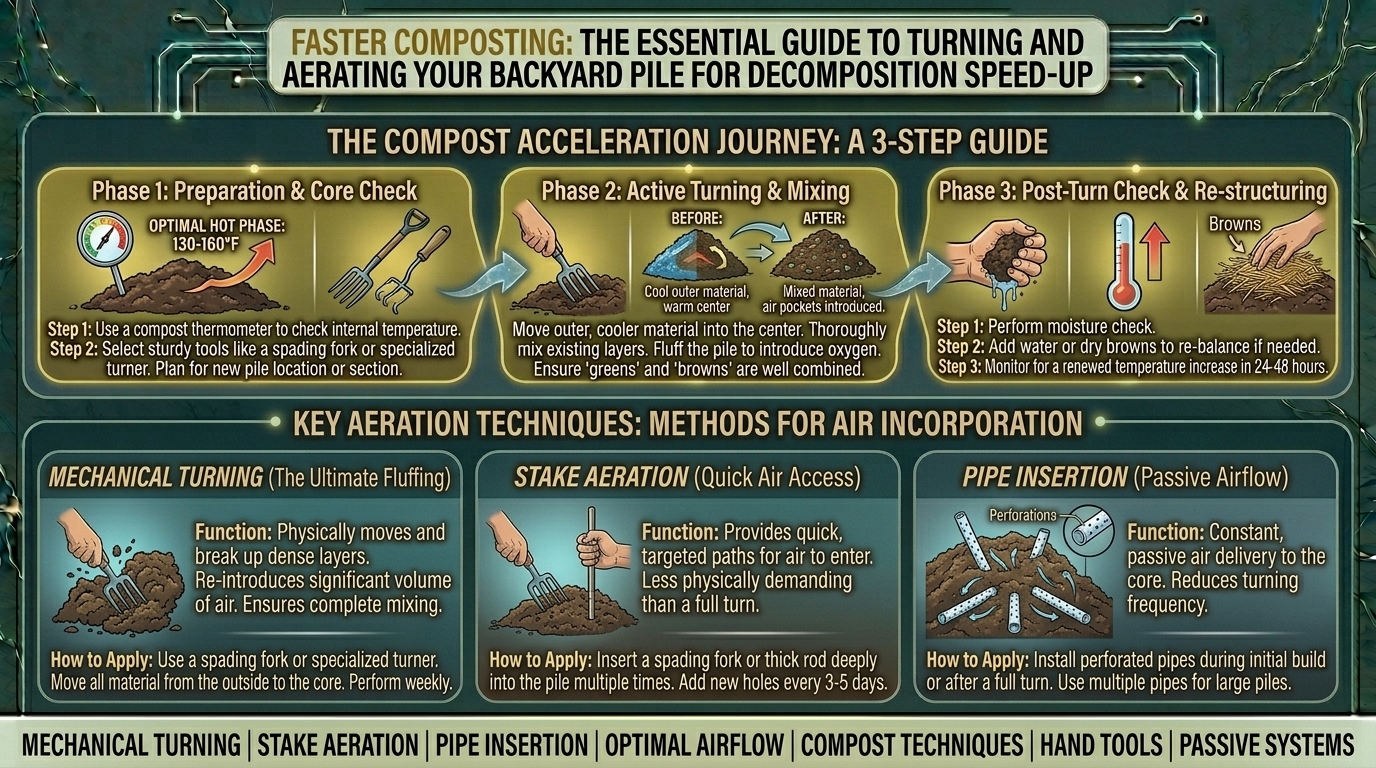
- Check the Temperature: Insert your long-stem thermometer into the heart of the pile. If it reads between 130°F and 150°F, your microbes are working hard. If it has dropped below 100°F, it is time to turn and reactivate the pile.
- Move the Outer Crust: The outer 4 to 6 inches of a compost pile usually stays cool and dry because it is exposed to the air. Using your pitchfork, peel away this outer layer and toss it aside.
- Rebuild the Core: Start shoveling the hot, partially decomposed material from the center of the old pile and place it into a brand-new pile right next to it (or back into your bin). This forms the new base and core of your flipped pile.
- Layer and Water: As you transfer material, periodically sprinkle dry, coarse brown materials (like dry leaves or straw) throughout the layers to maintain air pockets, and mist the layers with water if they feel dry.
- Finish with the Outer Crust: Take the dry, un-decomposed outer crust you set aside in Step 2 and place it directly into the center of the new pile. This ensures those raw materials are buried deep inside the hot core where they will break down rapidly.
Chapter 4: Regional Realities: Texas, New York, California, Washington, and San Francisco
Composting management must adapt dynamically to your regional climate and weather conditions.
1. Texas (Beating Summer Drying and Managing Heavy Clay Additions)
- The Regional Challenge: Scorching Texas summers and dry winds can bake compost piles out rapidly, dropping moisture levels below 30% and causing microbial activity to grind to a complete halt.
- Management Strategy: Turn your Texas compost pile during the early morning hours. Add a heavy canvas tarp or shade cloth over the bin to protect it from intense solar evaporation. Incorporate green lawn clippings carefully, balancing them with shredded cardboard to prevent sticky matting.
2. New York (Managing Winter Freezes and Autumn Leaf Surpluses)
- The Regional Challenge: New York winters bring sub-zero freezes that cause traditional compost piles to freeze solid like an iceberg, halting decomposition entirely until spring.
- Management Strategy: Stockpile mountains of shredded autumn leaves in October and November. When active turning slows down in winter, let the pile rest. Insulate the outer bin with straw bales. As soon as spring arrives and temperatures climb above 40°F, turn the pile aggressively to jumpstart biological activity.
3. California (Water Conservation and Managing Drought-Stressed Yard Waste)
- The Regional Challenge: California gardeners must practice diligent water conservation. Compost piles that dry out too quickly or receive woody, drought-hardy garden trimmings can be very slow to decompose.
- Management Strategy: Chop woody California native trimmings finely before adding them. Capture greywater or use runoff water from washing vegetables in the kitchen to keep your compost moisture levels balanced without wasting pristine municipal tap water.
4. Washington (Controlling Excess Winter Saturation and Soggy Piles)
- The Regional Challenge: Western Washington’s relentless autumn and winter rains can flood backyard compost bins, washing out nutrients and turning piles into cold, stinky, anaerobic swamps.
- Management Strategy: Keep your outdoor compost bin covered with a fitted lid or a waterproof tarp during the wettest months. Turn the pile more frequently during damp spells and increase your ratio of coarse brown materials (like wood chips) to maintain vital air channels.
5. San Francisco (Urban Composting and Tumbler Aeration Management)
- The Regional Challenge: San Francisco’s dense urban lots and foggy marine microclimates often mean homeowners rely on compact compost tumblers rather than massive open-air heaps.
- Management Strategy: Compost tumblers make turning effortless—just give the barrel a few spins every 3 to 4 days. Because tumblers trap moisture efficiently in San Francisco’s cool fog, balance kitchen scraps with plenty of shredded dry brown paper to prevent soggy clumping.
Chapter 5: Troubleshooting Sluggish or Problematic Compost Piles
When your composting process goes off track, use this diagnostic guide to course-correct immediately:
| Symptom | Probable Cause | Corrective Action |
| Foul / Rotten Egg Odor | Anaerobic conditions (too wet, lack of oxygen, too much nitrogen). | Turn the pile immediately; mix in dry, coarse browns (shredded cardboard/straw) to create air pockets. |
| Pile Won’t Heat Up | Too dry, too small, or lacks nitrogen (too many browns). | Add high-nitrogen greens (coffee grounds/grass), water the pile to a damp-sponge consistency, and resize or insulate. |
| Pests / Rodents Attracted | Exposed food scraps (meat, dairy, or oily foods). | Never add meat, dairy, or oils. Always bury fresh kitchen scraps at least 8 inches deep in the center of the hot core. |
| Mites / White Bugs Swarming | Normal decomposition fauna; usually harmless organic consumers. | Harmless detritivores breaking down organic matter; no action needed unless accompanied by a foul smell. |
Chapter 6: 10 Frequently Asked Questions (FAQs)
1. How often should I turn my backyard compost pile?
For fast, high-performance composting (hot composting), turn your pile every 5 to 7 days. If you prefer a lower-maintenance, passive approach (cold composting), turning it every 3 to 4 weeks (or even once a season) still works, but total decomposition will take several months to a year.
2. Why does my compost pile smell like rotten eggs?
A rotten egg smell indicates your pile has gone anaerobic (starved of oxygen). This happens when the pile is too wet, tightly compacted, or overloaded with wet nitrogen greens. Fix it immediately by turning the pile and mixing in dry, coarse brown materials like straw or shredded cardboard.
3. What is the ideal temperature for a hot compost pile?
The optimal temperature range is between 130°F and 160°F (54°C to 71°C). This heat level is hot enough to kill weed seeds and destructive plant pathogens while keeping beneficial thermophilic bacteria working at peak efficiency. Do not let the pile exceed 160°F, or beneficial microbes can perish; turn it immediately if it gets too hot.
4. Can I compost glossy colored paper and cardboard in my backyard bin?
Modern soy- and water-based inks used in newspaper and plain cardboard are generally safe, but avoid glossy magazines, heavy colored printing inks, and wax-coated cardboard boxes, as they contain chemical coatings and plastics that do not break down naturally.
5. Should I add water every time I turn my compost pile?
Only add water if the material feels dry. When turning, check the core moisture: if it feels like a wrung-out sponge, leave it alone. If it feels dry like dusty soil, mist it generously with your hose as you rebuild the pile.
6. Can I turn my compost pile in the freezing winter?
While you can turn a winter pile, freezing temperatures cause outdoor piles to go dormant. In regions with harsh winters (like New York or parts of Washington), it is best to insulate the pile with straw bales in autumn and wait until spring thaw before resuming regular turning.
7. What is the difference between a compost bin and an open pile?
Open piles allow maximum airflow from the sides and easy turning with a pitchfork, but they can dry out faster in hot climates like Texas. Enclosed bins and tumblers retain moisture and heat efficiently and deter pests, but require careful attention to moisture and carbon balance.
8. Why won’t my compost pile heat up even after I turn it?
If your pile won’t heat up, it usually lacks sufficient nitrogen (greens), is too small (under 3 feet cubed), or is too dry. Mix in fresh grass clippings or coffee grounds, adjust moisture to damp-sponge consistency, and ensure the heap is at least 3x3x3 feet in size.
9. What items should NEVER be added to a backyard compost pile?
Never add meat, fish, bones, dairy products, pet wastes (dog/cat), diseased garden plants with persistent fungi, and chemically treated wood. These items attract rodents, create foul odors, introduce dangerous pathogens, or poison your garden soil.
10. How do I know when my compost is completely finished and ready to use?
Finished compost is dark brown or black, has a sweet, earthy forest-floor aroma, features a uniform crumbly texture with no recognizable food scraps or leaves, and maintains an ambient temperature matching the surrounding air.
Conclusion: Master the Turn, Master the Soil
Properly turning and aerating your backyard compost pile transforms organic waste management from a frustrating guessing game into a high-performance horticultural art. By maintaining the ideal 30:1 carbon-to-nitrogen balance, keeping your moisture at a damp-sponge level, and turning your pile regularly to fuel aerobic microbes, you can manufacture premium, nutrient-dense compost faster than ever before.