Every seasoned vegetable gardener knows that high-performing crops like tomatoes, peppers, squash, and root vegetables demand more than just standard dirt and basic watering. When the goal is to produce thick root systems, robust stems, and heavy, vibrant fruit sets, soil fertility requires targeted nutritional reinforcement.
Among organic amendments, bone meal stands out as an indispensable classic. Composed of finely ground animal bones (typically sourced from slaughterhouses), this natural fertilizer is an exceptional source of phosphorus ($P$) and calcium ($Ca$). While synthetic fertilizers offer a quick, harsh chemical jolt that can leach away or burn delicate root hairs, organic bone meal releases its nutrients slowly, fueling microbial life and feeding plants steadily over months.
However, simply dumping a handful of bone meal into a planting hole and dropping in a tender seedling can backfire if done incorrectly. Proper application technique determines whether your plants thrive or struggle.
Whether you are amending heavy clay in Texas, managing urban container spaces in San Francisco, balancing variable seasonal weather in New York, or working with moisture-rich soils across Washington State and California, this comprehensive guide explores the science of bone meal, step-by-step planting hole incorporation methods, safety tips, and regional best practices.
1. The Nutritional Power of Bone Meal: Phosphorus and Calcium
To use bone meal effectively, you must understand what it brings to the underground table and how plants utilize its chemical composition.
The Role of Phosphorus ($P$)
Phosphorus is the “P” in the classic N-P-K fertilizer ratio (often boasting a typical bone meal analysis of 3-15-0 or higher).
- Root Development: Phosphorus is the primary catalyst for early root formation. Without adequate phosphorus, young seedlings produce weak, stunted root systems that cannot forage for water or nutrients.
- Blooming and Fruiting: As plants mature, phosphorus drives cellular energy transfer, flower bud formation, and fruit ripening. Without it, heavy feeders like tomatoes and peppers will produce lush green foliage but drop their blossoms before setting fruit.
The Role of Calcium ($Ca$)
Bone meal contains roughly 15% to 22% elemental calcium. Calcium acts as the structural glue of plant cell walls.
- Preventing Deficiencies: Adequate calcium prevents physiological disorders like blossom end rot in tomatoes, peppers, and squash, while shielding young vegetable tissue from cell collapse.
2. Safety First: The Dog and Pest Attraction Warning
Because bone meal is made from real animal bones, it carries a rich, earthy, meaty aroma that is invisible to human noses but irresistible to scavengers.
- The Hazard: If left exposed on the surface of the soil, dogs, raccoons, squirrels, and neighborhood cats will eagerly dig up your planting holes, disturbing root systems and scattering your plants.
- The Solution: Never leave bone meal on top of the soil. It must always be thoroughly mixed into the dirt and buried at the bottom of the planting hole, covered by at least 2 to 3 inches of clean soil.
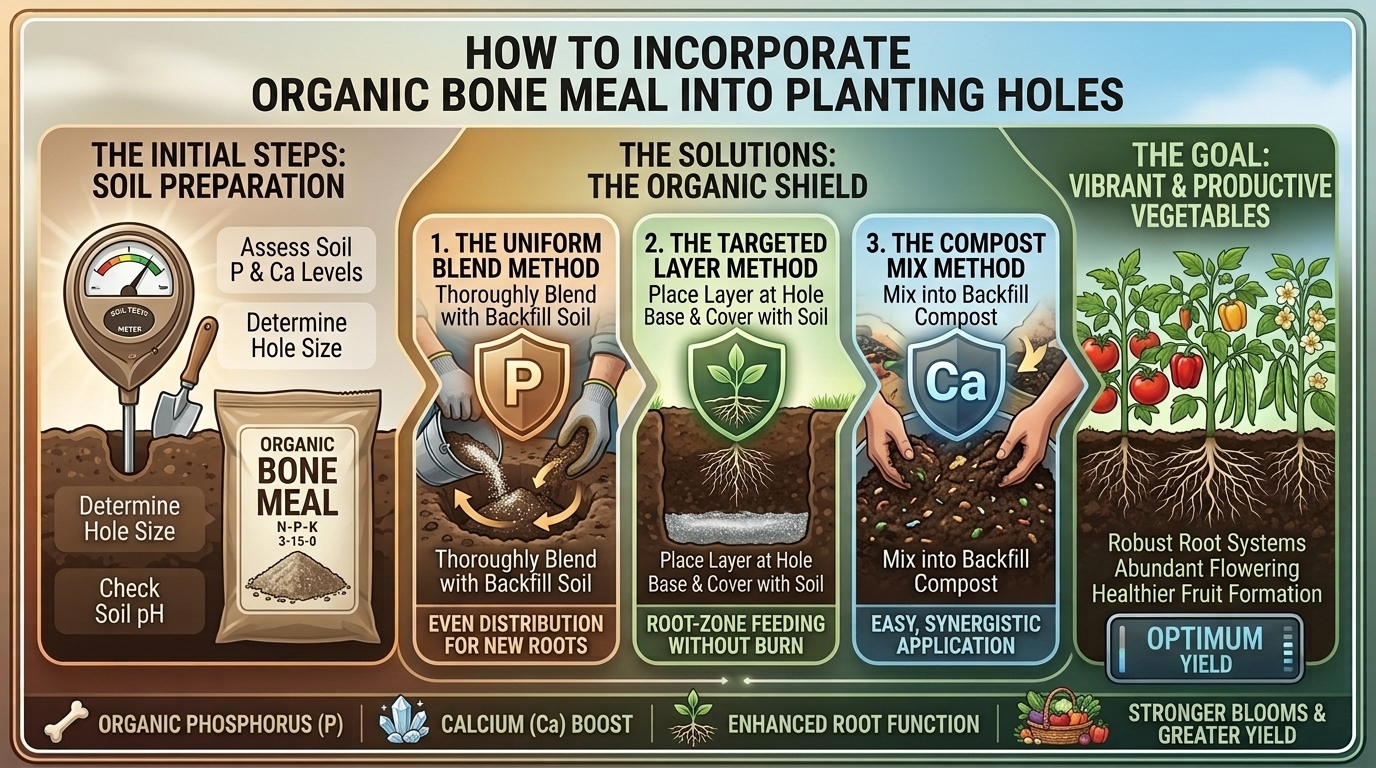
3. Step-by-Step: How to Incorporate Bone Meal into Planting Holes
Proper integration ensures the nutrients are accessible where roots can reach them immediately without causing root burn.
[ Dig Planting Hole ]
       │
       ├──> Step 1: Dig Hole Twice as Wide, Depth Appropriate for Crop
       │
       ├──> Step 2: Measure Correct Dosage (Avoid Over-Application)
       │
       ├──> Step 3: Thoroughly Blend Bone Meal into Sub-Soil
       │
       └──> Step 4: Add Soil Buffer Layer & Plant
Step 1: Dig the Proper Hole
Dig a planting hole twice as wide as the root ball of your transplant, but only as deep as the root ball itself.
Step 2: Measure the Right Amount
More is not better when it comes to bone meal. Over-application can lock up other trace minerals (like iron and zinc).
- Standard Dosage: For large transplants (like tomatoes, peppers, and eggplants), use 1 to 2 tablespoons per planting hole. For smaller seedlings or root crops, 1 teaspoon is sufficient.
Step 3: Blend Thoroughly with Sub-Soil
Sprinkle the bone meal directly into the bottom and lower sides of the excavated hole. Using a trowel or cultivator, mix the bone meal thoroughly into the bottom 2 to 3 inches of soil. Never dump a concentrated clump of powder at the base of the hole; blending prevents localized chemical hot spots.
Step 4: The Soil Buffer Layer
Before placing your plant into the hole, shovel a thin 1-inch layer of unamended soil directly over the blended bone meal. This prevents delicate, fresh root hairs from making direct, concentrated contact with the raw powder upon transplanting, allowing roots to grow smoothly into the nutrient zone.
4. Regional Soil Realities: Bone Meal Across U.S. Climates
Soil pH and regional chemistry dictate how quickly bone meal breaks down and becomes available to your vegetables:
California & San Francisco
- Climate Challenge: Mediterranean dry summers and often alkaline soils.
- Application Strategy: In alkaline California soils (where pH is above 7.0), bone meal breaks down much slower because soil fungi and bacteria operate sluggishly in high pH. Pairing bone meal with organic compost or humic acid helps activate the microbial digestion required to release phosphorus.
Texas
- Climate Challenge: Heavy “Blackland Prairie” clay soils lock up phosphorus tightly, rendering it chemically unavailable to plants even when present in the earth.
- Application Strategy: Mixing bone meal with organic compost and working it deeply into loosened clay planting holes helps prevent phosphorus from binding immediately to clay mineral particles.
New York
- Climate Challenge: Suburban and urban garden plots with neutral to slightly acidic soils.
- Application Strategy: New York’s slightly acidic soils provide the ideal pH range (6.0 to 7.0) for rapid microbial breakdown of bone meal, making it exceptionally effective for mid-spring vegetable plantings.
Washington State
- Climate Challenge: Cool, damp, naturally acidic forest soils.
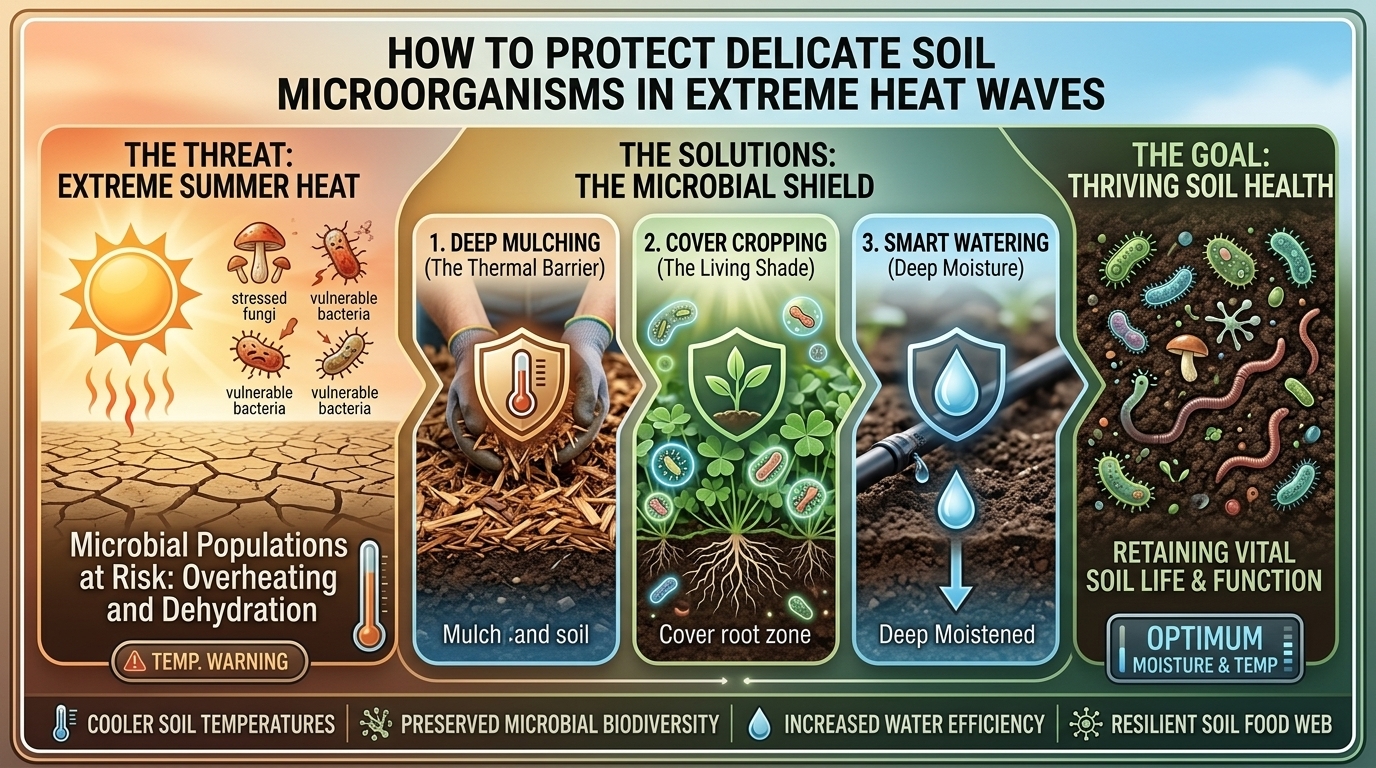
- Application Strategy: Acidic Pacific Northwest soils break down bone meal efficiently, but heavy spring rains can leach soluble nutrients quickly. Applying bone meal right at the root zone during transplanting ensures roots capture the phosphorus before it washes away.
5. Frequently Asked Questions (FAQ)
1. Can I use bone meal for container-grown vegetables?
Yes! Bone meal is fantastic for potted tomatoes, peppers, and patio vegetables. Mix 1 tablespoon per gallon of potting mix directly into the soil blend before planting to ensure sustained phosphorus feeding throughout the container’s season.
2. How long does bone meal take to break down in the soil?
Because bone meal is an organic, slow-release amendment, it takes anywhere from 2 to 4 months to break down fully, depending on soil temperature, moisture, and microbial activity. It feeds your plants steadily over the entire growing season.
3. What is the difference between bone meal and blood meal?
Bone meal is high in phosphorus and calcium and promotes root and flower growth. Blood meal is extremely high in nitrogen and promotes rapid, lush green top-growth. They serve entirely different purposes in the garden.
4. Will bone meal burn my plant roots?
Unlike high-nitrogen synthetic chemical fertilizers or fresh manures, bone meal is relatively mild and rarely causes chemical root burn—provided it is thoroughly mixed into the soil rather than dumped in a concentrated lump against the roots.
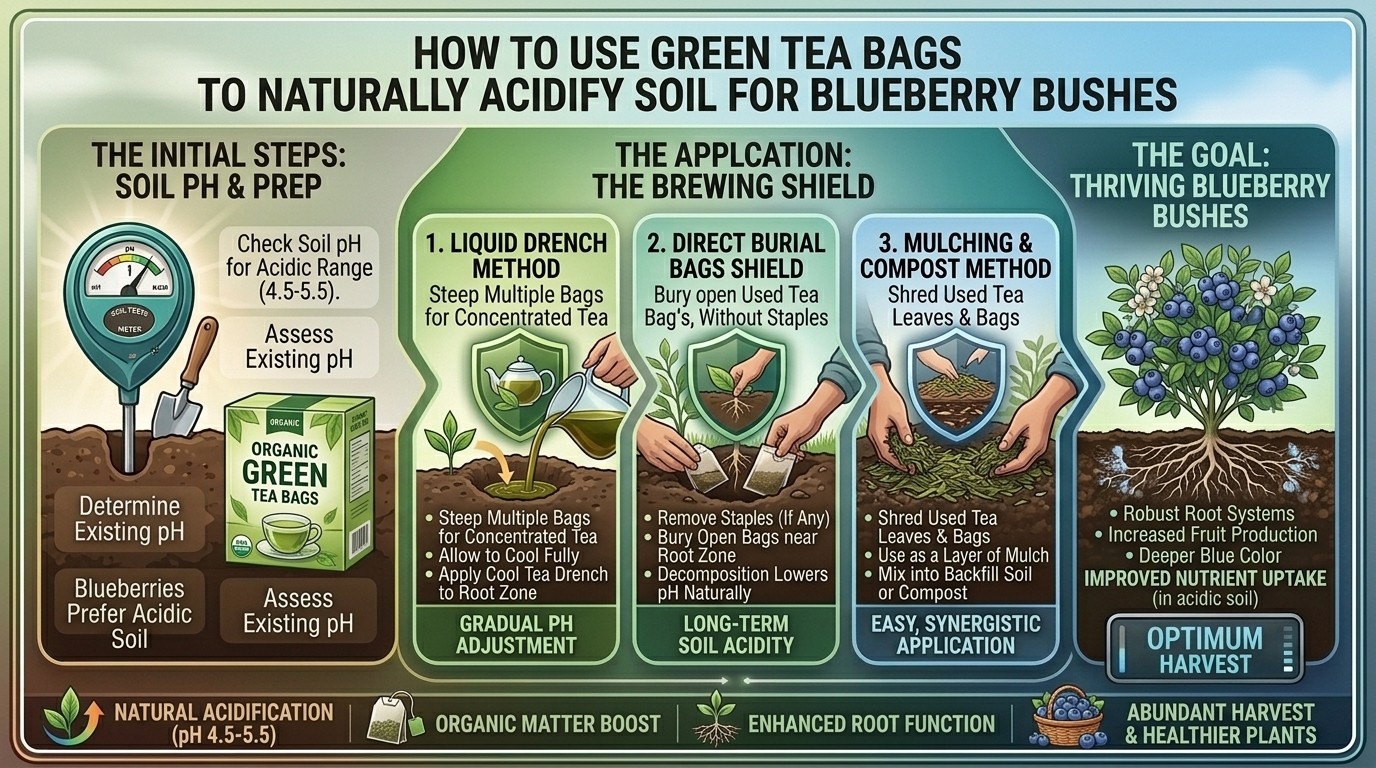
5. Can I use bone meal on acid-loving plants like blueberries?
While blueberries need acidic soil, they do require phosphorus. However, bone meal tends to have a neutral to slightly alkaline residual effect due to its calcium content. For blueberries, rock phosphate or elemental sulfur-amended organic fertilizers are often preferred over heavy bone meal applications.
6. Why are my dogs or neighborhood animals digging up my plants after I used bone meal?
Animals possess a keen sense of smell and can detect the organic scent of bone meal buried beneath the soil. To stop this, ensure the bone meal is buried at least 3 to 4 inches deep, and cover the soil surface with a physical barrier like chicken wire, sharp pinecones, or heavy mulch until the scent dissipates.
7. Does bone meal expire or go bad?
Pure bone meal has an indefinite shelf life if kept dry. If moisture gets into the bag and it develops mold or a foul smell, discard it. Otherwise, dry bone meal stored in a sealed bucket will remain effective for years.
8. Can I mix bone meal into my compost pile?
Yes! Adding bone meal to your compost pile boosts the overall phosphorus content and provides a rich mineral food source for the composting bacteria and fungi, resulting in a nutrient-dense finished compost.
9. What should I do if my soil test shows high phosphorus levels?
If a professional soil test indicates that your soil already has excessive phosphorus, do not add bone meal. Excess phosphorus can lock up vital micronutrients like iron and zinc, and runoff can contribute to local waterway pollution.
10. Can I apply bone meal as a top-dressing later in the season?
While you can scratch bone meal into the top inch of soil around established plants, it is far less effective as a top-dressing because phosphorus is immobile in soil and will not wash down to the roots easily on its own. Incorporating it directly into the planting hole at transplant time is always the gold standard.
Conclusion
Incorporating organic bone meal into your vegetable garden planting holes is a time-tested horticultural practice that lays the structural foundation for explosive root growth, heavy blossom sets, and bountiful harvests. By measuring appropriate dosages, blending the powder thoroughly into the sub-soil, and providing a protective soil buffer layer, you safeguard your crops from pests while feeding the soil food web.