When blistering summer heat waves descend, home gardeners instinctively worry about their wilting tomato plants, scorched lettuce leaves, and parched hanging baskets. We rush out with garden hoses, set up oscillating sprinklers, and erect shade cloth over delicate foliage. Yet, while we focus entirely on the visible plant canopy above ground, a silent catastrophe is unfolding directly beneath our feet.
In the blistering heat of mid-summer, exposed soil temperatures can skyrocket 15°F to 20°F higher than the ambient air temperature, frequently surpassing 100°F or even 120°F in the top inch of earth. At these elevated thresholds, your garden’s invisible workforce—the billions of beneficial bacteria, mycorrhizal fungi, protozoa, and earthworms that make up the soil food web—suffer massive die-offs, severe dehydration, and metabolic shutdown.
When your soil microbiome collapses, nutrient cycling grinds to a halt, leaving plants vulnerable to heat stress, disease, and nutrient lockout.
Whether you are managing baking clay and solar radiation in Texas, balancing urban rooftop microclimates in New York, navigating dry summer droughts across California, or dealing with unpredictable heat domes in Washington State and San Francisco, this comprehensive guide explores how to safeguard your delicate soil microorganisms during extreme summer heat wave conditions.
1. The Underground Crisis: What Extreme Heat Does to Soil Microbes
To protect your soil life, you must understand how extreme thermal spikes disrupt biological processes beneath the soil surface.
The Thermal Thresholds of Soil Life
Just like humans and plants, soil microorganisms have optimal operating temperatures:
- Optimal Zone (65°F – 85°F): Bacterial and fungal metabolism hums along at peak efficiency, rapidly breaking down organic matter into bio-available minerals.
- The Stress Zone (90°F – 100°F): Microbial respiration spikes uncontrollably. Microbes burn through their energy reserves faster than they can replenish them, leading to rapid starvation and population decline.
- The Lethal Threshold (105°F+): Beneficial mycorrhizal fungi begin to die off, bacterial cell walls rupture under thermal stress, and earthworms tunnel deep into the subsoil or aestivate (enter a dormant, heat-induced sleep), leaving your topsoil biologically barren.
The Desiccation Spiral
Heat waves rarely travel alone; they are accompanied by intense solar radiation and drying winds. As moisture evaporates rapidly from bare earth, surface tension creates a crust. Without water, active microbial cells dehydrate, shrivel, and perish, turning living loam back into lifeless dirt.
2. Top Strategies to Shield Soil Microbes from Thermal Stress
Protecting your soil ecosystem during a heat wave requires a multi-layered defense strategy focused on insulation, hydration, and biological shielding.
[ Extreme Heat Wave Incoming ]
       │
       ├──> Strategy 1: Apply Deep, Thick Organic Mulch (Insulation)
       │
       ├──> Strategy 2: Implement Shade Cloth (Solar Radiation Block)
       │
       ├──> Strategy 3: Deep, Infrequent Watering (Thermal Mass Buffer)
       │
       └──> Strategy 4: Inoculate with Heat-Resilient Compost & Biology
Strategy 1: Apply a Thick, Insulating Organic Mulch Layer
The single most effective defense against soil overheating is a physical blanket of mulch.
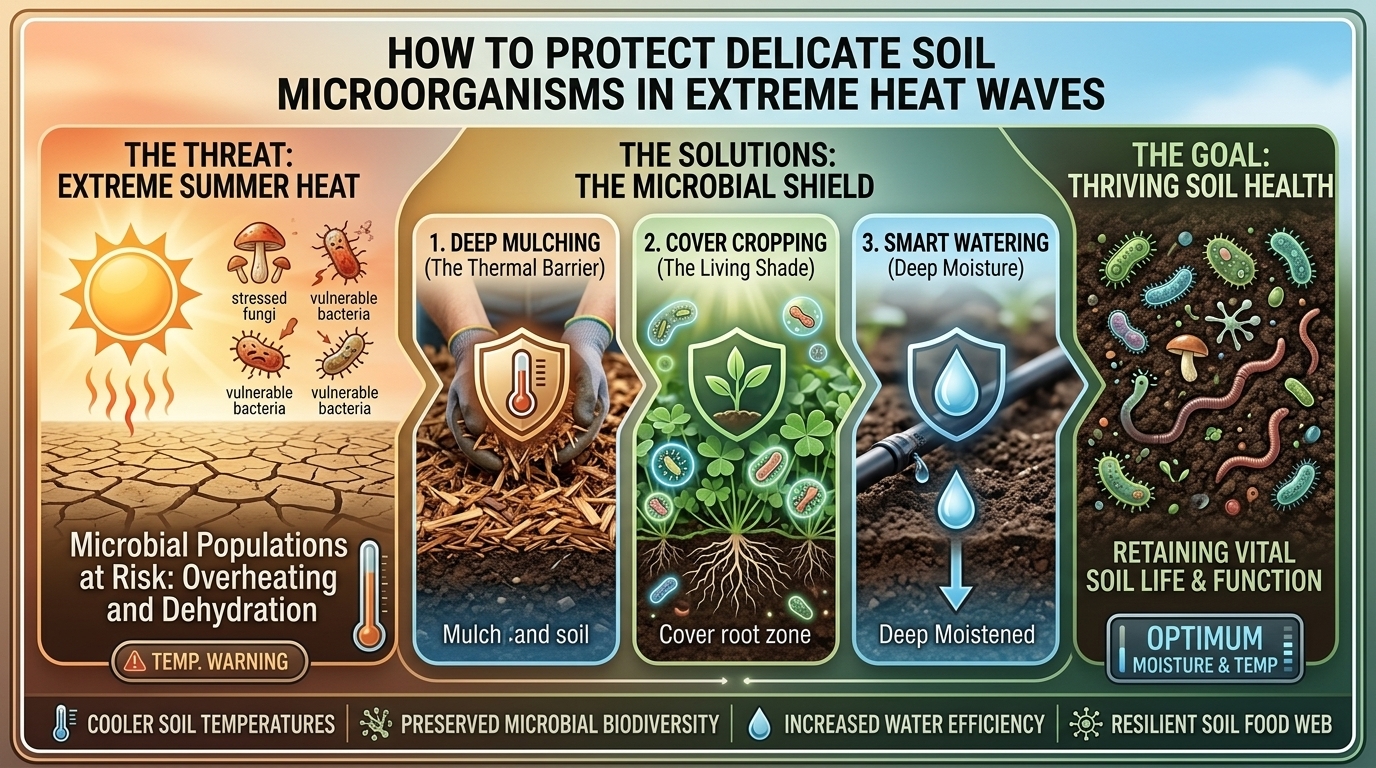
- The Science: Bare soil acts as a solar sponge. A 3-to-4-inch layer of organic mulch (such as shredded bark, straw, or leaf mold) acts as a thermal buffer, keeping soil temperatures up to 10°F to 15°F cooler than unmulched earth.
- Application Tip: Keep mulch a fraction of an inch away from plant stems to prevent rot, but ensure 100% surface coverage across all open bed areas to block direct UV rays from scorching surface microbes.
Strategy 2: Deploy Temporary Shade Cloths
If an intense heat dome settles over your region, your soil microbiome may need artificial shade.
- The Technique: Install a 30% to 50% agricultural shade cloth over low hoops or frames above your garden beds during peak afternoon hours. This blocks intense solar radiation without starving plants of the necessary light for photosynthesis, drastically reducing soil surface evaporation.
Strategy 3: Shift to Deep, Infrequent Irrigation
Shallow, daily sprinkling is the worst thing you can do during a heat wave. It only wets the top millimeter of earth, causing water to flash-evaporate and drawing delicate surface roots and microbes upward, where they bake.
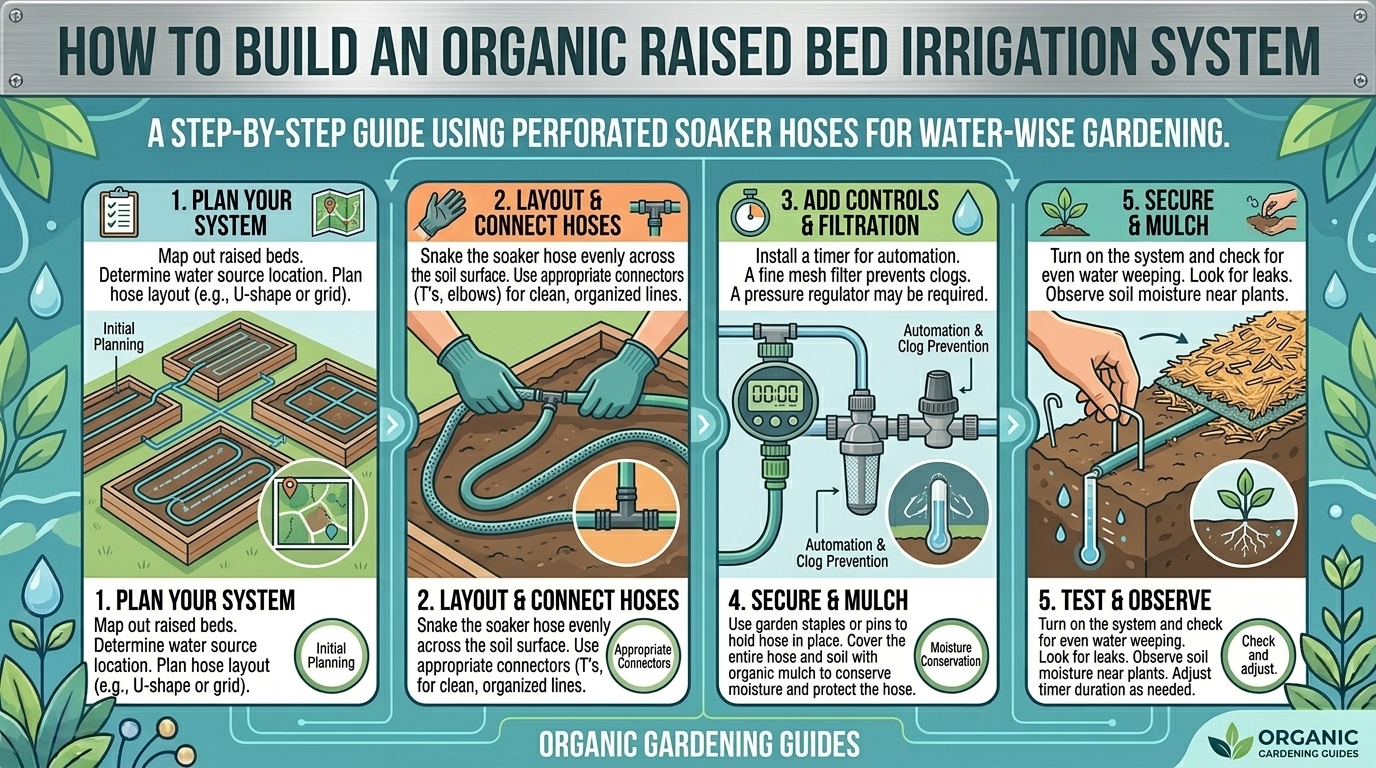
- The Technique: Water deeply and thoroughly (ideally via drip irrigation or soaker hoses) in the early morning hours (4:00 AM to 7:00 AM). Deep watering creates a cool thermal mass that stabilizes soil temperatures throughout the heat of the afternoon.
Strategy 4: Plant Living Mulches and Cover Crops
Nature rarely leaves soil bare. Planting low-growing, drought-tolerant ground covers or living green mulches (such as creeping thyme, sweet alyssum, or micro-clover) creates a natural canopy that shades the soil surface, keeping root zones cool and protecting underlying microbial communities.
3. Regional Heat Wave Protocols Across the U.S.
Different regional climates experience summer heat spikes in distinct ways. Tailor your microbial defense plan accordingly:
California & San Francisco
- Climate Challenge: Mediterranean dry summers mean zero rainfall, intense solar radiation, and extreme inland valley temperatures, while San Francisco experiences sudden microclimate heat spikes driven by offshore winds.
- Defense Strategy: Rely heavily on coarse bark mulches and drip irrigation timed before dawn. In urban San Francisco courtyard beds, use breathable shade covers to protect containerized soil biology from baking against hot asphalt and concrete.
Texas
- Climate Challenge: Relentless multi-week heat waves where ambient temperatures exceed 100°F, turning heavy clay soils into baked bricks that incinerate organic matter.
- Defense Strategy: Apply extra-thick organic mulches (4 to 5 inches) combined with compost top-dressings. The compost adds stable carbon structures that insulate microbial niches even under extreme thermal stress.
New York
- Climate Challenge: High humidity combined with sudden summer heat domes creates stifling conditions that can stress both plants and soil microbes in suburban and urban garden plots.
- Defense Strategy: Focus on maximizing soil aeration. Avoid compacting wet soil during sudden summer thunderstorms, and use lightweight straw or shredded leaf mulches to keep garden beds cool and breathable.
Washington State
- Climate Challenge: Pacific Northwest summers are historically mild, making unexpected heat domes exceptionally brutal for regional soils unaccustomed to prolonged triple-digit temperatures.
- Defense Strategy: Keep water reservoirs consistent and use temporary shade frames over raised garden beds the moment meteorological heat advisories are announced.
4. Frequently Asked Questions (FAQ)
1. Will boiling hot tap water kill my soil microbes?
If you leave a garden hose sitting out in the blazing sun, the water trapped inside can heat up to scalding temperatures (often over 120°F). Spraying this superheated water directly onto your garden can instantly kill delicate surface microbes and tender plant roots. Always let the hose run until the water turns cool before watering your beds.
2. Can I use black plastic sheeting as a summer mulch?
No! While black plastic is great for solarizing soil (intentionally killing pests and weed seeds through extreme heat), using it as a summer mulch in garden beds will trap solar heat, turn your soil into an oven, and completely exterminate your beneficial microbes. Always use breathable organic mulches.
3. Do earthworms die during summer heat waves?
Earthworms cannot survive extreme heat or dry soil. When topsoil temperatures exceed critical thresholds or dry out completely, earthworms burrow deep into the subsoil (often 2 to 3 feet down) or secrete a protective mucus cocoon to aestivate until cooler autumn weather returns.
4. How can I revive my soil microbiome after a severe heat wave?
Once the heat breaks, help your soil recover by applying a liquid biological activator—such as aerated worm casting tea, liquid kelp, or a light top-dressing of finished compost—paired with a deep, cool watering to reintroduce active bacteria and fungi.
5. Does tilling soil during a heat wave make things worse?
Yes, tilling during hot, dry weather is devastating to soil biology. Tilling exposes buried, heat-sensitive anaerobic microbes and moist soil layers directly to searing air and UV radiation, causing instantaneous cellular death and severe moisture loss. Never till in summer.
6. Are raised beds more vulnerable to summer heat than in-ground beds?
Yes. Raised beds are exposed to ambient air on all four sides as well as the top, causing them to heat up and dry out much faster than traditional in-ground garden beds. They require thicker mulching layers and more frequent, careful watering during heat waves.
7. What role do mycorrhizal fungi play during heat stress?
Mycorrhizal fungi form vast underground hyphal networks that act as a biological lifeline. They extend far beyond plant roots to source deep moisture and trace minerals, helping plants—and the surrounding soil ecosystem—survive periods of extreme heat and drought.
8. Should I fertilize my garden with synthetic nitrogen during a heat wave?
Never apply high-nitrogen synthetic fertilizers during a heat wave. Synthetic salts draw moisture away from plant roots and already-stressed soil microbes through osmotic pressure, accelerating dehydration and chemical burn.
9. Can companion planting help shade the soil during summer?
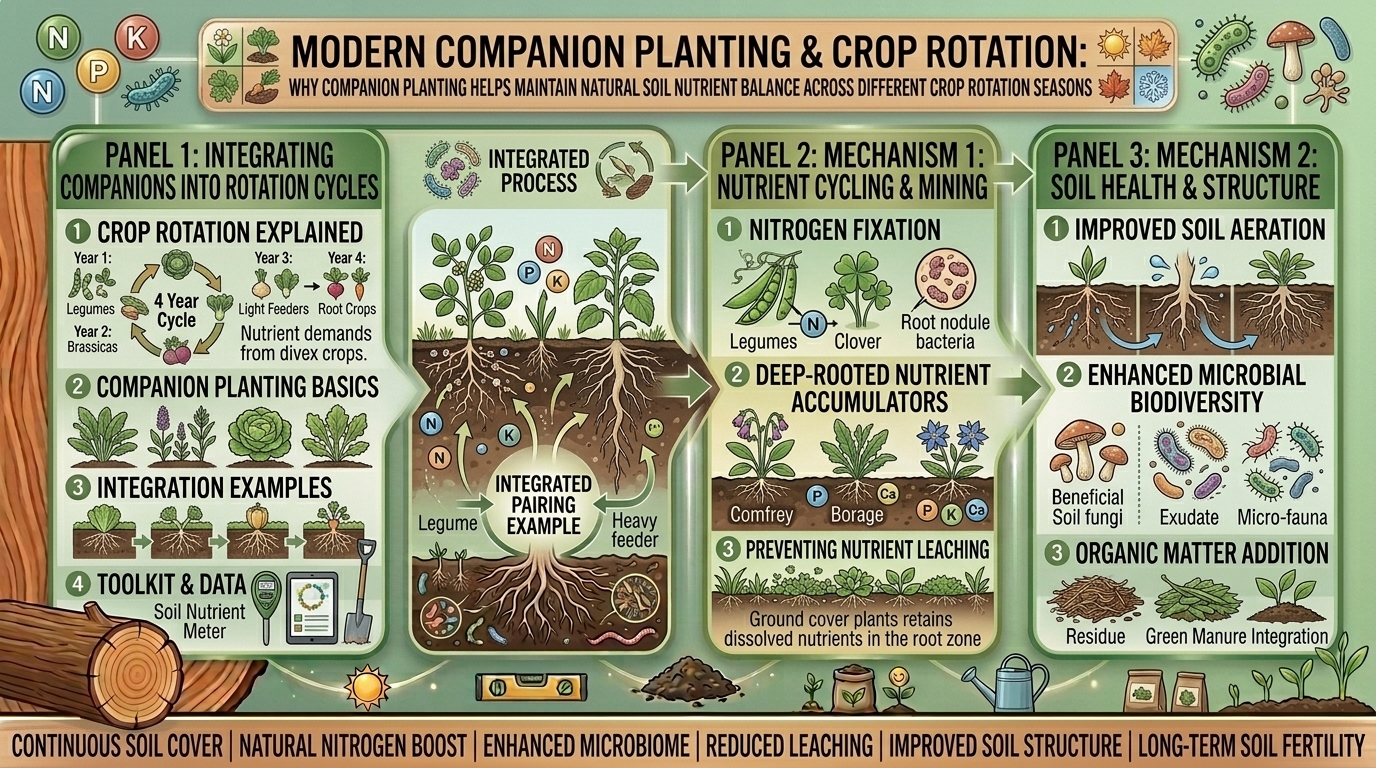
Absolutely! Densely planting complementary crops with overlapping canopies creates a natural “living shade” that protects the soil surface from direct sun exposure, keeping the rhizosphere significantly cooler.
10. How often should I check soil moisture during a heat wave?
During extreme heat waves, surface moisture can vanish in hours. Use the finger test—push your finger 2 inches into the soil beneath the mulch. If it feels dry at that depth, it is time for a deep, thorough irrigation cycle.
Conclusion
Protecting your soil microorganisms during extreme summer heat wave conditions is the hidden secret to maintaining a resilient, thriving garden. When you shield the earth with thick organic mulches, deploy shade cloth during peak solar hours, water deeply and strategically before dawn, and avoid destructive practices like tilling, you preserve the invisible life force beneath your feet.