When it comes to cultivating lush, vibrant, nutrient-dense leafy greens—such as crisp butterhead lettuce, spicy arugula, tender spinach, robust Swiss chard, and emerald kale—nitrogen is the undisputed king of nutrients. Leafy crops channel their energy entirely into vegetative growth, meaning they have a voracious appetite for nitrogen and amino acids during their rapid expansion phases.
While synthetic chemical fertilizers can force rapid leaf growth, they often yield watery, tasteless greens while burning delicate root hairs and decimating the soil microbiome. To grow heavy yields of flavorful, resilient greens sustainably, experienced horticulturists rely on liquid fish hydrolysate fertilizer.
Derived from whole, fresh fish processed through cold enzymatic digestion (rather than intense heat), fish hydrolysate is an organic powerhouse. It retains delicate proteins, amino acids, natural oils, and vitamins that fuel both plant leaves and soil biology.
However, because it is potent, applying it incorrectly can scorch tender foliage or attract unwanted scavengers.
Whether you are growing greens in urban container setups in San Francisco, managing garden beds in New York, tackling heavy clay in Texas, or working with moisture-rich soils across Washington State and California, this comprehensive guide explores the science of fish hydrolysate, step-by-step application methods, safety tips, and regional best practices for maximizing your leafy green harvest.
1. The Science of Fish Hydrolysate: Hydrolysate vs. Emulsion
Not all liquid fish fertilizers are created equal. Understanding the manufacturing difference is critical to your garden’s success.
Cold-Processed Hydrolysate
- The Process: Whole fish are ground up and broken down at room temperature using natural enzymes and acids.
- The Nutritional Profile: Because heat is never applied, delicate proteins, vitamins, amino acids, and natural oils remain completely intact. More importantly, these valuable fish oils contain micro-nutrients that feed beneficial soil fungi and bacteria, turning your soil into a biological engine.
Traditional Fish Emulsion
- The Process: Fish waste is cooked, treated with sulfuric acid, and stripped of its natural oils to create a stable shelf product.
- The Nutritional Profile: Much of the delicate protein and oil content is destroyed by heat, and chemical preservatives are often added. While still an organic source of nitrogen, fish emulsion lacks the powerful biological stimulation provided by true hydrolysate.
2. Key Benefits for Leafy Green Production
When applied correctly, liquid fish hydrolysate provides distinct advantages for vegetables grown for their leaves:
[ Liquid Fish Hydrolysate Application ]
       │
       ├──> 1. Rapid Nitrogen Supply (Lush, Deep-Green Foliage)
       │
       ├──> 2. Amino Acid Boost (Enhanced Photosynthesis & Flavor)
       │
       ├──> 3. Soil Microbial Inoculation (Nutrient Cycling)
       │
       └──> 4. Stress Mitigation (Stronger Cell Walls)
1. Bio-Available Nitrogen and Amino Acids
Fish hydrolysate delivers a fast-acting, organic nitrogen profile. Because it contains intact amino acids, plants do not have to expend metabolic energy converting raw chemicals into proteins; they absorb the ready-to-use building blocks, resulting in rapid, tender leaf expansion.
2. Sustained Soil Biological Activity
The proteins and natural oils present in hydrolysate act as an immediate banquet for soil bacteria and mycorrhizal fungi. A thriving microbial population continuously breaks down surrounding organic matter, ensuring a steady, long-term supply of micro-nutrients for your greens.
3. Step-by-Step Guide: Safe Application Methods
Because liquid fish hydrolysate is concentrated and biologically active, proper dilution and timing are essential.
Step 1: Choose Your Application Method
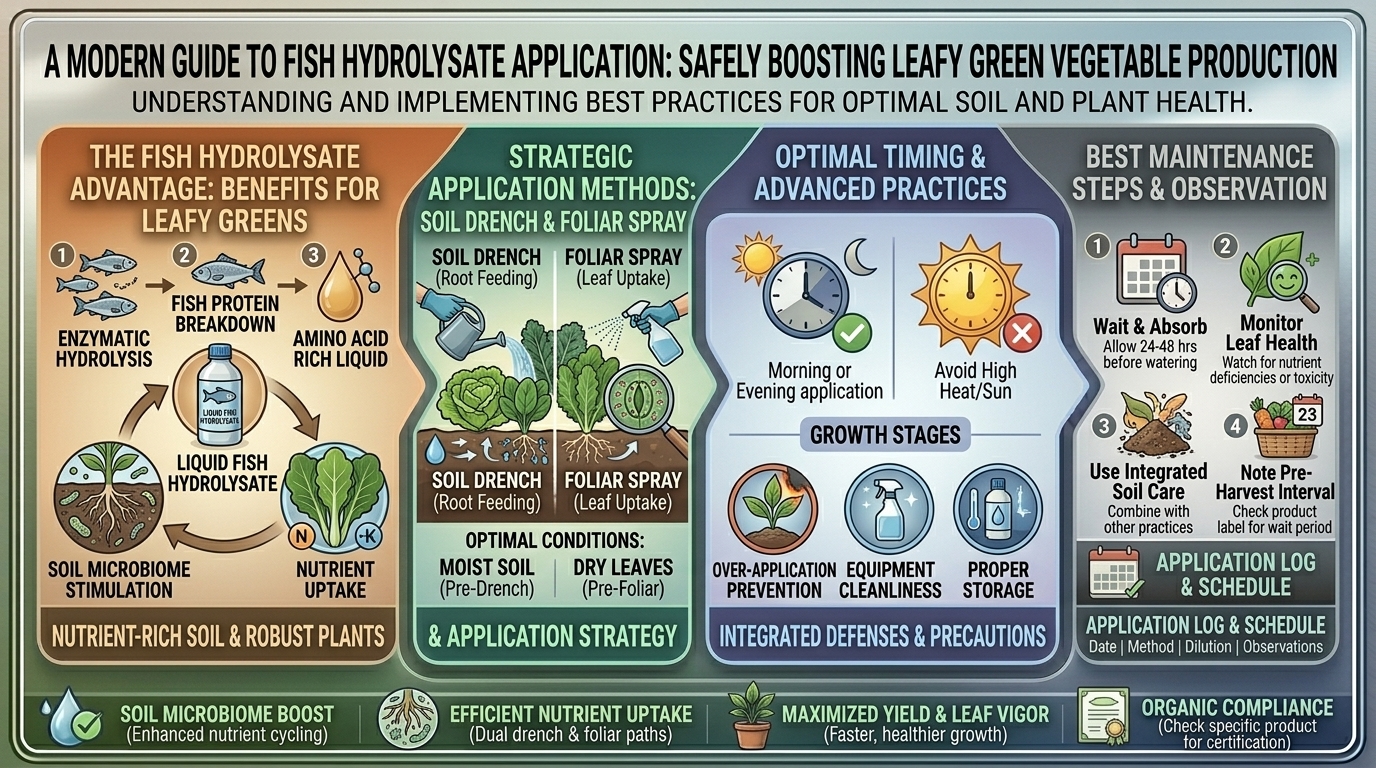
- Root Drench (Recommended for Maximum Soil Health): Dilute 1 to 2 tablespoons of fish hydrolysate per gallon of water in a watering can or hose-end sprayer. Pour the liquid directly onto the soil around the base of your leafy greens. This feeds the roots and soil food web directly.
- Foliar Spray (For Quick Pick-Me-Ups): Dilute 1 teaspoon per gallon of water and mist the undersides of the leaves early in the morning. Leaves absorb amino acids directly through their stomata, giving pale greens an immediate green-up. Warning: Never spray in direct midday sun, or leaf scorch may occur.
Step 2: Timing is Everything
- Apply your liquid fish fertilizer every 10 to 14 days during the active vegetative growth phase of your greens.
- When to Stop: Cease heavy nitrogen fertilization a few weeks before harvest or when crops begin to bolt (flower), as excess nitrogen at that stage can make greens taste bitter.
Step 3: Manage the Scent
Pure fish hydrolysate smells, quite literally, like fresh fish. While the aroma naturally dissipates within 24 to 48 hours in an open outdoor garden, indoor container growers should look for stabilized or deodorized formulas, or apply it exclusively outdoors.
4. Regional Adaptations: Using Fish Fertilizer Across the U.S.
Climate conditions dictate how and when your greens utilize nitrogen:
California & San Francisco
- Climate Challenge: Mild coastal climates allow for year-round cool-season green production, but dry spells can concentrate salts if soils are not watered thoroughly.
- Application Strategy: Use a gentle root drench every two weeks in San Francisco urban garden boxes. Pair the application with a light mulch to lock in moisture and prevent surface crusting.
Texas
- Climate Challenge: Rapidly shifting spring temperatures cause leafy greens to bolt into bitterness quickly as summer approaches.
- Application Strategy: Apply fish hydrolysate early in the spring to accelerate rapid leaf production before daytime temperatures spike. Switch to shade cloth protection alongside your liquid feeds.
New York
- Climate Challenge: Short, crisp spring and autumn seasons mean greens need an aggressive nutritional boost right out of the gate.
- Application Strategy: Start root drenches as soon as soil temperatures reach 50°F in April, pushing rapid growth before summer heat arrives.
Washington State
- Climate Challenge: Extended damp, cool spring weather slows down natural soil nitrogen mineralization.
- Application Strategy: Fish hydrolysate acts as an immediate temperature-independent nitrogen source, waking up cold Pacific Northwest garden beds and giving kale and spinach a vibrant head start.
5. Frequently Asked Questions (FAQ)
1. Will liquid fish hydrolysate attract neighborhood cats, dogs, or raccoons?
Yes! Because it is made from real fish, animals can smell the organic residue in the soil. To prevent pets or wildlife from digging up your garden beds, always water the hydrolysate deeply into the soil root zone rather than leaving it sitting in puddles on the surface, or cover the bed with a light layer of mulch.
2. Can I use fish hydrolysate as a foliar spray on indoor houseplants?
While foliar feeding works outdoors, spraying fish hydrolysate indoors is strongly discouraged unless you want your living room to smell like a fish market for two days. Stick to root drenches or use odorless commercial indoor fertilizers for houseplants.
3. What is the difference between fish hydrolysate and fish emulsion?
Fish hydrolysate is cold-processed, retaining valuable oils, proteins, and live biological compounds. Fish emulsion is heat-treated and chemically stripped of its oils. Hydrolysate is vastly superior for building long-term soil health.
4. Can I mix fish hydrolysate with other organic amendments?
Absolutely! Mixing fish hydrolysate with liquid kelp extract and a splash of blackstrap molasses creates the ultimate DIY organic biological tonic. Kelp supplies growth hormones, molasses feeds the bacteria, and fish provides the nitrogen.
5. Will high amounts of fish fertilizer burn my leafy greens?
Unlike synthetic chemical fertilizers (which have high salt index ratings and burn roots easily), cold-processed fish hydrolysate is gentle. However, extreme over-application can still cause nutrient imbalances or tip-burn, so always stick to the recommended 1 to 2 tablespoons per gallon ratio.
6. How should I store open bottles of fish hydrolysate?
Store your bottle in a cool, dark, well-ventilated space out of direct sunlight. Ensure the cap is screwed on tightly. Because it is a living organic product, it can build up mild gas pressure if left in a hot shed.
7. Does fish hydrolysate expire?
Unopened or properly sealed bottles stored in stable temperatures will last for several years. If the product develops a putrid, ammonia-like chemical stench or separates permanently into unmixable sludge, it has spoiled and should be discarded.
8. Can I use fish fertilizer on root crops like carrots and radishes?
Use caution. While young root crops need some nitrogen, excessive nitrogen from heavy fish fertilizer applications will cause carrots and radishes to pour all their energy into massive, lush green tops while producing stunted, forked, or hairy roots underground.
9. How long does the fish smell linger in the garden?
In an open, well-aerated outdoor garden with active soil microbes, the fish scent typically vanishes entirely within 24 to 48 hours as bacteria consume the organic proteins.
10. Is fish hydrolysate safe to use in organic vegetable gardens?
Yes! Pure, cold-processed fish hydrolysate is certified organic input compatible and is one of the oldest, most respected natural fertilizers used in sustainable regenerative agriculture.
Conclusion
Boosting your leafy green vegetable production does not require harsh chemical fertilizers that strip life from your soil. By utilizing cold-processed liquid fish hydrolysate, you deliver a rapid, bio-available surge of nitrogen and amino acids directly to your plants while feeding the vital microbial ecosystem beneath your feet.
Whether you are harvesting crisp lettuce on a San Francisco balcony, growing robust kale in New York, or managing garden beds across Washington, Texas, and California, incorporating fish hydrolysate into your feeding routine guarantees lush, vibrant, and delicious harvests.
What is your favorite variety of leafy green to grow, and how do you usually fertilize your vegetable beds during peak growing season?