Few houseplants capture the iconic, lush aesthetic of the tropics quite like the Monstera deliciosa—famously known as the Swiss Cheese Plant. With its striking, glossy, naturally fenestrated leaves, it is a staple in urban apartments across New York City and San Francisco, bright sunrooms in Austin, Texas, stylish lofts in Seattle, and cozy homes throughout California.
However, bringing a tropical rainforest native into an indoor living space often leads to one burning question for plant parents: How much daily sunlight do natural indoor potted Monstera plants actually need to survive and thrive?
Many owners make the mistake of believing Monsteras are low-light miracle plants that can survive in dark, windowless corners. While they might survive in low light for a brief period, they certainly won’t thrive, and you will likely miss out on their signature leaf splits.
This comprehensive, expert-backed guide breaks down everything you need to know about natural indoor lighting for potted Monsteras, how to measure it, and how to optimize your indoor setup for massive, healthy growth.
1. Understanding Monstera’s Natural Habitat (The Jungle Canopy)
To understand what a potted Monstera needs indoors, you have to look at how it grows in the wild.
In the tropical rainforests of Central and South America, Monstera deliciosa is an understory vine that climbs up massive tropical trees. Because it grows beneath a dense jungle canopy, it rarely receives harsh, direct, all-day equatorial sunlight. Instead, it evolved to absorb bright, indirect, dappled sunlight that filters down through the upper tree branches.
When you move a Monstera indoors, your goal is to replicate this natural dappled canopy light as closely as possible using your home’s windows.
2. The Golden Rule: Bright, Indirect Sunlight
For a healthy indoor potted Monstera, the magic phrase is bright, indirect sunlight. But what does that actually mean in practical terms?
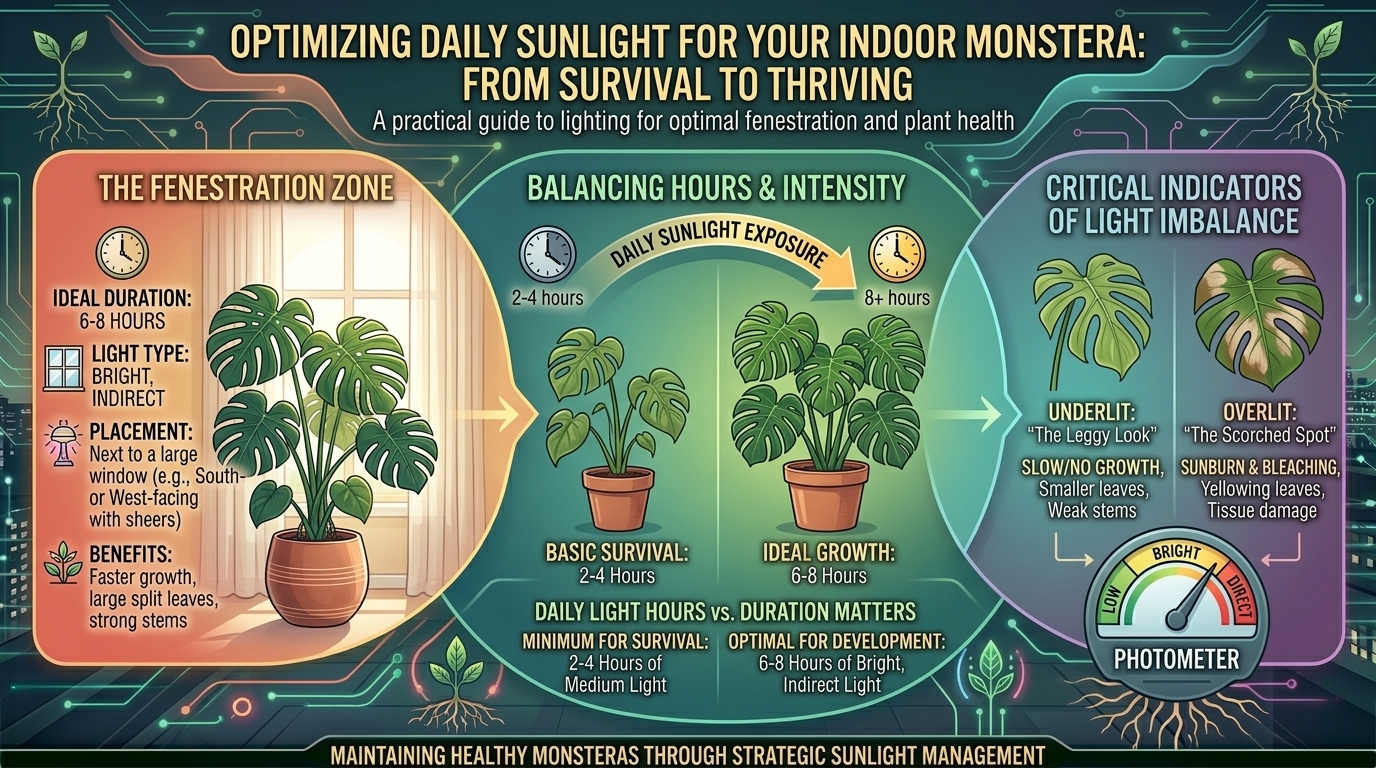
- The Sweet Spot (6 to 8 Hours): A healthy Monstera thrives best when placed in a spot that receives 6 to 8 hours of bright, indirect light every single day.
- Defining “Indirect”: Indirect light means the plant can “see” the sky clearly, but the sun’s direct rays do not physically strike or bake the surface of its leaves for extended periods.
How Different Windows Provide Light:
- East-Facing Windows (Ideal): Provide gentle, direct morning sun for a few hours, followed by soft, bright, indirect light for the rest of the day. This is often considered the gold standard for indoor Monsteras.
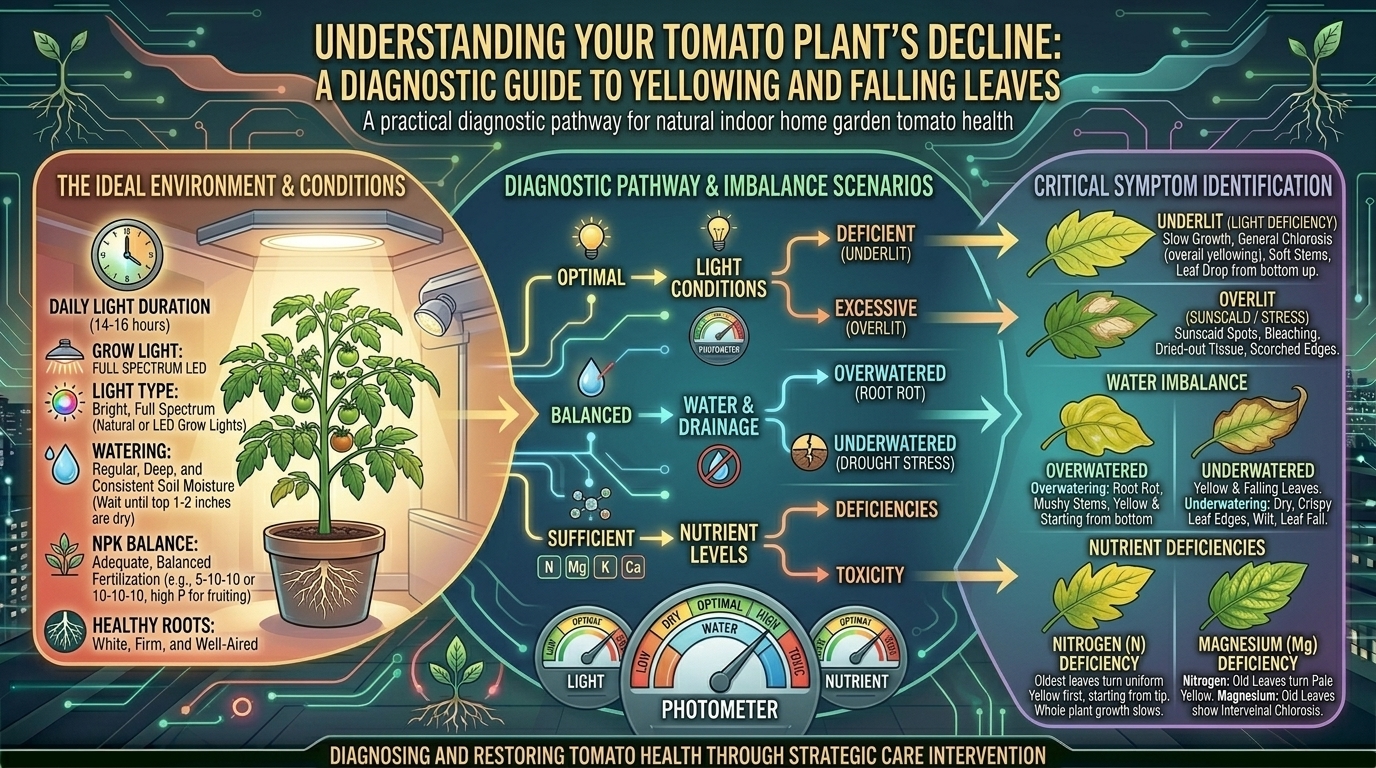
- South- and West-Facing Windows (Requires Caution): These windows offer intense, blazing afternoon sun. While Monsteras love light, direct scorching rays through a glass window can easily magnify heat and burn white, dry patches (sunburn) onto delicate green leaves. If using a south or west window, use a sheer curtain to diffuse the harsh afternoon glare.
- North-Facing Windows (Low Light): North-facing windows (in the Northern Hemisphere) provide weak, indirect light all day. While a Monstera can survive here, growth will slow to a crawl, and the plant will likely produce small, solid leaves without any characteristic splits (fenestrations).
3. Signs Your Monstera is Getting Too Much or Too Little Light
Your plant will always communicate its happiness levels through its foliage. Pay close attention to these visual indicators:
Signs of Insufficient Light (Too Little Sun):
- Leggy, Stretched Growth: The stems grow exceptionally long and spindly as the plant desperately reaches or “stretches” toward the nearest light source.
- Lack of Fenestrations: Mature Monsteras develop dramatic holes and splits in their leaves. If new leaves emerge entirely solid without splits, the plant is starved for light.
- Permanently Wet Soil: In low-light conditions, the potting soil takes much longer to dry out, dramatically increasing the risk of root rot.
- Pale or Yellowing Lower Leaves: Older leaves may turn pale green or yellow and drop off as the plant redirects all its limited energy to the top shoot.
Signs of Excessive Light (Too Much Direct Sun):
- Crispy, Bleached Patches: Large, papery, brown, or burnt white spots appear on the leaves where direct sun rays have scorched the tissue.
- Dull, Faded Foliage: Instead of a rich, deep glossy green, the leaves take on a washed-out, yellowish-green tint.
- Rapid Soil Dehydration: The potting soil dries out within a day or two of watering, causing the plant to droop constantly.
4. Can You Grow Monsteras Under Artificial Grow Lights?
What if your apartment in New York City or San Francisco lacks bright windows? Can you use artificial lighting?
Yes, absolutely. Artificial LED grow lights are a fantastic, highly effective alternative for indoor plant parents.
- What to use: Look for full-spectrum LED grow bulbs (often labeled as “daylight” 5000K to 6500K).
- Duration: Position the grow light about 12 to 18 inches above the top of your Monstera and leave it on for 10 to 12 hours daily using an automatic timer to mimic natural tropical day-night cycles.
5. Tips to Optimize Indoor Sunlight for Your Monstera
- Clean the Leaves: Indoor household dust settles quickly on broad Monstera leaves, acting like a physical sunblock that blocks photosynthesis. Gently wipe down your plant’s leaves with a damp microfiber cloth once every two weeks.
- Rotate the Pot: Monsteras naturally lean toward light sources. To prevent your plant from growing lopsided, give your pot a quarter-turn every time you water it.
- Use Light-Colored Interior Decor: If your room has white walls or light-colored flooring, it will naturally bounce and reflect ambient sunlight deeper into the room, benefiting your potted plant.
6. Frequently Asked Questions (FAQ)
1. Can a Monstera survive in a room with zero natural windows?
No living plant can survive long-term in a completely windowless room without natural sunlight unless you provide dedicated, high-output artificial LED grow lights turned on for at least 10 to 12 hours a day.
2. Is morning sun better than afternoon sun for an indoor Monstera?
Yes! Gentle morning sun from an east-facing window is much cooler and safer for indoor plants. Intense afternoon sun from west- or south-facing windows can easily scorch and burn indoor leaves.
3. Why are my Monstera leaves turning yellow?
Yellow leaves can be caused by a few factors, but the most common culprits are overwatering (often compounded by low light where soil stays wet too long) or natural aging of the oldest lower leaves.
4. Do young Monsteras need different lighting than mature ones?
Juvenile Monsteras (baby plants with small, heart-shaped leaves) are more sensitive to harsh, direct sunlight. They prefer gentle, bright, indirect light. As they mature into large climbing vines, they can handle slightly more intense ambient brightness.
5. How do I know if my Monstera is getting enough light to form splits?
If your Monstera is producing new leaves every 4 to 6 weeks that progressively get larger and feature more prominent splits (fenestrations) and inner holes, it is receiving optimal bright, indirect sunlight.
6. Should I put my indoor Monstera outside during the summer?
If you live in a warm climate with mild summers (like coastal California or parts of Washington), you can move your Monstera to a shady outdoor patio or porch for the summer. Just make sure it is transitioned slowly so it doesn’t suffer sunburn from harsh outdoor rays.
7. Do variegated Monsteras (like Albo or Thai Constellation) need more light?
Yes! Variegated Monsteras have white or cream-colored patches that lack chlorophyll (the pigment plants use to capture sunlight). Because of this, they require brighter, indirect light than all-green Monsteras to maintain their stunning variegation and fuel growth.
8. How close to a window should I place my potted Monstera?
The ideal placement is usually right next to an east-facing window, or about 2 to 4 feet away from a bright south- or west-facing window (or shielded behind a sheer white curtain).
9. Why is my Monstera leaning heavily to one side?
Your Monstera is phototropic, meaning it is bending and leaning toward its primary light source. Fix this by rotating the pot 180 degrees every week to encourage balanced vertical growth.
10. Can sheer curtains filter out too much light for a Monstera?
Standard sheer white curtains filter out about 20% to 40% of direct sunlight, transforming harsh, scorching rays into the exact kind of gentle, bright, indirect light that Monsteras love.
Conclusion
Providing the right amount of daily sunlight is the single most impactful thing you can do for your indoor potted Monstera. By aiming for 6 to 8 hours of bright, indirect light—ideally from an East-facing window or filtered through a sheer curtain—you will mimic its natural rainforest canopy home and watch your plant reward you with massive, glossy, fenestrated leaves.