Spring is the magical season of renewal. Whether you are prepping a sunny backyard plot in Austin, Texas, managing container boxes on a breezy balcony in San Francisco, cultivating a raised bed in Seattle, Washington, or tending to an urban oasis in New York City, spring is when gardening dreams come to life.
However, before you start purchasing seed packets and hauling bags of organic compost, you need to equip yourself properly. Walk into any major garden center, and you will be met with aisles of gadgets, heavy machinery, and specialized gizmos. For the beginner starting a natural, organic home garden, all that clutter is unnecessary.
To build a thriving, chemical-free garden from scratch, you only need a handful of high-quality, dependable base tools. This comprehensive, expert-backed guide covers the absolute essential tools required this spring, how to choose them, and how to maintain them naturally.
1. The Core Hand Tools: Your Daily Workhorses
When setting up a natural home garden, hand tools are the extension of your hands. Investing in durable, ergonomically designed steel tools will save you from hand fatigue and last for decades.
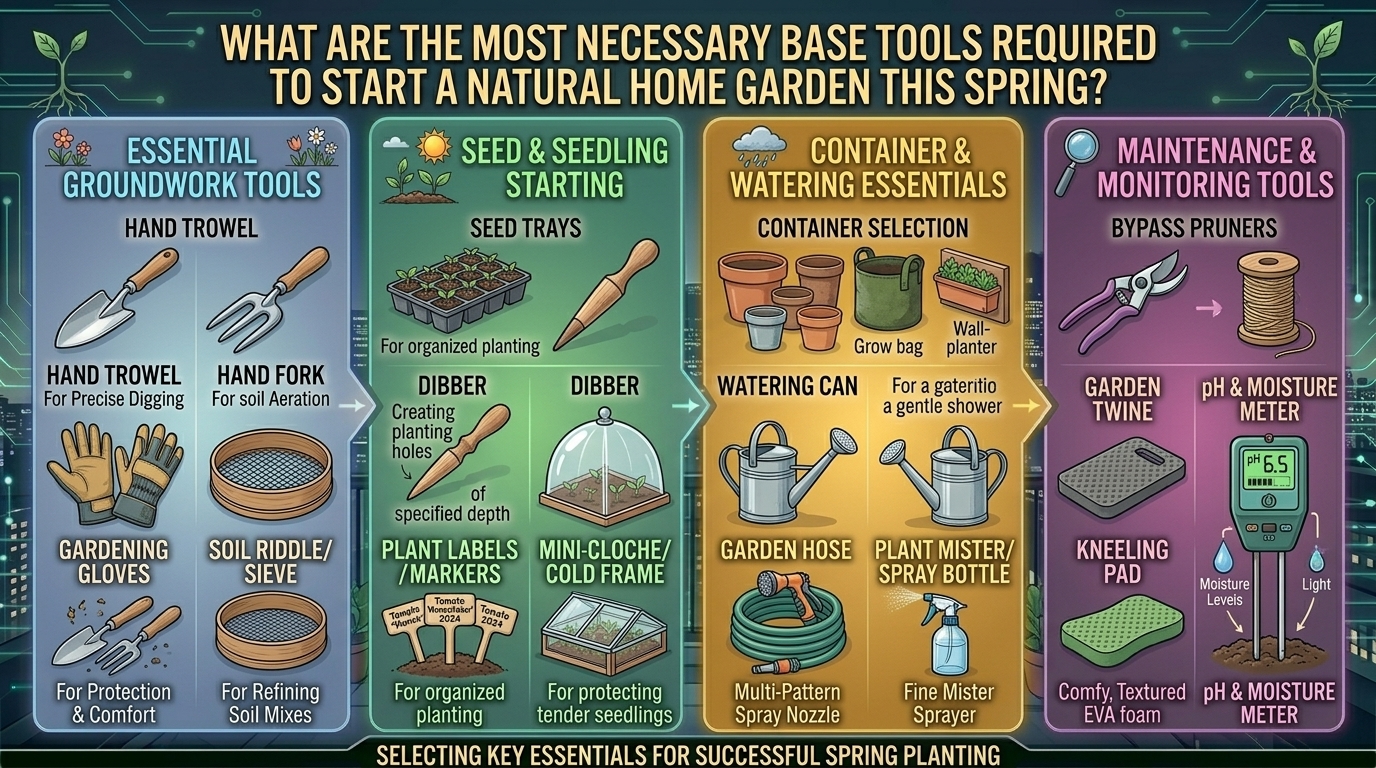
A. The Stainless Steel Hand Trowel
- What it does: The trowel is the ultimate tool for digging small holes, planting seedlings, transplanting potted herbs, and scooping loose organic soil.
- What to look for: Avoid cheap plastic or thin stamped-metal trowels that bend under pressure. Look for a one-piece forged stainless steel or aluminum-alloy trowel with a comfortable rubberized or wooden handle. Stainless steel resists rust and cleans easily after mixing into damp organic compost.
B. The Japanese Hori Hori Knife
- What it does: Often called the ultimate secret weapon of gardeners, a hori hori is a thick, convex steel utility knife with one straight edge and one serrated edge. It is used for slicing open bags of organic soil, dividing root balls, digging out deep taproot weeds like dandelions, and measuring planting depths.
- What to look for: Look for a stainless steel blade with measurement gradations stamped right onto the metal, housed in a sturdy leather or heavy canvas belt sheath.
C. Bypass Pruning Shears (Secateurs)
- What it does: Pruners are essential for trimming back spent stems, harvesting vegetables, deadheading flowers, and shaping woody herbs like rosemary or lavender.
- What to look for: Always choose bypass pruners (which work like scissors with two blades sliding past each other) rather than anvil pruners. Bypass blades make clean, crisp cuts that heal quickly, preventing disease entry. Look for hardened steel blades and an ergonomic grip sized to fit your hand comfortably.
2. Soil and Bed Preparation Tools
Depending on whether you are working with raised beds, containers, or an in-ground plot, you will need a few foundational items to move and aerate your natural soil base.
A. The Garden Spade or Border Fork
- What it does: If you are building raised beds or turning a small patch of ground, a border spade or garden fork helps mix in bulky organic amendments like compost, kelp meal, and worm castings.
- What to look for: A square-nosed or pointed spade with a sturdy handle. If your soil is heavy or rocky, a four-tined garden fork is superior because it penetrates compacted earth more easily without fracturing the soil’s natural structure.
B. Lightweight Wheelbarrow or Garden Trug
- What it does: Transporting bags of organic soil, fresh mulch, harvested produce, and garden waste requires reliable transport.
- What to look for: For smaller yards or urban spaces (like New York or San Francisco apartments), a flexible rubber garden trug or canvas utility bag is lightweight and easy to store. For larger yards in Texas or Washington, a single- or dual-wheel wheelbarrow saves your back from heavy lifting.
3. Irrigation and Watering Essentials
Natural organic soils rely heavily on maintaining consistent moisture to keep beneficial microbes alive. Getting water precisely where it needs to go is vital.
A. Precision Watering Can
- What it does: Essential for watering delicate spring seedlings, indoor container plants, and newly transplanted herbs without washing away fragile seeds.
- What to look for: A 1-to-2 gallon balanced watering can featuring a removable “rose” spout attachment that breaks water flow down into a gentle, rain-like shower.
B. Flexible Garden Hose with a Multi-Spray Wand
- What it does: For larger garden layouts, a durable kink-resistant hose paired with an adjustable watering wand allows you to reach every corner of your garden and switch effortlessly from a powerful jet (for cleaning tools) to a soft mist (for foliage).
4. Personal Protection and Comfort Gear
Spring gardening is a physical activity. Protecting your body ensures you can enjoy the hobby pain-free.
- Breathable Garden Gloves: Protect your hands from blisters, splinters, and abrasive organic fertilizers while maintaining tactile dexterity. Look for gloves with nitrile-coated palms.
- Kneeling Pad or Rolling Stool: High-density foam knee pads save your joints from hard pavement, concrete balconies, or damp spring soil.
- Wide-Brimmed Sun Hat and Natural Sun Protection: Essential for long spring afternoons working under the sun, whether in the Texas heat or coastal California brightness.
5. Frequently Asked Questions (FAQ)
1. Do I need expensive power tools to start an organic home garden?
Not at all. For a standard home vegetable or flower garden, power tools are entirely unnecessary. Simple, high-grade manual hand tools (trowel, pruners, hori hori) offer better precision, cost a fraction of the price, and connect you more closely with your garden soil.
2. What is the single most important tool to buy first if my budget is tight?
If you can only buy one or two items to start, invest in a forged stainless steel hand trowel and a quality pair of bypass pruners. Those two tools cover planting, digging, harvesting, and basic maintenance for containers and small beds.
3. Why are bypass pruners recommended over anvil pruners?
Bypass pruners slice cleanly past each other like kitchen shears, leaving a clean cut on live plant stems that seals quickly. Anvil pruners crush plant stems against a flat metal base, which damages live tissue and invites fungal diseases into your plants.
4. How do I prevent my metal garden tools from rusting?
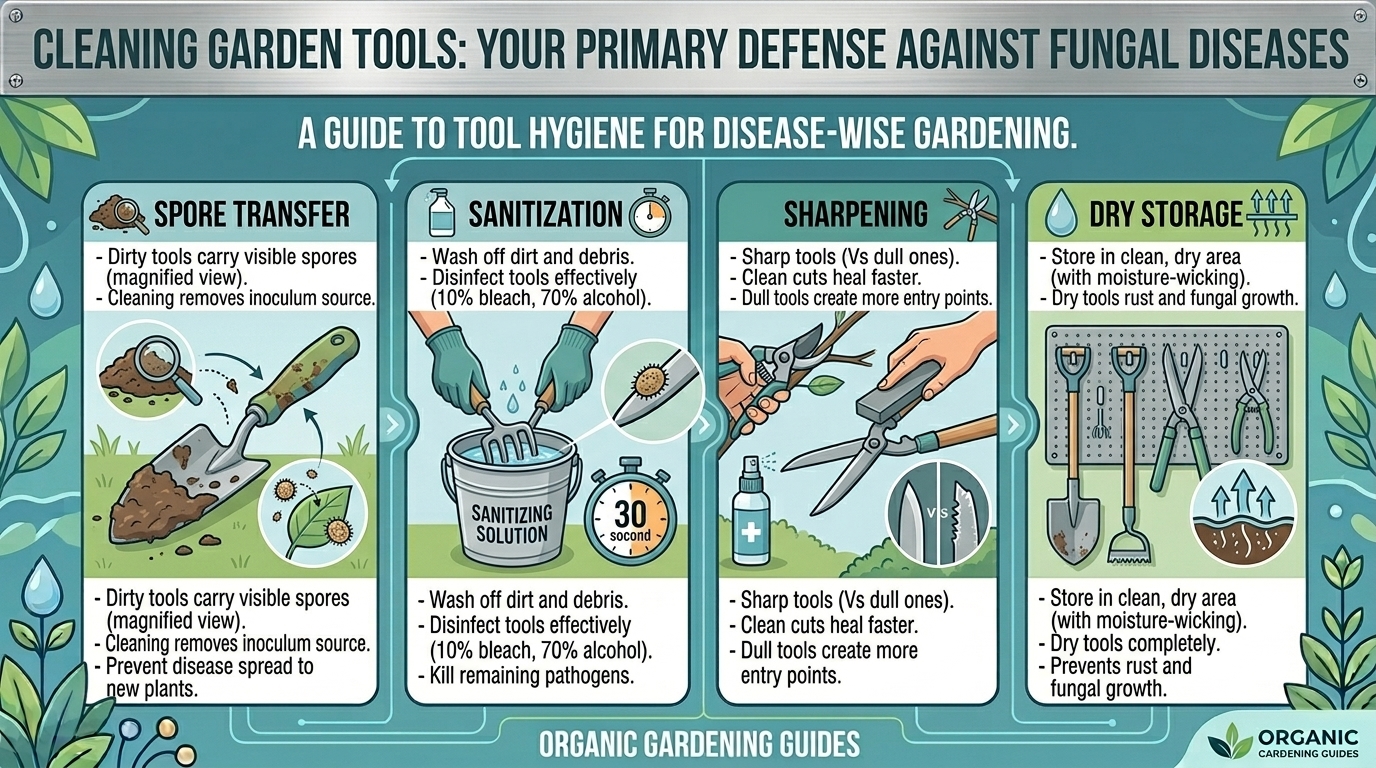
After every use, brush off excess damp soil with a stiff brush or wipe them down with a damp cloth. Dry them thoroughly with a towel. Once a season, rub a light coat of boiled linseed oil or organic neem oil onto the metal blades and wooden handles to condition and protect them.
5. Can I use a kitchen knife instead of a Hori Hori knife?
While an old kitchen knife can cut twine or open bags, a Hori Hori features a thick, concave, full-tang steel blade specifically engineered to pry, dig, saw roots, and slice through dense soil without bending or snapping. It replaces four tools in one.
6. What is the best way to carry my tools around the garden?
Many gardeners use a dedicated canvas tool caddy, a bucket organizer wrap, or a deep garden trug. Keeping your hand tools in a central carrier prevents you from misplacing your trowel or pruners under layers of mulch or compost.
7. How often should I sharpen my pruners and digging tools?
Sharpen your bypass pruners at the start of every spring season (and periodically during heavy use) using a diamond sharpening file or whetstone. Clean cuts require less hand pressure and keep your plants healthy.
8. Are expensive brand-name garden tools actually worth the investment?
Generally, yes. Mid-to-high-range tools forged from single-piece stainless steel or carbon steel come with lifetime warranties and do not bend or snap like cheap stamped-metal tools bought from discount bins, saving you money in the long run.
9. What kind of gloves are best for organic gardening?
Look for lightweight, breathable synthetic gloves with rubber or nitrile palms. They protect your skin from scratches and soil microbes while letting your hands breathe, unlike heavy rubber waterproof gloves that trap sweat.
10. Do I need a wheelbarrow for a small balcony or patio garden?
No. If you are gardening on a small apartment balcony or patio in cities like San Francisco or New York, a wheelbarrow is impractical. A lightweight fabric garden bag or bucket is more than sufficient for managing soil and debris in tight spaces.
Conclusion
Starting a natural home garden this spring doesn’t require commercial farming equipment or a garage full of expensive gadgets. By focusing on a minimalist toolkit of essential, high-durability items—like a sturdy trowel, a versatile hori hori knife, clean-cutting bypass pruners, and reliable watering gear—you will be fully prepared to build and nurture your organic garden ecosystem from day one.