There is few things quite as frustrating for a dedicated gardener as stepping out into the crisp morning air, coffee in hand, only to discover that your freshly tilled vegetable patch or prized flower bed has been converted into the neighborhood’s communal litter box. While felines are undeniably graceful and beloved companions, finding uninvited deposits in your carefully cultivated soil is a fast track to frustration. It ruins mulch, damages tender young seedlings, carries unpleasant odors, and poses legitimate hygiene concerns.
For property owners navigating diverse regional microclimates—from urban yards in San Francisco and New York to sprawling suburban properties across Texas, California, and Washington—finding a humane, eco-friendly solution is paramount. You don’t need to resort to harsh chemical pesticides or toxic synthetic granules that threaten local pollinators, beneficial earthworms, and family pets.
By understanding feline psychology, altering soil textures, deploying targeted scent deterrents, and installing safe physical barriers, you can permanently reclaim your garden beds. This comprehensive guide explores the absolute best natural, humane strategies to keep neighborhood cats away from your soil for good.
1. Understanding Feline Behavior: Why Your Garden?
To successfully deter a cat, you must first think like one. Cats do not target your garden out of spite; they are driven by deeply ingrained evolutionary instincts.
+-----------------------------------------------------------------+
|             THE FELINE GARDEN ATTRACTION CYCLE                  |
|                                                                 |
|   [1. The Textural Draw]                                        |
|   - Soft, loose soil or freshly laid organic mulch mimics the   |
|     ideal digging texture of sand and loose earth.              |
|              |                                                  |
|              v                                                  |
|   [2. The Elimination Instinct]                                 |
|   - Felines instinctively prefer loose, dry material that allows|
|     them to easily scratch and bury their waste.                |
|              |                                                  |
|              v                                                  |
|   [3. Territorial Pheromone Marking]                            |
|   - Once a cat successfully uses a spot, residual scent markers |
|     ensure they (and other neighborhood cats) return repeatedly.  |
+-----------------------------------------------------------------+
Because soft soil requires zero effort to excavate, an open garden bed is an irresistible invitation. To stop them, your strategy must focus on disrupting these three triggers: texture, scent, and accessibility.
2. Texture Modification: Making the Ground Uncomfortable
Cats are meticulous creatures with sensitive paw pads. They despise walking on uneven, prickly, or awkward surfaces. By altering the physical top-layer texture of your garden soil, you can make the ground completely unappealing for digging.
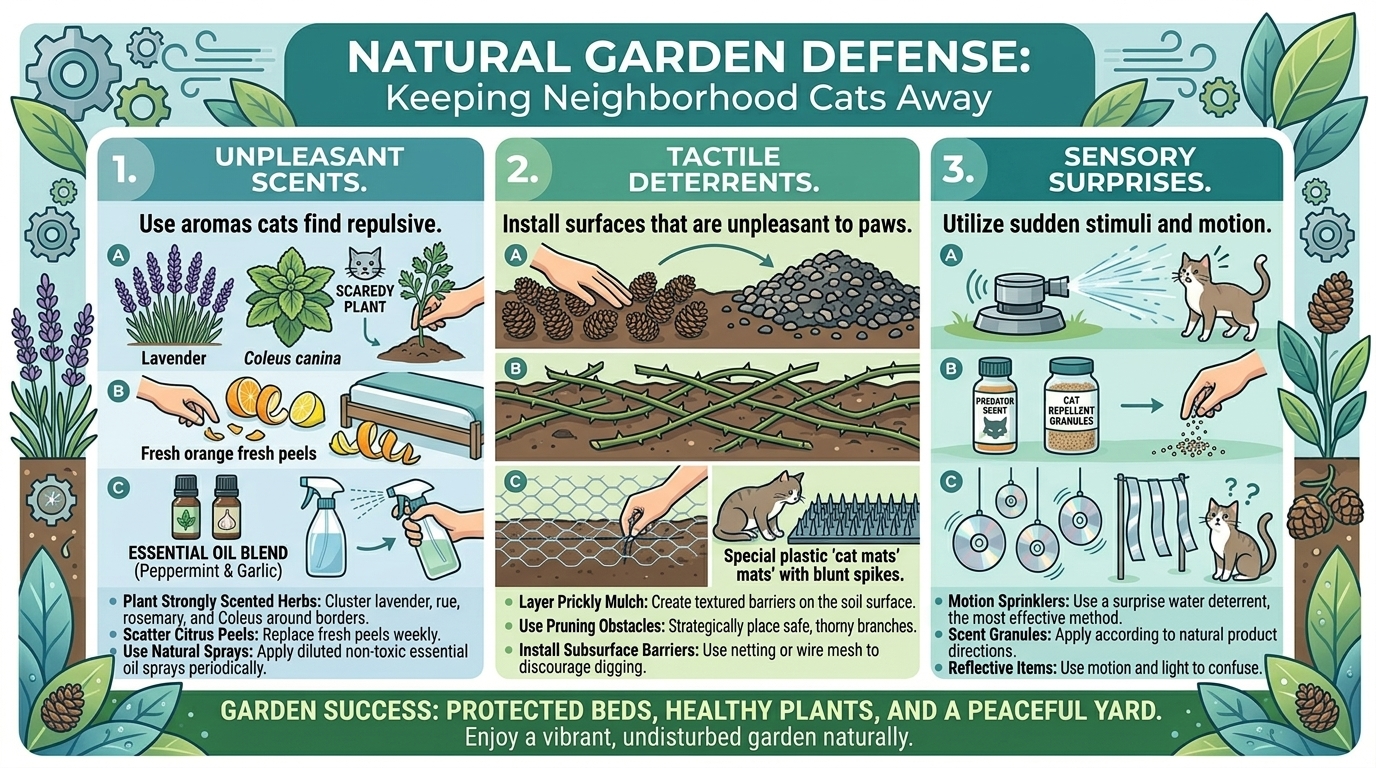
- Pine Cones and Twig Barriers: Scatter whole pine cones, rough branches, or decorative twigs closely together across open patches of soil between your plants. This leaves zero comfortable space for a cat to squat, scratch, or maneuver.
- Laying Chicken Wire or Plastic Mesh: Lay down a panel of galvanized chicken wire or UV-resistant plastic mesh flat across the soil surface inside your raised beds. Cut small X-shaped slits where your desired plants grow. Plants will easily grow up and through the mesh, but cats cannot dig through the rigid grid underneath.
- Coarse Mulching Alternatives: Swap out fine, powdery topsoil or soft shredded bark for heavy, coarse-textured materials such as large river rocks, pea gravel, or sharp eggshell fragments. Cats prefer fine-grained materials and will actively avoid scratching at chunky stone surfaces.
3. Botanical Barriers: Natural Repellent Plants
Mother Nature provides a wide array of aromatic plants that humans find delightful, but which overwhelm a cat’s ultra-sensitive olfactory receptors. Strategic companion planting around the perimeter of your garden beds creates an effective living fence line.
+-----------------------------------------------------------------+
|             TOP CAT-REPELLING BOTANICALS                        |
|                                                                 |
|   - Lavender (Lavandula): Beautiful purple blooms releasing     |
|     soothing scents humans love but cats intensely avoid.       |
|   - Rosemary (Salvia rosmarinus): Woody, pungent perennial      |
|     shrubs that act as physical and aromatic borders.           |
|   - Pennyroyal & Lemon Thyme: Sharp, citrus-and-mint-tinged     |
|     foliage that disrupts a cat's tracking ability.             |
|   - Coleus Canina ("Scaredy Cat Plant"): Emits a powerful       |
|     pungent aroma when brushed that deters local wildlife.      |
+-----------------------------------------------------------------+
Plant Placement Tip
Position these aromatic defenders heavily at common entry points, corners, and along the front edges of raised beds where neighborhood cats typically sneak into your garden zone.
4. DIY Scent Deterrents and Sprays
Felines rely heavily on their sense of smell. You can manufacture safe, cost-effective sprays and barrier dusts using household ingredients that send cats running the other way.
- Citrus Peel Scatter: Cats universally dislike the sharp, acidic oils of citrus fruits. Do not throw away your leftover lemon, lime, orange, and grapefruit peels. Chop them up and scatter them directly over the soil margins. Note: Refresh these weekly as the natural oils dry out.
- The Citrus-Vinegar Spray Shield: Mix equal parts water and white vinegar with a splash of pure lemon juice and a few sprigs of fresh rosemary in a spray bottle. Mist this solution along borders, fencing, and pathways. Never spray acidic mixtures directly onto plant foliage, as it can burn the leaves.
- Essential Oil Barriers: Dilute 10 to 15 drops of rosemary, lavender, or citronella essential oil in water. Apply using a spray bottle along hardscaping and perimeter boundaries.
Important Warning: Avoid using toxic substances like mothballs, garlic, or excessive chemical concentrates, which can poison local wildlife, household pets, and beneficial garden insects. Furthermore, avoid using coffee grounds directly on soil; while popular online lore, high concentrations of caffeine can be toxic if ingested by pets, and grounds mold quickly.
5. Advanced Hands-Off Solutions: Motion-Activated Tech
If stubborn neighborhood cats ignore physical barriers and organic scents, you can let technology do the work.
- Motion-Activated Sprinklers: These devices hook up directly to your garden hose and use infrared thermal sensors to detect movement. When a cat steps into your garden bed, the unit emits a sudden, harmless burst of water paired with a mechanical clicking sound. Cats are startled instantly and quickly learn to associate your garden with an unpleasant, sudden downpour, avoiding the area permanently after just one or two encounters.
- Ultrasonic Pest Repellers: Solar-powered electronic stakes emit high-frequency sound waves that are inaudible or deeply annoying to feline ears while remaining completely silent to humans.
6. Neutralizing Existing Territorial Pheromones
If a cat has already used your garden as a toilet, simply covering the mess won’t solve the problem. Cats have an exceptional memory for scent landmarks; if they smell old urine or feces pheromones lingering in the soil, they will dig right back through your deterrents to mark their territory.
- Scoop and Clean: Thoroughly remove all solid waste and discard it in an outdoor trash bin.
- Flush the Soil: Generously soak the affected spot with a garden hose to dilute and push residual waste proteins deep down past the root zone.
- Apply Enzymatic Neutralizers: Spray the area with an eco-friendly, pet-safe enzymatic cleaner or liquid castile soap solution designed to break down organic pet urine at a molecular level, erasing the territorial beacon permanently.
7. Regional Considerations Across the United States
Your local climate and regional ecosystem dictate how your natural deterrents perform:
San Francisco and New York City
Urban and suburban yards in dense metropolitan areas often experience high densities of neighborhood and stray cats. With limited green space, competition for soil is intense. Rely heavily on physical barriers like chicken wire mesh and motion-activated water sprinklers, as heavy urban foot traffic and pollution can cause organic scents to dissipate rapidly.
Texas and California
Warm, arid, and semi-arid climates cause homemade citrus sprays and essential oil barriers to evaporate within hours under intense sunshine. In these regions, physical texturing (heavy river rock, pine cones, or wire mesh) combined with drought-tolerant cat-repelling plants like rosemary and lavender provide the most resilient, long-lasting defense.
Washington State
Frequent rainfall in the Pacific Northwest washes away DIY surface sprays and coffee-based barriers almost instantly. Focus your efforts on heavy physical ground covers (bark chunks, coarse gravel, chicken wire) and moisture-loving aromatic shrubs that thrive in damp soils.
8. Comprehensive Natural Cat Deterrent Schedule
| Frequency | Action Item | Primary Objective |
| Immediate | Clean waste, flush soil, apply enzymatic neutralizer | Erase existing territorial scent markers and pheromones |
| Weekly | Refresh citrus peels and reapply essential oil sprays | Maintain an active, overwhelming scent barrier |
| Bi-Weekly | Adjust pine cones, check chicken wire mesh placement | Ensure physical ground textures remain undisturbed |
| Seasonally | Prune cat-repelling perimeter plants (lavender/rosemary) | Encourage dense growth to maintain living border walls |