Welcome to kcplants.com, your definitive digital sanctuary for indoor plant care and urban jungle curation. Whether you are nurturing towering Fiddle Leaf Figs and Monsteras in a sun-drenched high-rise apartment in San Francisco or New York, managing vibrant tropical collections through dry summer heatwaves in California and Texas, or helping moisture-loving houseplants weather chilly indoor heating seasons in Washington, one essential maintenance task unites all plant parents: cleaning foliage.
Indoor plants do not have the luxury of outdoor weather. In their native tropical rainforest habitats, frequent tropical downpours naturally wash away accumulated dust, pollen, and microscopic hitchhiking pests. Inside our homes, however, dust settles silently and relentlessly on broad, waxy tropical leaves.
Dirty leaves are not merely an aesthetic eyesore. A thick blanket of household dust acts like a physical shield, clogging the plant’s breathing pores (stomata) and blocking vital sunlight, which drastically reduces photosynthesis. Even worse, dust and grime provide the ultimate camouflage for microscopic pests like spider mites and thrips to breed undetected.
This comprehensive guide covers everything you need to know about safely washing dust and microscopic pests off the leaves of your large indoor tropical plants, ensuring a thriving, glossy, and pristine indoor jungle.
Part 1: Why Dusty Leaves Threaten Indoor Plant Health
Before grabbing a cloth or turning on the shower, it is vital to understand what happens beneath the surface when dust accumulates on indoor tropicals.
1. Suffocation of Stomata
Plant leaves are living breathing organs. They feature microscopic cellular valves called stomata (predominantly located on the undersides of leaves) that open and close to regulate gas exchange—taking in carbon dioxide and releasing oxygen and water vapor. When household dust seals these pores shut, the plant effectively suffocates, slowing down metabolic functions and stunting new growth.
2. Impaired Photosynthesis
Chloroplasts inside plant cells rely on unobstructed sunlight to convert light energy into chemical food. A heavy layer of household dust reflects and diffuses incoming light rays, starving the plant of the solar energy it needs to thrive.
3. Pest Camouflage
Microscopic pests—especially two-spotted spider mites and thrips—love dry, dusty environments. A dirty leaf provides both a physical hiding spot and camouflage against early detection, allowing minor pest populations to explode into full-scale infestations before you notice them.
Part 2: Essential Tools for Leaf Cleaning
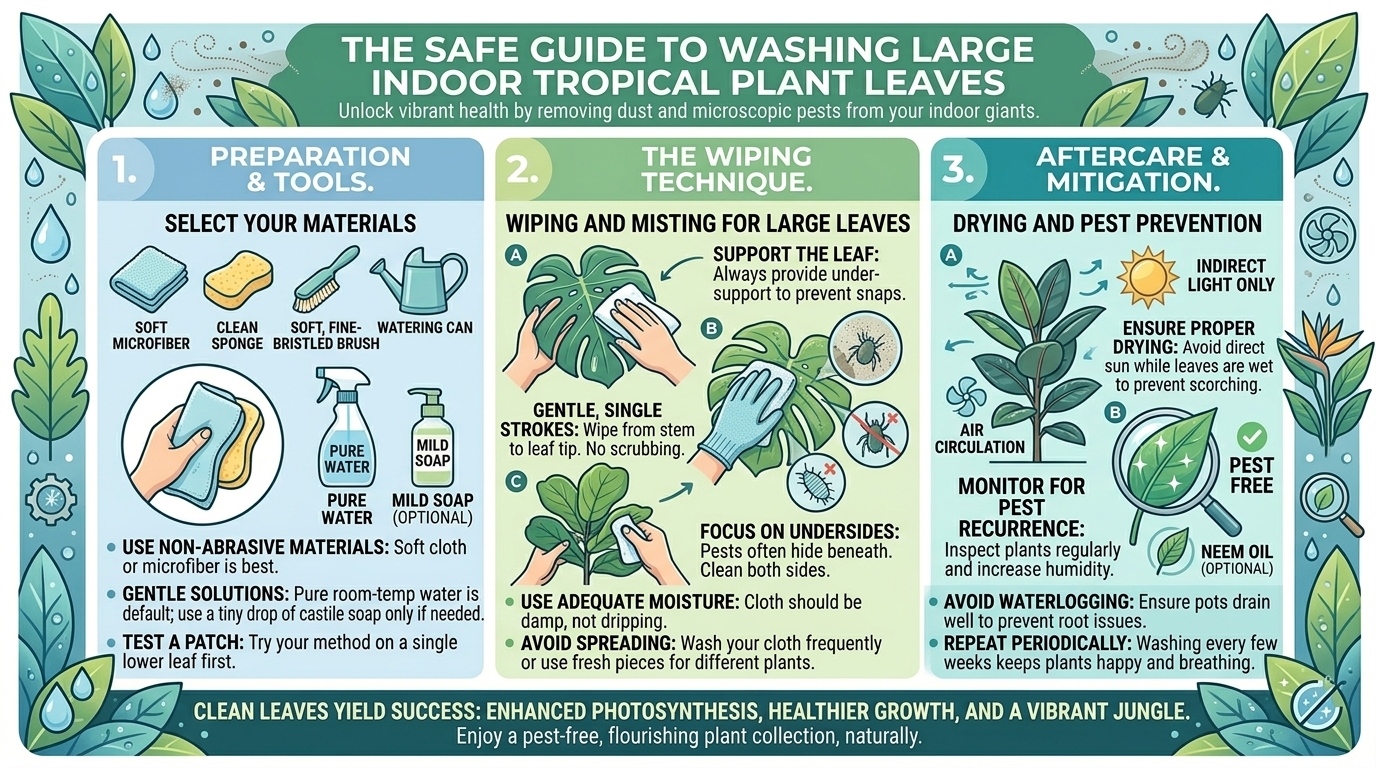
You do not need fancy commercial chemical sprays or expensive store-bought leaf shine products (which can actually clog stomata with artificial oils and silicones). Instead, gather these simple, plant-safe supplies:
- A Microfiber Cloth or Soft Sponge: Microfiber traps dust particles effectively without scratching delicate leaf surfaces.
- Lukewarm Water: Never use ice-cold or piping-hot water, as extreme temperature shocks can rupture plant cell walls.
- Mild Liquid Castile Soap or Horticultural Soap (Optional): Used only if you suspect an oily residue or early pest presence.
- A Spray Bottle: For fine misting and rinsing between deep cleans.
- A Gentle Basin, Sink, or Shower Area: For thorough rinses.
Part 3: Step-by-Step Protocol to Wash Large Tropical Plants
Different indoor plants require tailored cleaning techniques based on their size, weight, and leaf structure. Here are the three best methods for washing large tropical plants.
Method 1: The Bathroom Shower Spa (Best for Deep Cleans)
For medium-to-large potted plants that you can physically move (like Monsteras, Rubber Trees, and Philodendrons), the bathroom shower is the ultimate cleaning station.
- Protect the Soil: Wrap a plastic grocery bag tightly around the base of the pot and secure it around the stem with a rubber band or twine. This prevents soil from washing out of the drainage holes and keeps the potting mix from becoming waterlogged.
- Adjust Water Temperature: Turn on your shower nozzle to lukewarm (test it on your inner wrist—it should feel neutral, never hot or cold).
- The Gentle Shower: Tilt the pot slightly at a 45-degree angle and gently spray the plant from top to bottom. Crucial rule: Use your free hand to gently support the underside of each broad leaf as the water hits it so the heavy water pressure doesn’t snap delicate stems or petioles.
- Target the Undersides: Spend extra time spraying the undersides of the leaves where dust and spider mites congregate.
- Air Dry: Allow the plant to drip dry completely in a well-ventilated room before returning it to its display spot.