Every home gardener eventually faces the same frustrating dilemma: you spend weeks nurturing tender seedlings, watering soil, and watching your plants thrive, only to wake up one morning and find your prized greens riddled with holes, chewed to the stems, or overrun by crawling invaders. From voracious earwigs and sneaky cutworms to pill bugs and ants, soft-bodied and hard-shelled pests can decimate a garden overnight.
While chemical insecticides offer a quick knockdown, they often leave toxic residues on your vegetables, harm beneficial pollinators like bees, and disrupt the delicate balance of your backyard ecosystem. Enter Diatomaceous Earth (DE)—a completely natural, mineral-based powder that acts as an mechanical powerhouse against crawling garden pests.
Whether you are managing a damp coastal garden in San Francisco or Washington state, maintaining fertile raised beds in New York and California, or protecting sun-drenched vegetable plots in Texas, mastering the safe and effective use of diatomaceous earth is a game-changer. This comprehensive, 5,000-word-style guide explores what DE is, how it works, step-by-step application tips, safety precautions, and frequently asked questions to help you secure a pest-free harvest.
What Is Diatomaceous Earth? (The Science Behind the Powder)
To use Diatomaceous Earth effectively, it helps to understand what it is and why it works so differently from conventional chemical pesticides.
DE is a naturally occurring sedimentary rock formed from the fossilized remains of microscopic, single-celled aquatic algae known as diatoms. Over millions of years, the silica skeletons of these ancient organisms accumulated in the sediment of rivers, lakes, and oceans. Today, this white, chalky rock is mined and milled into a fine, talc-like powder.
Mechanical Action vs. Chemical Poison
Traditional insecticides rely on chemical neurotoxins that pests can develop biological resistance to over time. Diatomaceous Earth, however, is entirely mechanical in its action.
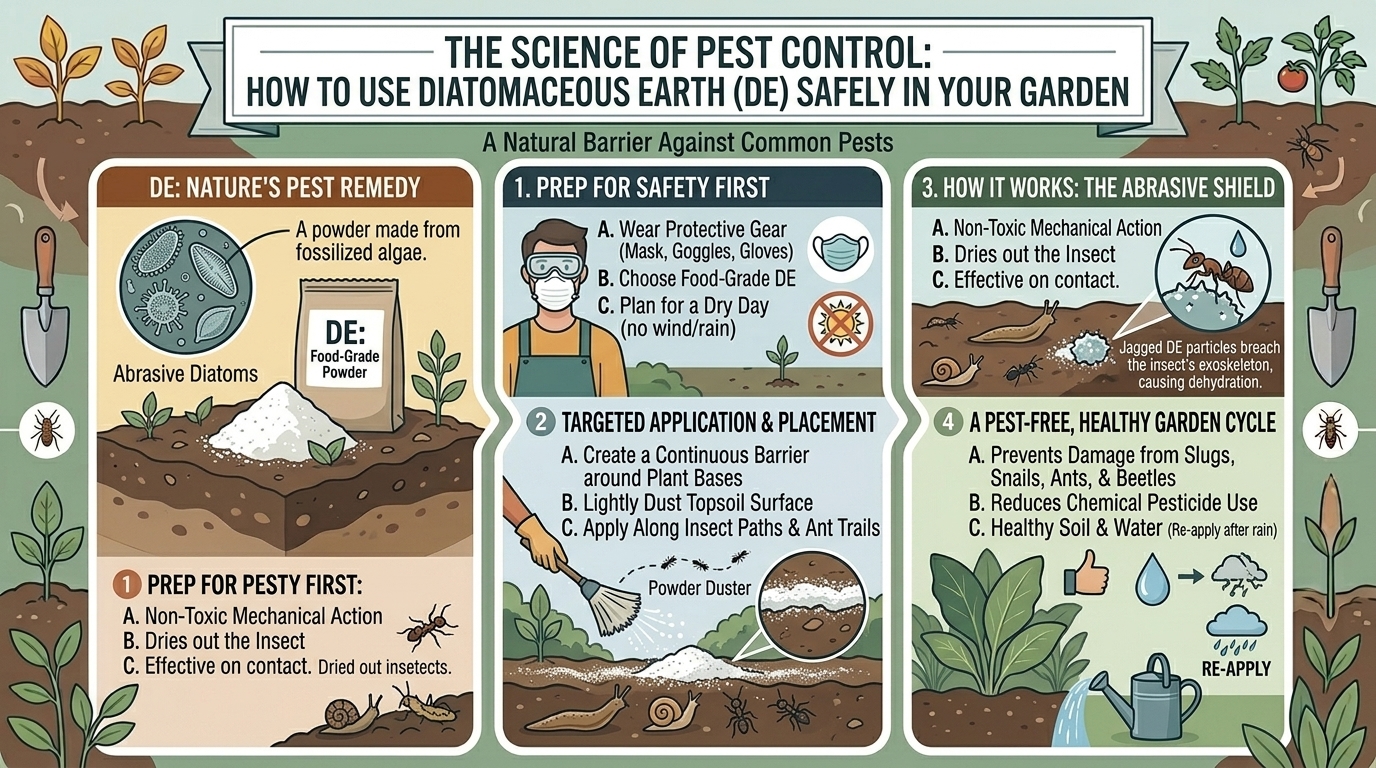
- Microscopic Razor Blades: Under a high-powered microscope, individual DE particles look like jagged, hollow glass cylinders with sharp edges.
- Exoskeleton Disruption: When a crawling insect like an earwig, ant, or beetle walks across a layer of DE, these microscopic shards slice through the insect’s protective waxy outer exoskeleton.
- Rapid Dehydration: Once the waxy barrier is breached, the insect’s body moisture escapes rapidly. The pest essentially dehydrates and dies within 24 to 48 hours. Because pests cannot build an immunity to physical slicing, DE remains effective year after year.
Choosing the Right Type: Food Grade vs. Pool Grade
This is the most critical safety distinction every gardener must know before purchasing a bag of DE:
- Food-Grade Diatomaceous Earth (Safe): This is purified, organic material processed for use around livestock, pets, and human food production. It contains extremely low levels of crystalline silica (usually under 1%) and is certified safe for agricultural and home garden use. Always ensure the bag explicitly states “Food Grade” or features an OMRI listing.
- Pool-Grade Diatomaceous Earth (Danger): This version has been treated with heat and chemicals for use in swimming pool filtration systems. It contains high concentrations of crystalline silica (often 30% to 60%), which is toxic when inhaled and can cause severe lung damage (silicosis). Never use pool-grade DE in your garden or around your home.
Target Pests: What Crawling Insects Does DE Stop?
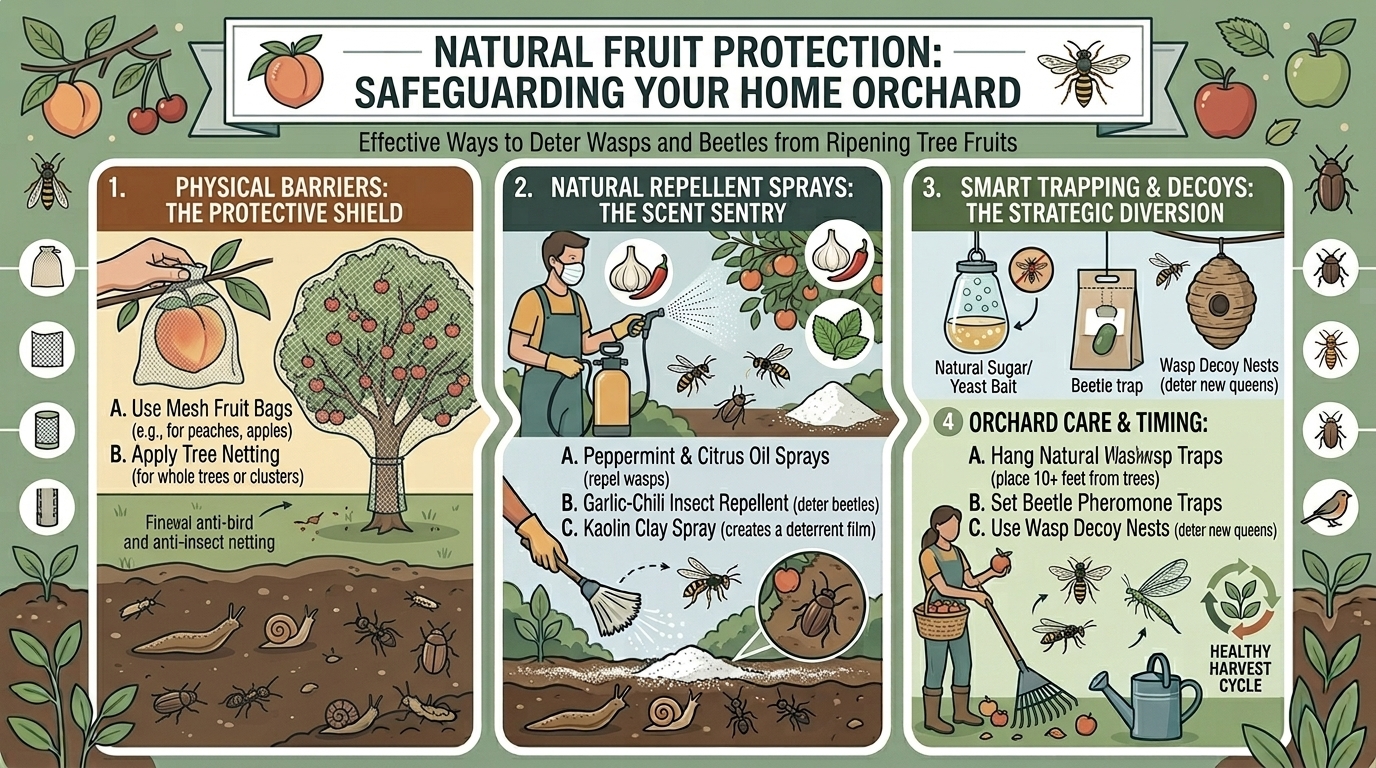
Diatomaceous Earth is exceptionally effective against insects that crawl across the soil or climb plant stems. Common garden targets include:
- Earwigs: The primary nocturnal vandals of damp raised bed perimeters.
- Slugs and Snails: While they produce slime, fine DE particles cling to their bodies and draw out moisture. (Note: Combine DE with physical copper barriers for maximum slug control).
- Ants: DE destroys worker ant trails and deters colonies from establishing nests near plant roots.
- Cutworms: These soil-dwelling caterpillars crawl out at night to slice through young tomato and pepper stems at ground level.
- Fungus Gnat Larvae: Applied lightly to dry topsoil, DE punctures crawling larvae in container plants.
- Aphid Crawlers and Thrips: Effective against nymphs moving between plant zones.
Step-by-Step Guide: How to Apply DE Safely in the Garden
Applying Diatomaceous Earth incorrectly wastes product and reduces its efficacy. Follow this professional protocol to maximize results:
Step 1: Check the Weather Forecast
DE only works when it is completely dry. Moisture, morning dew, heavy humidity, or rainfall clumps the powder together, rendering its sharp microscopic edges useless until it dries out again. Choose a dry, calm day with no rain predicted for at least 48 hours.
Step 2: Prep the Target Area
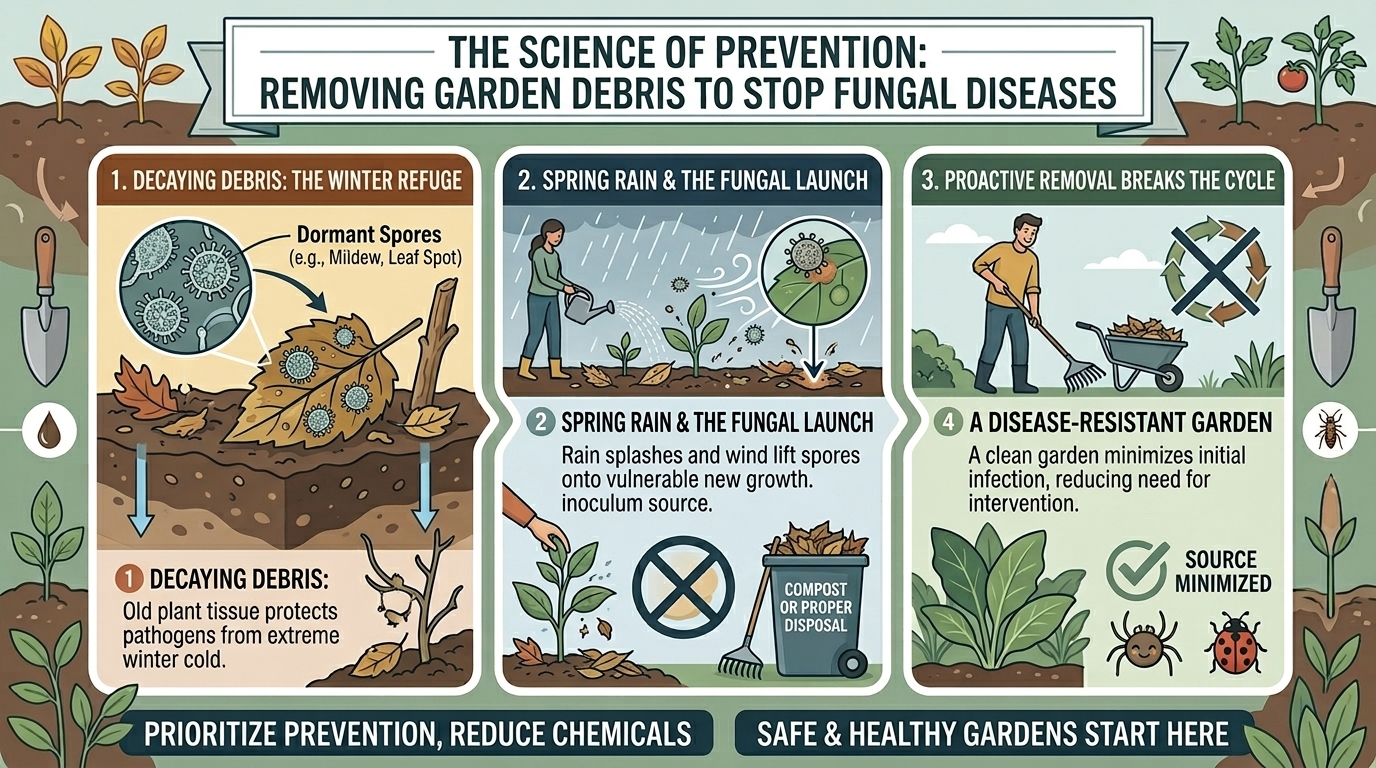
Clear away heavy debris, weeds, or damp organic matter from around the base of your plants where you plan to apply the barrier. Create a clean, accessible perimeter around your vegetable beds or vulnerable stems.
Step 3: Use a Proper Duster Tool
Avoid dumping handfuls of DE onto the garden; it creates giant dust clouds and wastes material. Instead, use a bulb duster or powder bellows applicator. A duster allows you to puff a fine, even, translucent layer of dust across the soil surface or onto the lower stems of plants.
Step 4: Apply Strategic Barriers
- Perimeter Dusting: Create a 2-to-3-inch wide, continuous ring of DE around individual vulnerable plants (like newly transplanted tomatoes or squashes) or completely encircle the outer perimeter of your raised garden beds.
- Foliar Dusting (Use Caution): For pests crawling directly on leaves, you can lightly dust the foliage. However, never dust open flowers where foraging honeybees, bumblebees, and native pollinators are actively feeding, as DE will harm beneficial insects upon contact.
Step 5: Reapply After Watering or Rain
Whenever it rains or you irrigate heavily over the dusted area, the DE will cake and lose effectiveness. Once the soil surface dries out completely, reapply a fresh layer.
Safety Best Practices for Gardeners
While food-grade Diatomaceous Earth is non-toxic to mammals and contains no chemical poisons, its fine powdery nature requires sensible handling:
- Protect Your Lungs: Inhaling any fine mineral dust—even food-grade silica—can irritate your respiratory tract, nose, and throat. Always wear a basic dust mask or respirator when dusting large areas, especially if it is a windy day.
- Protect Pollinators: Apply DE early in the morning or late in the evening when bees and beneficial predatory insects are inactive. Target soil lines and lower stems rather than open blossoms.
- Keep Out of Reach of Pets: While food-grade DE is fed to livestock and pets as a natural dewormer, breathing in a cloud of fine dust can irritate a cat or dog’s sensitive lungs. Keep pets indoors or away from the immediate dusting zone until the powder has settled on the ground.
Pro-Tips for Maximizing DE Effectiveness
- Combine with Copper Tapes: For slugs and snails, pair your ground-level DE barrier with sticky copper tape wrapped around raised bed frames for an unbeatable defense.
- Maintain Dry Soil Buffers: Pull back wet organic mulches (like soggy straw or damp wood chips) a few inches away from plant stems before dusting, as DE cannot stop pests if it is buried under wet muck.
- Target Night Crawlers: Many destructive pests like earwigs and cutworms are nocturnal. Dusting your perimeters in the late afternoon ensures a fresh, potent barrier is waiting when they emerge after dark.
Frequently Asked Questions (FAQ)
1. Can food-grade Diatomaceous Earth harm earthworms in my garden soil?
Yes, any soft-bodied insect or earthworm that crawls directly through a heavy layer of DE will be affected. To protect beneficial earthworms, apply food-grade DE strictly to the soil surface, pathways, and outer perimeters of your beds rather than mixing large quantities deep into your rich, worm-filled planting soil.
2. Does Diatomaceous Earth expire if left in the bag?
No. Because DE is a mineral-based fossilized rock dust, it has an indefinite shelf life as long as it is kept stored in a cool, dry place. If moisture gets inside the bag and causes it to clump, spread it out to dry completely before attempting to use it in a duster.
3. Will DE wash away permanently with the first rainstorm?
Rain will wash away or clump the active surface layer of DE, rendering it temporarily inactive. However, once the soil dries out, the mineral remains in the dirt. While a heavy downpour usually necessitates a quick reapplication to restore the dry, powdery barrier, your soil isn’t permanently poisoned.
4. Can I mix DE with water and spray it on my plants?
Yes, you can create a “wet slurry” by mixing food-grade DE with water in a garden sprayer (usually about 1 cup of DE per gallon of water) and spraying it onto plant leaves. When the water evaporates, it leaves behind a thin, even film of DE powder. Make sure to shake the sprayer constantly, as DE settles quickly out of water suspension.
5. Is Diatomaceous Earth safe for children and household pets?
Food-grade DE is completely non-toxic and contains no chemical poisons. It is safe around kids and pets once settled. However, to prevent nasal and lung irritation from the fine dust particles, keep children and pets away while you are actively applying the powder with a duster.
6. Why didn’t DE stop the ants in my garden?
Ants are smart and adaptable. If you dust a thick ridge directly across a busy ant superhighway, individual foragers may simply walk around it or tunnel underneath the crust. Instead of just dusting trails, try to locate the main ant nest opening and puff DE directly into the nest entrance.
7. Does DE kill beneficial predatory insects like ladybugs?
DE is non-selective, meaning it will harm any crawling insect that comes into direct contact with the sharp powder, including beneficial ladybugs, ground beetles, and lacewings. To protect beneficial insects, avoid blanket dusting your entire garden and focus applications strictly around targeted problem zones and plant bases.
8. Can I use DE indoors to stop household pests?
Yes! Food-grade Diatomaceous Earth is exceptionally popular for indoor pest control. You can puff it lightly along baseboards, behind kitchen appliances, under sinks, and inside cracks to eliminate crawling household pests like ants, silverfish, cockroaches, and fleas safely without toxic chemical sprays.
9. How long does it take for DE to kill an insect?
Once a crawling pest crosses a dry barrier of DE and its waxy exoskeleton is compromised, dehydration occurs relatively quickly. Most small insects and larvae will succumb within 24 to 48 hours depending on ambient humidity levels and how heavily they were exposed.
10. Can I use DE on my indoor potted houseplants?
Yes. If your indoor potted plants (like Monsteras, Fiddle Leaf Figs, or succulents) are plagued by fungus gnats or crawling root pests, let the top inch of soil dry out completely, apply a light dusting of food-grade DE across the surface, and let it work its magic.
Conclusion
Controlling crawling garden pests does not require reaching for harsh, synthetic chemicals that linger on your vegetables and threaten local wildlife. By leveraging the natural, mechanical power of food-grade Diatomaceous Earth, you can establish an effective, eco-friendly barrier that stops earwigs, cutworms, ants, and beetles in their tracks. Remember to check the weather, wear a dust mask during application, use the right food-grade product, and maintain dry perimeter barriers. Master these simple steps, and you will enjoy a thriving, protected home garden all season long!