There are few moments in gardening more satisfying than watching your backyard fruit trees—whether apples, peaches, pears, plums, or figs—burst into bloom and set a heavy load of fruit. Day by day, you watch the fruit swell, color up, and inch closer toward that mouth-watering state of perfection.
Then, disaster strikes. Just as the fruit reaches peak ripeness, a wave of unwelcome visitors arrives. Yellowjackets, paper wasps, Japanese beetles, and fruit-chewing chafers descend en masse. Within days, your pristine harvest is reduced to hollowed-out shells, chewed flesh, and rotting windfalls.
If you garden in regions with warm summers and diverse microclimates—such as the sun-drenched yards of Texas and California, the coastal air of Washington and San Francisco, or the fertile growing zones of New York—managing flying and crawling fruit pests is an annual trial. While you could reach for synthetic chemical sprays, doing so leaves toxic residues directly on the food you plan to eat.
This comprehensive guide explores the best, 100% natural, organic methods to protect your ripening tree fruits from wasps and hungry beetles without compromising your family’s health or the local ecosystem.
Understanding the Pests: Why Are They Attacking Your Fruit?
Wasps and beetles do not attack your fruit out of malice; they are simply driven by evolution to seek out high-sugar energy sources.
- The Wasps (Yellowjackets and Hornets): Wasps possess strong mandibles designed to chew through thin fruit skins. Once a peach or plum begins to soften and sugar levels peak, wasps tear open the skin to drink the juices. Worse yet, because wasps lack the precision to finish a single fruit, they puncture dozens of fruits, ruining an entire harvest.
- The Beetles (Japanese Beetles and June Bugs): These hard-shelled pests are voracious skeletonizers. Japanese beetles arrive in swarms, emitting aggregation pheromones that call hundreds more of their friends to your trees. They feed on the leaves and flesh of ripening stone fruits, leaving behind lacework foliage and scarred, weeping fruit.
To defeat them, you need a multi-layered Integrated Pest Management (IPM) strategy that combines physical exclusion, smart trapping, and natural repellents.
Strategy 1: Physical Exclusion – Fruit Protection Bags (The Gold Standard)
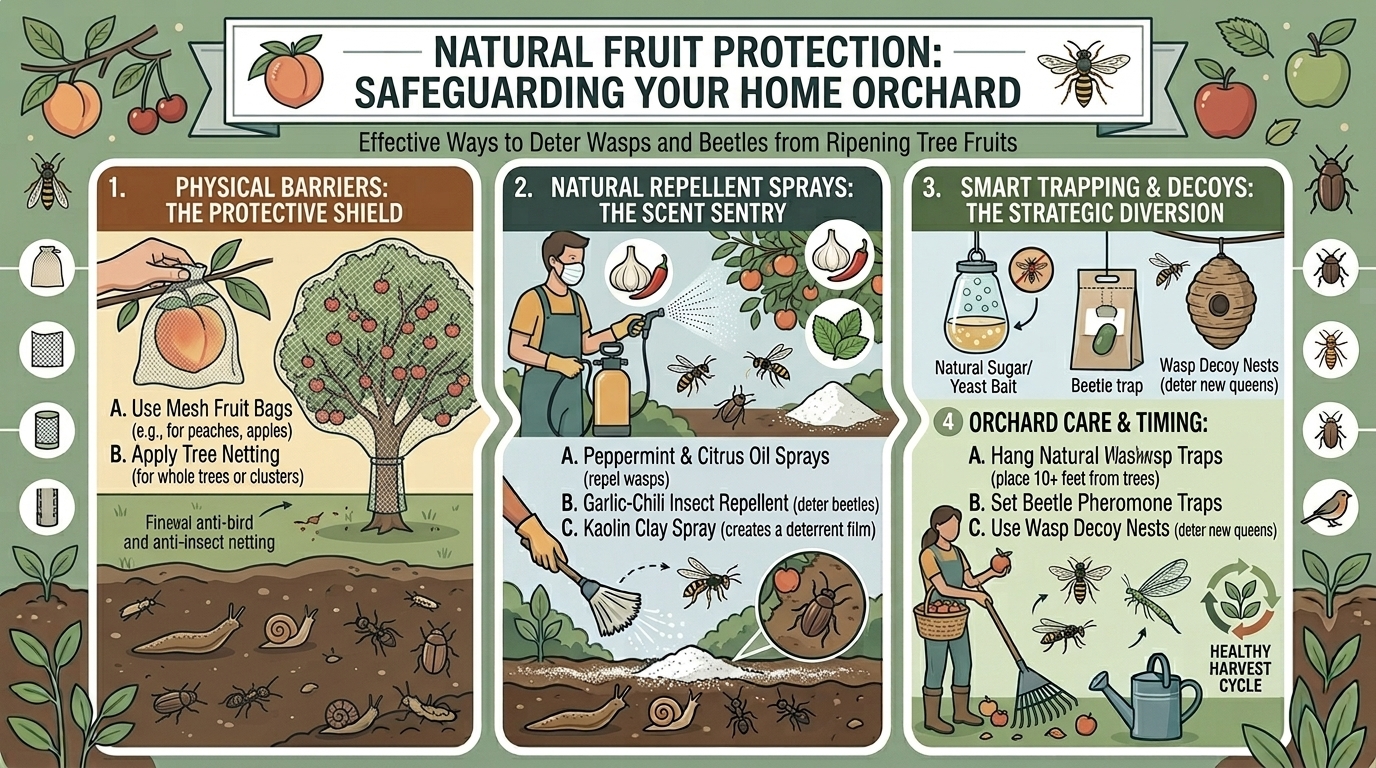
If you want absolute, bulletproof protection for your ripening tree fruits without spraying a single substance, physical exclusion bags are your best option.
What Are Fruit Protection Bags?
Often called “orchard sox” or fruit barrier bags, these are small, breathable mesh bags (made from organza, nylon, or fine mesh) equipped with a pull-string closure. They allow air, sunlight, and moisture to reach the developing fruit while creating an impenetrable physical barrier against wasps, beetles, moths, and birds.
How to Apply Them
- Thin Your Fruit First: When your fruit is still small (roughly the size of a nickel or quarter), thin out crowded clusters. Leave only one healthy fruit per cluster.
- Slip the Bag Over: Slide the mesh bag over the baby fruit and pull the drawstrings snug around the stem.
- Let Nature Do the Rest: As the fruit grows inside the protective pouch, it expands safely. By harvest time, your fruit will be unblemished, while pests completely ignore it because they cannot reach or smell the skin.
Strategy 2: Eco-Friendly Traps and Baits (Luring Pests Away)
Trapping works exceptionally well for mobile pests like wasps and beetles, diverting them away from your precious tree canopy.
1. DIY or Commercial Wasp Traps
- How they work: Wasps are drawn to sweet liquids and fermenting odors. You can purchase reusable plastic wasp traps or make a DIY version using a plastic two-liter soda bottle.
- DIY Wasp Trap Recipe: Cut the top third off a plastic soda bottle, invert it like a funnel, and tape it back into the bottom base. Pour in a sweet mixture of apple juice, a splash of dish soap (to break surface tension so they drown), and a piece of overripe fruit or jam. Hang the trap from a neighboring branch or fence post away from the fruit tree to lure scouts away from the canopy.
2. Soapy Water Knockdown for Japanese Beetles
- The Morning Routine: Japanese beetles are sluggish in the early morning cool hours. Take a bucket filled with water and a generous squirt of liquid dish soap, hold it beneath infested branches, and gently shake or tap the branches. The beetles will drop straight down into the soapy water and drown instantly.
Strategy 3: Natural Repellents and Essential Oil Sprays
While physical barriers and traps handle active populations, natural deterrent sprays can discourage pests from landing on your fruit trees in the first place.
1. Neem Oil and Horticultural Oils
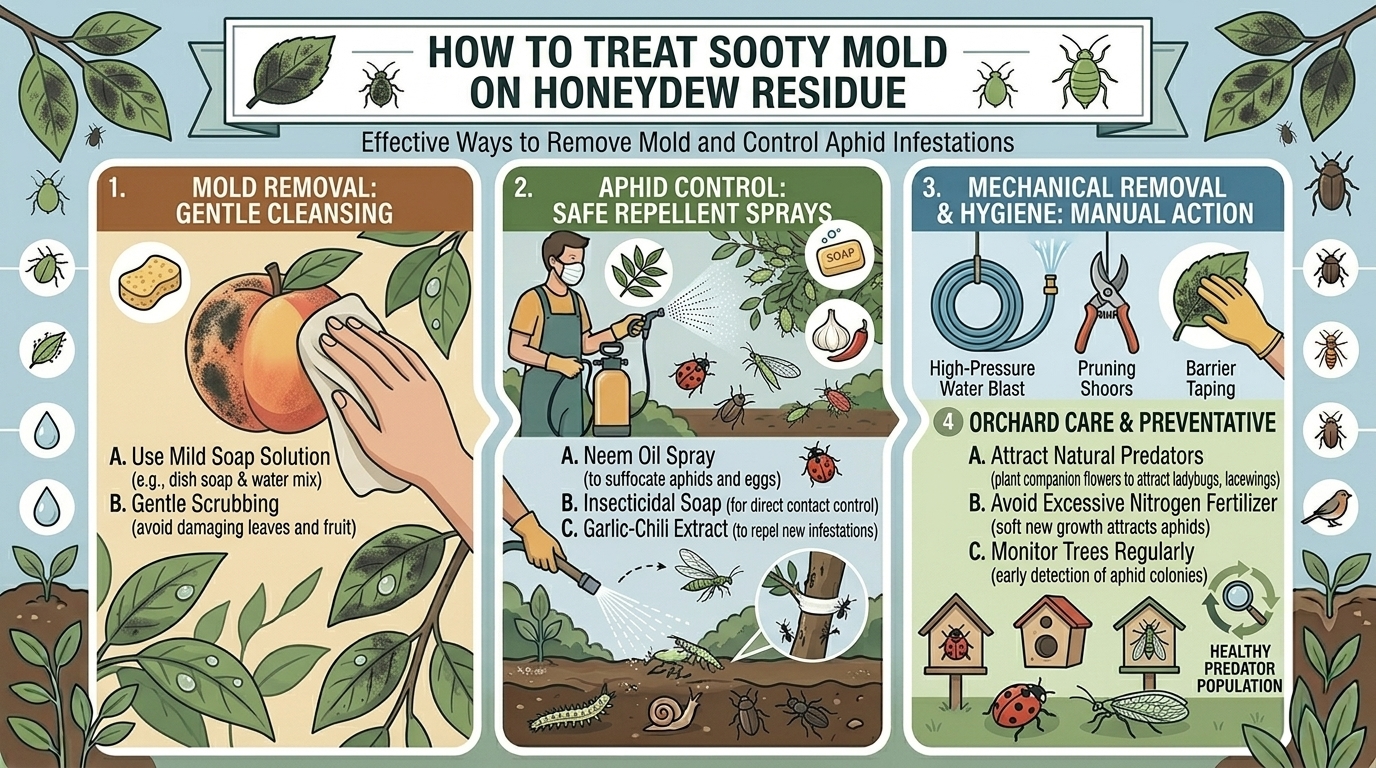
- What it does: Neem oil disrupts the feeding behavior and life cycle of beetles.
- Application Rule: Apply neem oil strictly early in the morning or late in the evening after direct sun has passed. Never spray trees with oil during high heat, or you risk scorching the foliage and fruit skin.
2. Peppermint and Garlic Botanical Sprays
- The Recipe: Blend several cloves of garlic with water, a tablespoon of organic liquid castile soap, and a few drops of pure peppermint essential oil. Strain the liquid into a garden sprayer.
- Why it works: Insects intensely dislike pungent sulfur compounds and strong mint aromas. Spraying this around the trunk and lower branches acts as an olfactory camouflage mask, hiding the sweet scent of ripening fruit.
Step-by-Step Seasonal Action Plan
Protecting your fruit trees requires a proactive calendar approach:
- Spring (Petal Fall): Inspect trees for early pest activity. Hand-pick overwintering beetles or grubs from the surrounding soil.
- Early Summer (Fruit Set): Thin your fruit clusters and immediately install mesh fruit protection bags over developing apples, peaches, and pears. Hang baited wasp traps around the perimeter of the orchard.
- Mid-to-Late Summer (Ripening Phase): Perform early morning bug shakes into soapy water. Check fruit bags weekly. Clean up any fallen, bruised fruit immediately so it doesn’t ferment on the ground and attract a secondary wave of pests.
- Autumn (Post-Harvest): Rake up all leaf litter, till the topsoil beneath the tree canopy to expose pupating beetles to predatory birds, and sanitize the area.
Frequently Asked Questions (FAQ)
1. Will fruit protection bags affect the ripening or color of my fruit?
No. High-quality organza or sheer nylon mesh bags allow maximum sunlight and airflow to pass through. Your fruits will color up and ripen naturally right inside their protective sleeves.
2. Do Japanese beetle bag traps actually work, or do they make things worse?
Commercial Japanese beetle pheromone bags use strong sex attractants and aggregation cues. While they catch thousands of beetles, studies show they often attract more beetles to your yard than they catch, drawing bugs from surrounding properties directly toward your fruit trees. It is generally recommended to place pheromone traps far away from your actual orchard, near property boundaries.
3. Are wasps beneficial to the garden in any other way?
Yes! Outside of their frustrating habit of eating ripening fruit, adult wasps are fierce carnivores that hunt down thousands of soft-bodied garden pests—including caterpillars, aphids, and grubs—to feed their young. The goal is not to eradicate all wasps from your property, but simply to exclude them from your fruit tree canopy.
4. Can I eat fruit that has been partially nibbled by wasps or beetles?
It is risky. Once the skin of a fruit is broken by a wasp or beetle, opportunistic bacteria, molds, and fruit flies quickly invade the wound. It is best to discard heavily damaged fruit into the compost or trash to prevent rot and disease spread.
5. Why do beetles attack some fruit trees while ignoring others?
Beetles are notoriously selective. They heavily target stone fruits (peaches, plums, cherries) and specific apple varieties with thin, sweet skins, while often leaving tart or thick-skinned varieties alone. Planting pest-resistant heritage cultivars can drastically reduce damage.
6. Will spraying water alone deter wasps from visiting my trees?
No, water will not deter wasps; in fact, during hot summer weather, wasps actively seek out moisture sources. However, strong jets of water can occasionally knock aphids and small beetle larvae off leaves, though it won’t stop adult flyers.
7. How do I protect large fruit trees where bagging every fruit is impossible?
If your tree is too massive to bag individually, focus your efforts on bagging the fruit on the lower, reachable branches. For the upper canopy, rely on a combination of perimeter wasp traps, morning beetle shaking, and applying organic kaolin clay sprays (which coat leaves and fruit in a powdery mineral film that insects hate to touch or eat).
8. Do bird netting options also keep out wasps and beetles?
Standard bird netting features mesh holes that are far too large to stop small insects like yellowjackets and Japanese beetles. If you want insect protection, you must use ultra-fine insect mesh netting or individual fruit-sleeve bags.
9. How do I dispose of trapped wasps safely?
If you use DIY bottle traps filled with soapy water, the wasps will already be dead. Simply seal the contents in a plastic trash bag and discard them. If using dry reusable container traps, submerge the sealed trap in a bucket of soapy water for 30 minutes before emptying to ensure live wasps cannot sting you.
10. Can companion planting around fruit trees deter beetles and wasps?
Yes! Planting strong-scented herbs and flowers like marigolds, mint, garlic, and lavender around the drip line of your fruit trees helps confuse pests with competing aromas and draws in beneficial predatory insects that prey on pest eggs.
Conclusion
Protecting your ripening tree fruits from destructive wasps and hungry beetles doesn’t require toxic chemicals or resigning yourself to a ruined harvest. By deploying physical fruit exclusion bags, setting up strategic perimeter traps, utilizing morning knockdown routines, and maintaining a clean orchard floor, you can enjoy a bountiful, pristine yield. Take control of your orchard ecosystem naturally, and savor the sweet reward of your hard work!