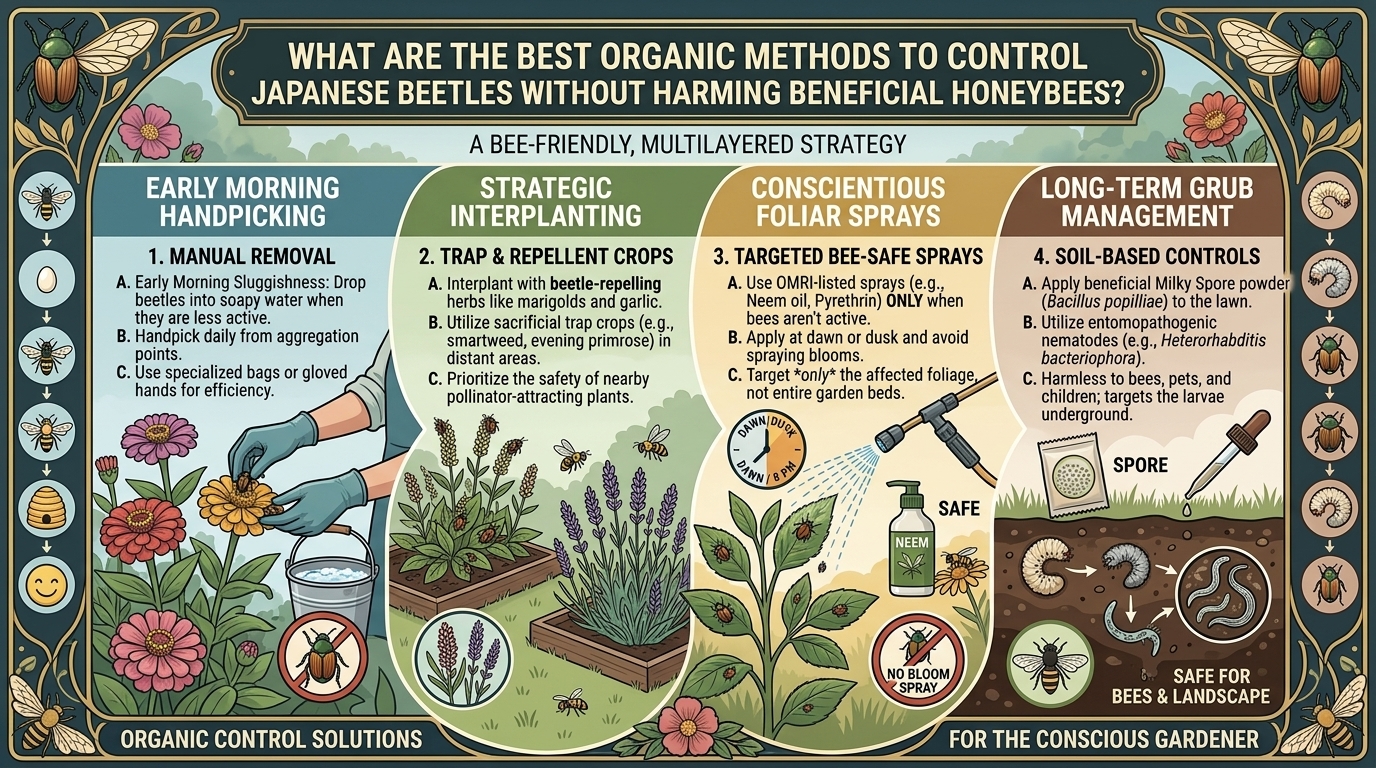
Welcome to kcplants.com, your ultimate digital hub for sustainable horticulture, eco-friendly pest control, and thriving organic gardens. Whether you are managing an urban garden in San Francisco, protecting backyard ornamentals across New York and Washington, or battling intense summer insect pressures throughout Texas and California, one metallic, bronze-and-green menace unites gardeners in frustration: the Japanese beetle (Popillia japonica).
When July and August arrive, these destructive beetles emerge in swarms, skeletonizing the leaves of over 300 plant species, including roses, fruit trees, raspberries, and ornamental shade trees. However, for organic gardeners, the challenge is twofold: how to eradicate an aggressive pest without deploying broad-spectrum synthetic insecticides that devastate beneficial honeybees, native pollinators, and vital soil ecosystems.
In this comprehensive, SEO-optimized guide, we will explore the biology of the Japanese beetle, examine why traditional traps often backfire, and detail the best organic, bee-safe methods to protect your landscape.
The Ecological Dilemma: Japanese Beetles vs. Honeybees
To design an effective control strategy, you must first understand the enemy’s life cycle and habits—and why indiscriminate spraying is a dangerous mistake.
The Japanese Beetle Life Cycle
Japanese beetles spend roughly ten months of the year underground as C-shaped white grubs feeding on turfgrass roots. In early summer, adult beetles pupate and emerge en masse to feed on plant foliage during the day, mate, and fly back to the soil to lay eggs. While the grubs destroy lawns, the adult beetles destroy above-ground foliage, devouring the soft tissue between leaf veins until only a delicate, lace-like skeleton remains.
Why Broad-Spectrum Chemical Sprays Fail Pollinators
Many commercial garden centers sell quick-fix synthetic sprays containing neonicotinoids or pyrethroids. While these chemicals kill Japanese beetles, they are equally toxic to honeybees, bumblebees, and beneficial predatory insects. Because honeybees forage on many of the same flowering plants that beetles attack, using toxic sprays creates collateral damage, collapsing local pollinator populations and leaving your garden without the bees required for fruit and vegetable production.
Regional Challenges Across Major Growing Zones
Climate and regional geography play a massive role in Japanese beetle distribution and severity:
- New York & Washington: Warm, humid summers provide optimal hatching conditions. Turfgrass is lush, supporting dense underground grub populations that emerge in huge numbers by mid-summer.
- Texas & California: While historically less widespread in certain arid zones, Japanese beetles have established strong footholds in irrigated urban and suburban landscapes, where well-watered lawns and abundant garden plants create ideal breeding habitats.
- San Francisco: Cooler maritime microclimates historically kept Japanese beetles at bay, but shifting weather patterns and imported nursery stock mean urban gardeners must remain vigilant against sudden localized outbreaks.
Top Bee-Safe, Organic Methods to Control Japanese Beetles
Implementing an effective organic management plan requires tackling both the underground grub stage and the adult beetle stage without disrupting honeybee foraging.
      [ Underground Stage ]  -->  Apply Beneficial Nematodes & Milky Spore (Targets Grubs)
                   ↓
      [ Above-Ground Stage ] -->  Hand-Picking & Neem Oil / Pyrethrin Spray (At Dusk)
1. Biological Control: Milky Spore (Paenibacillus popilliae)
Milky spore is a naturally occurring bacterium that specifically targets Japanese beetle grubs in the soil.
- How It Works: When grubs ingest the spores while feeding on grass roots, the bacteria multiply inside their bodies, killing them and turning the grub a milky-white color. As the dead grub decomposes, it releases millions of new spores into the soil.
- Bee Safety: 100% safe for honeybees, earthworms, pets, and humans because it targets only the specific beetle family.
- Application Tip: Apply milky spore powder to your lawn in the fall or spring. It builds up over several years, creating a self-sustaining biological barrier.
2. Beneficial Nematodes (Heterorhabditis bacteriophora)
If you want fast results against soil-dwelling grubs, microscopic beneficial nematodes are your best defense.
- How It Works: These microscopic, unsegmented roundworms seek out beetle grubs in the soil, enter their bodies, and release a symbiotic bacterium that liquefies the pest from the inside out within 48 hours.
- Bee Safety: Completely harmless to honeybees, plants, and mammals.
- Application Tip: Apply nematodes during warm, moist soil conditions (typically late summer or early fall) using a garden hose-end sprayer, watering thoroughly afterward to help them burrow into the soil.
3. Early Morning Hand-Picking
It sounds tedious, but hand-picking is surprisingly effective for small-to-moderate garden infestations.
- The Routine: Adult Japanese beetles are sluggish in the cool temperatures of early morning.
- Method: Walk your garden at dawn with a bucket filled with water and a squirt of liquid dish soap. Simply brush or flick the beetles directly into the soapy water; they cannot fly out and will quickly drown.
4. Strategic Timing of Organic Contact Sprays
If foliage damage becomes overwhelming, you can use organic sprays such as neem oil or azadirachtin (derived from the neem tree), or organic pyrethrin (derived from chrysanthemum flowers).
- The Golden Rule for Bee Safety: Never spray plants while honeybees are active. Apply organic sprays exclusively at dusk or dawn when bees have ceased foraging for the day. Pyrethrins break down rapidly in sunlight within 24 hours, minimizing residual risk to pollinators.
The Great Trap Debate: Do Japanese Beetle Traps Work?
One of the most common mistakes gardeners make is hanging commercially sold Japanese beetle bag traps in their yards.
- The Trap-Crop Phenomenon: These traps use powerful floral scents and sex pheromones to attract beetles from hundreds of yards away.
- The Catch: While the traps catch thousands of beetles, they attract ten times more to your property. Many of the incoming beetles stop and feed on your prized roses and fruit trees before ever reaching the trap, resulting in worse damage than if you had used no trap at all.
- Expert Recommendation: If you do use a pheromone trap, place it far away from the plants you want to protect—ideally at the absolute edge of your property line, downwind from your garden.
Comprehensive Tips for Long-Term Orchard and Garden Resilience
- Maintain Healthy Turf: Keep your lawn aerated and properly watered. Healthy grass roots recover much faster from grub feeding than stressed, dry turf.
- Diversify Plantings: Japanese beetles are notorious for favoring specific plants (like roses, hibiscus, and linden trees). Interplant resistant species such as boxwoods, hostas, columbines, and marigolds to break up feeding corridors.
- Use Row Covers: During peak beetle emergence weeks, cover vulnerable vegetable crops and young fruit bushes with lightweight, breathable insect netting. Ensure covers are secured tightly so crawling beetles cannot creep underneath.
Frequently Asked Questions (FAQ)
1. Do Japanese beetle traps actually attract more beetles to my garden?
Yes. Pheromone and floral scent traps are exceptionally strong attractants. They pull beetles from neighboring yards into your property, often increasing the overall feeding damage on nearby ornamental plants.
2. Is milky spore effective immediately upon application?
No. Milky spore requires time to establish and multiply within the soil ecosystem. It can take anywhere from one to three seasons to reach peak effectiveness, making it a long-term preventive strategy rather than an overnight cure.
3. Can I use neem oil safely without harming honeybees?
Yes, provided you apply it correctly. Spray neem oil in the evening after honeybees have finished foraging for the day. Avoid spraying open blossoms directly where bees feed to protect pollinators.
4. What is the safest time of day to apply organic beetle treatments?
Dusk or early dawn is always the best time. During these hours, honeybees are inactive inside their hives, and cooler temperatures prevent organic sprays from scorching tender plant foliage.
5. Do beneficial nematodes affect earthworms in my garden soil?
No. Beneficial nematodes (Heterorhabditis bacteriophora) specifically target insect pests like beetle grubs, flea beetle larvae, and root weevils, leaving beneficial earthworms unharmed.
6. Why do Japanese beetles prefer certain plants over others?
Japanese beetles are guided by olfactory cues and volatile compounds released by stressed or preferred host plants. They heavily favor plants with thin, sweet foliage like roses, raspberries, grapes, and linden trees.
7. Will chickens or ducks help control Japanese beetles?
Absolutely! If you raise backyard poultry, letting your chickens or ducks scratch through garden soil or lawns in early spring or fall is an incredible, natural way to eliminate overwintering grubs.
8. How long do adult Japanese beetles live during the summer?
An individual adult beetle typically lives for about 30 to 45 days. During this window, they feed voraciously, mate, and burrow into the soil to lay eggs before dying off by late summer.
9. Can I compost leaves that have been skeletonized by Japanese beetles?
Yes. Once the leaves drop or are pruned, you can safely add them to a hot compost pile. The decomposition process and microbial heat will break down the tissue without harboring surviving beetle pests.
10. Are there any companion plants that naturally repel Japanese beetles?
While no plant is 100% bulletproof, planting strong-scented herbs and flowers like garlic, chives, catnip, geraniums, and rue near susceptible crops can help confuse the beetles’ sense of smell and deter heavy feeding.
Conclusion
Controlling Japanese beetles without harming beneficial honeybees requires shifting your focus from quick chemical fixes to a sustainable, multi-step biological strategy. By targeting underground grubs with milky spore and beneficial nematodes, hand-picking morning arrivals, and applying bee-safe organic sprays strictly at dusk, you can protect your garden’s delicate ecosystem. Balancing pest management with pollinator protection ensures your landscape remains vibrant, buzzing with life, and blooming beautifully all season long.