How to Stop Ants from Farming Aphids on the Tender New Growth of Your Prized Garden Roses
Welcome to kcplants.com, your ultimate digital destination for expert gardening guides, sustainable pest management, and thriving plant care. Whether you are tending a delicate rose garden in the temperate climate of San Francisco, managing resilient blooms across California and Texas, or nurturing cold-hardy varieties in New York and Washington, spring and early summer bring a universal challenge: the destructive alliance between ants and aphids.
If you have ever noticed swarms of ants bustling up and down the stems of your prized garden roses—especially congregating around lush, tender new growth—you are witnessing one of nature’s most fascinating yet frustrating symbiotic relationships. Ants actively protect, transport, and “farm” aphids for their sweet, sugary secretions known as honeydew. Left unchecked, this partnership can decimate your rosebushes, causing stunted growth, curled leaves, and unsightly black sooty mold.
In this comprehensive, SEO-optimized guide, we will break down the science of this relationship, explore practical, organic, and chemical-free strategies to sever the connection, and share expert tips tailored to gardeners across diverse climates.
The Ecological Alliance: Why Ants Farm Aphids
To defeat an enemy, you must first understand it. To the casual observer, ants crawling over rosebuds might look like predators attacking pests. In reality, the exact opposite is happening: the ants are acting as dairy farmers, and the aphids are their livestock.
1. What is Honeydew?
Aphids feed on the nutrient-rich phloem sap of tender rose stems and leaves. Because plant sap is heavily packed with sugars and relatively low in essential amino acids, aphids must consume massive quantities of it to extract enough protein. They excrete the excess sugary liquid as a sticky substance called honeydew.
2. The Mutualistic Relationship
Ants have an insatiable sweet tooth and consider honeydew a high-energy delicacy. To secure a steady supply, worker ants provide protection and services to the aphid colonies:
- Predator Defense: Ants fiercely protect aphids from natural predators like ladybugs, lacewings, hoverfly larvae, and parasitic wasps. If a ladybug lands on a rose stem, aggressive ants will swarm and knock it off.
- Transportation: Some species of ants will physically pick up aphid eggs or nymphs and carry them to fresh, untouched parts of the rosebush when food supplies run low or when overcrowding occurs.
- Hygiene and Shelter: Certain ant species even build protective mud shelters over aphid colonies or move them underground during harsh weather to ensure their “livestock” survives.
The Toll on Your Garden Roses
When ants successfully farm aphids on your roses, the consequences compound quickly:
- Stunted Growth & Deformed Buds: A heavy concentration of sap-sucking aphids drains the plant’s vitality, causing new rose shoots to twist, curl, and fail to open properly.
- Sooty Mold Outbreak: The sticky honeydew dripping down the stems and lower leaves creates an ideal breeding ground for black sooty mold. While this mold doesn’t directly infect the plant tissue, it blocks sunlight, shutting down photosynthesis and weakening the rosebush.
- Viral Transmission: As aphids move from plant to plant, they can transmit destructive plant viruses, compounding the stress on your garden.
Regional Challenges Across Major Growing Zones
Gardening conditions vary drastically depending on where you live. Here is how regional climates influence the ant-aphid dynamic:
- Texas & California: Warm winters and early springs mean aphid populations hatch and multiply much earlier in the season. Extended periods of drought also stress rosebushes, making them far more susceptible to sudden insect explosions.
- New York & Washington: High moisture, spring rains, and rapid temperature fluctuations create explosive bursts of soft, tender green growth—prime real estate for early-season aphid colonization.
- San Francisco: Coastal marine layers and cool, damp microclimates can slow down biological predators like ladybugs, giving farming ants an advantage in protecting their aphid herds early in the growing year.
Step-by-Step Strategy: How to Break the Ant-Aphid Cycle
To stop ants from farming aphids, you must tackle both ends of the partnership simultaneously. Targeting only the aphids often fails because the ants will simply restock the colony or defend the survivors.
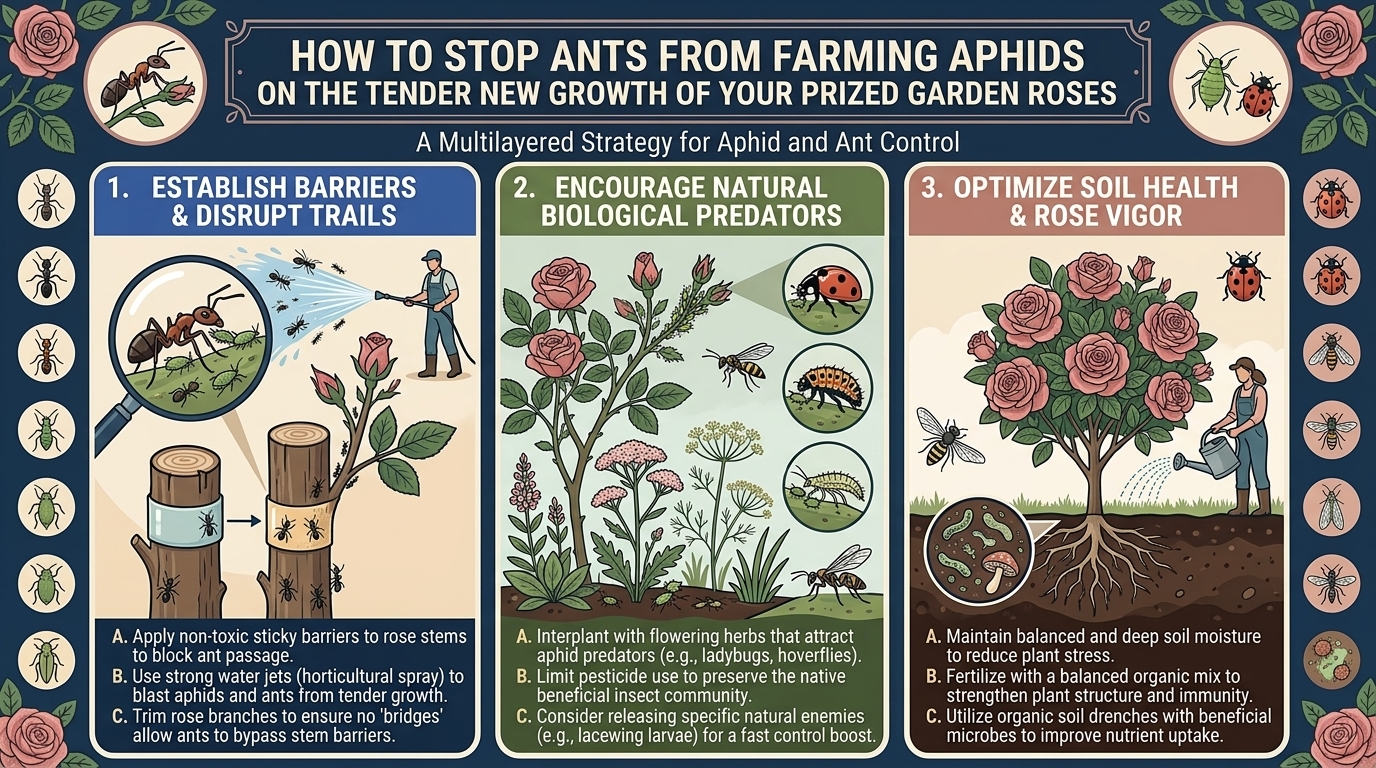
      [ Step 1: Physical Barriers ]  -->  Apply Tanglefoot / Sticky Barrier to canes
                   ↓
      [ Step 2: Eliminate Aphids ]   -->  Blast with water or spray organic insecticidal soap
                   ↓
      [ Step 3: Discourage Ants ]    -->  Remove debris, mulch properly, and use natural deterrents
Step 1: Cut Off Access with Sticky Barriers
Since most ants must climb up the main canes of the rosebush to reach the upper foliage, blocking their pathway is the single most effective way to cut off their supply line.
- Application: Wrap the lower woody base of the rose canes with a protective band of horticultural tape or heavy paper wrap, then coat it with a sticky barrier product like Tanglefoot.
- Pro Tip: Never apply sticky substances directly to the green bark of a rose stem, as it can damage the delicate tissue. Always use a protective barrier layer underneath.
Step 2: Dislodge and Destroy the Aphids
Once the ants are blocked from protecting the aphids, you can easily sweep away the remaining pests using natural methods:
- The High-Pressure Water Blast: Take a garden hose fitted with a high-pressure nozzle and thoroughly spray the infested tips and undersides of the leaves. Many aphids will be washed away and unable to climb back up.
- Insecticidal Soap or Neem Oil: Spray affected areas with organic potassium salts of fatty acids (insecticidal soap) or cold-pressed neem oil. Ensure complete coverage, as these sprays work on contact.
Step 3: Disrupt Ant Nesting Sites Near the Roots
Ants often nest directly in the rich, loose soil surrounding heavily amended rosebeds.
- Diatomaceous Earth (DE): Dust food-grade diatomaceous earth around the base of the rosebushes and over dry soil surfaces. The microscopic sharp particles damage the exoskeletons of crawling insects, dehydrating and deterring ants.
- Essential Oil Sprays: Ants despise strong aromatic scents. Spraying a diluted mixture of peppermint oil, water, and a drop of dish soap around the base of the plant will disrupt their scent trails.
Comprehensive Troubleshooting Tips for Healthy Roses
- Avoid Over-Fertilizing with Nitrogen: High-nitrogen fertilizers trigger a massive flush of tender, succulent green growth. While this looks lush, it is exceptionally high in amino acids and sugars, creating an irresistible buffet for aphids. Balance your fertilizers with adequate phosphorus and potassium.
- Encourage Beneficial Insects: Plant companion flowers nearby—such as sweet alyssum, marigolds, dill, fennel, and yarrow—to attract natural predators like hoverflies, ladybugs, and parasitic wasps that feed on aphids.
- Prune Crossing Canes: Proper air circulation keeps rose foliage dry and healthy, reducing stress and making it easier to spot early infestations.
Frequently Asked Questions (FAQ)
1. Do ants actually eat my rose flowers?
No, garden ants do not eat rose petals or foliage. They are strictly visiting your roses to harvest the sweet honeydew produced by the aphids and to protect their “livestock.”
2. Will getting rid of the ants make the aphids disappear on their own?
Not entirely, but it makes them dramatically easier to control. Without ants guarding them, aphid populations quickly fall prey to natural predators like ladybugs, birds, and lacewings.
3. Can I use household borax to kill the ants around my roses?
You can create a DIY bait using borax, sugar, and water, but use it with extreme caution. Borax is a form of boron, and excess boron can easily build up in garden soil and become toxic to sensitive rose roots. Commercial ant baits placed in protective stations are safer for your plants.
4. Why are aphids worse on new rose growth?
Tender new growth has softer cell walls and a higher concentration of sweet phloem sap, making it much easier for aphids to pierce the plant tissue and feed efficiently.
5. Does soapy water hurt my rosebushes?
Mild dish soap or specialized horticultural soap mixed with water is safe for roses when applied in the early morning or evening. Avoid spraying in direct, intense midday sunlight, as the soap combined with heat can scorch the leaves.
6. Are there specific rose varieties that are resistant to aphids?
While no rose is entirely immune, modern disease-resistant shrub roses and certain heavily scented heirloom varieties often possess tougher leaf cuticles that make it harder for sap-sucking pests to feed.
7. How often should I reapply sticky barriers like Tanglefoot?
Check your sticky barriers every week or two. Over time, windblown dust, pollen, and tiny debris can coat the sticky surface, creating a bridge that ants can walk right across. Clean and reapply as needed.
8. Can ants damage the roots of my rosebushes?
Some species of mound-building ants can loosen the soil around a root system or dry out the root zone, but the primary threat to roses remains their symbiotic relationship with sap-sucking pests.
9. Will ladybugs solve an aphid problem if ants are present?
Usually, no. Ants are fiercely territorial and will actively attack, bite, and drive away ladybugs and other beneficial insects before they can consume the aphids. You must disrupt the ants first.
10. Is Neem oil safe to use during the blooming season?
Neem oil is generally safe, but you should always apply it in the evening after honeybees and other pollinators have finished foraging for the day. Avoid spraying open blossoms directly to prevent petal damage.
Conclusion
Stopping ants from farming aphids on your garden roses is a game of breaking a partnership. By combining physical barriers like sticky bands to block the ants, organic sprays to clear out the aphid herds, and smart cultural practices like balanced feeding, you can reclaim your garden. Protecting your roses means breaking their supply chain—leaving your blooms free to grow strong, healthy, and breathtakingly beautiful all season long.