How to Use Companion Planting Onions and Carrots Together to Confuse Root-Boring Fly Pests Naturally
Welcome to kcplants.com, your ultimate digital destination for sustainable gardening, organic crop protection, and time-tested companion planting strategies. Whether you are managing a backyard vegetable patch across the varied microclimates of California and Texas, planting cool-season crops in New York and Washington, or cultivating an urban garden plot in San Francisco, one of the most frustrating challenges for root-crop growers is the stealthy carrot rust fly (Psila rosae).
When it comes to growing sweet, crisp carrots, nothing ruins a harvest faster than discovering your prized roots riddled with rusty-brown tunnels carved out by subterranean fly larvae. Fortunately, organic gardeners don’t need toxic chemical pesticides to win this battle. By turning to nature’s oldest alliance—interplanting onions and carrots together—you can create a powerful, scent-masked ecosystem that naturally confuses pests and protects your harvest.
In this comprehensive, SEO-optimized guide, we will explore the science behind allium-carrot companion planting, examine how scent masking works, and provide a step-by-step masterclass on how to design a borer-proof garden bed.
The Ecological Science: Why Onions and Carrots Are Natural Partners
Companion planting is more than just an old folklore tradition; it is grounded in botany, biochemistry, and insect ecology. When you grow onions (and other members of the Allium family, such as garlic, leeks, and chives) right next to carrots (Daucus carota), a brilliant chemical defense mechanism takes place.
1. Olfactory Confusion (The Scent-Masking Effect)
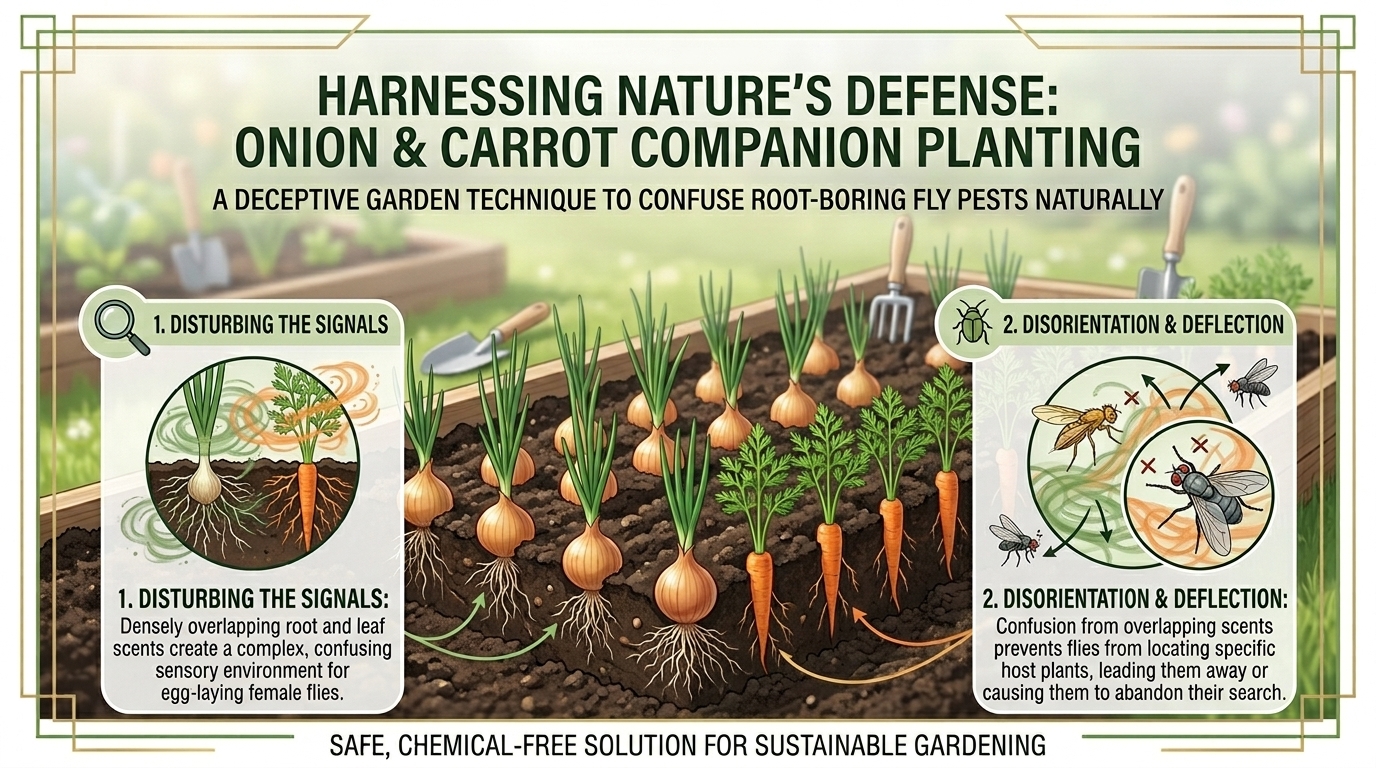
Insects do not wander blindly through the garden; they use their highly sensitive antennae to locate host plants via scent molecules, known as volatile organic compounds (VOCs).
- The Carrot Scent: Female carrot rust flies search for the distinct, spicy aroma of fresh carrot foliage to find a place to lay their eggs in the soil right next to the taproot.
- The Onion Shield: Onions and garlic emit powerful, pungent organosulfur compounds. When planted in close proximity, the heavy allium odor completely overpowers and masks the delicate scent of the carrots. Flying pests become disoriented, unable to sniff out their target host.
2. Mutual Pest Repulsion
Beyond protecting the carrots from flies, the pairing also benefits the alliums. Carrots provide a dense, living ground cover that helps shade the soil around onion roots, helping retain soil moisture and suppressing weeds. It is a textbook example of synergistic polyculture where neither plant competes aggressively for the exact same root zone depth or nutrient profile.
The Enemy: Understanding the Carrot Rust Fly
To appreciate why this companion planting method works, you must understand the pest you are trying to deter.
The Life Cycle of the Root-Boring Fly
The carrot rust fly overwinters as a pupa in the soil. In spring, adult flies emerge and mate. The females fly low to the ground—rarely rising above two feet—searching for young carrot seedlings.
- The Damage: Once they locate a carrot plant, they lay eggs in the soil near the base. When the larvae hatch, they burrow underground, chewing through the tender skin and tunneling deep into the flesh of the carrot root.
- The Aftermath: Infested carrots turn a rusty color, develop dark, corky channels, and rot easily in storage.
Because adult flies fly low and hunt by smell, an interplanted barrier of tall, pungent onions blocks their flight path and hides the scent simultaneously.
Regional Growing Challenges Across Major Zones
Climate and regional pest pressures vary significantly, influencing how you time your onion-carrot intercropping:
- New York & Washington: Cool, moist springs and damp soils create ideal conditions for emerging carrot rust flies. Spring plantings benefit immensely from establishing a strong allium border early in the season.
- Texas & California: Warmer southern soils mean multiple generations of root pests can hatch throughout an extended growing season. Intercropping helps maintain natural pest control without relying on heat-degraded chemical sprays.
- San Francisco: Coastal fog and moderate temperatures can prolong pest activity. Utilizing tight, alternating rows of alliums and carrots maximizes space in urban gardens while keeping subterranean bugs at bay.
Step-by-Step Guide: How to Interplant Onions and Carrots
Throwing a few seeds haphazardly into a bed won’t maximize your protection. Follow this strategic layout for optimal results:
      [ Onion Row ]  (Pungent sulfur barrier)
      [ Carrot Row ] (Protected sweet roots)
      [ Onion Row ]  (Pungent sulfur barrier)
      [ Carrot Row ] (Protected sweet roots)
Step 1: Design an Alternating Row Layout
Instead of planting large, solid blocks of single crops (monoculture), alternate your rows. Plant one row of carrots, followed immediately by a tight row of bunching onions, green onions, or sets, keeping them roughly 4 to 6 inches apart.
Step 2: Staggered Spacing and Thinning
Carrots need room to expand into straight roots, while onions require space for bulb development.
- Space carrot seeds about 2 inches apart within the row.
- Intersperse onion sets or small garlic cloves between the carrot spacing, or alternate entire parallel rows.
- Crucial Tip: When thinning your carrot seedlings, do it on a calm evening and immediately clear away the pulled carrot foliage. Crushed carrot greens release a potent scent cloud that acts like a dinner bell for adult rust flies. Dispose of the greens in a sealed compost bin or bury them deep.
Step 3: Soil Preparation and Organic Amendments
Both onions and carrots thrive in loose, well-draining, rock-free soil. Compacted or stony soil causes carrots to fork and deform, making them much more vulnerable to pest entry points. Work in plenty of aged compost and coarse sand to ensure a loose root zone.
Comprehensive Tips for Maximum Pest Defense
- Use Floating Row Covers for Early Season Protection: During the peak flight window of early spring, cover your newly planted bed with a lightweight, breathable floating row cover. Secure the edges tightly with soil. Once the plants are established, you can remove the cover, relying on your onion scent barrier.
- Practice Crop Rotation: Never plant carrots or onions in the exact same garden bed two years in a row. Rotate them to a different section of your garden to break the pest life cycle in the soil.
- Harvest Cleanly: When harvesting mature carrots in the fall, remove all leftover roots and debris from the soil. Decaying plant matter attracts overwintering pests for the following year.
Frequently Asked Questions (FAQ)
1. Do onions stunt the growth of nearby carrots?
No. While they grow close together, onions have shallow, compact root systems, whereas carrots develop a deeper taproot. They occupy different soil layers and do not compete heavily for nutrients or water.
2. Can I use store-bought yellow onions or green onion sets for companion planting?
Yes! You can plant onion sets (small immature bulbs), green onion (scallion) seeds, or chives. Chives are particularly great because they are perennial and act as a permanent fragrant border around your carrot beds.
3. Will the onions make my carrots taste like garlic or onions?
Not at all. While the underground chemical defense compounds help deter pests from tunneling into the roots, they do not transfer flavor. Your carrots will retain their naturally sweet, crisp taste.
4. What other pests do onions deter from carrots?
Beyond the carrot rust fly, the strong sulfur aroma of onions helps repel aphids, flea beetles, and even certain small mammalian herbivores like rabbits and voles that dislike intense allium scents.
5. How close together should I plant the onions and carrots?
You can plant them in alternating rows spaced 4 to 6 inches apart, or even mix onion sets directly into the same seed row interspersed every few inches between carrot seeds.
6. Are there specific carrot varieties that are more resistant to rust flies?
Yes. Varieties like ‘Flyaway’, ‘Healthmaster’, and ‘Major’ have been bred with tougher woodier cores or specific chemical profiles that make it much harder for fly larvae to tunnel through them.
7. When is the best time of year to plant onions and carrots together?
In most temperate regions, plant them in early spring as soon as the soil can be worked. In milder climates like California and Texas, you can also plant a second late-summer or fall crop.
8. Why is thinning carrots so risky when rust flies are active?
Pulling up excess carrot seedlings breaks plant cells, releasing a strong plume of sweet carrot terpenes into the air. Adult rust flies can smell this from a distance, so always thin gently and dispose of greens immediately.
9. Can I grow garlic instead of onions with my carrots?
Absolutely! Garlic (Allium sativum) is an exceptional companion for carrots. Its intense allicin compounds provide an even stronger scent barrier against subterranean pests.
10. Do raised beds help prevent carrot rust fly infestations?
Yes. Raised beds improve soil drainage (preventing rot) and elevate your crops slightly above the ground level where low-flying rust flies cruise, reducing overall infestation rates.
Conclusion
Companion planting onions and carrots together is a masterclass in organic garden design. By harnessing the power of olfactory confusion and natural scent masking, you can protect your sweet, crisp carrot roots from destructive root-boring flies without ever touching a synthetic pesticide. Whether you are managing an urban plot or a sprawling backyard homestead, this simple, beautiful intercropping method ensures a bountiful, borer-free harvest season after season.