What Are the Best Natural Options for Controlling Weed and Grass Growth Between Patio Paving Stones?
Welcome to kcplants.com, your ultimate resource for sustainable outdoor living, eco-friendly landscape design, and natural yard maintenance. Whether you are tending a sun-baked backyard patio in Texas or California, managing a damp, moss-prone courtyard in Washington or New York, or maintaining an urban hardscape in San Francisco, there is one universal chore that frustrates every homeowner: weeds and grass sprouting between patio pavers.
There is nothing quite like a pristine, professionally laid stone patio. Unfortunately, wind-blown seeds, creeping grasses, and resilient dandelions quickly turn those neat grout lines into a chaotic green fringe. While traditional chemical weed killers like glyphosate offer a quick fix, they pose serious risks to nearby garden beds, groundwater, pets, and beneficial pollinators.
In this comprehensive, SEO-optimized guide, we will explore the best natural, eco-friendly methods to clear, kill, and permanently prevent weeds and grass from reclaiming your patio paving stones.
Why Paver Joints Become Weed Havens
To control patio weeds effectively, you must understand how they arrive and thrive in such harsh conditions:
- Wind and Wildlife Transport: Birds drop seeds, and passing winds carry lightweight dandelion, crabgrass, and thistle seeds directly into the tiny gaps between your pavers.
- Organic Accumulation: Over time, dust, pollen, decaying leaves, and organic debris settle into the joints, breaking down into a rich, fertile soil layer that acts like a miniature planter box.
- Moisture Trapping: Patio joints retain moisture during morning dews and rains, providing the hydration weed seeds need to germinate rapidly during spring and summer.
Regional Hardscape Challenges Across Major Zones
Climate heavily influences how aggressively weeds and grasses invade patio stones:
- Texas & California: Intense summer heat causes standard sand joints to shrink, crack, and dry out, creating wide crevices where stubborn taproot weeds and drought-resistant grasses wedge themselves deeply.
- New York & Washington: High seasonal humidity, frequent rains, and freezing winter cycles cause joint sand to wash away entirely. This damp environment encourages not just weeds, but also stubborn moss and algae growth.
- San Francisco: Cool maritime air and persistent fog keep hardscapes damp, creating an ideal microclimate for moss, lichen, and shallow-rooted grasses to flourish in shady patio corners.
Top Natural Methods for Killing Patio Weeds
When tackling established weeds between pavers, you want methods that destroy the plant down to the root without staining your stone or poisoning your surrounding soil.
      [ Step 1: Thermal or Acidic Shock ] -->  Boiling Water or Horticultural Vinegar
                   ↓
      [ Step 2: Mechanical Removal ]      -->  Weed Wand, Wire Brush, or Pressure Washer
                   ↓
      [ Step 3: Permanent Sealing ]       -->  Polymeric Sand to Block Future Growth
1. Thermal Weed Control (Boiling Water)
One of the simplest, cheapest, and most environmentally friendly weed killers is sitting right in your kitchen.
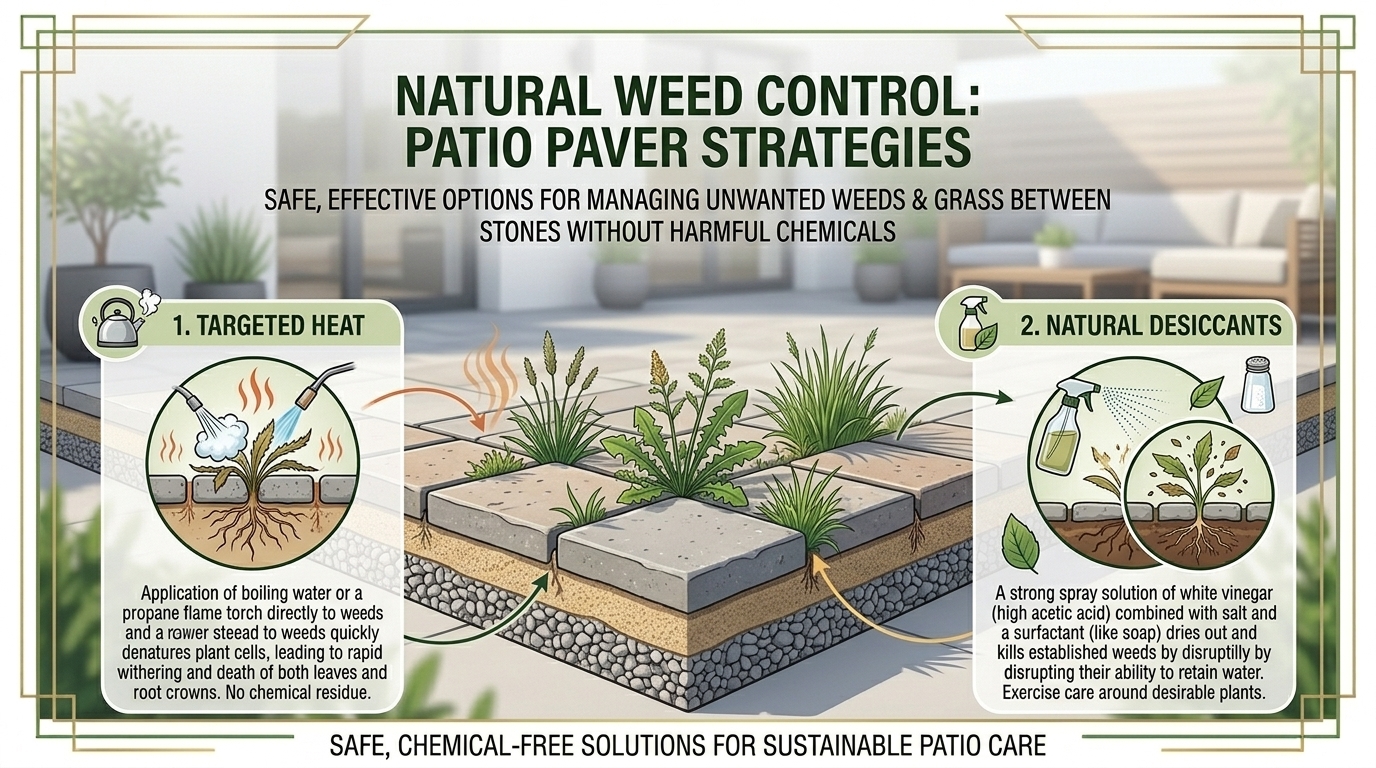
- How It Works: Pouring a kettle of rolling boiling water directly over weeds and grass thermal-shocks the plant tissue, instantly rupturing cell walls and killing delicate roots.
- Best Used For: Quick spot treatments of young weeds in small patio areas.
- Tip: Add a tablespoon of regular dish soap to the boiling water to help it stick to waxy weed leaves.
2. Horticultural Vinegar Spray
Standard household vinegar (5% acidity) works slowly on tiny weeds, but for established patio invaders, you need horticultural vinegar (20% to 30% acetic acid).
- How It Works: The high acid concentration acts as a powerful contact herbicide, burning the foliage on contact within hours on a sunny day.
- Safety Note: Horticultural vinegar is a strong acid. Wear gloves, safety glasses, and a mask when spraying, as it can irritate skin and eyes. Avoid getting it on nearby prized garden plants.
3. Natural Salt and Dish Soap Mixture
For areas where you want to ensure no plant life grows ever again (such as deep driveway cracks or non-porous stone patios):
- The Recipe: Mix 1 gallon of white vinegar, 1 cup of regular table salt (or Epsom salt), and 1 tablespoon of liquid dish soap.
- How It Works: Salt dehydrates the soil and prevents future germination, while vinegar burns existing foliage.
- Warning: Never use this mixture near garden beds, lawns, or tree root zones, as salt permanently ruins soil fertility and prevents future growth.
4. Mechanical Eradication (The Old-Fashioned Way)
Sometimes, physical force is the most satisfying and foolproof method.
- Tools: Invest in a long-handled paver weeding knife (a specialized L-shaped blade), a stiff-bristled wire brush, or an upright weed-pulling wand.
- Technique: After a soaking rain or after saturating the patio with a hose, the soil softens, allowing you to hook and pull out deep taproots (like dandelions) entirely intact.
Permanent Prevention: How to Stop Weeds from Coming Back
Killing current weeds is only half the battle. If you leave empty joints behind, new seeds will sprout within weeks. The secret to permanent paver weed control is joint stabilization.
1. The Power of Polymeric Sand
Polymeric sand is the ultimate weapon against patio weeds. It is a specialized blend of graded fine sand and safe organic or synthetic polymers.
- Application: Sweep the dry polymeric sand thoroughly into all clean patio joints until they are filled to just below the stone bevel. Compact the pavers gently, blow off any excess dust from the stone surface, and mist the patio lightly with water.
- How It Works: When activated by water, the polymers bind the sand grains together into a dense, rock-hard mortar-like seal. Weeds cannot push through it, ants cannot tunnel through it, and heavy rains cannot wash it away.
2. Joint Sand Maintenance and Re-sanding
If your patio was installed with standard joint sand, inspect it annually. Sweep in fresh sand mixed with a bit of crushed lava rock or thyme seed (if you prefer a living green ground-cover patio) to maintain a tight barrier.
Comprehensive Troubleshooting Tips for Hardscape Care
- Avoid High-Pressure Washing Without Caution: While pressure washers blast away dirt and weeds instantly, using too much pressure will blow out the protective joint sand beneath your pavers, leaving massive gaps for future weeds. If you use a pressure washer, re-sands the joints afterward.
- Embrace Living Ground Covers: Instead of fighting nature, convert your patio joints into a feature! Plant low-growing, traffic-tolerant fragrant herbs like creeping thyme, Roman chamomile, or dichondra between pavers. They choke out weeds naturally, smell wonderful when stepped on, and tolerate foot traffic beautifully.
- Sweep Regularly: Make it a habit to run a stiff push broom across your patio once a week. Sweeping removes organic dust and drifting seeds before they ever get a chance to take root.
Frequently Asked Questions (FAQ)
1. Will boiling water damage concrete or natural stone pavers?
No. Standard boiling water is completely safe for concrete pavers, bluestone, flagstone, slate, and brick. It cools rapidly upon contact and leaves zero chemical residue.
2. Is horticultural vinegar safe for pets and wildlife?
When wet, high-concentration vinegar can irritate the paws of pets. Keep dogs and cats indoors while you spray, and let the patio dry completely (usually 2 to 3 hours) before letting pets walk on it again.
3. Why do weeds keep coming back even after I pull them out?
If you snap a weed off at the surface instead of pulling out the entire root crown, the plant will quickly regenerate from underground food reserves. Furthermore, empty unsealed joints invite fresh wind-blown seeds.
4. Can I use salt to kill weeds on a patio made of natural stone?
Use caution. While salt is effective, heavy run-off from a salted patio can seep into adjacent lawn areas or flower beds, killing your grass and desirable plants. Avoid salt near garden borders.
5. What is the difference between regular sand and polymeric sand?
Regular sand is loose and easily washed away by rain or displaced by ants, creating open gaps for weed seeds. Polymeric sand contains binding polymers that harden when activated with water, creating a solid barrier against weeds.
6. Do weed torches (propane flamers) work well on patios?
Yes! Propane weed torches are fantastic for instantly boiling the water inside weed leaves, causing them to wither and die within a day. They are 100% chemical-free, though you should avoid using them on wooden decks or near dry summer brush.
7. How often should I seal my patio joints with polymeric sand?
Depending on your regional weather and foot traffic, high-quality polymeric sand lasts anywhere from 3 to 5 years before minor touch-ups or re-application become necessary.
8. Will dish soap alone kill grass growing between pavers?
Dish soap acts as a surfactant, breaking down the waxy cuticle of plant leaves, but by itself, it rarely kills a well-established grass root system. It works best when combined with boiling water or vinegar.
9. Can I plant creeping thyme between my pavers instead of sand?
Yes! Creeping thyme is a stunning, hardy ground cover that thrives in narrow stone gaps, handles light foot traffic, releases a pleasant fragrance when crushed, and naturally crowds out unwanted weeds.
10. Does shade make patio weed growth worse?
Shady, damp patios (common in San Francisco or Washington) are more prone to moss, algae, and shallow weeds because moisture lingers longer. Ensuring proper patio slope drainage and sweeping regularly helps minimize shade-loving growth.
Conclusion
Keeping your patio paving stones free of weeds and grass doesn’t require toxic chemicals that harm your yard or family. By utilizing thermal shocks like boiling water, contact treatments like horticultural vinegar, and permanent physical barriers like polymeric sand, you can maintain a pristine, beautiful outdoor living space effortlessly. Whether you are enjoying a sunny afternoon in Texas or a crisp evening in New York, a clean hardscape enhances your entire home ecosystem.