How to Keep Chipmunks From Eating Your Sprouting Bean Seeds in Outdoor Raised Garden Beds
Few things frustrate a gardener more than planting a fresh row of green beans, waiting eagerly for emergence, and finding nothing but small, dug-up holes in your raised garden beds. Chipmunks (Tamias) are notoriously clever burrowers and hoarders. Newly direct-sown bean seeds and tender young sprouts are prized targets because they are nutrient-dense, high in protein, and easy to extract from loose, fluffy potting soil.
Whether you are managing suburban backyard garden beds in Texas or New York, suburban plots across Washington and California, or compact urban micro-gardens in San Francisco, protecting your spring crops requires a mix of physical barriers, sensory repellents, and smart planting techniques.
At KC Plants, we advocate for humane, chemical-free methods that safeguard your harvest without harming urban wildlife or contaminating your garden soil.
1. Physical Barriers (The Gold Standard)
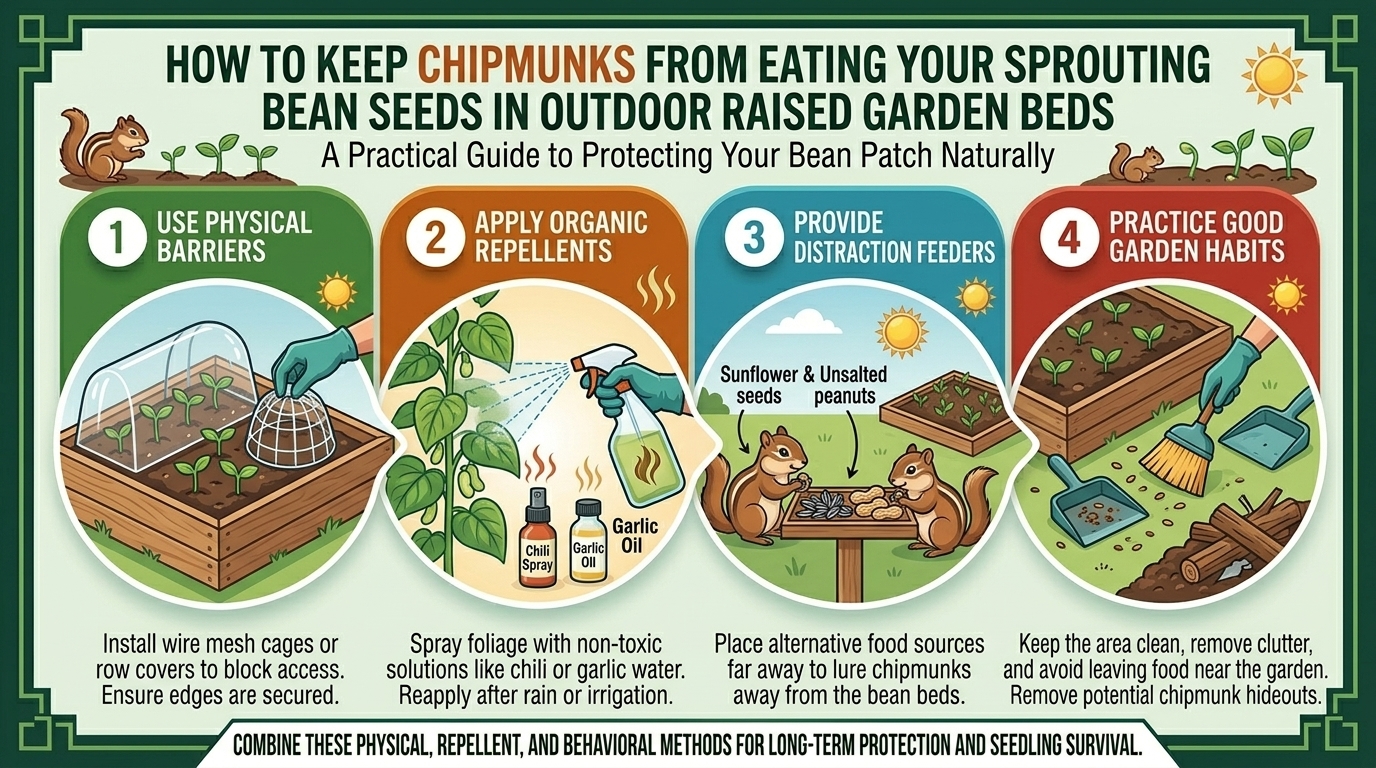
When it comes to small, agile rodents like chipmunks, physical exclusion is the single most reliable deterrent. Because bean seeds only need protection during their vulnerable 10-to-14-day germination window, temporary physical barriers work exceptionally well.
Hardware Cloth and Mesh Covers
- 1/4-Inch Hardware Cloth: Lay a sheet of galvanized 1/4-inch hardware cloth flat across the soil surface immediately after sowing bean seeds. Secure it with landscape staples. Sprouting stems can push up through the mesh, but chipmunks cannot dig past it to steal the seed cotyledons. Remove the mesh once sprouts develop 2 to 3 true leaves.
- Hardware Cloth Cloches: Build simple wire mesh boxes or domes to place over individual rows or raised bed quadrants.
Floating Row Covers and Insect Netting
Tightly woven fabric row covers suspended over wire hoops prevent chipmunks from hopping into the bed altogether. Ensure the edges are firmly weighted down with bricks, timber, or soil so pests cannot slip underneath.
2. Sensory Repellents and Natural Scents
Chipmunks rely heavily on their sense of smell to locate buried seeds. Masking the scent of sprouting beans or creating an unpleasant environment forces them to forage elsewhere.
| Deterrent Type | Ingredients / Method | Reapplication Frequency |
| Capsaicin Spray | Hot pepper sauce, cayenne powder, liquid soap, and water sprayed on soil. | After every rainfall or heavy watering. |
| Blood Meal | Nitrogen-rich organic soil amendment sprinkled over soil surfaces. | Weekly; double benefit as a soil fertilizer. |
| Predator Urine | Commercial fox or bobcat urine granules applied around bed perimeters. | Every 10 to 14 days. |
| Castor Oil Repellent | Liquid castor oil mixed with dish soap and sprayed over soil. | Every 2 weeks during peak germination. |
3. Alternative Planting Strategies
Sometimes the best way to outsmart chipmunks is to change how and where you germinate your beans.
1.Pre-Start Beans Indoors in Nursery Trays:Eliminating in-ground seed vulnerability.
Sow bean seeds indoors in soil blocks or deep cell modules 2 weeks before planting out. Chipmunks target buried seeds and tender cotyledons; once seedlings develop sturdy stems and true leaves, chipmunks generally leave them alone.
2.Disguise the Planting Soil Surface:Conceal seed disturbance.
Freshly dug, moist soil signals easy digging to rodents. After sowing beans, cover the top of the raised bed with a thin layer of dry mulch, straw, or crushed eggshells to mask fresh soil scent and deter digging.
3.Establish a Sacrificial Feeding Station:Provide an easy distraction.
Place a feeding tray containing inexpensive sunflower seeds or cracked corn far away from your raised beds (e.g., near the yard perimeter). Chipmunks often take the path of least resistance for easier food sources.
4.Interplant with Strong Aromatics:Tactical planting design.
Surround bean rows with strong-smelling herbs and flowers like marigolds, garlic, chives, or peppermint, which mask the tempting smell of sprouting legume seeds.
10 Frequently Asked Questions (FAQ)
1. Will chicken wire keep chipmunks out of raised garden beds?
No. Standard 1-inch or 2-inch chicken wire openings are too large. Chipmunks can easily squeeze through 1-inch openings. Use 1/4-inch hardware cloth or tight hardware mesh instead.
2. Do coffee grounds deter chipmunks from digging up bean seeds?
Used coffee grounds add a strong scent and mild acid texture that chipmunks dislike, but grounds alone are rarely enough to stop a hungry chipmunk. Combine them with physical mesh covers for best results.
3. Why do chipmunks target bean seeds specifically?
Bean seeds are large, calorie-dense, high in protein, and easy to unearth. When seeds absorb soil moisture and swell during germination, they release strong scents that chipmunks detect quickly.
4. Can ultrasound pest deterrent devices protect garden beds?
Ultrasonic devices have mixed effectiveness. While they may startle chipmunks initially, rodents often habituate to constant or repeated sound frequencies within a few days.
5. Will Irish Spring soap keep chipmunks away from my garden?
Shaved or grated Irish Spring soap placed around the parameter of raised beds can temporarily act as a scent barrier due to its strong perfume, but its effectiveness wears off quickly when exposed to moisture.
6. Are chipmunks more active during certain times of day?
Yes. Chipmunks are diurnal, meaning they are most active during early morning and late afternoon hours. Applying repellents or setting up covers before sunrise ensures coverage during peak activity.
7. Does cayenne pepper hurt bean seedlings?
No. Capsaicin (the active compound in cayenne) does not harm germinating seeds or seedlings. However, avoid applying concentrated oil-based pepper mixtures directly to delicate young leaves under bright sunlight to avoid foliage burn.
8. How deep do I need to bury wire barriers around raised beds?
If chipmunks are burrowing under your raised bed walls, line the bottom of the entire bed frame with 1/2-inch or 1/4-inch hardware cloth before adding soil during bed construction.
9. Will dogs or cats keep chipmunks away from raised beds?
Yes. The physical presence and scent of household pets act as strong natural deterrents. Pet fur placed around bed perimeters can also signal predator presence to cautious chipmunks.
10. How long after germination are bean plants safe from chipmunks?
Bean plants are most vulnerable from the day of planting until about 5 to 7 days after emergence, once the seed coat splits fully and 2 to 3 true leaves develop. After this stage, chipmunks rarely attack the main stem.
Conclusion
Protecting sprouting bean seeds from chipmunks in raised garden beds comes down to timing and barrier protection. Because bean seeds are only vulnerable during their first two weeks in the soil, applying temporary hardware cloth covers, spraying natural capsaicin repellents, or transplanting pre-started seedlings completely neutralizes the threat without relying on harmful chemicals.