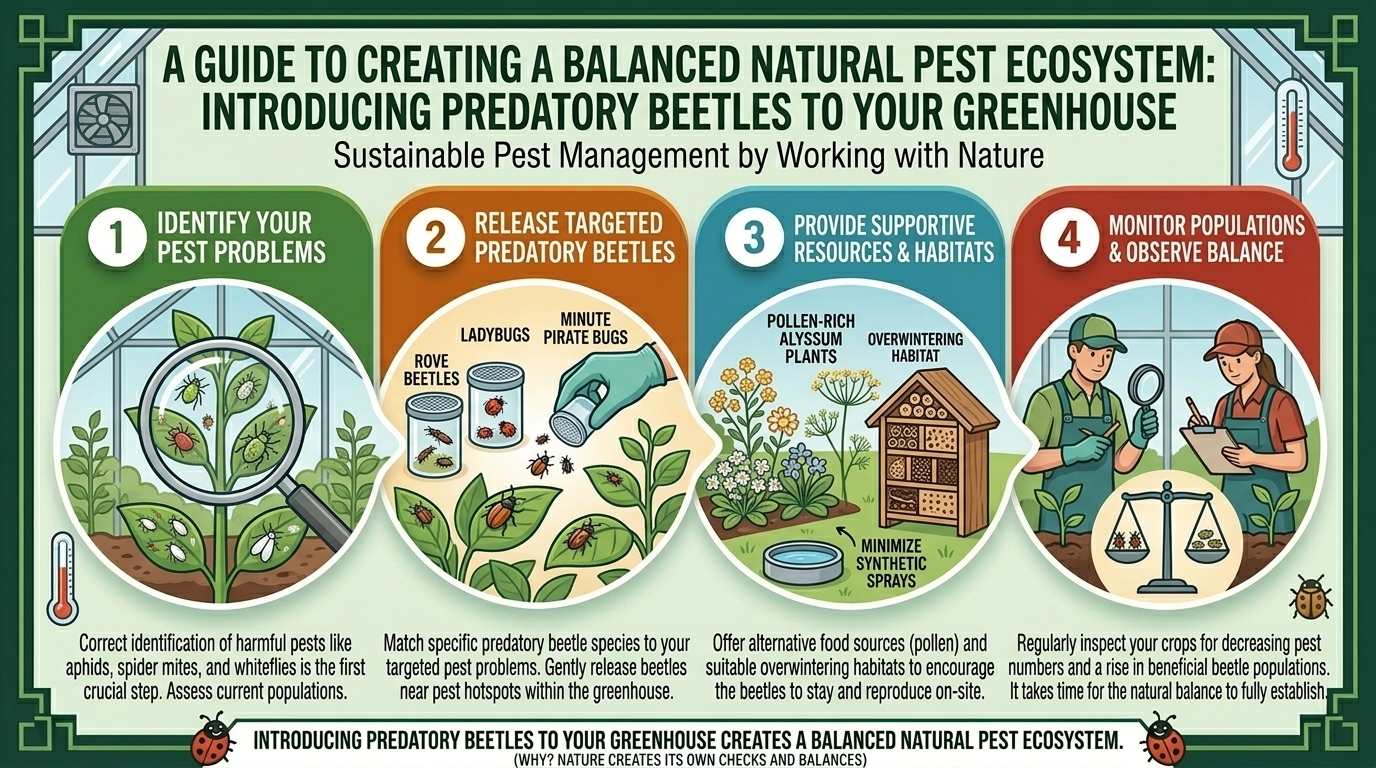
Why Introducing Predatory Beetles to Your Greenhouse Creates a Balanced Natural Pest Ecosystem
Greenhouses offer ideal, climate-controlled environments for growing plants year-round. However, those same warm, sheltered conditions can also turn into paradise for soft-bodied pests like aphids, spider mites, thrips, and mealybugs. Without natural wind, weather variations, or outdoor predators to keep populations in check, greenhouse pest infestations can explode exponentially in days.
While chemical sprays offer quick knockdowns, they frequently trigger secondary pest outbreaks, damage delicate crop foliage, and build pesticide resistance over time. Introducing predatory beetles into your greenhouse creates a self-sustaining biological control mechanism that manages pest populations naturally.
At KC Plants, we specialize in helping growers across diverse climates—from the high humidity of Texas to the cooler, fog-kissed microclimates of San Francisco, California, Washington, and New York—build self-maintaining biological ecosystems under glass.
1. Key Benefits of Predatory Beetles in Greenhouse IPM
Integrated Pest Management (IPM) relies on ecological balance rather than total eradication. Predatory beetles serve as primary agents in this strategy for several distinct reasons:
- Active Hunting Drive: Predatory beetles—such as ladybird beetles (Coccinellidae), rove beetles (Dalotia coriaria), and mealybug destroyers (Cryptolaemus montrouzieri)—actively search through dense foliage, soil layers, and root zones for prey.
- High Voracity Rates: A single adult predatory beetle or its voracious larva can consume hundreds of pest eggs, nymphs, or soft-bodied insects per week.
- Targeted Biological Control: Unlike broad-spectrum chemical sprays that kill beneficial insects alongside pests, predatory beetles target pest species without disrupting plant health or soil microflora.
- Prevention of Chemical Resistance: Insect pests frequently adapt to chemical insecticides within a few generations. Pests cannot develop immunity to biological predation.
| Predatory Beetle Species | Target Greenhouse Pests | Ideal Habitat Zone |
| Ladybird Beetle (Hippodamia convergens) | Aphids, scale insects, whiteflies | Upper plant canopy & stems |
| Rove Beetle (Dalotia coriaria) | Fungus gnat larvae, thrips pupae, shore flies | Soil surface & growing media |
| Mealybug Destroyer (Cryptolaemus montrouzieri) | Mealybugs, soft scale, woolly aphids | Stems, leaf axils, fruit clusters |
| Spider Mite Destroyer (Stethorus punctillum) | Two-spotted spider mites | Underside of dense foliage |
2. Essential Conditions for Establishing Beetle Populations
Successfully establishing beneficial beetles requires making your greenhouse environment hospitable enough for them to feed, mate, and reproduce continuously.
1.Optimize Environmental Conditions:Match temperature and humidity needs.
Maintain greenhouse temperatures between 68°F and 82°F with relative humidity levels of 50% to 70%. Extremely low humidity dries out beetle eggs, while excessive cold slows their metabolic activity.
2.Avoid Total Pest Eradication:Maintain a baseline food supply.
Predatory beetles require a baseline pest population to survive. Introducing them into a completely sterile, pest-free greenhouse causes them to starve or disperse through ventilation windows.
3.Plant Banker and Companion Flora:Provide nectar sources for adult beetles.
Interplant flowering companion species like sweet alyssum, dill, and marigolds within greenhouse bays. Adult beetles consume pollen and nectar to supplement their diet when pest counts are low.
4.Stop Synthetic Pesticide Applications:Eliminate broad-spectrum chemical residues.
Cease chemical pesticide applications at least 2 to 4 weeks prior to releasing predatory beetles. Residual chemical films on leaf surfaces can kill beneficial insects upon contact.
3. Best Practices for Release and Long-Term Ecosystem Management
Releasing predatory species requires strategic execution to maximize survival and establish home ranges inside your greenhouse structure.
- Release at Dusk or Dawn: Always release beetles during cool, low-light hours (early morning or dusk). Releasing them in bright midday heat causes them to immediately fly toward glass vents or UV lighting.
- Mist Foliage Before Release: Lightly mist crop foliage with water before releasing beetles. Transported beetles are typically dehydrated and will stay longer on plants if water droplets are readily available.
- Distribute Evenly Across Hotspots: Concentrate releases near known pest hotspots, but reserve a portion of the batch to distribute evenly across surrounding healthy crops to establish defensive perimeters.
10 Frequently Asked Questions (FAQ)
1. Will predatory beetles fly out of greenhouse vents?
Some adult beetles may escape through open vents if food is scarce or if temperatures are excessively high. Installing insect netting over intake vents and providing adequate food and water keeps the majority inside.
2. How long does it take for predatory beetles to control a pest outbreak?
Initial feeding begins immediately upon release. However, noticeable population-level reduction usually takes 2 to 3 weeks as the beetles reproduce and their voracious larvae begin hunting.
3. Do predatory beetles harm beneficial pollinators like bees?
No. Predatory beetles target soft-bodied pests, larvae, and eggs. They do not attack adult bees or interfere with pollination activities inside the greenhouse.
4. What do predatory beetles eat when all the pests are gone?
When pest populations drop significantly, adult beetles feed on pollen and nectar from flowering companion plants. If food is entirely absent, they will disperse or starve.
5. Can I use predatory beetles alongside parasitic wasps?
Yes. Multi-species biological control is highly effective. Predatory beetles and parasitic wasps (such as Encarsia formosa or Aphidius colemani) target different pest stages and occupy distinct canopy layers.
6. Do rove beetles bite humans or pets?
No. Rove beetles (Dalotia coriaria) are microscopic to tiny soil-dwelling beetles that are entirely harmless to humans, pets, and plants.
7. How can I tell if my release of mealybug destroyers was successful?
Look for Cryptolaemus larvae on stems and leaf joints. These larvae are covered in white, waxy filaments—resembling large, fast-moving mealybugs—and actively consume target pests.
8. Will sulfur burners or fungicides kill predatory beetles?
Fungicidal sulfur vapors and contact sprays generally do not kill adult beetles directly, but heavy residues can irritate their sensory organs and disrupt egg-laying activities.
9. How many beetles do I need per square foot of greenhouse space?
Inoculative release rates typically range from 1 to 3 beetles per 10 square feet for prevention, or up to 5 to 10 beetles per 10 square feet for active pest infestations.
10. Why are predatory beetles better than chemical pesticides for greenhouses?
Chemicals often fail due to spray coverage gaps in dense crop canopies and rapid pest resistance development. Predatory beetles physically hunt into tight leaf crevices, providing continuous, self-replicating control without chemical residues.
Conclusion
Creating a balanced natural pest ecosystem in your greenhouse with predatory beetles reduces dependency on synthetic chemicals, prevents resistance build-up, and protects crop yields over time. By managing environmental temperatures, providing supplementary nectar sources, and timing releases effectively, you can transform your greenhouse into a resilient biological sanctuary.