Winter can be a magical time for you and your home, but for tropical houseplants originating from the lush, humid rainforests of the world, the arrival of winter indoor heating can feel like an environmental shock. When the cold weather sets in across regions like New York, Washington, California, San Francisco, and Texas, heating systems kick on. While radiators and forced-air furnaces keep us cozy, they drastically strip moisture from the air, plunging indoor relative humidity down to desert-like levels (often below 20%).
At kcplants, we talk to plant parents every day who notice their beloved monsteras, calatheas, and pothos suddenly dropping leaves, developing crispy brown tips, or struggling during these chilly months. Because winter plant care requires a complete shift in your routine, this comprehensive, expert-backed guide covers everything you need to know to keep your indoor tropical oasis thriving all winter long.
1. The Winter Microclimate: Why Indoor Heating Changes Everything
To understand winter watering, you first need to understand how indoor heating alters your plants’ natural ecosystem. In their native habitats—whether the Amazon basin or Southeast Asian jungles—tropical plants experience warmth coupled with high, consistent ambient humidity and regular moisture.
When you turn on your heater, three major changes occur:
- Plummeting Humidity: Heaters dry out the air rapidly. Dry air pulls moisture directly from plant leaves through a process called transpiration, forcing the plant to drink more water just to survive the atmospheric stress.
- Reduced Natural Sunlight: Winter days are shorter, and the sun sits at a lower angle. With less light, your plants undergo lower rates of photosynthesis.
- Slower Metabolic Rates: Because of reduced light and lower overall temperatures near windows, many tropical plants enter a state of semi-dormancy. Their growth slows down significantly, meaning they actually consume fewer nutrients and less soil moisture than they do in spring and summer.
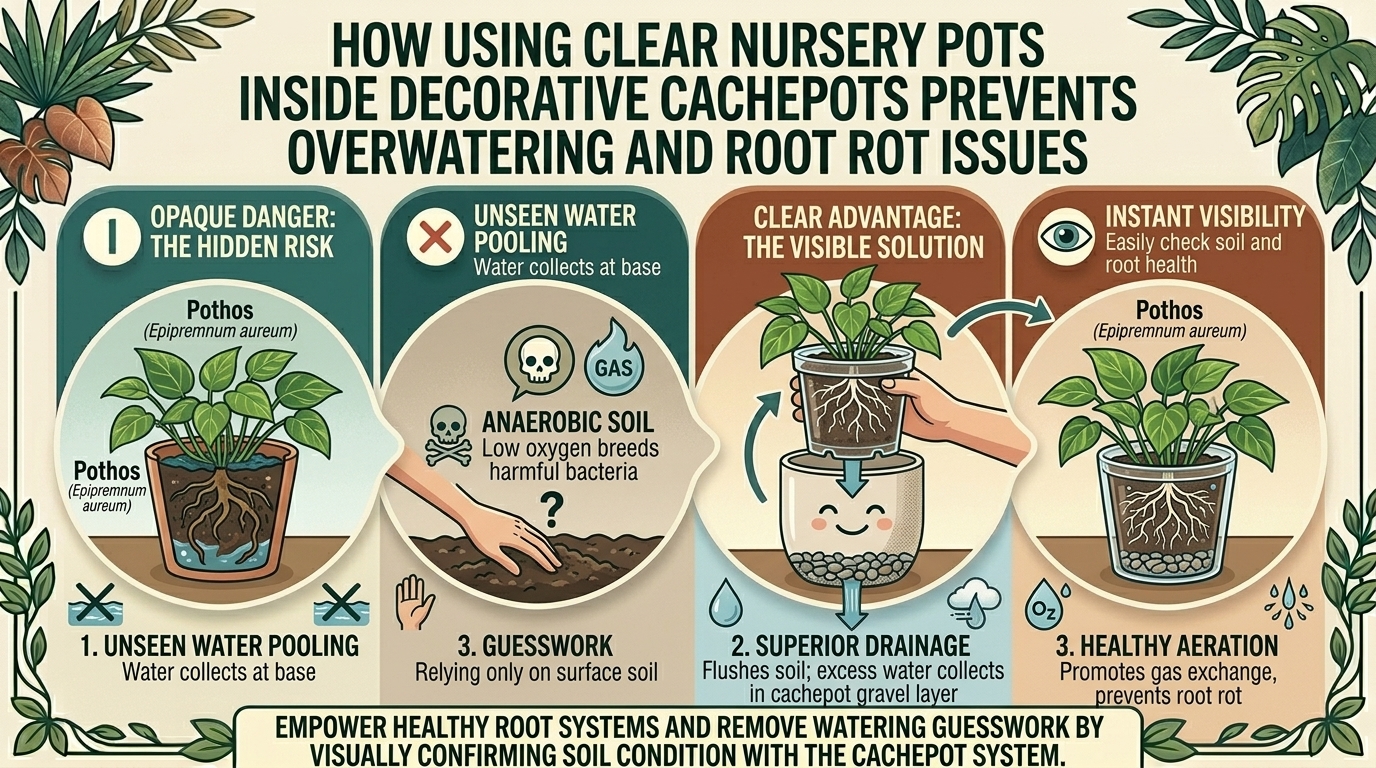
This creates a tricky paradox: the dry air makes leaves thirsty, but the damp, cold soil means the roots cannot process water as quickly. Misinterpreting crispy tips as a sign to simply dump more water into the pot is the #1 way winter houseplants succumb to root rot.
2. Recognizing the Signs of Winter Stress vs. Under/Overwatering
Before changing your watering schedule, you need to correctly diagnose what your plant is telling you. Symptoms in winter can easily be misread.
| Symptom | Probable Cause in Winter | Corrective Action |
| Crispy, brown leaf tips | Low humidity from indoor heating | Increase ambient humidity via grouping or humidifiers. |
| Yellowing, mushy lower leaves | Overwatering / Soil staying wet too long | Let soil dry out deeper; improve drainage. |
| Drooping despite moist soil | Cold drafts or root shock from cold water | Move away from drafty windows; use tepid water. |
| Stunted or halted growth | Natural seasonal dormancy | Reduce watering frequency and pause fertilizing. |
3. The Ultimate Winter Watering Strategy: Step-by-Step
Throw out your rigid summer watering calendar. Watering tropical plants in the winter requires a tactile, intuitive approach tailored to your home’s unique microclimate.
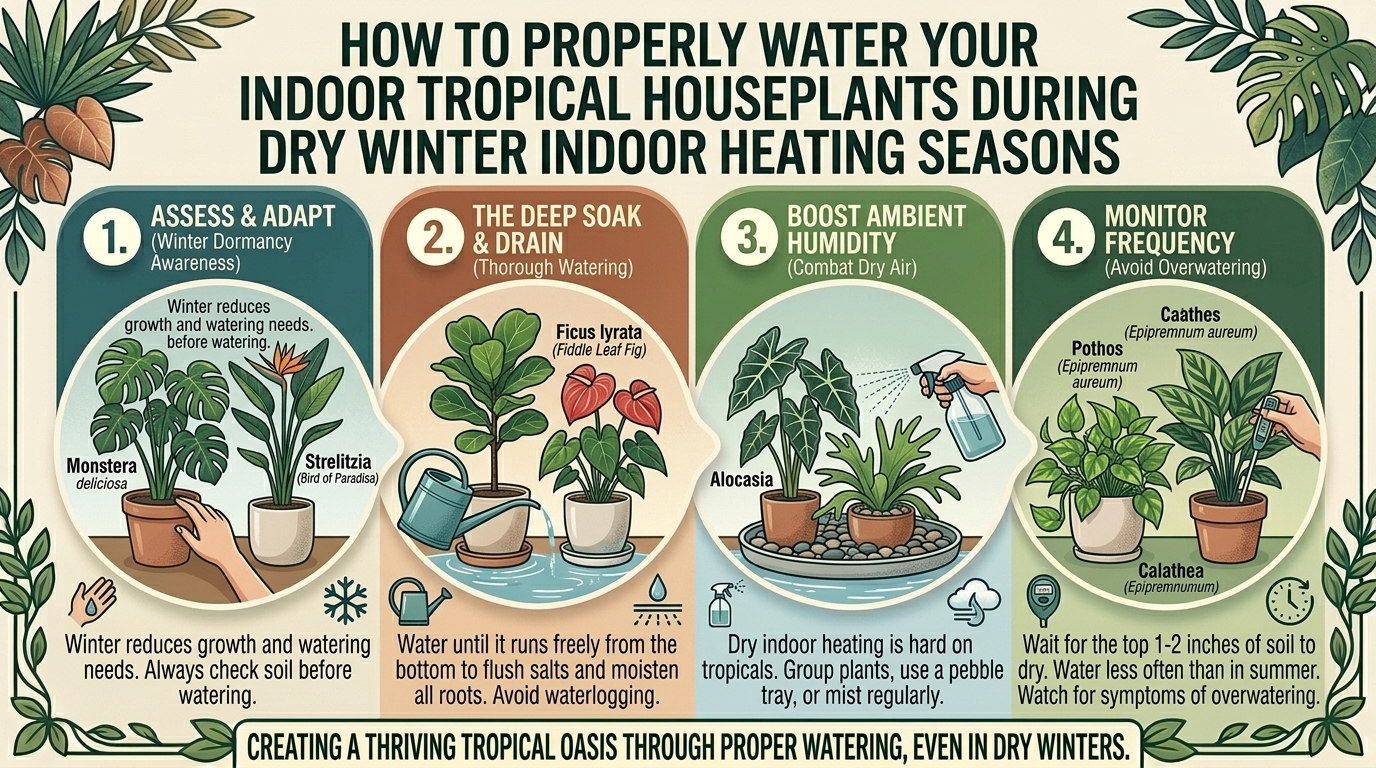
Step 1: Always Check the Soil Depth
Never water a plant simply because the surface of the soil looks dry. Indoor heating can bake the top inch of soil into a crust within a day, while the root zone an inch or two down remains soaking wet.
- The Finger Test: Insert your index finger into the soil up to the second knuckle (about 2 inches deep). If it feels cool and damp, wait. If it feels dry and crumbly, it is time to water.
- The Moisture Meter: For larger pots, a reliable soil moisture meter takes out the guesswork, telling you precisely what is happening at the root level.
Step 2: Use Tepid (Room Temperature) Water
In winter, tap water coming straight from your pipes can be ice-cold. Pouring freezing water onto tropical roots that are already stressed by cold window drafts can shock the root system, causing shock and leaf drop. Always let your watering can sit filled overnight so it reaches room temperature.
Step 3: Drench and Drain Thoroughly
When it is finally time to water, do it right. Give the plant a thorough, deep soaking until water runs freely out of the drainage holes at the bottom of the pot. This ensures the entire root ball is hydrated and flushes out any built-up mineral salts from tap water or lingering fertilizers. Crucial rule: Never let your pot sit in a saucer of standing water for more than 15 minutes, as sitting water invites root rot.
4. Region-Specific Winter Challenges
Because kcplants serves plant enthusiasts across diverse climates, it is important to tailor your approach to your local winter environment:
- New York & Washington (Freezing & Radiator Heat): Homes here often rely on aggressive steam radiators or intense forced air. Keep plants away from direct blasts of dry heat vents and drafty historic windows. You will likely need a room humidifier running near your collection.
- California & San Francisco (Mild Outdoor, Dry Indoor): While winters are milder outside, coastal fog gives way to indoor heating that dries out homes quickly. San Francisco homes can experience sharp temperature drops at night, so insulate your plants from cold glass panes.
- Texas (Sudden Temperature Swings): Texas winters can alternate between unseasonably warm humid days and sudden, fierce blue northers that freeze outdoor temperatures overnight. Pay close attention to insulation if your plants sit near large glass sliding doors or windows.
5. Humidity Management: The Secret Partner to Watering
You cannot separate watering from humidity during the winter heating season. If your indoor humidity is below 30%, your plants will suffer no matter how carefully you water. Try these proven methods:
- Group Your Plants: Plants naturally transpire and create a micro-climate of humidity around themselves when clustered together.
- Invest in a Cool-Mist Humidifier: Placing a humidifier in your primary plant room is the single most effective investment you can make.
- Use Pebble Trays: Place a shallow tray filled with pebbles and water beneath your pots. Ensure the water level stays just below the top of the pebbles so the pot bottom doesn’t sit directly in water. (Note: Avoid misting leaves with a spray bottle, as it only raises humidity for a few minutes and can promote fungal leaf spot diseases in stagnant winter air).
10 Frequently Asked Questions (FAQs)
1. Should I stop fertilizing my tropical plants in the winter?
Yes. Because most tropical houseplants enter a period of reduced growth due to lower light and cooler indoor temperatures, they do not utilize nutrients efficiently. Fertilizing in winter can lead to a buildup of mineral salts that burn the roots. Resume fertilizing in early spring when new growth emerges.
2. How often should I water my indoor plants during winter?
As a general rule, you will water 1.5 to 2 times less frequently than you did in the summer. If you watered a plant every 7 days in July, it might only need water every 14 to 20 days in January. Always rely on the soil moisture test rather than a fixed calendar schedule.
3. Why are the tips of my spider plant and calathea turning brown?
Brown, crispy tips are the classic signature of low indoor humidity caused by central heating. It can also be triggered by using tap water high in fluorides and salts. Try switching to filtered water and boosting the ambient humidity around the plant.
4. Is it okay to use cold tap water straight from the sink?
No. Cold water shocks tropical root systems, which can lead to sudden leaf yellowing and dropped foliage. Always use room-temperature or slightly tepid water.
5. My soil is pulling away from the edges of the pot when I water. What does this mean?
When potting mix dries out completely over a long period, it becomes hydrophobic (repelling water). When you water, the liquid simply channels down the sides of the pot without wetting the root ball. To fix this, submerge the entire nursery pot in a basin of room-temperature water for 30–45 minutes until fully saturated, then let it drain completely.
6. Should I move my plants closer to windows in the winter?
Yes, because winter sunlight is significantly weaker and daylight hours are shorter. Moving your plants closer to south- or west-facing windows helps them capture maximum light. However, ensure they do not touch cold glass panes or sit directly in the path of freezing drafts from leaky window frames.
7. How do I know if my plant has root rot from overwatering in winter?
Signs of root rot include a sour, damp smell coming from the soil, mushy or black stems near the base, and leaves that rapidly turn yellow and drop even though the soil is wet. If suspected, unpot the plant, trim away rotted brown roots, and repot in fresh, well-draining soil.
8. Do different tropical plants need different winter watering care?
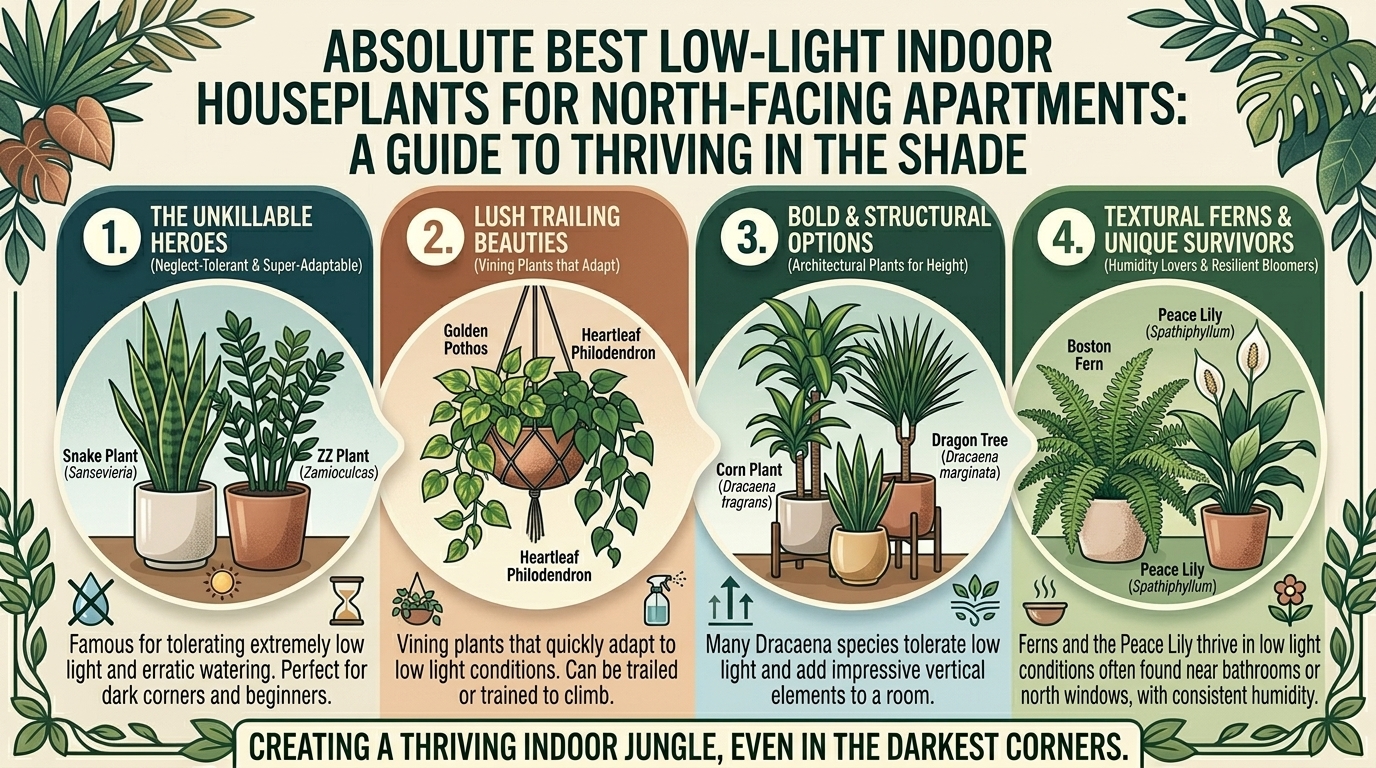
Yes! Thin-leafed tropicals like Calatheas, Ferns, and Fittonias despise drying out completely and need consistent slight moisture. Thicker, succulent-style tropicals like Monsteras, Snake Plants, Pothos, and ZZ plants store water in their stems or roots and prefer to dry out almost completely between waterings.
9. Can I use pebble trays to solve dry winter air?
Pebble trays offer modest help for small- to medium-sized plants, but they have a limited range. For large collections or demanding tropicals like ferns and prayer plants, a mechanical humidifier is much more effective.
10. Why is my plant dropping leaves right after I brought it home or moved it for winter?
Minor leaf drop is often a normal reaction to environmental shock (moving from a greenhouse or store to your home, or shifting location to avoid a cold winter draft). Give the plant stable conditions, avoid overcorrecting with extra water, and allow it a few weeks to acclimate.
Conclusion
Mastering indoor tropical houseplant care during the dry winter heating season is all about mimicking nature where you can and adapting to your home’s artificial climate. By shifting away from rigid watering schedules, checking soil moisture deeply, protecting your plants from cold drafts, and supplementing dry winter air with proper humidity, your indoor jungle will not just survive the winter—it will thrive and be ready to explode with lush new growth when spring finally arrives.