Stepping into home gardening—whether you are cultivating a sprawling raised bed in Austin, Texas, tending an urban backyard plot in Seattle, Washington, managing a sunny rooftop container garden in New York City, or working with compact spaces in San Francisco and across California—brings a profound appreciation for nature’s complexity.
Many first-time gardeners invest heavily in premium seeds, high-end watering cans, and expensive organic fertilizers, only to watch their tomato plants yellow, their peppers stunt, and their leafy greens wither. When plants struggle despite your best efforts, the culprit is rarely a lack of love or water.
More often than not, the hidden bottleneck lies right beneath the surface: your soil pH.
Understanding and managing natural soil pH levels is the absolute secret to thriving home garden vegetables. Without the correct pH, essential nutrients become chemically locked up and unavailable to plant roots, no matter how much organic compost you add.
This comprehensive, expert-backed guide breaks down everything you need to know about soil pH, how it controls nutrient absorption, and how to balance it naturally using organic methods.
1. What Exactly Is Soil pH? (The Chemistry of Gardening)
To master soil pH, you need a quick, simple grasp of the science behind it.
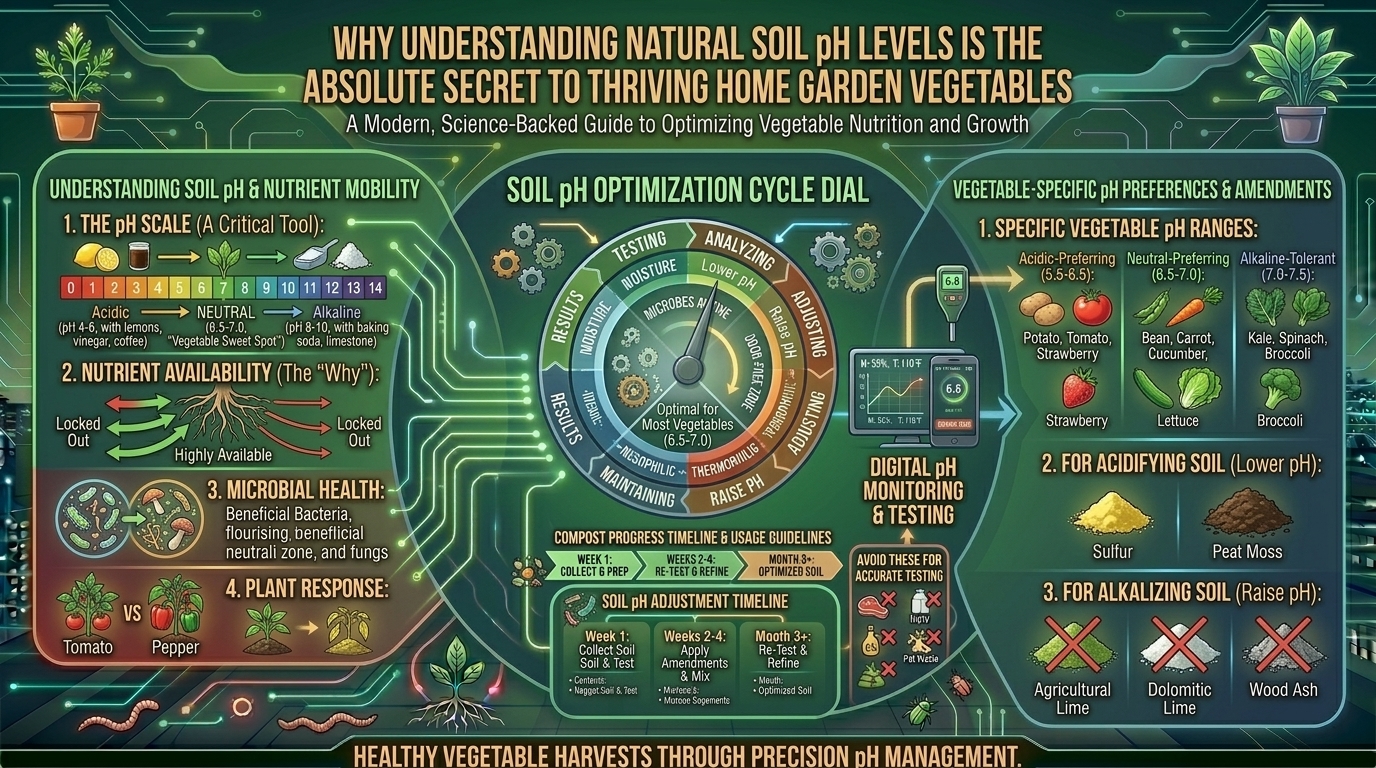
pH stands for “potential of hydrogen.” It measures the relative acidity or alkalinity of your soil on a logarithmic scale from 0 to 14:
- Neutral: A pH of 7.0 is neutral (neither acidic nor alkaline).
- Acidic (“Sour”): Any pH measurement below 7.0 is acidic. (e.g., pine forests or peat bogs often have acidic soil).
- Alkaline (“Sweet”): Any pH measurement above 7.0 is alkaline. (e.g., desert soils or regions with heavy limestone deposits often feature alkaline soil).
For the vast majority of home vegetable gardens, the optimal pH sweet spot lies between 6.0 and 7.0 (slightly acidic to neutral). In this narrow window, soil biology thrives, and chemical bonds allow roots to drink freely.
2. Why pH Controls Nutrient Availability (The Nutrient Lockout Phenomenon)
Why does pH matter so much? Imagine your soil is a massive pantry filled with all the groceries your plants need to survive (Nitrogen, Phosphorus, Potassium, Calcium, Magnesium, Iron, and trace minerals).
- When pH is out of balance (too acidic or too alkaline): Chemical locks snap onto the pantry doors. Even though the nutrients are physically present in your soil, they bind tightly to mineral particles, making them completely insoluble in water. Your plant roots cannot absorb them.
- The Result: You get “nutrient lockout.” Your plants exhibit classic deficiency symptoms—such as yellowing leaves, stunted growth, and blossom-end rot—even though your soil is packed with organic compost.
The Element Breakdown:
- Phosphorus (Crucial for roots and flowers): Locks up and becomes unavailable in highly acidic soils (below 6.0) and highly alkaline soils (above 7.5).
- Micronutrients (Iron, Manganese, Boron): Become overly soluble and toxic in very acidic soils (below 5.5), or lock up entirely and cause severe chlorosis (yellowing) in alkaline soils (above 7.5).
3. Regional Soil pH Tendencies Across the US
Different geographic regions naturally lean toward specific pH profiles due to local climate, rainfall, and parent rock geology:
- The Pacific Northwest (Washington / Seattle): High annual rainfall tends to leach basic minerals (calcium and magnesium) out of the soil over time, leaving natural forest soils moderately to strongly acidic (pH 5.2 to 6.0).
- The Northeast (New York): Varies by neighborhood and parkland, but generally leans slightly acidic (pH 6.0 to 6.5) due to decaying organic matter and regional precipitation.
- California and the Bay Area (San Francisco): Highly variable depending on micro-climates and imported landscape fill, often hovering around neutral to slightly alkaline (pH 7.0 to 7.8) in coastal or interior valley regions.
- Texas (Austin and surrounding areas): Often characterized by limestone geology, Texas soils frequently lean alkaline (pH 7.5 to 8.2), requiring careful organic balancing for crops that prefer neutral soils.
4. How to Test Your Soil pH Naturally
You cannot determine soil pH by simply looking at dirt. You need accurate testing methods to understand your starting point.
A. At-Home DIY Soil Test Kits
- Chemical Drop Kits: Inexpensive and widely available. You mix a soil sample with distilled water and a reactive chemical powder in a test tube. The liquid changes color, which you match against a standardized pH color chart.
- Digital Soil pH Meters: Insert a metal probe directly into moist soil to get an instant digital reading. For best accuracy, clean the probe between tests.
B. The Vinegar and Baking Soda Test (A Fun Rough Check)
While not scientifically precise, this old-school kitchen test tells you if your soil leans heavily alkaline or acidic:
- Test for Alkalinity: Place a sample of soil in a bowl and pour household white vinegar over it. If it fizzes or bubbles, your soil is alkaline (reacting with calcium carbonate).
- Test for Acidity: Take a fresh soil sample, moisten it with distilled water, and sprinkle baking soda over it. If it fizzes, your soil is acidic.
5. How to Adjust Soil pH Naturally and Organically
If your soil test reveals a pH that is too high or too low for your vegetable crops, avoid harsh synthetic chemical acidifiers or industrial lime. Use these slow, steady organic methods instead.
A. How to Raise Soil pH (Making Acidic Soil More Alkaline)
If your soil is too acidic (below 6.0) and you want to raise it toward neutral:
- Dolomitic Limestone (Garden Lime): A natural rock powder rich in calcium and magnesium carbonates. It neutralizes acid and provides essential secondary nutrients.
- Wood Ash: Untreated wood ash from your fireplace or fire pit is rich in potassium and calcium carbonate. Use sparingly: sprinkle it lightly, as heavy applications can spike pH too quickly and burn delicate roots.
- Crushed Eggshells: While slower acting, finely pulverized eggshells gently buffer soil acidity over time while adding valuable calcium.
B. How to Lower Soil pH (Making Alkaline Soil More Acidic)
If your soil is too alkaline (above 7.5) and you need to bring it down:
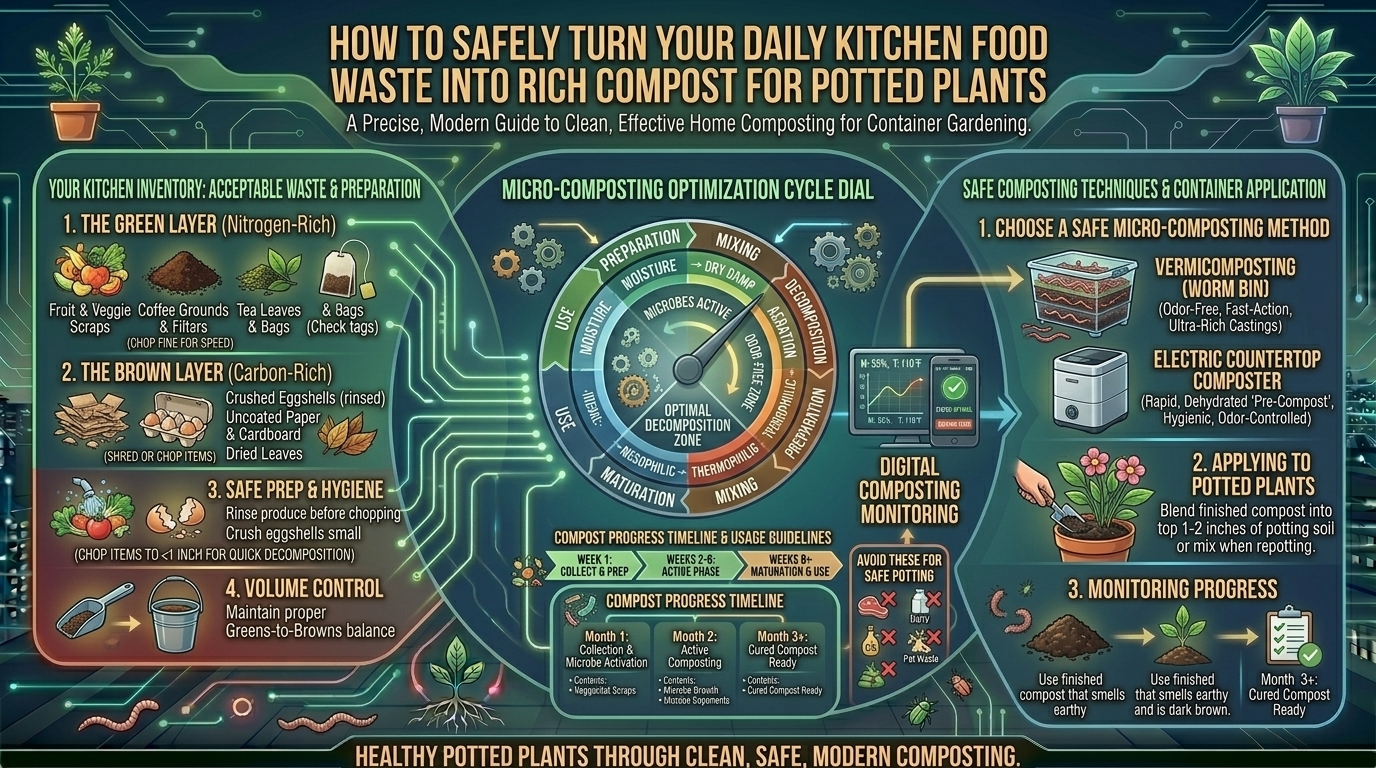
- Organic Compost and Peat Moss: High-grade organic compost naturally tends toward a neutral pH and introduces organic acids through microbial activity. Sphagnum peat moss is naturally acidic and works wonders when blended into alkaline garden beds.
- Elemental Sulfur (Organic Grade): Soil microbes consume elemental sulfur and slowly convert it into sulfuric acid over several weeks, safely lowering high pH levels.
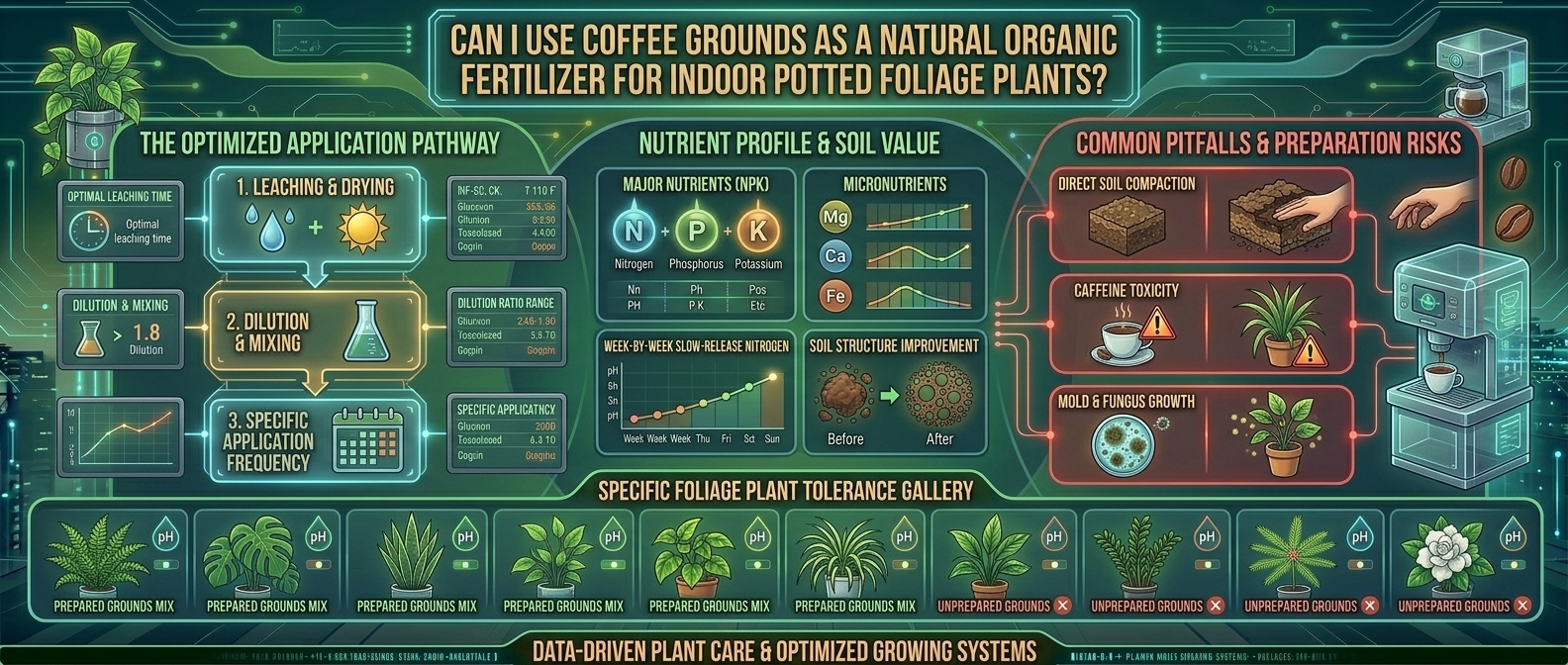
- Coffee Grounds and Pine Needles: Excellent organic mulch top-dressings that contribute mild acidity as they decompose.
6. Soil pH Preferences for Common Home Garden Vegetables
Not all vegetables require the exact same pH. Grouping your crops or adjusting specific raised beds helps maximize yields:
- Slightly Acidic (pH 6.0 to 6.8 – The Sweet Spot for Most): Tomatoes, peppers, eggplants, beans, peas, squash, cucumbers, corn, lettuce, spinach, and root vegetables like carrots and radishes.
- More Tolerant of Acidic Soil (pH 5.5 to 6.5): Potatoes, sweet potatoes, blueberries (strongly acidic at 4.5 to 5.5), and strawberries.
- Tolerant of Slightly Alkaline Soil (pH 6.5 to 7.5): Brassicas (cabbage, broccoli, kale, cauliflower, Brussels sprouts), asparagus, and onions.
7. Frequently Asked Questions (FAQ)
1. How often should I test the pH of my garden soil?
Testing your soil once a year—ideally in late winter or early spring before planting season begins—is more than sufficient. Established organic soils with active microbial life tend to buffer and stabilize their own pH naturally over time.
2. Can I use tap water to water my plants if my soil pH is high?
In many regions (especially areas with hard water like parts of Texas and California), municipal tap water contains dissolved calcium and bicarbonate minerals that can slowly raise your soil pH over time. If you notice your soil creeping upward, collecting rainwater or using a simple inline filter can help.
3. What happens if my soil pH is way off, like 4.0 or 8.5?
At extreme pH levels, beneficial soil microbes go dormant or die, earthworms disappear, and critical nutrients like phosphorus and iron become completely locked away. Plants will show severe stunting, necrosis, or chlorosis, and will eventually perish.
4. Does adding organic compost automatically fix soil pH imbalances?
Compost is a fantastic natural “buffer.” Because it contains humic acids and a diverse microbial ecosystem, regular applications of organic compost help nudge extreme soils (either too high or too low) closer to a neutral 6.5-7.0 sweet spot.
5. How long does it take for garden lime to raise soil pH?
Agricultural limestone acts relatively slowly because it must break down in the soil moisture. It typically takes 2 to 3 months for garden lime to fully react and shift the soil pH, which is why it should be applied well before spring planting.
6. Can I change the pH of soil in containers and pots?
Yes, much easier than in-ground garden beds! Container soils rely entirely on what you put into them. Using a base of coco coir (slightly acidic to neutral) and blending in organic compost allows you to easily hit the ideal pH range for your potted vegetables.
7. Why are my tomato leaves turning yellow even though I fertilize them?
If your soil pH is too high (above 7.5), iron and manganese lock up. Even if your fertilizer contains iron, the plant cannot absorb it, resulting in yellow leaves with green veins (iron chlorosis). Lowering the pH solves the issue.
8. Are digital pH meters better than chemical test kits?
Digital meters are faster and reusable, but cheap models can sometimes lose calibration. Chemical drop kits are inexpensive and highly reliable if read carefully under natural daylight.
9. Can I make my soil too acidic by adding too much peat moss?
Yes. Piling excessive amounts of raw sphagnum peat moss into a garden bed can drop the pH below 5.0, locking out calcium and magnesium. Always balance peat moss with organic compost and a pinch of garden lime if necessary.
10. Do earthworms care about soil pH?
Yes! Earthworms prefer a neutral environment close to 6.5 to 7.0. In highly acidic soils (below 5.0) or extremely alkaline soils, earthworm populations drop significantly because the environment irritates their skin and digestion.
Conclusion
Understanding and managing natural soil pH levels is the hidden master key to unlocking a thriving, abundant home garden. By testing your soil, recognizing your regional tendencies, and using natural organic amendments like compost, dolomitic lime, or elemental sulfur to maintain the ideal pH sweet spot between 6.0 and 7.0, you ensure your vegetable roots have uninterrupted access to vital nutrients.