How to Create a Self-Sustaining Terrarium Ecosystem Inside a Large Glass Jar for Your Desk
There is a profound sense of calm that comes from having a living, breathing piece of nature right at your fingertips. For urban professionals and plant enthusiasts setting up a workspace in bustling tech hubs like San Francisco, high-rise apartments in New York, sunny workspaces in California, scenic dens in Washington, or spacious home offices across Texas, bringing the outdoors inside is a proven way to reduce stress, boost focus, and elevate interior aesthetics.
Among all indoor gardening projects, crafting a self-sustaining closed terrarium stands out as the ultimate horticultural magic trick. By sealing plants, soil, and moisture inside a large glass jar, you create a miniature Earth that cycles its own water, recycles decaying matter, and thrives for years with almost zero human intervention.
Brought to you by kcplants.com, this comprehensive, expert-led masterclass provides your ultimate, step-by-step blueprint for building a flourishing, self-sustaining terrarium ecosystem for your desk.
Part I: The Science of a Closed Terrarium Ecosystem
To build a terrarium that survives—and thrives—independently, you must first understand the biological engine running inside the glass:
- The Water Cycle (Transpiration and Condensation): Plants absorb moisture from the soil through their roots and release water vapor through microscopic pores in their leaves (transpiration). This vapor hits the cool glass walls of the jar, condenses into liquid water droplets, runs back down into the soil, and repeats the cycle endlessly.
- The Nutrient Cycle (Decomposition): Microorganisms, beneficial bacteria, and springtails break down fallen organic matter (such as tiny dead leaves or decaying moss), returning essential nutrients back into the soil for the plants to absorb.
- Respiration and Photosynthesis: During daylight hours, plants absorb light and carbon dioxide to produce oxygen and food. At night, they consume a small amount of oxygen and release carbon dioxide, which is then reabsorbed during the day.
Part II: Gathering Your Materials and Tools
Selecting the right components ensures your miniature ecosystem achieves chemical equilibrium rather than collapsing into mold or rot.
1. The Glass Vessel
- Size Matters: Choose a large glass jar (at least one to two gallons in capacity) with a wide enough opening to fit your hands or long tools comfortably. Jars with tight-fitting glass lids or cork stoppers are essential for trapping moisture.
- Clarity: Opt for clear, distortion-free glass rather than colored or heavily textured glass so that maximum light can penetrate the interior.
2. The Layering Substrates (From Bottom to Top)
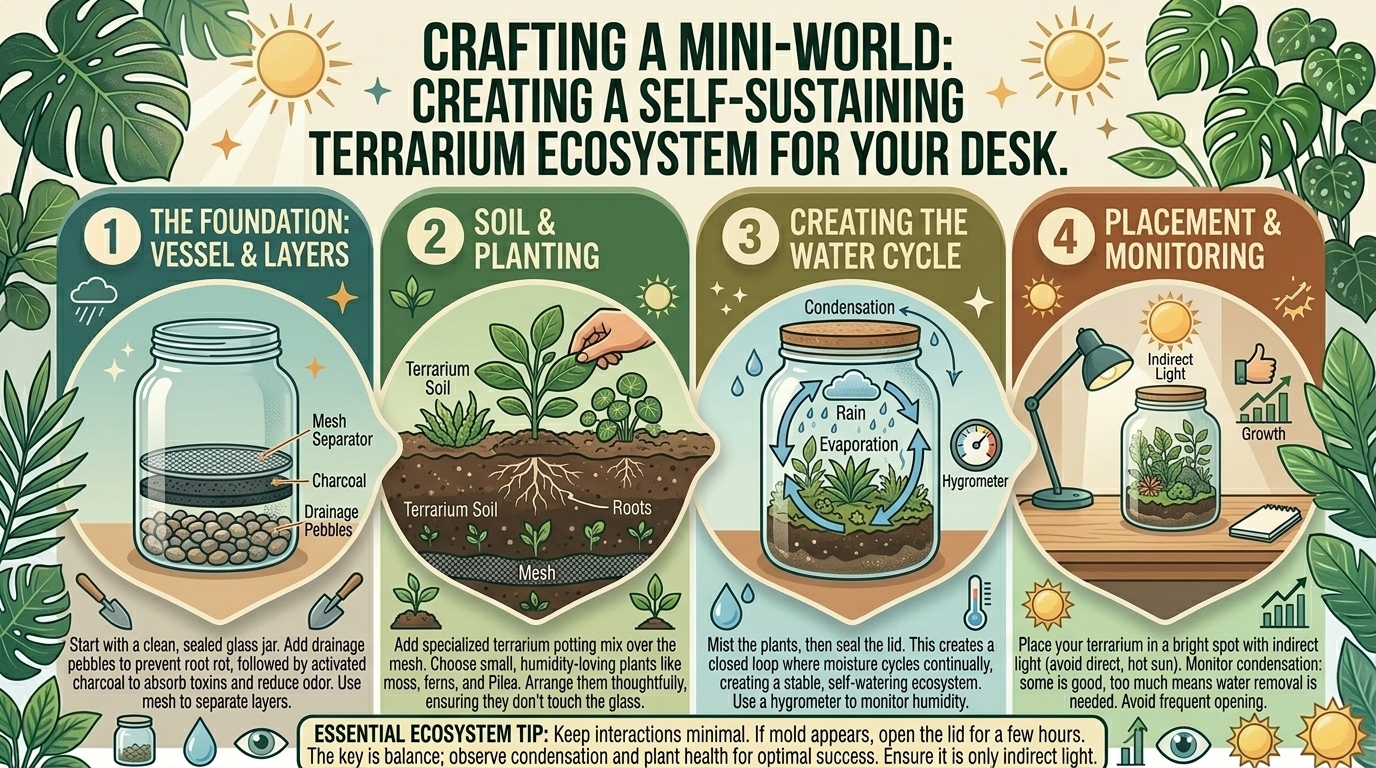
- The Drainage Layer (Expanded Clay Pebbles, River Rock, or Gravel): A 1-to-2-inch layer at the very bottom provides a reservoir for excess water, keeping plant roots from sitting in stagnant pools.
- The Filtration Barrier (Activated Horticultural Charcoal): A thin layer spread over the drainage rocks. Activated charcoal is vital because it filters impurities, absorbs odors, and prevents mold, mildew, and bacteria growth inside the sealed jar.
- The Growing Medium (Specialized Terrarium Soil): Use a light, well-draining, nutrient-rich tropical potting mix mixed with perlite or orchid bark. Avoid heavy garden soil, which compacts easily and suffocates roots.
3. Choosing the Right Plants
Select miniature, slow-growing tropical species that love high humidity and will not outgrow the jar in a few months:
- Fittonias (Nerve Plants): Known for their striking, brightly veined leaves.
- Miniature Ferns (e.g., Button Ferns, Maidenhair Ferns): Excel in high-humidity environments.
- Ficus pumila (Creeping Fig): A vigorous, tiny-leaved vine that can climb the interior glass walls.
- Mosses (e.g., Cushion Moss, Mood Moss): The ultimate living carpet for terrariums, adding lush green texture.
Part III: Step-by-Step Construction Guide
Follow this systematic building process to set up your desk terrarium for long-term success:
- Sterilize Your Glass Jar: Wash your glass container thoroughly with warm, soapy water and rinse it completely. Any residual soap film or chemical residue can harm your plants.
- Layer the Drainage Foundation: Pour in 1.5 to 2 inches of clean pebbles or clay balls to form the base water reservoir.
- Add Activated Charcoal: Sprinkle a generous layer of activated horticultural charcoal evenly over the top of the pebbles.
- Introduce the Soil Mix: Add 2 to 3 inches of your specialized terrarium soil. Slope the soil upward toward the back or sides to create visual depth and topography. Use a spoon or your hand to tamp it down lightly.
- Planting Your Specimen: Use a spoon or chopstick to dig small planting holes in the soil. Gently remove your plants from their nursery pots, tease apart tangled roots, and tuck them into the soil. Firm the soil around the base of each plant.
- Incorporate Moss and Hardscape: Lay patches of live moss around the plants to cover exposed soil. Add small, clean decorative stones or pieces of driftwood to anchor the landscape.
- Water with Precision: Using a spray bottle or a turkey baster, lightly mist the plants and trickle a small amount of water down the inside glass walls. The goal is to moisten the soil evenly without creating standing water in the bottom pebble layer.
- Seal and Monitor: Place the lid securely on the jar and set it in its permanent desk location.
Part IV: Desk Placement and Long-Term Maintenance
- Lighting is Everything: Place your desk terrarium in a spot that receives bright, indirect natural light (such as near an east- or north-facing window, or under an LED desk lamp/grow light). Never place a closed glass terrarium in direct sunlight, as the glass acts as a greenhouse amplifier, quickly cooking and killing the plants inside.
- Reading the Condensation:
- Heavy fog or water streaming down the glass all day: Your terrarium is too wet. Remove the lid for 24 hours to let excess moisture evaporate.
- No condensation on the glass even in the morning: Your terrarium is too dry. Add a tiny splash of distilled water via spray bottle.
- Light morning condensation that clears by afternoon: Perfect balance!
- Pruning and Grooming: If a plant grows too tall and touches the glass wall, simply trim it back using clean scissors. Remove any yellowing leaves immediately to prevent fungal outbreaks.
Part V: Pro Tips for Troubleshooting Terrarium Issues
- Combatting Mold Outbreaks: A white, fluffy mold bloom usually indicates high moisture paired with stagnant air. Open the jar for a day, remove affected leaves, and introduce tiny living clean-up crew organisms like springtails, which feed naturally on mold and decaying matter.
- Choosing Distilled Water: Always use distilled or reverse-osmosis water rather than hard tap water to prevent unsightly white mineral crusts from forming on the inside of your glass jar.
- Temperature Stability: Keep your desk terrarium away from drafty air conditioning vents, direct heating units, or sudden temperature fluctuations common in office environments.
10 Frequently Asked Questions (FAQ)
1. How does a closed terrarium survive without being watered?
A closed terrarium functions as a self-contained water cycle. Moisture evaporates from the soil and plants (transpiration), condenses on the cool glass, and drips back down to the roots in a continuous loop.
2. How much light does a desk terrarium need?
It needs bright, indirect light for 6 to 12 hours a day. North- or east-facing windowsills, or a dedicated LED desk lamp, provide ideal conditions. Avoid direct sunlight at all costs.
3. What happens if my terrarium gets too much direct sunlight?
Direct sunlight magnifies heat through the glass, essentially creating an oven effect that can rapidly cook your plants, dry out the soil, and kill the ecosystem within hours.
4. Why is there white mold growing on my terrarium soil?
Mold typically occurs when there is too much moisture and inadequate air circulation. Open the lid for 24 hours to air it out, remove any decaying plant matter, and consider adding springtails to eat the mold.
5. Can I open the jar to check on the plants?
Yes! While it is a self-sustaining ecosystem, opening the jar every few weeks for 15 minutes to let fresh air circulate and to prune or wipe the glass is completely fine and healthy.
6. Do I need to fertilize a closed terrarium?
No. Fertilizing causes rapid, leggy plant growth that will quickly outgrow your glass jar. The decomposing organic matter and natural soil microbes provide all the nutrients your plants need.
7. What are springtails and should I add them to my terrarium?
Springtails are microscopic, harmless white insects that act as nature’s janitors. They feed on mold, fungi, and decaying matter, keeping your terrarium clean and balanced.
8. How often will I need to water a closed terrarium?
In a properly sealed, balanced terrarium, you may only need to add water once every few months—or sometimes not at all for over a year once equilibrium is reached.
9. What plants are completely unsuited for a closed terrarium?
Cacti and succulents are unsuited because they require arid conditions and low humidity, which will cause them to rot and melt away in the high humidity of a closed jar.
10. Can I keep a terrarium on a desk with no windows?
Yes, provided you install a small LED grow light above the jar or ensure your desk lamp remains turned on for several hours a day to substitute for natural sunlight.
Conclusion
Creating a self-sustaining terrarium ecosystem inside a large glass jar for your desk is a deeply rewarding project that bridges art, science, and interior design. By combining the right drainage layers, activated charcoal, moisture-loving tropical plants, and balanced lighting, you forge a living, breathing natural world that requires minimal upkeep while bringing daily tranquility to your workspace. Visit kcplants.com for more expert guides, plant care tutorials, and inspiration to help your indoor garden thrive!