There is an undeniable allure to variegated indoor houseplants. With their stunning splashes of creamy white, golden yellow, striking pink, and silver marbling, plants like the Monstera deliciosa ‘Albo-Variegata’, Philodendron Pink Princess, Epipremnum aureum (Marble Queen Pothos), and Calathea ornata represent the crown jewels of modern interior design. Whether you are curating a bright minimalist apartment in San Francisco, styling an urban loft in New York, decorating a sunlit home in Texas, or designing indoor urban jungles across California and Washington, variegated plants instantly command attention.
However, many enthusiastic plant parents quickly discover a heartbreaking reality: keeping variegated plants looking vibrant and healthy is significantly more challenging than caring for their solid green cousins. Left in standard indoor lighting conditions, variegated plants often lose their stunning patterns, turning entirely green—a frustrating botanical phenomenon known as reversion.
Why do these dazzling plants demand so much more attention and light? Brought to you by kcplants.com, this comprehensive, expert-led masterclass explores the fascinating botany of variegation, explains why brighter indirect sunlight is mandatory for their survival, and shares pro tips to keep your variegated collection stunning year-round.
Part I: The Botanical Science of Chlorophyll and Variegation
To understand why variegated plants have such demanding lighting requirements, we must examine the microscopic machinery inside their leaves:
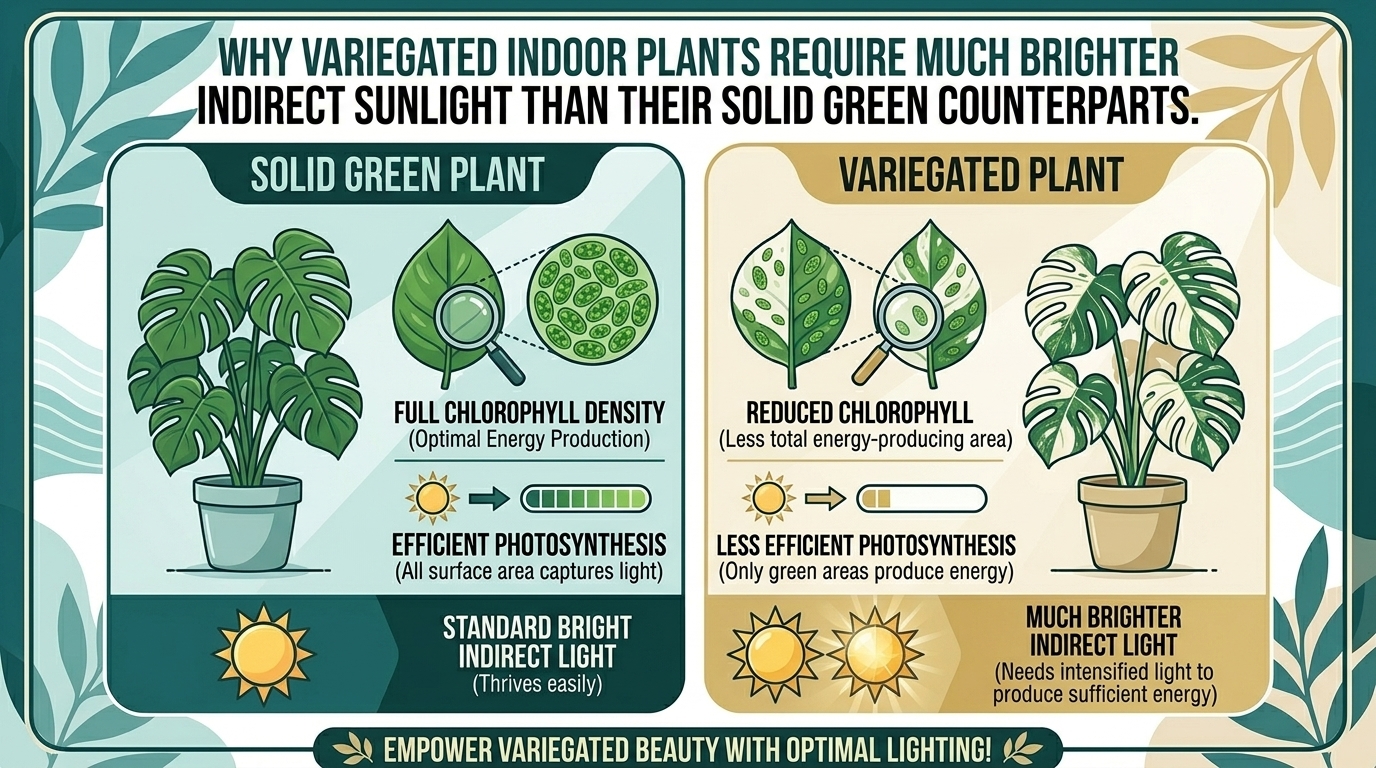
- The Role of Chlorophyll: Chlorophyll is the light-absorbing pigment responsible for giving plants their lush green color. Inside plant cells, chloroplasts use chlorophyll to capture photon energy from sunlight, converting water and carbon dioxide into glucose through photosynthesis. Chlorophyll is essentially the plant’s solar panel and engine combined.
- What Causes Variegation? Variegation occurs due to a genetic mutation or chimeral tissue anomaly where certain plant cells fail to develop normal chloroplasts. Without chloroplasts, those white, cream, or yellow sections of the leaf contain zero chlorophyll. They are pure, non-pigmented plant tissue.
- The Photosynthetic Handicap: While a solid-green leaf operates at 100% solar efficiency across its entire surface area, a variegated leaf might have only 50% or 60% green tissue. The white patches are essentially “dead weight” from an energy-production standpoint—they cannot capture light or produce food.
Because their solar-harvesting surface area is drastically reduced, variegated plants must work twice as hard to produce the exact same amount of energy. To compensate for this internal handicap, they require much brighter indirect sunlight to supercharge their remaining green chloroplasts.
Part II: The Dangers of Low Light for Variegated Plants
If you tuck a high-variegation plant—such as a heavily splashed Monstera Albo or Epipremnum Marble Queen—into a dim corner or low-light bookshelf, a chain reaction of survival mechanisms triggers inside the plant:
1. Reversion (The Plant Self-Corrects)
- Starved of sufficient light energy, the plant realizes that its white, non-green leaves are energy drains. To survive, the plant’s growth nodes trigger new stems and leaves to revert entirely to solid green, producing maximum chlorophyll to capture every stray photon.
- Before you know it, your expensive, high-variegation cutting has turned into a plain green plant, permanently losing its white splashes.
2. Slowed Growth and Stunted Stems
- Without enough fuel (glucose) generated through photosynthesis, cell division slows to a crawl. New leaves emerge smaller, weaker, and take months to unfurl.
3. Rot and Tissue Collapse on White Patches
- White, non-green plant tissue lacks natural resilience. Under low-light, damp conditions, white leaf sections are exceptionally prone to turning brown, crisping, rotting, or becoming breeding grounds for fungal pathogens.
Part III: Defining the “Sweet Spot” – Bright Indirect Light
What kind of lighting environment satisfies a demanding variegated houseplant?
- Avoid Direct Scorching Sun: While variegated plants need bright light, they do not want harsh, direct midday sun. Because white and yellow tissue lacks chlorophyll, it also lacks the natural cellular pigments (like anthocyanins) that act as natural sunscreen. Direct sun will quickly scorch, burn, and turn the white patches brown and crispy within hours.
- The Ideal Setup: Position your variegated plants right in front of an unobstructed east-facing window, or pull them 2 to 3 feet back from an unfiltered south- or west-facing window.
- The White Paper Test: Stand where your plant sits and hold a piece of white paper. If you can read a book comfortably without straining, the light level is generally adequate. If it feels dim or shadowy, your variegated plant will likely struggle and revert.
Part IV: Regional Considerations for Variegated Plant Care
Depending on your geographic location across our key regional hubs, natural lighting conditions fluctuate dramatically:
- San Francisco & New York (Urban Apartments): High-rise apartment buildings, narrow urban canyons, and heavy overcast marine layers in San Francisco or winter snowstorms in New York can severely cut down natural daylight hours. If your windows face north or are blocked by adjacent structures, supplementing natural light with a sleek, full-spectrum LED grow light is essential to maintain high variegation.
- Texas, California, & Washington: Expansive windows in Texas and California provide brilliant sun, but intense summer afternoon rays can easily scorch delicate white variegation. Use sheer curtains during peak afternoon hours. In Washington, persistent winter gray skies mean even south-facing windows may require temporary supplemental grow light support.
Part V: Pro Tips to Maintain Vibrant Variegation
- Prune Reverting Stems Immediately: If you notice a stem or a new leaf emerging with solid green color and zero variegation, take your sterilized pruning shears and cut that stem back to the last node that showed good variegation. If left unchecked, the aggressive green growth will completely outcompete and overtake the variegated sections.
- Fertilize Wisely: Because variegated plants have fewer chloroplasts, they rely heavily on balanced mineral nutrition. Feed them monthly during spring and summer with a balanced, water-soluble houseplant fertilizer diluted to half-strength.
- Wipe Dust Off Leaves: Dust acts like a physical sunblock, blocking precious photons from reaching the limited green chlorophyll patches. Gently wipe your plant’s leaves clean with a damp microfiber cloth every two weeks.
10 Frequently Asked Questions (FAQ)
1. Why are the white parts of my plant’s leaves turning brown and crispy?
White patches lack chlorophyll and are extremely sensitive. Crispy brown edges are usually caused by low ambient humidity, underwatering, or too much direct, scorching sunlight burning the delicate tissue.
2. Can my variegated plant turn completely green if it doesn’t get enough light?
Yes! This is called reversion. When a variegated plant is starved of light, it produces solid green leaves to maximize its chlorophyll production for survival, permanently losing its white or yellow patterns.
3. Do variegated plants need more light than solid green plants?
Yes. Because their white or yellow areas lack chlorophyll (the plant’s solar panel), they have less surface area available for photosynthesis. They require much brighter indirect light to manufacture enough food.
4. Will direct sunlight burn variegated plant leaves?
Yes. Without chlorophyll and natural protective pigments in the white tissue, direct sun rays act like a magnifying glass, scorching the leaves and turning them brown and paper-dry within hours.
5. What is the best indoor window orientation for variegated houseplants?
An unobstructed east-facing window provides gentle morning sun and bright indirect light all day, making it the ideal spot. South- and west-facing windows also work if filtered through a sheer curtain.
6. Should I cut off leaves that have turned entirely green?
Yes. If a stem reverts to producing solid green leaves, those leaves grow much faster and produce more energy than the variegated parts, quickly taking over the plant. Pruning them back encourages the plant to produce variegated growth.
7. Can I use artificial grow lights for high-variegation plants?
Absolutely! Full-spectrum LED grow lights are fantastic for indoor variegated plants, especially in urban apartments with north-facing windows or during dark winter months. Keep lights on for 10 to 12 hours daily.
8. Are some types of variegation more stable than others?
Yes. Genetic variegation (where the mutation is stable in the plant’s DNA, like in Monstera Albo) is relatively stable. However, chimeral variegation can sometimes be unpredictable, requiring careful pruning to maintain.
9. Do variegated plants grow slower than green plants?
Yes, almost always. Because they possess less chlorophyll to capture light energy, their overall metabolism and food production are slower, resulting in a more leisurely growth rate.
10. How do I clean my variegated plant’s leaves without damaging them?
Gently wipe down each leaf with a soft, damp microfiber cloth. Support the underside of the leaf with your hand while wiping to prevent snapping the stem. Avoid commercial leaf-shine sprays, which can clog stomata.
Conclusion
Variegated indoor plants are true masterpieces of the botanical world, rewarding observant plant parents with breathtaking displays of color and pattern. By understanding their unique photosynthetic limitations, providing abundant bright indirect light without scorching direct sun, and ruthlessly pruning any reverting green stems, you can keep your variegated collection stunning and vibrant year-round. Visit kcplants.com regularly for expert plant care guides, tips, and inspiration to help your indoor jungle flourish!