How to Treat Root Shock After Moving a Sensitive Indoor Houseplant to a New Location
Bringing home a lush new houseplant or rearranging your urban indoor jungle can feel immensely rewarding. Whether you are styling a bright minimalist apartment in San Francisco, an industrial loft in New York, a sunlit home in Texas, or vibrant living spaces across California and Washington, moving plants is a routine part of indoor gardening.
However, many plant parents encounter a heartbreaking phenomenon: shortly after shifting a sensitive houseplant (such as a Fiddle Leaf Fig, Calathea, or Fern) to a brand-new spot, the plant suddenly drops leaves, droops dramatically, or shows signs of rapid decline. This is transplant or relocation shock—a physiological crisis triggered when sudden environmental shifts disrupt a plant’s delicate root system and vascular equilibrium.
Brought to you by kcplants.com, this comprehensive, expert-led masterclass explores why root shock happens, how to accurately diagnose its symptoms, and step-by-step natural methods to nurse your sensitive houseplants back to vibrant health.
Part I: The Botanical Science of Root Shock
To treat root shock effectively, you must first understand what occurs inside the plant’s vascular architecture when its environment changes.
- Homeostasis Disruption: Houseplants are living organisms that adapt their internal cellular chemistry to a specific microclimate. Factors like ambient temperature, relative humidity, light intensity, and airflow dictate how fast roots absorb water and how fast leaves transpire.
- The Root-Shoot Imbalance: When a plant is moved—especially if it involves repotting or a dramatic shift in light and temperature—the root hairs experience microscopic trauma or functional shutdown. The roots temporarily lose their ability to pump water upward. Meanwhile, the leaves continue losing moisture through transpiration, creating a severe hydraulic imbalance.
- The Shock Response: Deprived of adequate water pressure, cellular turgor collapses. Leaves curl, droop, yellow, or drop off entirely as the plant sheds foliage to conserve remaining moisture.
Part II: Telltale Symptoms of Root and Relocation Shock
How do you distinguish normal seasonal shedding from acute root shock? Look for these distinct warning signs:
- Sudden Leaf Drop: In sensitive species like Ficus lyrata (Fiddle Leaf Fig) or Benjamina, moving the pot even a few feet can trigger a dramatic shower of green or yellow leaves within 48 to 72 hours.
- Widespread Wilting and Limp Stems: The plant looks severely underwatered, even though the potting soil feels damp to the touch.
- Crispy Edges and Tip Burn: Leaves develop brown, crispy margins because the roots cannot supply moisture fast enough to match indoor evaporation rates.
- Stalled Growth: All new bud development halts abruptly as the plant channels all its remaining energy into cellular survival.
Part III: Step-by-Step Guide to Treating Root Shock
If your sensitive houseplant is reeling from a recent move or repotting session, act quickly with this recovery protocol:
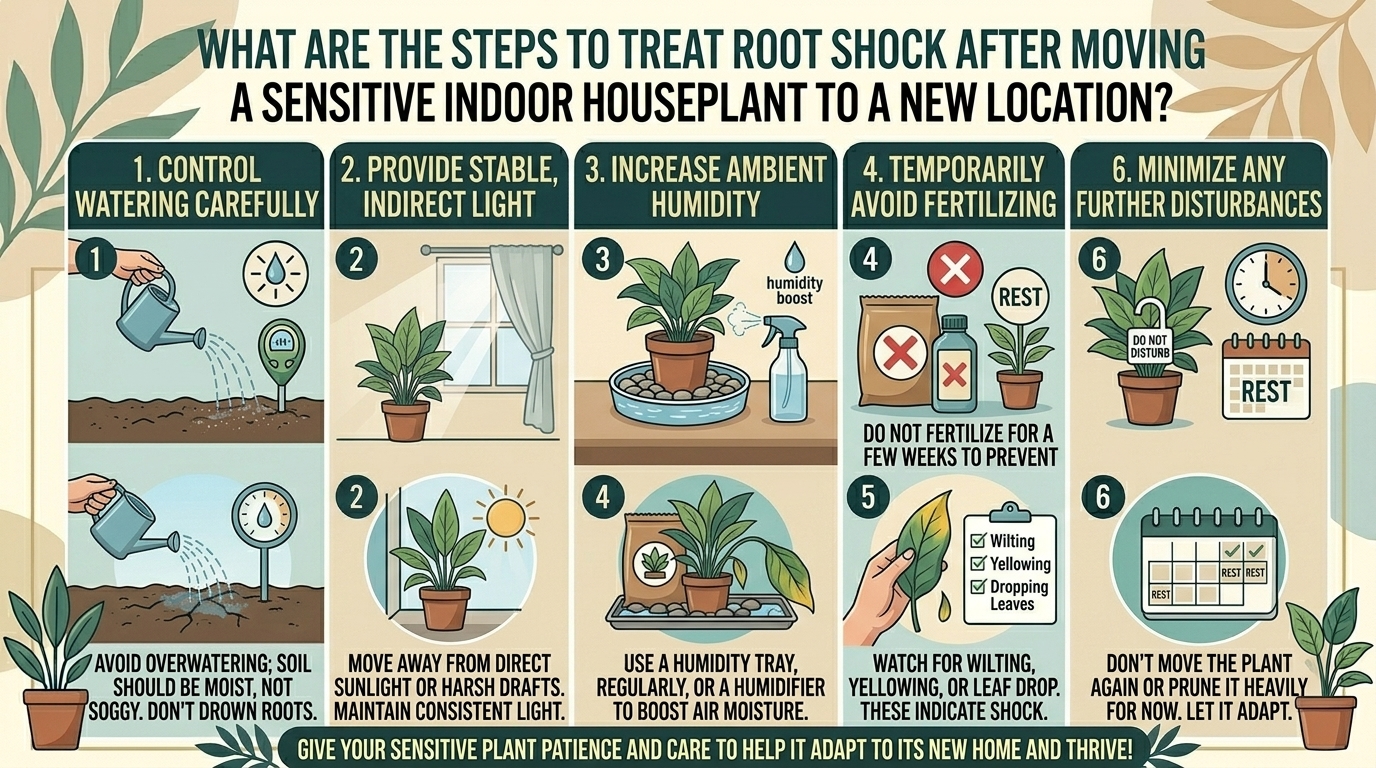
Step 1: Return to Stability (Stop Moving the Plant)
The worst thing you can do when a plant shows shock is keep moving it around in search of a “better spot.” Pick a stable location that closely mimics its original ideal environment (bright, indirect light, away from drafty AC vents or heaters) and leave it there permanently to let it settle.
Step 2: Assess Soil Moisture and Root Health
Gently inspect the top 2 inches of soil using your finger or a moisture meter.
- If the soil is bone-dry, give it a thorough, deep bottom-watering session.
- If the soil is waterlogged and soggy, your shock is compounded by root suffocation. Gently slip the plant out of its pot, wrap the root ball in dry paper towels to wick away excess moisture, and let it air out for a few hours before repotting in fresh, dry soil.
Step 3: Prune Dead or Damaged Foliage Sparingly
While it is tempting to chop off every damaged leaf, leave healthy green tissue alone so the plant can continue photosynthesizing. However, cleanly snip off completely dead, crispy, or rotting leaves and stems to prevent fungal infections from taking hold.
Step 4: Boost Ambient Humidity Immediately
Shocked plants struggle to take up water through their roots, making high ambient humidity a lifesaver.
- Mist the surrounding air gently (avoiding soaking the damaged leaves directly), place the pot on a pebble tray filled with water, or group it closely with other houseplants. For ultra-sensitive tropicals like Calatheas, placing a clear plastic bag loosely over the canopy for a few days creates a mini-greenhouse effect that locks in moisture.
Step 5: Withhold All Fertilizers
When a plant is suffering from root shock, its root hairs are damaged and incapable of processing mineral nutrients. Never fertilize a shocked plant. Pouring chemical fertilizers onto stressed roots causes severe chemical fertilizer burn, often proving fatal. Wait until you see steady, active new leaf growth before resuming regular monthly feeding.
Part IV: Regional Environmental Factors in Shock Recovery
Depending on where you live, regional indoor climates play a massive role in how plants experience and recover from shock:
- San Francisco & New York (Urban Apartments): Historic apartments and high-rises often feature fluctuating radiator heat in winter or chilling drafts from single-pane windows. Keep shocked plants well away from cold window glass and hot steam radiators.
- Texas, California, & Washington: Expansive sunrooms in Texas and California can expose recovering plants to scorching afternoon heat waves. Protect shocked plants with sheer window curtains during peak sun hours. In Washington, combat dry indoor heating by running a dedicated room humidifier.
Part V: Pro Tips to Prevent Future Relocation Shock
- Acclimatize Gradually: If you are moving a plant from a dim indoor corner to a bright window, do it over the course of two weeks by moving it an inch closer to the light every few days.
- Maintain Stable Temperatures: Avoid placing sensitive plants near exterior doors, ceiling fans, air conditioning vents, or heaters where temperature swings exceed 10 degrees Fahrenheit in a single day.
10 Frequently Asked Questions (FAQ)
1. What is the primary cause of root shock in indoor houseplants?
Root shock is primarily caused by physical trauma to fragile root hairs during repotting, combined with sudden environmental shifts in light, temperature, or humidity that disrupt the plant’s water-absorbing capacity.
2. Can moving a plant just a few feet across the room really cause shock?
Yes, especially for ultra-sensitive species like Fiddle Leaf Figs, Benjamina Ficus, and Calatheas. Even a minor shift in light intensity or proximity to a drafty vent can trigger sudden leaf drop.
3. Should I fertilize my plant to help it recover from root shock?
No! Fertilizing a shocked plant is one of the worst things you can do. Stressed or damaged root hairs cannot process nutrients, and concentrated fertilizer will burn the roots, worsening the damage.
4. How long does it take for a houseplant to recover from root shock?
Recovery timelines vary based on the severity of the shock and the plant species. Mild shock resolves in 1 to 2 weeks, while severe root shock can take 4 to 8 weeks to push out new growth.
5. Why are the leaves dropping off my plant after I moved it?
Leaf drop is a defense mechanism. By shedding leaves, the plant reduces its overall surface area, lowering the amount of water it needs to transpire while its damaged roots recover.
6. Should I cut off all the drooping or damaged leaves immediately?
Only remove leaves that are completely dead, crispy, or rotting. Leave partially green leaves attached so the plant can still generate energy through photosynthesis.
7. Does high humidity really help a plant suffering from root shock?
Yes! High ambient humidity reduces moisture loss through the leaves (transpiration), easing the burden on compromised roots until they can re-establish water uptake.
8. How can I tell if my plant is suffering from root shock or root rot?
Root shock usually follows a recent move or repotting and presents as sudden wilting or leaf drop. Root rot is caused by chronic overwatering and is accompanied by soggy soil, black mushy roots, and a musty odor.
9. Should I water a shocked plant more frequently?
Not necessarily. Always check soil moisture first. Overwatering a shocked plant with damaged roots will suffocate them and trigger secondary root rot. Maintain a balanced soak-and-dry routine.
10. Which indoor houseplants are most sensitive to being moved?
Fiddle Leaf Figs (Ficus lyrata), Weeping Figs (Ficus benjamina), Calatheas, Prayer Plants, and Ferns are notoriously sensitive and prone to dramatic shock when relocated.
Conclusion
Experiencing root shock after moving or repotting a sensitive houseplant can be stressful, but with patience and proper care, most plants can make a full recovery. By providing a stable environment, resisting the urge to fertilize, boosting ambient humidity, and avoiding unnecessary secondary moves, you can nurse your green companions back to radiant health. Visit kcplants.com regularly for expert plant care guides, tips, and inspiration to help your indoor jungle thrive!