There is something profoundly calming about walking into a home filled with lush, cascading greenery. Whether you are styling a sunlit urban loft in San Francisco, an industrial apartment in New York, a spacious contemporary home in Texas, or vibrant living spaces across California and Washington, hanging plants add an unmatched layer of organic texture, warmth, and dimension to interior design.
While store-bought plant hangers are readily available, mass-produced synthetic options often lack character and fail to support sustainable living practices. Crafting your own custom macrame plant hanger using natural 100% cotton rope allows you to tailor the exact length, style, and holding capacity to fit your favorite windows perfectly.
Brought to you by kcplants.com, this comprehensive, expert-led masterclass provides a complete, step-by-step tutorial for crafting a professional-grade macrame plant hanger, along with pro tips for hanging it securely in your window frame.
Part I: Why Natural Cotton Rope is the Gold Standard for Macrame
Before diving into knots and measurements, choosing the right cord material is vital for both aesthetic and structural success:
- 100% Virgin Cotton (Unwaxed & Unbleached): Natural cotton rope is soft on your hands while knotting, drapes with a gorgeous organic softness, and holds tight, friction-based knots securely without slipping.
- 3-Strand Twisted vs. Single-Strand Braided vs. Single Twist: For plant hangers holding heavy ceramic pots and damp soil, 3-strand twisted cotton rope (typically 4mm or 5mm in thickness) offers superior tensile strength, structural integrity, and durability.
- Eco-Friendly and Sustainable: Natural cotton is biodegradable and free from synthetic microplastics, making it an eco-conscious choice for modern plant parents.
Part II: Materials and Tools Checklist
Gathering your supplies beforehand ensures a smooth, frustration-free crafting experience. Here is everything you need:
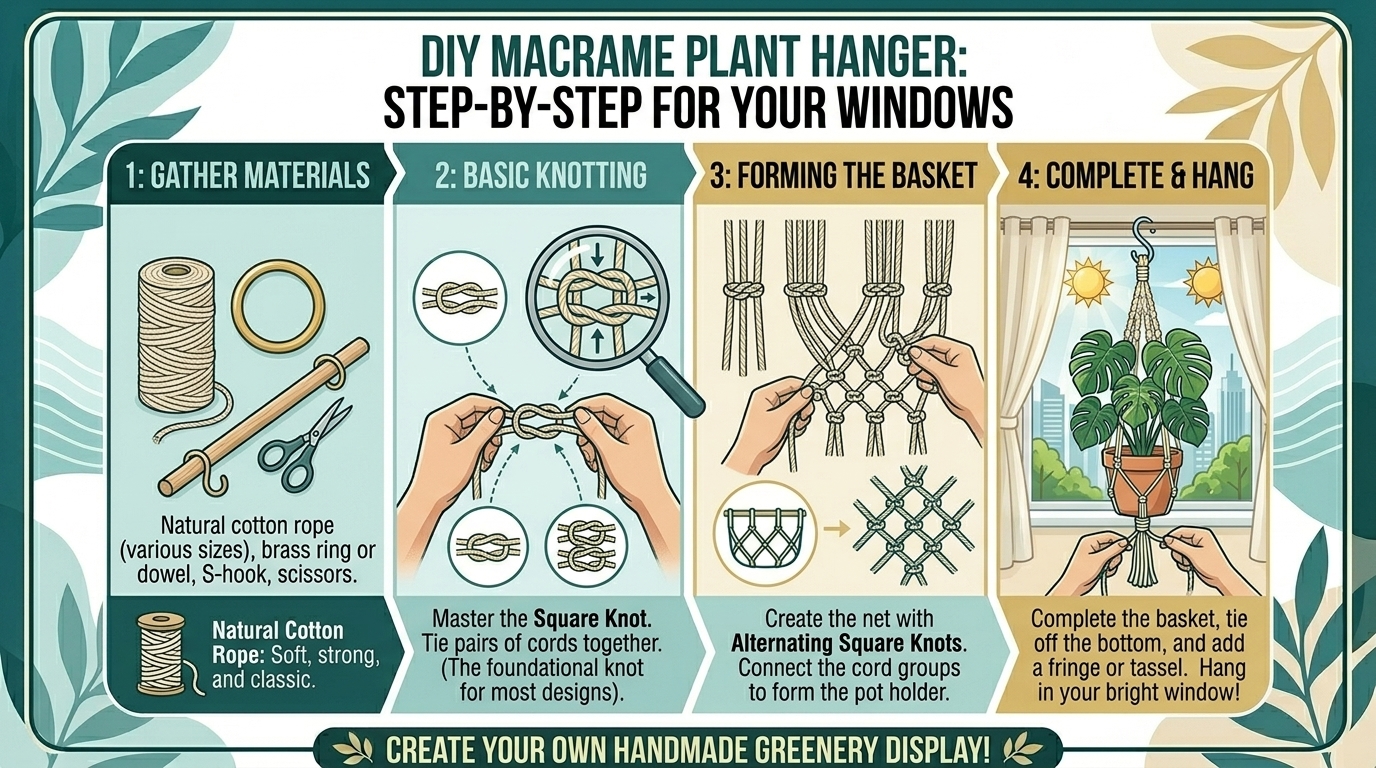
- Cotton Cord: Approximately 90 to 100 feet of 4mm or 5mm 3-strand twisted natural cotton rope.
- Top Ring: One 2-to-3-inch wooden ring, brass ring, or a sturdy metal loop to anchor the hanger.
- Measuring Tape & Scissors: A sharp pair of fabric scissors to make clean cuts without fraying.
- Painter’s Tape: Useful for wrapping the ends of your cords to prevent unraveling while knotting.
- Mounting Hardware: A heavy-duty ceiling hook or wall bracket rated for your pot’s total weight when filled with wet soil.
Part III: Cutting and Preparing Your Cords
Precision in your initial cuts ensures your finished plant hanger hangs evenly without lopsided baskets or uneven strands.
- Cut 8 Working Cords: Using your measuring tape, cut 8 separate cords, each measuring 10 feet (120 inches) in length. (If you prefer a longer cascading tail below the basket, cut them to 12 feet).
- Attach to the Top Ring: Fold all 8 cords precisely in half, finding the exact middle point. Pass the folded loop through your wooden or brass ring, then pull all the cord ends down through the loop to create a secure lark’s head knot around the ring. You will now have 16 hanging working strands of equal length.
Part IV: Step-by-Step Guide to Macrame Knots
Macrame relies primarily on a few foundational knots. Master these two, and you can build any plant hanger imaginable:
1. The Square Knot (The Building Block)
- You will work with 4 adjacent cords: 2 outer working cords and 2 inner core cords.
- Cross the left cord over the two center cords, then under the right cord.
- Cross the right cord under the center cords, then up through the loop on the left.
- Pull tight. Repeat this sequence to form a complete flat Square Knot.
2. The Gathering Knot (The Wrapping Knot)
- Used at the top and bottom to bundle all cords together securely into a clean column.
Part V: Assembling Your Plant Hanger Step-by-Step
Step 1: The Top Wrapping Knot
- Take a separate 2-foot piece of cord. Wrap it tightly around all 16 hanging strands approximately 2 inches below your top ring, wrapping it downward 6 to 8 times, tucking the end through, and pulling it secure to create a professional finished collar.
Step 2: Divide and Create the First Tier of Knots
- Separate your 16 cords into 4 distinct groups of 4 cords each.
- Measure down about 3 to 4 inches below the top wrapping knot. Using each group of 4 cords, tie a sequence of 3 to 4 stacked Square Knots.
Step 3: Creating the Basket Net (Alternating Square Knots)
- Measure down about 2 to 3 inches below your first tier of knots.
- Create the “net” that will cradle your pot by offsetting your cords: take the 2 right-hand cords from the first group and pair them with the 2 left-hand cords from the adjacent group.
- Tie a single Square Knot with these newly paired 4-cord sets. Repeat this all the way around the circle. This creates a staggered mesh diamond pattern. Measure down another 2 inches and repeat this netting process one more time.
Step 4: The Bottom Gathering Knot
- Place your target flower pot inside the center of your web to test the fit. The bottom of the pot should rest comfortably inside the lower diamond mesh.
- Gather all 16 cords together directly beneath the base of the pot. Tie a secure Bottom Gathering Knot to lock the basket shape in place, leaving a decorative fringe tassel trailing below. Trim the ends evenly with your scissors.
Part VI: Window Hanging Safety and Placement
- Anchor into Studs: Window frames are surrounded by wooden studs or drywall headers. Always screw your ceiling hook directly into a solid wooden ceiling joist or use heavy-duty toggle bolts designed for drywall.
- Light Optimization: Hang your macrame planter close to your window to provide your plant with adequate natural light while ensuring it does not obstruct window blinds or opening mechanisms.
10 Frequently Asked Questions (FAQ)
1. What type of rope is best for making a DIY plant hanger?
100% natural, unbleached 3-strand twisted cotton rope (4mm or 5mm thick) is ideal because it is sturdy, eco-friendly, soft to work with, and holds knots securely without slipping.
2. How much rope do I need to make one standard plant hanger?
Generally, you will need about 90 to 100 feet of cord total, usually cut into 8 individual strands measuring 10 feet each.
3. Can natural cotton rope hold heavy ceramic pots and damp soil?
Yes! A properly knotted 4mm or 5mm 3-strand cotton cord can easily support pots weighing 10 to 15 pounds when secured with proper ceiling hardware.
4. What is the easiest knot to learn for beginner macrame projects?
The Square Knot is the foundational knot of macrame. Once you master the simple left-and-right crossing pattern, you can build entire plant hangers.
5. How do I prevent my cotton rope ends from fraying?
You can wrap small pieces of painter’s tape around the ends of your cords before cutting, or dip the finished fringe ends in a tiny dab of clear fabric glue.
6. Can I wash my cotton macrame plant hanger if it gets dirty?
Yes. Hand-wash your plant hanger in lukewarm water with mild dish soap, rinse thoroughly, and hang it up to air dry completely before placing a pot back inside.
7. What size pot fits best in a standard 10-foot cord plant hanger?
A standard 10-foot cord configuration comfortably accommodates pots ranging from 6 inches to 10 inches in diameter.
8. How do I safely anchor my plant hanger to a ceiling or window frame?
Always locate a wooden ceiling joist using a stud finder and screw a heavy-duty steel plant hook directly into the wood. For hollow drywall, use heavy-duty spring toggle anchors.
9. Why is my macrame plant hanger lopsided when I put the pot in?
Lopsided hanging usually happens when your square knots were tied at slightly uneven distances down the cords. Double-check your measuring tape intervals before tying the lower tier.
10. Can I dye natural cotton rope custom colors to match my decor?
Absolutely! Because natural cotton is a plant-based fiber, you can easily dye your rope using standard fabric dye (like RIT dye) or natural botanical dyes (like coffee, tea, or avocado pits) before tying your hanger.
Conclusion
Crafting your own DIY macrame plant hanger using natural cotton rope is a rewarding, creative, and sustainable way to elevate your interior plant styling. By choosing sturdy 100% cotton cord, mastering basic square knots, and securing your finished piece safely in your window frame, you create a functional work of art that showcases your favorite trailing plants in style. Visit kcplants.com regularly for expert DIY tutorials, plant care guides, and inspiration to help your indoor jungle thrive!